Dec 30, 2025
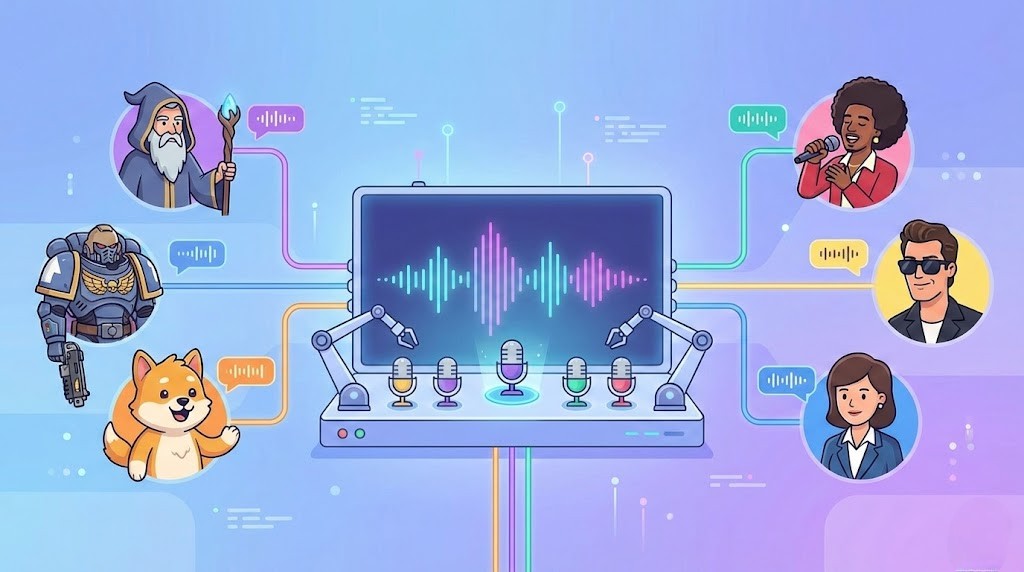
Character AI voices are exploding right now. Spongebob. Darth Vader. Mickey Mouse. Every movie character you can think of.
People are making millions of views with these voices. TikTok creators are going viral daily. YouTube channels are monetizing character voice content.
But here's the problem. Most AI voice generators focus on creating "professional voiceover" voices. They're not built for character voices. The results sound generic and lifeless.
We spent 50+ hours testing every major AI voice platform. Generated over 200 character voice clips. Compared quality, character selection, ease of use, and pricing across 10 different tools.
This guide shows you the best AI voice generators specifically for movie characters and celebrities, which characters are available on each platform and which sound most authentic, how to generate character voices that actually capture the personality, creative ways to use character AI voices for viral content, and legal considerations for using character voices in your content.
Let's start with why character voices are different from regular AI voices.
Why character AI voices need specialized tools
Regular AI voice generators create "neutral professional" voices. News anchor voices. Documentary narrator voices. Generic corporate voices.
Character voices are completely different. They require personality, distinctive quirks, emotional range, recognizable catchphrases, and specific vocal characteristics that make the character instantly identifiable.
A generic AI voice saying "I'm ready" sounds nothing like Spongebob saying "I'm ready!" The personality, the enthusiasm, the specific vocal timbre - that's what makes it Spongebob. Most AI voice platforms can't capture this because they're not trained on character voices. They're trained on professional voice actors reading scripts neutrally.
Character-focused AI voice platforms train their models differently. They use actual character audio from movies, TV shows, and games. This training data includes the character's full emotional range, their catchphrases, their distinctive pronunciation patterns, and the specific audio characteristics that make them recognizable.
The result is AI voices that don't just sound like the words - they sound like the character saying those words. That's the difference between a clip that gets 1,000 views and one that gets 1,000,000 views.
What makes a character voice sound authentic
Authenticity in character AI voices comes down to specific elements. Voice timbre matters first - the unique tonal quality that makes Darth Vader sound mechanical and deep, or makes Spongebob sound high-pitched and nasal. Generic AI can't replicate this without character-specific training.
Personality delivery is critical. When Batman speaks, there's gravitas and intensity even in casual statements. When SpongeBob speaks, there's childlike enthusiasm even when he's being serious. The AI needs to capture this personality in every generated line.
Catchphrases and speech patterns define characters. Yoda speaks in inverted sentence structure. Gollum refers to himself in third person. Scooby-Doo adds "R" sounds to words. These patterns need to be naturally integrated, not forced.
Emotional consistency matters too. Some characters have limited emotional range by design - think Squidward's perpetual annoyance or Eeyore's constant melancholy. The AI voice needs to maintain this emotional consistency even when generating new content.
Background character elements add authenticity. Darth Vader has breathing sounds. Wall-E has mechanical servo noises. C-3PO has a slight metallic reverb. These subtle background elements make the voice feel authentic rather than like a person imitating the character.
The data problem with character voices
Training AI on character voices faces unique challenges compared to training on human speakers. Most characters have limited audio data - maybe 2-3 hours total from their movies or show episodes. Compare that to public figures like Trump who have thousands of hours of recorded speeches.
The audio quality varies dramatically. Older cartoon characters like Mickey Mouse have audio spanning decades with different recording technologies. Early episodes sound completely different from modern productions. The AI needs to reconcile these quality differences.
Character voices are often mixed with music, sound effects, and other characters speaking. Isolating clean character audio for training requires significant audio engineering work. Many platforms skip this work, resulting in AI voices that sound muddy or have artifacts.
Some characters are voiced by multiple actors across different productions. Think about all the different actors who've voiced Batman across animated series, movies, and games. Which version should the AI replicate? Different platforms make different choices here.
The best character AI voice platforms solve these problems by carefully curating training data, manually cleaning audio to remove background noise and music, choosing the most iconic voice actor for multi-actor characters, and using advanced AI models that can learn from limited data more effectively.
Best AI voice generators for character voices
We tested every major platform claiming to offer character voices. The quality differences are massive. Some tools produce character voices that sound perfect. Others sound like bad impressions.
Here are the platforms that actually deliver authentic character voices.
Try AI Voices - largest character library
Try AI Voices specializes in character and celebrity voices with over 500+ voices available. This includes the largest selection of movie characters, cartoon characters, video game characters, and anime characters we found on any platform.
The character selection covers Disney characters like Mickey Mouse, Donald Duck, and Goofy. Pixar characters including Buzz Lightyear, Woody, and Mr. Incredible. Nickelodeon characters like Spongebob, Patrick, and Squidward. Warner Bros characters including Bugs Bunny, Daffy Duck, and Scooby-Doo. Marvel and DC superheroes like Iron Man, Batman, and Joker. Star Wars characters including Darth Vader, Yoda, and C-3PO. Plus hundreds more across every major franchise.
What impressed us most was the quality consistency. Many platforms have huge character libraries but half the voices sound terrible. Try AI Voices maintains high quality across their entire library because they use character-specific training rather than generic voice cloning.
The interface makes finding characters easy. Search by franchise, character name, or browse by category. Each character has a preview sample so you can hear the voice quality before generating.
Generation is instant - type your text, select your character, click generate, download audio. No queues, no waiting, no complicated settings to configure. The simplicity makes it perfect for content creators who need to generate dozens of character voice clips quickly.
The platform works particularly well for creating character conversations and mashups. Generate Spongebob talking to Darth Vader. Create Batman arguing with Iron Man. Mix character voices from completely different franchises for comedy content.
Best for content creators who need variety and want access to every major character, TikTok and Instagram creators making character meme content, YouTubers creating character mashup comedy, and anyone who wants the largest character selection without platform switching.
Uberduck - API for automated character content
Uberduck provides character voices through API access rather than a web interface. This makes it ideal for developers and creators who want to automate character voice generation.
Their character library focuses on popular mainstream characters with well-trained models. You won't find as many obscure characters as FakeYou, but the quality of available characters is consistently high because Uberduck curates their library rather than accepting all community uploads.
The API is straightforward to implement. POST your text and character ID to their endpoint, receive the audio file back. Documentation includes code examples in Python, JavaScript, and other languages. Authentication uses API keys you generate in your dashboard.
Pricing operates on a usage basis - you pay based on the characters of text you generate into speech. This works well for projects with variable usage. You're not paying monthly fees during slow periods, but you're also not limited by generation quotas during busy periods.
Voice quality from Uberduck is professional-grade, suitable for applications, automated content systems, and even commercial projects. The character voices maintain consistency across multiple generations, which is critical for applications that need reliable output.
The API approach means you can build automated workflows. Monitor trending topics and automatically generate relevant character voice content. Create bots that respond with character voices. Build applications where users input text and select characters. The possibilities expand significantly beyond manual generation.
Best for developers building apps or services that need character voice features, creators running automated content generation systems, and projects that need API integration rather than manual generation through web interfaces.
Eleven Labs - highest quality for select characters
ElevenLabs doesn't focus specifically on character voices like the other platforms. However, their voice cloning technology is so advanced that the character voices they do offer are the highest quality available anywhere.
Their character selection is limited compared to Try AI Voices or FakeYou. You'll find maybe 20-30 character voices total. But these voices sound absolutely perfect - genuinely indistinguishable from the real character in many cases.
The quality comes from ElevenLabs' advanced AI models and their meticulous training process. They spend significant time cleaning audio, tuning models, and testing results. A character voice isn't added to their library until it meets their quality standards.
If the character you need exists in ElevenLabs' library, it's worth using their platform just for the quality advantage. The voices capture subtle personality nuances that other platforms miss. Emotional delivery sounds natural rather than forced. Pronunciation matches the character exactly.
ElevenLabs also offers voice design features that let you adjust character voices. Want Darth Vader but slightly more menacing? Adjust the stability and style settings. Need Spongebob but slightly less energetic? Lower the style exaggeration. This customization isn't available on most character voice platforms.
The platform is premium-priced and requires subscription access. For casual content creation, this might not justify the cost. For professional projects or if you're seriously monetizing character voice content, the quality difference makes ElevenLabs worth considering.
Best for professional content creators who prioritize quality over character variety, creators making commercial content where voice quality directly impacts revenue, and users willing to pay premium prices for the absolute best character voice quality available.
Most popular character voices and where to find them
Certain character voices dominate social media and content creation. These are the voices generating millions of views and the platforms where they sound best.
Disney and Pixar characters
Disney character AI voices are among the most searched and generated. The nostalgia factor combined with instantly recognizable voices makes Disney characters perfect for viral content.
Mickey Mouse is available on most major platforms but quality varies dramatically. Try AI Voices and FakeYou both offer solid Mickey voices that capture his cheerful optimism and distinctive high pitch. The challenge with Mickey is maintaining the vintage cartoon quality while being clear enough for modern content.
Donald Duck's voice is technically difficult for AI because it's so distinctive and unusual. Only a few platforms have truly convincing Donald voices. Try AI Voices does it well by training specifically on Donald's speech patterns and unique vowel pronunciations.
Goofy requires specific training on his elongated vowels and signature "hyuck" laugh. Most generic AI voice platforms fail at Goofy because they don't capture these signature elements. Look for platforms that specifically list Goofy by name rather than trying to use generic voice cloning.
For Pixar characters, Buzz Lightyear and Woody are widely available and generally high quality across platforms. Their voices are more "normal" compared to classic Disney characters, making them easier for AI to replicate convincingly.
The Incredibles characters, particularly Mr. Incredible and Frozone, work extremely well for comedy content. Their voices are distinctive enough to be recognizable but natural enough that AI handles them easily. Try AI Voices has excellent models for both.
Finding Nemo and Finding Dory characters like Dory and Marlin are available but less commonly generated. If you're looking for characters with less competition, these are good options. FakeYou has multiple community-trained models for these characters.
Nickelodeon cartoon characters
Nickelodeon characters dominate TikTok and short-form video content. Spongebob Squarepants is probably the single most-generated character voice in AI platforms.
Spongebob's voice is available on nearly every character AI platform. The quality difference between platforms is substantial though. Try AI Voices captures Spongebob's enthusiasm and distinctive nasal quality perfectly. Lower-quality platforms make Spongebob sound like a person imitating the voice rather than the actual character.
Patrick Star works great for comedy because his slow, dim-witted delivery contrasts perfectly with Spongebob's energy. Generate conversations between Spongebob and Patrick for guaranteed engagement on social media.
Squidward's perpetually annoyed voice is harder to find in high quality but absolutely worth it when you do. The monotone delivery with occasional emotional outbursts defines his character. Look for platforms that specifically trained on Squidward rather than attempting to clone his voice.
Sandy Cheeks works well for content targeting slightly older audiences who remember the character. Her Southern accent and scientific knowledge create interesting comedy opportunities.
Other Nickelodeon characters like Fairly OddParents (Cosmo and Wanda), Jimmy Neutron, and Rugrats characters are available on community-driven platforms like FakeYou. Quality varies but you can find solid models with some testing.
Marvel and DC superheroes
Superhero character voices generate massive engagement because of the current popularity of comic book movies and shows.
Batman has dozens of different AI voice models available because he's been voiced by so many actors. Kevin Conroy's animated Batman voice from Batman: The Animated Series is considered the definitive version and appears on most platforms. Christian Bale's movie Batman voice is also available but harder to use naturally due to the extreme gravelly quality.
Joker voices vary depending on which actor's portrayal you want. Heath Ledger's Joker, Mark Hamill's animated Joker, and Joaquin Phoenix's Joker are all available on different platforms. Try AI Voices has all three versions available separately.
Iron Man (Tony Stark) benefits from Robert Downey Jr.'s distinctive delivery. The combination of confidence, sarcasm, and technical knowledge makes Iron Man's voice perfect for comedy content about modern technology or social media trends.
Spider-Man's voice works well for younger-skewing content. The enthusiasm and occasional nervousness in Spider-Man's delivery makes him relatable for content about everyday struggles or anxiety.
Darth Vader is technically a Star Wars character but appears in this category because of the superhero-style content he's used for. His deep, mechanical voice with breathing sounds is available on most platforms. Quality depends on whether the platform includes the breathing effects and mechanical reverb.
Thanos gained popularity after the Infinity War movies. His voice combines menace with philosophical conviction, making him perfect for dramatic voiceovers about serious topics presented comedically.
Anime and video game characters
Anime character voices face unique challenges because most anime is Japanese with English dubbing. AI models trained on English dub voices sound different from the original Japanese performances.
Popular anime character voices available in English include Goku from Dragon Ball (especially his overly enthusiastic battle cries), Naruto with his distinctive "believe it" catchphrase, and Luffy from One Piece with his carefree, determined delivery.
Video game characters like Mario and Luigi are everywhere but often sound wrong because people expect the specific voice from specific game eras. Modern Mario sounds different from 1990s Mario. Specify which version you want when searching for these voices.
Sonic the Hedgehog has multiple voice actor versions available. The "classic" voice from early games is most recognizable to older audiences. Recent movie versions sound completely different.
Pokémon character voices are primarily Pikachu (which is mostly just "Pika pika") and various human characters from the show. Ash's voice is available on some platforms but less commonly used than other character categories.
How to generate character AI voices that sound authentic
Generating character voices isn't just about typing text and clicking generate. The way you write your input text determines whether your character voice sounds authentic or like a bad impression.
Writing text that matches character personalities
Each character has distinctive speech patterns beyond just their voice. Capturing these patterns in your text input makes the AI generation sound exponentially more authentic.
Spongebob speaks with endless enthusiasm and frequent interruptions of his own thoughts. He uses phrases like "I'm ready!" and "Aye aye, captain!" even in casual conversation. Your text should reflect this energy. Bad: "Hello, how are you today?" Good: "Hi! Oh boy, oh boy, oh boy! This is going to be the best day ever! How are you? I'm ready!"
Darth Vader speaks in complete, formal sentences with calculated pauses for dramatic effect. His vocabulary is sophisticated and his tone is consistently menacing or dismissive. Bad: "Hey buddy, what's up?" Good: "Your lack of faith is disturbing. I find your optimism... misguided."
Patrick Star from Spongebob speaks slowly with simple words and frequent confusion. He often misunderstands basic concepts. Bad: "I comprehend your perspective." Good: "Is mayonnaise an instrument? I don't understand what's happening."
Batman speaks in short, direct statements with minimal emotion. Everything is purposeful and slightly aggressive. Bad: "That's interesting, perhaps we should investigate." Good: "I need answers. Now."
Mickey Mouse maintains relentless positivity even when describing problems. He uses phrases like "gosh" and "oh boy" constantly. Bad: "This is concerning." Good: "Oh boy! Gosh, this sure is a pickle! But don't worry, we'll figure it out together, pal!"
The key is researching your character's actual dialogue from their source material. Watch 5 minutes of the character speaking and take notes on their patterns. How long are their sentences? What words do they use repeatedly? How do they react to problems versus good news? Incorporate these observations into your text input.
Using character-specific catchphrases and speech patterns
Catchphrases define characters for audiences. Including them strategically makes your generated voice instantly recognizable.
Scooby-Doo adds "R" sounds to the beginning of words and speaks in food-motivated terms. "Ruh-roh!" and "Scooby snacks" must appear in any authentic Scooby-Doo content. Every sentence should feel like Scooby is either scared or hungry.
Yoda speaks in object-subject-verb order rather than the standard subject-verb-object. "Powerful you have become" instead of "You have become powerful." Every sentence needs this inverted structure or it doesn't sound like Yoda.
Gollum refers to himself in third person and uses "precious" to describe the Ring (or anything he desires). He alternates between his Gollum personality (aggressive, suspicious) and his Sméagol personality (childlike, friendly). Your text should indicate which personality is dominant.
Dory from Finding Nemo forgets things mid-sentence and gets distracted by interesting objects. "I'm going to... ooh, a rock! Wait, what was I saying?" This forgetfulness must be integrated naturally, not forced every single sentence.
Squidward sighs frequently and makes dismissive comments about things he secretly cares about. He's perpetually annoyed but occasionally reveals artistic passion or genuine emotion. Balance the annoyance with these moments of vulnerability for authentic Squidward content.
The mistake many creators make is overusing catchphrases. Saying "I'm ready!" every other sentence doesn't make your Spongebob voice sound more authentic - it makes it sound like a parody. Use catchphrases at the frequency they actually appear in the source material, not in every line.
Matching content tone to character personality
Different characters work for different types of content. Forcing characters into incompatible content makes the voice sound wrong even if the AI quality is perfect.
Optimistic characters like Spongebob, Mickey Mouse, and Dory work best for uplifting content, reactions to positive news, educational content presented enthusiastically, and comedy based on their childlike interpretation of serious topics.
Cynical characters like Squidward, Eeyore, and Ron Swanson excel at commentary on frustrating situations, reactions to bad news or annoying trends, deadpan humor about everyday struggles, and criticism presented as entertainment.
Heroic characters like Batman, Captain America, and Superman fit motivational content, commentary on justice or morality, reactions to villainous behavior (presented comedically), and serious topics delivered with gravitas.
Comedic relief characters like Patrick, Goofy, and Jar Jar Binks work for absurdist humor, intentionally wrong explanations of complex topics, reactions that completely miss the point, and content that's funny specifically because the character is clueless.
Villainous characters like Darth Vader, Joker, and Thanos are perfect for dramatic voiceovers about mundane topics, ominous warnings about trivial things, philosophical commentary on everyday situations, and content that's funny due to the mismatch between serious villain voice and silly content.
Matching character to content type determines whether your AI voice clip gets 1,000 views or 1,000,000 views. Spongebob reviewing horror movies works because of the contrast. Batman reviewing kids' toys works for the same reason. But trying to make Patrick explain quantum physics isn't funny - it's just confusing.
Audio editing for character authenticity
Raw AI-generated character voices sound good but simple audio editing makes them sound professional.
Add appropriate background ambiance for the character's world. Underwater bubble sounds for Spongebob. Cave reverb for Batman. Spaceship ambiance for Star Wars characters. These subtle background elements make the voice feel situated in the character's actual environment.
Many character voices benefit from slight EQ adjustments. Cartoon characters often need a bit of high-frequency boost around 8-10kHz to capture that bright, animated quality. Deep-voiced characters like Darth Vader benefit from bass boost around 80-120Hz for more menacing presence.
Compression evens out volume levels for more professional sound. Some character voices like Spongebob have extreme volume dynamics - quiet moments followed by shouting. Gentle compression (3:1 ratio) makes these dynamics more controlled without losing the character's energy.
Character-specific sound effects add authenticity. Darth Vader's breathing between sentences. Wall-E's servo motor sounds when moving. Goofy's signature "hyuck" laugh at appropriate moments. These effects aren't included in most AI voice generators by default but you can add them in post-production.
Some character voices need slight speed adjustments. Patrick sounds better at 0.9x speed for his slow, dim-witted delivery. Spongebob can work at 1.1x speed for extra energy. Test different speeds to find what sounds most authentic for your specific character and content.
Creative ways to use character AI voices
Character AI voices open up endless creative possibilities for content that gets millions of views. Here are proven approaches that work.
Character mashup conversations
The highest-performing character AI voice content on TikTok and YouTube features characters from completely different universes having conversations.
Darth Vader arguing with Spongebob about optimism versus pessimism generates massive engagement because the contrast is inherently funny. Write these conversations with both characters staying true to their personalities while discussing completely unexpected topics.
Batman interviewing Donald Duck as a witness to a crime plays on Batman's serious detective persona versus Donald's inability to stay calm. The comedy comes from Batman trying to maintain professionalism while Donald loses his temper about trivial details.
Mickey Mouse giving motivational speeches to supervillains like Thanos or Joker works because Mickey's relentless optimism clashes perfectly with their nihilistic worldviews. Write Mickey trying to find the good in obviously evil characters.
Yoda teaching modern slang to younger characters creates humor through the contrast of ancient wisdom applied to trivial language. Have Yoda explain TikTok trends in his backwards sentence structure for reliable comedy.
The key to successful mashup conversations is choosing characters with opposite or incompatible personalities. Don't pair two similar characters - that's boring. Pair characters who would never interact in their original franchises and give them a reason to talk that makes sense (or doesn't make sense, which can be even funnier).
Character reactions to modern trends
Character AI voices reacting to current trends, memes, and news generate consistent views because they combine nostalgia with relevancy.
Generate Scooby-Doo and Shaggy reacting to the latest scary movie trailer, maintaining their cowardly personalities while commenting on modern horror tropes. This appeals to both Scooby-Doo fans and horror movie fans simultaneously.
Create Iron Man reviewing new technology products with his trademark confidence and technical knowledge. His character is perfect for tech content because Tony Stark is literally a genius inventor. The voice adds entertainment value to what would otherwise be standard product reviews.
Have Patrick explain complex current events with his characteristic confusion and oversimplification. This works as comedy but also makes complicated topics more digestible by breaking them down (albeit incorrectly) to basics.
Use villain characters like Joker or Thanos to deliver dramatic commentary on trivial social media drama. The mismatch between their menacing voices discussing petty influencer beef creates natural comedy.
Timing matters with trend-based content. You need to generate and post while the trend is still current. The advantage of AI voices is speed - you can create character content about a trending topic within an hour of it breaking, while traditional content creation might take days.
Educational content with character voices
Character AI voices make educational content more engaging, especially for younger audiences or topics that are typically dry.
Use beloved characters to explain school subjects. Spongebob teaching marine biology has obvious appeal. Batman explaining forensic science plays to his detective persona. Mickey Mouse teaching history with his trademark enthusiasm makes boring topics fun.
Create character-narrated documentaries or explainer videos. Morgan Freeman's voice is famous for nature documentaries - what if David Attenborough's content used Darth Vader's voice instead? The contrast between serious nature content and menacing villain voice creates entertaining educational content.
Language learning content works surprisingly well with character voices. Generate characters speaking simple phrases in different languages. Kids (and adults) are more motivated to learn when their favorite characters are the teachers.
Science experiments narrated by character voices gain millions of views compared to standard science content. Use energetic characters like Spongebob for chemistry experiments. Use villains like Joker for dangerous demonstrations (obviously just narration, not actual dangerous content).
The educational content must be actually accurate and valuable - the character voice is the entertainment hook, not a replacement for real educational value. If the information is wrong, the character voice won't save your content from criticism.
Meme format adaptation
Taking existing meme formats and adding character AI voices creates new viral potential from proven formats.
The "Increasingly Verbose" meme format works perfectly with character voices. Start with a simple statement in a character voice. Then have different characters repeat the same information in progressively more complicated language. End with a character like Yoda or Shakespeare saying it in the most convoluted way possible.
"Character Explains" memes where you take a complex topic and have different characters explain it according to their personality. Batman explains it seriously. Patrick explains it wrong. Mickey Mouse explains it optimistically. This format gets millions of views across TikTok and YouTube.
"POV: You're [character] and..." scenarios where you create character reactions to specific situations. "POV: You're Squidward and Spongebob just invited you to another jellyfish catching trip." Generate Squidward's annoyed response in character voice for instant relatability.
Trend remixing with character voices revitalizes old trends. Take a trend that died six months ago and redo it with character voices. The nostalgia for both the old trend and the character combines for renewed virality.
Commercial and sponsored content
Some creators successfully monetize character AI voices through sponsored content and advertising.
Product reviews in character voices get significantly higher engagement than standard reviews. Tech YouTubers generate character voices reviewing phones or laptops. The entertainment value makes viewers watch through the entire review instead of skipping.
Sponsored content that's clearly labeled and uses character voices in entertaining ways can work. A VPN company sponsors a creator who makes Batman explain cybersecurity in character voice. The entertainment value makes the sponsored message more palatable.
Affiliate content where characters "recommend" products (clearly marked as AI voices and not real endorsements) performs well. Generate a compilation of characters discussing a product category you have affiliate links for. The character voices provide entertainment while the affiliate links provide monetization.
Local business advertising sometimes uses character voices for social media content. A pizza shop has character AI voices arguing about which pizza is best. This works for small businesses that can't afford professional voice acting but want entertaining social media content.
Critical disclaimer: Any commercial use of character voices requires careful legal consideration. Disney, Warner Bros, and other IP holders actively protect their characters. Always consult legal counsel before using character voices commercially. Most successful commercial character voice content operates in grey areas or uses clear parody protections. Don't assume just because others are doing it that you're legally protected.
Legal considerations for character AI voices
Using character AI voices raises more complex legal issues than using public figure voices because characters are explicitly copyrighted intellectual property.
Understanding copyright versus right of publicity
Character voices involve copyright law (protecting creative works) rather than just right of publicity (protecting individuals' likeness rights).
Copyright protects characters themselves as creative works. Mickey Mouse is copyrighted. His distinctive voice is part of that copyright. Using an AI-generated Mickey voice potentially infringes Disney's copyright in the character.
Right of publicity protects the voice actors who originated the voices. When you generate an AI voice of Spongebob, you're potentially infringing on Tom Kenny's right of publicity by replicating his voice performance.
Both types of legal protection apply simultaneously with character voices, making the legal situation more complex than generating voices of politicians or other public figures.
Parody and fair use provide some protections, but these defenses are narrower for copyrighted characters than for public figures. Courts are more protective of commercial intellectual property than they are of public figure rights.
When character voice usage is generally protected
Certain uses of character AI voices have stronger legal protections under fair use and parody doctrines.
Non-commercial parody clearly labeled as AI-generated and not official content generally qualifies for fair use protection. Creating obvious comedy content where Darth Vader discusses mundane topics or Spongebob reacts to news - clearly marked as parody - typically falls under protected speech.
Educational content that uses character voices to teach genuine educational topics often qualifies as transformative fair use. Using Batman's voice to explain forensic science adds educational value beyond just entertainment.
Commentary and criticism about the characters themselves or their source material is protected. Using character AI voices in video essays analyzing the character, discussing their impact on culture, or critiquing their movies typically qualifies as fair use.
Personal, non-commercial use with no monetization and limited distribution generally doesn't trigger copyright enforcement even if technically infringing. Making character AI voices for your friends privately usually doesn't result in legal action simply because rights holders don't know about it and it doesn't threaten their commercial interests.
High-risk uses that invite legal action
Some uses of character AI voices have resulted in takedown notices, legal demands, or actual lawsuits.
Commercial advertising using character voices without permission is the highest-risk usage. Never use character AI voices to sell products or suggest character endorsements unless you have explicit licensing agreements with the rights holders.
Content that could confuse audiences about whether it's official licensed content risks legal action. If your character AI voice content looks like it could be official Disney content rather than fan-created parody, expect problems.
Monetizing character voice content through ads or subscriptions increases legal risk significantly. Rights holders are more likely to pursue legal action when someone is making money from their copyrighted characters.
Creating AI voices of extremely valuable characters from active franchises (current Disney releases, recent Marvel movies, etc.) carries more risk than using older, less commercially active characters. Rights holders protect their most valuable IP most aggressively.
Distributing your character AI voices for others to use, especially commercially, is extremely high risk. Don't create and distribute AI voice models of copyrighted characters - this definitely infringes on copyright and has resulted in legal action in several cases.
Platform policies on character voices
Different platforms have different policies about AI-generated character voices, independent of whether the content is legal.
TikTok allows character AI voices for parody and entertainment content with proper disclosure. Content must be clearly marked as AI-generated and not official. Misleading content that could confuse viewers about authenticity violates guidelines.
YouTube's policies require disclosure of synthetic media depicting real people or characters. Add "AI-generated character voice" to video descriptions. Properly disclosed parody character content is generally allowed, but YouTube will remove content if rights holders file copyright claims.
Instagram and Facebook require disclosure of manipulated media including AI-generated character voices. Use captions indicating AI-generated content. These platforms are more likely to remove character voice content than TikTok or YouTube based on user reports and rights holder requests.
Twitch has strict policies against impersonation including character impersonation. Using character AI voices during streams risks suspension if it's not clearly disclosed and positioned as entertainment rather than impersonation.
Rights holders can request content removal from any platform regardless of fair use arguments. Platforms typically comply with removal requests from major companies like Disney or Warner Bros to avoid liability, even when the content might qualify as fair use.
Best practices for reducing legal risk
Follow these practices to minimize legal issues while creating character AI voice content.
Always clearly disclaim content as AI-generated and unofficial. Include disclaimers in titles, descriptions, and ideally in the content itself. "AI-generated parody - not affiliated with [company]" protects you more than no disclaimer.
Focus on obvious parody rather than attempting to replicate official content. Make your content clearly satirical or comedic so there's no confusion about whether it's official licensed material.
Avoid monetization if you're concerned about legal risk. Creating character voice content as entertainment without ads or sponsorships significantly reduces (though doesn't eliminate) chances of legal action.
Don't create or distribute AI voice models of copyrighted characters for others to use. Generating voices for your own content is lower risk than giving others the tools to generate those voices.
Respond immediately to any takedown requests. If a rights holder contacts you requesting content removal, comply immediately and completely. Fighting takedown requests rarely works unless you have legal resources comparable to the rights holder.
Consider focusing on older characters in the public domain or characters from smaller companies less likely to pursue legal action. Mickey Mouse content gets Disney's attention. A character from a 1970s cartoon on a defunct network probably doesn't.
Consult entertainment lawyers before any commercial use of character voices. If you're planning to monetize character voice content seriously, legal advice specific to your situation is essential.
Monetizing character AI voice content
Many creators successfully monetize character AI voice content through various revenue streams.
Platform ad revenue strategies
YouTube, TikTok, and other platforms offer creator monetization programs for character voice content when properly disclosed.
YouTube Partner Program allows monetization of parody character content once you meet requirements (1,000 subscribers, 4,000 watch hours). Character voice content typically generates moderate CPM ($3-10 per 1,000 views) depending on audience demographics. Educational character content generates higher CPM than pure entertainment.
TikTok Creator Fund pays based on views and engagement. Rates are lower than YouTube (typically $0.02-0.04 per 1,000 views) but viral character content can accumulate millions of views quickly, generating meaningful revenue even at low CPM.
Instagram and Facebook creator programs periodically offer bonuses for Reels. Character voice content that generates high engagement qualifies for these programs when available. Rates and availability change frequently so stay updated on current opportunities.
Podcast sponsorships work well for character voice shows. Once you build an audience listening to character-driven podcasts, sponsors will pay for placements. Rates range from $20-50 CPM depending on audience engagement.
The key to platform monetization is volume and consistency. Character voice content that gets a few hundred thousand views monthly generates minimal revenue. Content consistently getting millions of views monthly generates substantial income.
Selling character voice services
Your expertise creating quality character AI voices has market value beyond creating your own content.
Offer custom character voice generation services to other creators, marketers, or businesses. Charge per minute of generated audio with rates depending on usage rights. Typical rates range from $50-200 per minute depending on whether the client can use the content commercially.
Create character voice content packages for businesses wanting social media content but lacking the expertise to generate it themselves. Package pricing for complete videos with character voices, editing, and thumbnail design typically ranges from $500-2,000 per video.
Provide voice matching services where you generate AI voices that match specific characters better than the client could achieve themselves. This premium service commands higher rates because it requires expertise in training or fine-tuning voice models.
Don't resell or redistribute character AI voice models themselves - this definitely violates copyright. Only sell the generated content or your service generating content, not the tools to generate it.
Educational content and tutorials
Teaching others how to create character AI voices provides monetization opportunities without directly using copyrighted characters in commercial contexts.
Create comprehensive online courses teaching character AI voice generation, scriptwriting for character voices, audio editing techniques specific to character content, legal considerations and risk mitigation, and monetization strategies. Sell courses on Udemy, Teachable, or your own platform. Typical pricing ranges from $30-150 depending on course depth and your credibility.
Build a YouTube channel focused on tutorials about character AI voices. Monetize through ads, sponsorships from AI voice platforms, and affiliate links to recommended tools. Tutorial channels often generate more stable income than entertainment channels because of consistent search traffic rather than relying on viral hits.
Offer one-on-one consulting helping creators optimize their character voice content strategy. Experienced creators can charge $100-300 per hour for consultations covering content strategy, technical setup, and monetization approaches.
Create and sell template packages - character voice scripts, video editing project files, thumbnail templates, and audio editing presets. Sell as one-time purchases ($10-50) or subscription template libraries.
Affiliate marketing with character content
Character AI voice content pairs well with affiliate marketing for specific product categories.
Tech reviews in character voices can include affiliate links to reviewed products. Generate Iron Man reviewing tech gadgets with affiliate links to Amazon. The entertainment value increases view duration and click-through rates on affiliate links.
Software and tool recommendations where characters explain or demonstrate various tools with affiliate links. Generate character voices explaining how different AI tools work with your affiliate links for those tools.
Educational products where characters teach topics related to products you're promoting. Generate character voices teaching photography basics with affiliate links to camera equipment, courses, or software.
Affiliate marketing works best when the character genuinely fits the product category. Tech-oriented characters like Iron Man work for tech products. Educational characters like Magic School Bus work for learning products. Don't force incompatible character-product pairings just for affiliate commissions.
Frequently asked questions about character AI voices
Common questions about generating and using character AI voices.
Are character AI voices legal to create?
Creating character AI voices exists in a legal grey area. Characters are copyrighted intellectual property, so generating their voices potentially infringes copyright regardless of whether it's for commercial use.
However, fair use doctrine provides protections for parody, criticism, and transformative works. Character AI voices used for obvious parody, clearly disclosed as AI-generated, and not suggesting official endorsement generally fall under fair use protection.
The practical reality is that non-commercial character voice content for entertainment rarely results in legal action even if technically infringing, because rights holders focus enforcement on commercial infringement that threatens their business interests.
Creating character voices is lower legal risk than using them commercially. What you do with the voices matters more than simply generating them.
Which character AI voices sound most realistic?
Character voice quality varies dramatically based on the specific character and the platform used to generate it.
Characters with distinctive but relatively normal voice qualities sound most realistic. Iron Man, Batman (non-Bale versions), and most Disney princess voices generate very convincingly because they're human voices with specific personality delivery but not extreme vocal characteristics.
Characters with extremely stylized voices like Donald Duck, Gollum, or Scooby-Doo are harder to replicate perfectly because their voices are so unusual. However, these characters are also more forgiving of imperfect replication because audiences don't expect perfection from such distinctive voices.
The most realistic character AI voices come from platforms like Try AI Voices and ElevenLabs that train specifically on character voices rather than attempting to clone them using generic voice models.
Testing multiple platforms for your specific character is the best approach - what sounds perfect for one character might sound terrible for another on the same platform.
Can I use character voices for commercial projects?
Using character AI voices commercially is high legal risk without proper licensing from the rights holders.
Major companies like Disney, Warner Bros, and others actively protect their character IP and have legal resources to enforce their rights. Commercial use almost guarantees legal attention if your content becomes successful enough to notice.
Some creators use character voices commercially for local business advertising or sponsored content under the assumption that they're small enough to fly under the radar. This strategy works until it doesn't - one copyright claim can force removal of all your content and potentially result in legal costs.
If you need character voices for legitimate commercial projects, the correct approach is licensing the characters officially or using sound-alike human voice actors who can perform in the character's style without technically infringing.
For commercial work, focus on creating original characters or using public domain characters rather than copyrighted characters from major franchises.
How do I avoid copyright strikes on social media?
Avoiding copyright strikes requires proper disclosure and positioning your content clearly as parody.
Always include clear disclaimers in titles and descriptions stating the content uses AI-generated voices and is not officially licensed. "AI-generated parody - not affiliated with Disney" or similar disclaimers help establish that you're not claiming the content is official.
Make the parody nature obvious in the content itself. Don't try to make content that could be mistaken for official licensed content. The more obviously it's fan-created parody, the stronger your position.
Respond immediately to any copyright claims or takedown notices. Fighting copyright claims rarely works unless you have legal resources. Compliance and removal when requested is the safest approach.
Some creators maintain backup channels knowing their main channel might eventually face copyright issues. This isn't ideal but reflects the reality of creating character voice content.
Which characters have the biggest audience?
The most popular characters for AI voice content vary by platform and audience demographics.
For TikTok and younger audiences, Spongebob, Patrick, Squidward, and other Nickelodeon characters dominate. These characters have nostalgia appeal for millennials and Gen Z while still being recognizable to younger viewers.
YouTube audiences respond well to Marvel and DC superheroes, particularly characters from recent movies. Iron Man, Batman, Spider-Man, and major villains like Thanos or Joker generate consistent views.
Disney characters have universal appeal across all age groups. Mickey Mouse, Donald Duck, and Pixar characters work for family-friendly content that appeals to broad audiences.
Star Wars characters particularly Darth Vader, Yoda, and Obi-Wan have dedicated fanbase that engages heavily with character content.
Anime characters appeal to specific demographics but generate intense engagement within those communities. Naruto, Goku, and other major anime characters have passionate fanbases.
The "biggest" audience depends on your specific niche and content style. Choosing characters you understand and can write for authentically matters more than simply choosing the most popular character overall.
How Try AI Voices helps with character voice generation
Try AI Voices provides the most comprehensive character library available on any AI voice platform. Over 500 character voices covering every major franchise.
The platform focuses specifically on character and celebrity voices rather than generic professional voiceovers. This specialization means character voices sound authentic rather than like impressions.
Character-specific training using actual character audio from movies, shows, and games captures the personality and distinctive vocal characteristics that generic AI voice platforms miss.
Generate character conversations and mashups easily with all characters available on one platform. Create Spongebob talking to Darth Vader without switching between different tools or services.
Instant generation with no queues or waiting. Type your text, select your character, generate audio, download your file in under a minute.
The platform makes finding characters simple with category browsing by franchise, series, or character type, search functionality to find specific characters quickly, and preview samples for every character so you know the quality before generating.
Final thoughts
Character AI voices open up incredible creative possibilities for content creators. The technology is accessible, the results are impressive, and the audience appetite for character-driven content is massive.
Success with character AI voices comes down to choosing the right platform for your needs. Try AI Voices for the largest character selection. FakeYou for obscure characters. ElevenLabs for the highest quality when available.
Writing authentic scripts that match character personalities matters more than the AI quality itself. Study the characters. Learn their speech patterns. Incorporate their distinctive phrases naturally.
Always disclose your content as AI-generated. Clear disclaimers protect you legally and ethically while maintaining the entertainment value. Audiences appreciate transparency.
Focus on parody and entertainment rather than attempting to replicate official content. The comedy comes from characters in unexpected situations, not from pretending to be official licensed content.
Start with characters you genuinely understand and enjoy. Your knowledge of and passion for specific characters will show in your content quality. Don't just chase the most popular characters if you don't know them well.
The legal landscape around character AI voices will continue evolving. Stay informed about platform policies and rights holder enforcement. Adapt your approach as needed.
Character AI voices are powerful tools for entertainment and education when used responsibly.
The technology makes professional-quality character content accessible to anyone with creativity and dedication.