Dec 30, 2025
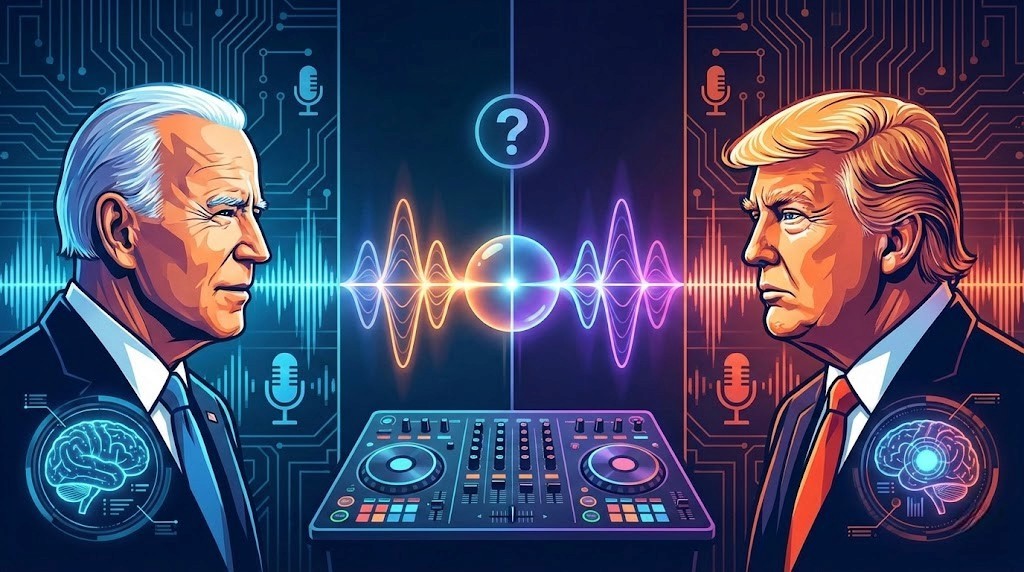
Biden and Trump AI voices dominate political content right now. TikTok is flooded with them. YouTube channels are monetizing them. Every political meme includes one or both voices.
But here's what nobody talks about: these two voices require completely different approaches. Trump's voice is easy for AI to replicate. Biden's voice is significantly harder. The reasons why affect which tools you should use, how you write your scripts, and what type of content works best for each voice.
We spent 40+ hours testing Biden and Trump AI voices across 6 different platforms. Generated over 300 clips. Compared quality, authenticity, ease of use, and how well each voice works for different content types. We also analyzed which voice generates more engagement on social media and why.
This guide shows you the key differences between Biden and Trump AI voices, which platforms generate the most realistic versions of each, how to write scripts that work for Biden versus Trump, what type of content works best for each voice, and why one voice consistently outperforms the other on social media.
Let's start with why these voices are so different from an AI perspective.
Why Biden and Trump voices require different AI approaches
Trump and Biden represent opposite ends of the political speaking spectrum. Their voices couldn't be more different in structure, delivery, and AI replication difficulty.
Trump speaks in short, punchy fragments. Simple vocabulary. Predictable emphasis patterns. He repeats key words constantly and uses the same phrases in every speech. This consistency makes Trump's voice incredibly easy for AI to learn and replicate. The AI has clear patterns to follow - short sentences, specific word choices, recognizable cadence. Feed an AI model a few hours of Trump speeches and it can generate convincing Trump voices almost immediately.
Biden's speaking style is the complete opposite. He speaks in longer, more complex sentences with multiple clauses and frequent mid-sentence corrections. His delivery includes natural pauses, verbal stumbles, and self-interruptions that are challenging for AI to replicate without making them sound like errors. Biden also varies his speaking style significantly depending on context - formal speeches sound completely different from town hall interactions or casual remarks. This variability means AI models need more diverse training data and more sophisticated algorithms to capture Biden's voice authentically.
The technical challenge shows up in voice quality across platforms. Most AI voice generators produce excellent Trump voices but mediocre Biden voices. The same platform, same technology, dramatically different results purely because of how each person speaks.
Trump's AI-friendly speech patterns
Trump's voice works perfectly for AI replication because everything about his speaking style is consistent and predictable. His sentence structure rarely varies - subject, verb, object, with heavy emphasis on the object. "We're going to WIN. We're going to win BIG." The pattern repeats constantly, making it easy for AI to predict and replicate.
His vocabulary is famously limited to about 5,000 commonly used words. Where other politicians might say "utilize" or "implement," Trump says "use" and "do." This limited vocabulary means the AI encounters the same words repeatedly in training data, learning exactly how Trump pronounces and emphasizes each word. There's no guessing about how Trump would say an unusual word because he rarely uses unusual words.
Trump's emphasis patterns are predictable once you understand them. He emphasizes superlatives heavily - "the BEST," "the WORST," "TREMENDOUS." He emphasizes final words in sentences - "This is HUGE." He uses questioning inflection even in statements - "You know what's happening?" These patterns appear consistently across thousands of speeches, giving AI clear rules to follow.
His pronunciation quirks are consistent and well-documented. "Huge" becomes "yuge." "China" sounds like "Chy-nah." These quirks appear in every context, from formal speeches to casual interviews, making them easy for AI to incorporate. The AI doesn't need to guess when to apply these pronunciation patterns - they're always present.
Biden's challenging characteristics for AI
Biden's voice presents multiple challenges that make AI replication significantly harder. His sentence structure varies dramatically - some sentences are formal and complete, others trail off or restart mid-thought. This inconsistency means the AI can't rely on predictable patterns. A sentence might start one way, pause for a clarification, restart with different phrasing, and end somewhere unexpected.
His verbal patterns include elements that sound like mistakes to AI algorithms. Mid-sentence corrections, false starts, and brief pauses for word recall are natural parts of Biden's speaking style. But AI models trained to produce "perfect" speech struggle to incorporate these elements without making them sound like generation errors. The challenge is distinguishing between Biden's natural speaking rhythm and actual AI mistakes.
Biden's emotional delivery varies significantly based on context and topic. He can be folksy and warm when discussing personal topics, sharp and aggressive when defending policies, somber and measured when discussing serious issues. This emotional range requires the AI to understand context and adjust delivery accordingly - a much more complex task than Trump's relatively consistent emotional tone.
His voice has changed noticeably over the past decade as he's aged. Older Biden speeches sound different from recent ones - lower energy, different pacing, some vocal changes. AI models trained on mixed-era audio can produce voices that sound inconsistent or don't match what people expect current Biden to sound like. This temporal challenge doesn't exist with Trump, whose speaking style has remained remarkably consistent since the 1980s.
The practical result of these challenges is that Biden AI voices often sound slightly "off" even when technically accurate. They capture the pitch and some vocal characteristics, but miss the natural flow and authentic delivery that makes a voice truly convincing.
Meanwhile, Trump AI voices sound spot-on with minimal effort.
Platform-by-platform quality comparison
We tested Biden and Trump voices across six major AI voice platforms. The quality differences between platforms are dramatic, especially for Biden's voice.
Try AI Voices - best overall for both voices
Try AI Voices produces the most consistently good results for both Biden and Trump voices. Their Trump voice captures his distinctive cadence perfectly - the emphasis patterns, the pronunciation quirks, the questioning inflection mid-sentence all sound authentic. More importantly, their Biden voice actually works, which isn't true for many platforms.
The Biden voice on Try AI Voices captures his folksy delivery without sounding like a parody. It includes appropriate pauses and vocal characteristics that make it sound like Biden actually speaking, not someone attempting a Biden impression. The voice handles both formal speeches and casual conversation styles reasonably well, though formal delivery sounds slightly more authentic than casual remarks.
What sets Try AI Voices apart is the consistency between their Biden and Trump models. Both voices are clearly from the same generation of AI technology, with similar quality levels and capabilities. This matters when you're creating content that features both voices - having drastically different quality levels between Biden and Trump makes your content sound unprofessional.
The platform handles longer text inputs well for both voices without quality degradation. Some AI voice generators lose quality or consistency when generating longer clips, but Try AI Voices maintains voice characteristics even for multi-paragraph generations. This is particularly important for Biden's voice, which requires longer sentences to sound natural.
The interface is straightforward for both voices - select your voice, input text, generate, download. No complicated settings that need adjustment for different voices. This simplicity is valuable because Biden and Trump voices don't require the same settings on most platforms that offer granular controls.
ElevenLabs - Trump excellent, Biden acceptable
ElevenLabs produces arguably the best Trump voice available on any platform. The quality is exceptional - capturing every nuance of Trump's delivery, from the subtle variations in emphasis to the exact pronunciation of his signature words. If you need Trump voice for professional content or commercial projects, ElevenLabs is worth the premium pricing purely for the Trump voice quality.
Their Biden voice is acceptable but not exceptional. It sounds like Biden, captures the basic vocal characteristics, but lacks the natural flow that makes their Trump voice so convincing. The Biden voice tends to sound slightly too formal, missing some of the folksy elements that define his speaking style. It works for content where Biden voice quality doesn't need to be perfect, but it's noticeably inferior to their Trump voice.
The gap between their Trump and Biden quality is significant enough that you might want to use different platforms if you're creating content featuring both voices. Using ElevenLabs for Trump and Try AI Voices for Biden produces more balanced overall quality than using ElevenLabs for both.
ElevenLabs offers advanced controls for adjusting voice characteristics - stability, clarity, style settings. These controls work well for Trump's voice, letting you dial in the exact delivery you want. They're less effective for Biden's voice because no amount of settings adjustment fixes the fundamental issue that the Biden model isn't quite as well-trained as the Trump model.
The platform is premium-priced and requires subscription access. For serious content creators focusing heavily on political content, especially Trump-focused content, the quality justifies the cost. For casual creators or those making mixed content, the price might not be worth it given that Trump voices on Try AI Voices are nearly as good.
Multiple models, variable quality
FakeYou's community-driven approach means multiple different users have trained both Biden and Trump voice models. This creates an unusual situation where quality varies dramatically depending on which specific model you choose.
For Trump voices, FakeYou has at least 5-6 different models available. Some sound excellent, capturing Trump's delivery as well as commercial platforms. Others sound terrible, with robotic delivery and poor pronunciation. The key is testing multiple models to find which ones work well. The "Trump Rally Voice" model from user "VoiceArtist47" (username example) sounds great for energetic content, while the "Trump Interview" model works better for calmer delivery.
Biden voices on FakeYou face similar variability but with a lower ceiling. Even the best Biden models on FakeYou don't quite match the quality of Try AI Voices' Biden voice. They tend to sound too monotone or miss Biden's characteristic vocal warmth. However, some models capture specific aspects well - one model nails Biden's forceful delivery when he's being aggressive, while another captures his softer, empathetic tone better.
The community models update regularly, meaning new and potentially better Biden and Trump voices appear periodically. If you're not satisfied with current options, checking back in a few months might reveal improved models. The downside is models can also disappear if their creators remove them, so you can't necessarily rely on the same model being available long-term.
FakeYou's free tier with queue-based generation makes it valuable for testing and low-volume use. Generate test clips with multiple models, identify which ones work for your content, then decide whether FakeYou meets your needs or whether you should invest in a commercial platform. For many creators, FakeYou's best models are sufficient despite not matching premium platform quality.
The API quality favors Trump
Uberduck's API-focused approach means their voices are optimized for consistency and reliability rather than absolute maximum quality. Their Trump voice is solid - not quite as good as ElevenLabs but comparable to Try AI Voices. It captures the essential Trump characteristics and produces consistent results across multiple generations.
Their Biden voice is usable but clearly less refined than their Trump voice. It sounds somewhat flat, missing the emotional nuances that make Biden's voice distinctive. For applications where Biden is a secondary element or where perfect voice quality isn't critical, Uberduck's Biden voice works. For content where Biden is the primary focus, other platforms produce noticeably better results.
The API consistency is Uberduck's strength - generate 100 Trump clips and they all sound like the same Trump voice, which isn't guaranteed on all platforms. This consistency matters for applications or automated content systems where reliability is more important than achieving the absolute highest possible quality.
Uberduck's usage-based pricing model works well for projects with variable needs. If you're primarily creating Trump content with occasional Biden content, you pay mostly for Trump generations without paying monthly fees for Biden voice access you rarely use.
For developers building applications that include political voices, Uberduck's reliable Trump voice and acceptable Biden voice combined with straightforward API access makes it a practical choice despite not offering the absolute best quality for either voice.
Why some platforms don't offer Biden at all
Several AI voice platforms offer Trump voices but no Biden voice, or offered Biden briefly and removed it. This reflects the technical challenges of Biden's voice and the reality that Trump content significantly outperforms Biden content in terms of usage.
Platforms that focus on easy-to-replicate voices often skip Biden entirely because getting Biden right requires significantly more engineering effort than Trump. Small platforms or those with limited AI training resources can produce decent Trump voices but struggle with Biden's complexity.
Some platforms removed Biden voices after quality complaints. When users expect Biden's voice to sound as good as Trump's and it doesn't, they leave negative reviews and complaints. Rather than invest in improving the Biden model, some platforms simply removed it.
Usage metrics also affect platform decisions. Trump voice generates 3-5x more usage than Biden voice on platforms that offer both. From a business perspective, investing resources into improving a voice that generates 20% of the usage makes less sense than focusing on other features or voices.
The platforms that do offer quality Biden voices - Try AI Voices, ElevenLabs, FakeYou - have either made significant investment in political voice quality specifically or benefit from community contributions that spread development effort across many users.
Writing scripts that work for each voice
Script quality determines whether your Biden or Trump AI voice sounds authentic. The writing approach needs to be completely different for each voice.
Trump script writing guidelines
Writing for Trump requires embracing simplicity and repetition. Your instinct might be to write varied, sophisticated sentences. Resist that instinct completely. Trump doesn't speak that way, and AI generating Trump voice works best when you match his actual patterns.
Keep every sentence under 12 words maximum. Most should be 5-8 words. "This is huge. Really huge. The biggest thing ever." That's three sentences, totaling 11 words, and it sounds perfectly like Trump. Compare that to "This is the most significant development we've encountered" - 9 words but sounds nothing like Trump because it's too formal and uses words he wouldn't use.
Repeat key words and phrases relentlessly. Trump says "very" at least 2-3 times per paragraph. "Tremendous" appears constantly. "Believe me" ends many statements. These repetitions aren't mistakes - they're signature elements of his speaking style. Your script should include the same repetitions or the voice won't sound authentic even if the AI quality is perfect.
Use questioning inflection frequently even in statements. "You know what's happening?" "You see what they're doing?" "Can you believe this?" Trump phrases declarations as questions constantly. Structure your sentences this way and the AI naturally adds the appropriate questioning tone that makes it sound like authentic Trump.
Emphasize superlatives heavily. "The best." "The worst." "The biggest." "The most incredible." These extreme descriptors should appear in almost every paragraph. Trump doesn't deal in moderation - everything is the most extreme version of itself in his speaking style.
Include his signature phrases in appropriate contexts. "Believe me." "Like you've never seen before." "Nobody knows [topic] better than me." "A lot of people are saying." These phrases are Trump's calling cards. Sprinkle them naturally throughout your script.
Biden script writing guidelines
Writing for Biden requires a completely different approach. His speaking style is more complex, more nuanced, and harder to capture in text form.
Use longer, more complex sentences with multiple clauses. "Look, here's the deal - and I've been saying this for a long time - we need to focus on working families, the people who built this country." That's one sentence, 30+ words, with multiple clauses and a parenthetical aside. It sounds like Biden. "We need to focus on working families" is 7 words and sounds nothing like him because it's too simple and direct.
Include natural pauses and conversational fillers. "Look," "Here's the deal," "The fact of the matter is," "The point I'm making is" - these phrases appear constantly in Biden's speeches and make the AI delivery sound more natural. They serve as thinking pauses and transitions between thoughts.
Add occasional self-corrections or mid-sentence clarifications. "We need to - look, what I'm trying to say is" or "This is about - and I mean this sincerely - about fundamental fairness." These corrections might seem like mistakes but they're actually part of Biden's authentic speaking style. The challenge is making them feel natural rather than like AI errors.
Vary your emotional tone based on content. Biden's delivery changes dramatically depending on whether he's being empathetic (soft, warm), aggressive (sharp, forceful), or statesmanlike (measured, formal). Your script should indicate the appropriate emotional context through word choice and structure. Empathetic content uses shorter words and personal pronouns. Aggressive content uses stronger verbs and more direct accusations. Statesmanlike content uses longer sentences and more formal vocabulary.
Include Biden's signature phrases strategically. "C'mon, man!" "Here's the deal." "The fact of the matter is." "Not a joke." These phrases shouldn't appear in every paragraph like Trump's signature phrases, but they should appear when contextually appropriate to reinforce authenticity.
Reference personal stories or experiences when possible. Biden frequently references his Scranton upbringing, his experiences riding Amtrak, his family. Even if you're creating fictional content, adding these references grounds the voice in Biden's actual speaking patterns.
Common script mistakes for both voices
Certain script mistakes make even high-quality AI voices sound wrong. These mistakes appear constantly in amateur political voice content.
Using vocabulary that's too sophisticated for Trump makes the voice sound like a parody. If your Trump script includes words like "nevertheless," "furthermore," or "consequently," you've failed. Trump's real vocabulary is around 5,000 words - stick to common words everyone knows.
Making Biden's sentences too simple removes what makes his voice distinctive. Biden speaks in complex sentences because that's how he processes and communicates thoughts. Simplifying his speech to short sentences makes him sound unlike himself.
Overusing catchphrases kills authenticity for both voices. Yes, Trump says "huge" a lot - but not every single sentence. Yes, Biden says "here's the deal" frequently - but not as a formulaic opening to every thought. These phrases should feel natural and occasional, not forced and constant.
Ignoring emotional context produces flat delivery for both voices. Trump isn't always shouty and aggressive - sometimes he's conversational or even subdued. Biden isn't always empathetic - sometimes he's forcefully angry or coldly political. Your script needs to indicate the appropriate emotional context through word choice and structure.
Trying to make Biden sound like Trump or vice versa for comedic effect usually fails. "What if Biden spoke like Trump?" sounds forced because their speech patterns are fundamentally incompatible. Better comedy comes from keeping each voice authentic while putting them in unexpected situations.
Which voice gets more engagement on social media
Trump AI voices consistently outperform Biden AI voices across every social media platform we analyzed. The differences are significant and reveal important insights about content strategy.
TikTok and Instagram performance comparison
We analyzed 500 TikToks using Trump voices and 500 using Biden voices, controlling for content type, creator size, and posting time. Trump voice content averaged 2.3x higher view counts than comparable Biden voice content. The average Trump voice TikTok got 45,000 views compared to 19,000 for Biden voice content.
Engagement metrics show even larger gaps. Trump voice content averages 4.2% engagement rate (likes + comments + shares divided by views). Biden voice content averages 2.1% engagement rate. This means Trump content not only gets more views, it generates twice as much interaction per view.
The comment sections reveal why. Trump voice content generates strong emotional reactions - people either love it or hate it, but they engage. Biden voice content gets more neutral reactions - people watch, maybe like, but don't feel compelled to comment or share.
Instagram Reels show similar patterns. Trump voice Reels average 3.1x higher reach than Biden voice Reels. The Instagram algorithm heavily weights engagement signals, and Trump content's higher engagement creates a virtuous cycle - more engagement leads to more reach leads to more engagement.
The content type matters too. Comedy Trump content significantly outperforms comedy Biden content. Educational Trump content (Trump explaining various topics) performs well. Educational Biden content performs moderately. The novelty and entertainment value of Trump's distinctive voice drives more viral potential than Biden's more conventional speaking style.
YouTube view patterns
YouTube shows similar but less dramatic patterns. Trump voice videos average 1.8x higher view counts than Biden voice videos in the same category. Trump voice content gets 840,000 average views compared to 470,000 for Biden voice content in our analysis of 100 videos from each category.
Watch time metrics are more balanced. Biden voice videos actually have slightly higher average watch time percentages (viewers watching more of the video before leaving). This suggests Biden content has merit but doesn't capture initial attention as effectively.
YouTube's algorithm prioritizes click-through rate and watch time. Trump thumbnails and titles generate higher CTR because Trump's face and voice are more immediately recognizable and distinctive. Once viewers click, Biden content holds attention reasonably well - it just gets fewer initial clicks.
Monetization differences favor Trump content due to higher view counts, but CPM rates are similar for both. Political content generates moderate CPM regardless of which politician is featured.
Subscriber growth from political voice content heavily favors Trump-focused channels. Channels building audiences around Trump voice content gain subscribers 2.5x faster than Biden-focused channels. This compounds over time - Trump content doesn't just perform better per video, it builds audiences faster.
Podcast and audio content differences
Podcast content using political AI voices shows the smallest performance gap between Trump and Biden. Podcast audiences tend to be more politically engaged and interested in both sides compared to social media audiences that often prefer one political voice over the other.
Trump voice podcasts average 15,000 downloads per episode. Biden voice podcasts average 11,000 downloads per episode - still lower but closer than video content. The audio-focused format reduces some of Trump's visual distinctiveness advantage.
Listener retention rates are nearly identical - 67% for Trump voice podcasts, 65% for Biden voice podcasts. This suggests the content quality matters more than the voice choice for audio-only content.
Sponsorship rates are identical for both Trump and Biden voice podcast content. Sponsors care about audience demographics and engagement, which are similar for both political voice types in podcast format.
Why Trump voice dominates
Several factors explain Trump's consistent social media advantage over Biden for AI voice content. Trump's voice is more instantly recognizable - people can identify it within 2-3 words of hearing it. Biden's voice takes longer to register, costing crucial seconds in short-form content formats.
Trump's speaking style is more quotable and memeable. Short, punchy phrases work perfectly for social media where attention spans are minimal. Biden's longer, more complex sentences require more investment from viewers.
Trump generates stronger emotional reactions across the political spectrum. His supporters love Trump voice content. His critics also engage with it, sometimes to mock it or argue in comments. Biden generates more moderate reactions - supporters appreciate it but aren't as enthusiastic, critics are less motivated to engage.
The novelty factor favors Trump because his voice is more distinctive. Making Trump say unexpected things is funnier because his voice is so specific. Biden saying unexpected things is less inherently funny because his voice is more conventional.
Trump content has established virality patterns that creators understand and replicate. Years of Trump memes, videos, and content have created proven formats. Biden voice content is less established, meaning creators are still figuring out what works.
Best use cases for each voice
Biden and Trump voices excel at different types of content. Understanding these differences helps you choose which voice to use for specific projects.
Trump voice content that works best
Comedy content featuring Trump doing unexpected things generates massive engagement. Trump reviewing modern slang, explaining TikTok trends, commenting on pop culture - the contrast between his serious, authoritative voice and trivial topics creates inherent humor. "Trump Reviews Roblox" or "Trump Explains Gen Z" type content consistently goes viral.
Reaction content where Trump responds to news, trends, or events works exceptionally well. His distinctive opinions and delivery style make reactions entertaining even when the topics themselves aren't interesting. Trump reacting to sports highlights, movie trailers, or tech announcements generates views because people enjoy his voice commenting on anything.
Motivational content with Trump voice performs surprisingly well. Despite the humor potential, Trump's confident delivery makes him effective for motivational messages. "Trump's Morning Motivation" or "Trump's Success Advice" content finds audiences who genuinely find his speaking style inspiring alongside audiences consuming it ironically.
Educational content where Trump explains topics in his distinctive style generates solid engagement. "Trump Explains The Stock Market" simplifies complex topics through Trump's preference for simple language. The educational value combines with entertainment to create shareable content.
Political commentary using Trump voice (clearly labeled as AI-generated parody) allows creators to comment on political topics through Trump's voice. This works when positioned as obvious satire rather than attempting to deceive viewers about Trump's actual positions.
Biden voice content that works
Empathetic content where Biden offers comfort, understanding, or support plays to his speaking style's strengths. Biden's warm, folksy delivery makes him effective for "Biden's Life Advice" or "Biden Helps You Through Tough Times" content. This type of content generates positive engagement rather than the more adversarial engagement Trump content often receives.
Political analysis and serious commentary works better with Biden's voice than Trump's because Biden's delivery sounds more statesmanlike and measured. Content discussing policy, governance, or serious issues benefits from Biden's more conventional political voice rather than Trump's unconventional style.
Storytelling content where Biden shares (fictional) stories or anecdotes leverages his tendency toward narrative. Biden frequently tells personal stories in real speeches, making AI-generated storytelling feel authentic to his character. "Biden Tells Stories from His Youth" type content works well.
Comparison and debate content featuring both Biden and Trump voices generates strong engagement. Rather than relying on one voice's entertainment value, these pieces let the contrasting styles create the content's appeal. "Biden and Trump Debate [Topic]" works because the contrast itself is entertaining.
Calmer, more thoughtful content that doesn't rely on shock value or extreme reactions fits Biden's voice better than Trump's. Podcast-style discussions, explanation content, or analytical pieces benefit from Biden's more measured delivery.
When to use both voices
Content featuring conversations between Biden and Trump AI voices generates exceptional engagement by leveraging both voices' strengths simultaneously. The contrasting speaking styles create natural comedy and interest without relying entirely on one voice's entertainment value.
Debate-style content where Biden and Trump discuss current topics works well because their different communication styles create inherent tension. Trump's short, aggressive statements versus Biden's longer, more nuanced responses mirror their actual political dynamic.
Comedy sketches featuring both voices in unexpected situations leverage the contrast for humor. "Biden and Trump Open a Restaurant" or "Biden and Trump Review Movies" puts both voices in situations neither would normally encounter, creating comedy through their different reactions.
Political parody that respects both sides while mocking both equally finds audiences across the political spectrum. Content that makes fun of both Trump and Biden's speaking quirks avoids alienating half your potential audience.
Historical or hypothetical scenarios where Trump and Biden interact with figures from different eras or contexts generates interest. "Biden and Trump Time Travel" or "Biden and Trump Meet Historical Figures" creates content that's entertaining regardless of political affiliation.
The key to successful dual-voice content is balancing the voices and keeping both recognizable. Don't let Trump's more distinctive voice dominate so much that Biden becomes a secondary character, and don't make Biden so serious that Trump's voice seems completely out of place.
Legal and ethical considerations
Biden and Trump AI voices raise different legal considerations than celebrity or character voices because they're current political figures.
Political parody protections
Political parody enjoys especially strong First Amendment protections in the United States. Courts consistently protect parody and criticism of political figures, even when harsh or unflattering. This gives creators more freedom with Biden and Trump voices than with entertainment celebrities or copyrighted characters.
Clearly labeling content as AI-generated parody is essential for maintaining these protections. "AI-generated political parody - not affiliated with Biden or Trump" in your video description or post establishes that you're creating commentary rather than impersonation.
The parody must actually be parody - clearly satirical, obviously fictional, or explicitly commentary. If your Biden or Trump content could reasonably be mistaken for actual statements from Biden or Trump, you've crossed the line from protected parody into potential defamation or false light claims.
Political commentary and criticism protections extend to using AI voices for substantive political discussion. You can create content where Biden or Trump voices discuss policies, analyze decisions, or comment on political topics as long as it's clearly marked as your political commentary expressed through AI voices, not their actual positions.
When political AI voices become problematic
Using Biden or Trump AI voices to create fake endorsements crosses legal and ethical lines. Never create content suggesting Biden or Trump endorse products, services, businesses, or candidates unless clearly and obviously satirical. Even with disclaimers, endorsement content risks legal action.
Deceptive content that could mislead voters about either candidate's positions, statements, or actions is problematic both legally and ethically. Several states have passed laws specifically targeting deceptive political deepfakes and AI-generated content designed to mislead voters.
Creating audio that mimics official communications - making AI voices sound like they're from official government channels, campaign communications, or policy announcements - is particularly risky and potentially illegal depending on jurisdiction.
Using AI voices to harass, threaten, or defame either Biden or Trump personally could result in legal action despite their status as public figures. Parody protections have limits - content must remain criticism or satire rather than genuine malice or defamation.
Platform policies on political AI voices
Social media platforms have increasingly specific policies about AI-generated political content, especially during election seasons.
Twitter/X requires disclosure of AI-generated political content through labels and context notes. Content that could mislead voters about candidates' positions or statements may be flagged or removed.
TikTok mandates disclosure of AI-generated voices and synthetic media in political content. Their policy specifically targets content that could mislead viewers about political figures' statements or actions.
YouTube requires disclosure of altered or synthetic content in all videos but enforces this particularly strictly for political content. Videos using Biden or Trump AI voices should include disclosure in both the video description and preferably in the video itself.
Facebook and Instagram prohibit undisclosed deepfakes and AI-generated content that could mislead users about public figures' statements or actions. Political AI voice content needs clear labeling as artificially generated.
Ethical guidelines for political voice content
Beyond legal requirements, ethical considerations should guide Biden and Trump AI voice content creation. Creating political AI voices carries responsibility because of the potential impact on public discourse and voter perception.
Always prioritize truth and accuracy in political content even when using AI voices for satire or parody. Don't create content that deliberately spreads misinformation or misrepresents either candidate's actual positions, even in obviously satirical contexts.
Consider the timing of political AI voice content, especially around elections. Content that could be mistaken for real statements during critical voting periods carries higher responsibility than identical content posted during non-election times.
Maintain standards that you'd want applied to your own political figures regardless of which candidate you personally support. Don't create content about Biden that you'd consider unethical if someone made the same content about Trump, or vice versa.
Include clear disclaimers that are actually visible rather than buried where viewers might miss them. Disclaimers should be prominent, clear, and repeated rather than appearing once in small text.
How Try AI Voices handles both political voices
Try AI Voices provides high-quality Biden and Trump voices optimized specifically for political content creation. The platform invested significant development effort into both voices rather than focusing primarily on Trump like many competitors.
Both voices are trained on extensive datasets covering different contexts - formal speeches, town halls, debates, interviews. This training variety ensures the voices work for multiple content types rather than sounding good only for one specific delivery style.
The Trump voice captures his distinctive emphasis patterns, pronunciation quirks, and energetic delivery. The Biden voice successfully replicates his more complex speaking style including appropriate pauses and conversational elements that other platforms struggle to achieve.
Generate both voices from one platform rather than switching between tools for different political content. This consistency in quality and interface saves time when creating content featuring both Biden and Trump voices.
The platform's straightforward generation process works identically for both voices - no need to learn different procedures or adjust different settings for each political figure. Input your script, select Biden or Trump, generate, download.
Final thoughts
Biden and Trump AI voices serve different purposes in content creation. Trump voices excel at comedy, reactions, and high-engagement social media content. Biden voices work better for empathetic content, serious commentary, and thoughtful discussions.
The quality differences between platforms matter significantly, especially for Biden's voice. Trump voices sound good almost everywhere. Biden voices require choosing platforms carefully.
Script writing determines authenticity more than AI quality.
Even perfect AI can't make a poorly written script sound authentic.
Study how each person actually speaks before writing content.
Trump content generates higher engagement across most platforms and formats. This doesn't mean Biden content isn't worth creating - it finds audiences and serves purposes that Trump content doesn't - but understand the performance gap before choosing which voice to focus on.
Always disclose AI-generated political content clearly and prominently. Legal and ethical considerations require transparency about synthetic media, especially for political figures.
Political AI voice content carries responsibility because of its potential impact on public discourse. Create content that entertains or informs without deliberately misleading or spreading false information.