AI Old Man Voice Generator: Create Authentic Elderly Narration
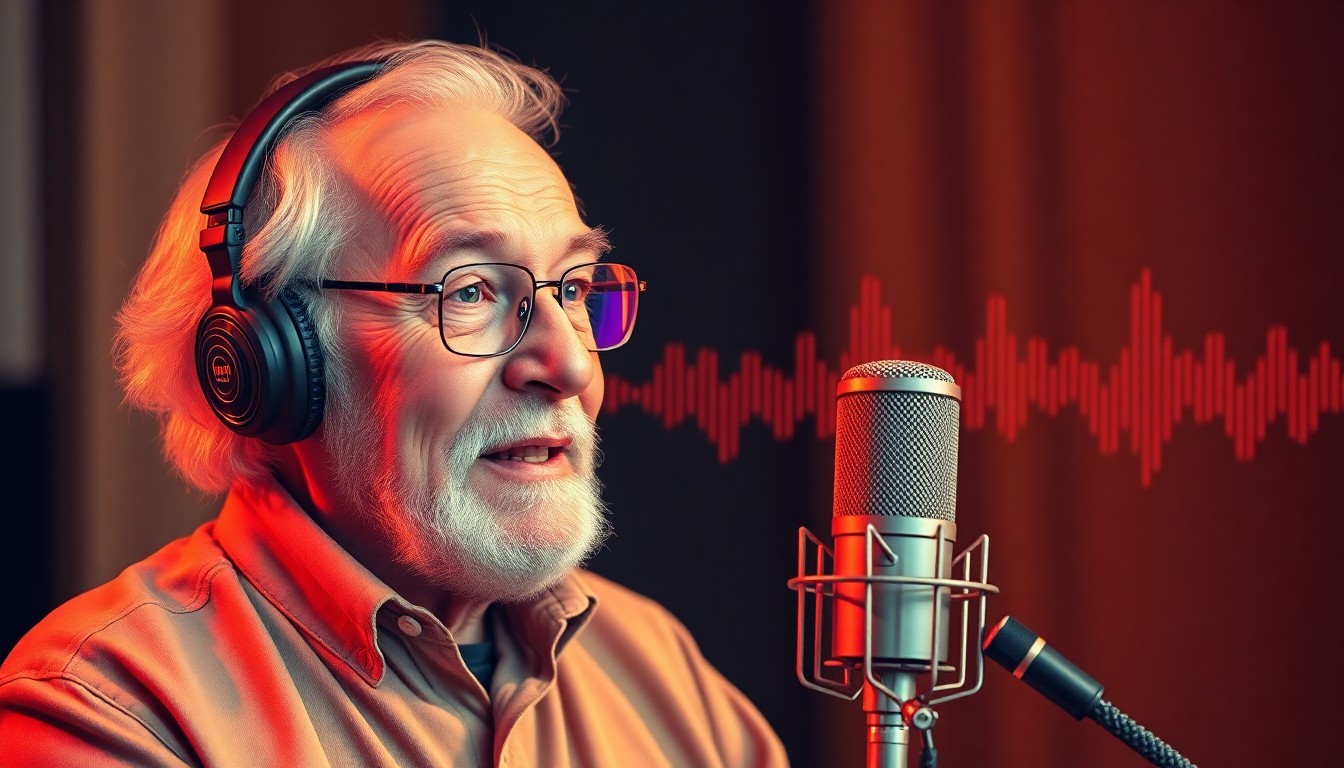
Content creators need distinctive character voices that resonate with audiences. Elderly male voices carry authority and warmth audiences respond to naturally. They work for historical documentaries, wise mentor characters, vintage narration, grandfather figures, and storytelling applications where experience matters.
The challenge sits in finding quality elderly voice options. Most text-to-speech platforms offer generic older voices that sound flat. They miss the texture that makes elderly speech distinctive. The subtle vocal fry. The pacing wisdom. The resonance that comes with decades of living.
This guide covers everything you need to create authentic AI old man voices. We explore what makes elderly voices unique from a technical perspective, the best platforms and tools for generation, script writing strategies that match elderly speech patterns, creative applications across different content types, and production techniques that enhance realism. You'll learn to match voice characteristics to character archetypes, avoid common pitfalls that break immersion, and implement voices that audiences remember.
TryAIVoices specializes in character voice generation with dozens of elderly voice options spanning different ages, accents, and personality types. The platform captures the nuanced vocal characteristics that distinguish quality elderly synthesis from generic attempts.
Understanding elderly voice characteristics
Aging changes vocal production in specific ways. Understanding these changes helps you evaluate quality and write better scripts.
Physical voice changes with age
Male voices undergo predictable transformations as speakers age. The vocal cords lose elasticity and mass over time. This creates the characteristic thinning and slight tremor many elderly voices display. Breath support weakens with reduced lung capacity. Phrasing gets shorter. Pauses become more frequent.
Pitch patterns shift too. Contrary to popular belief, elderly male voices don't always deepen. Many actually rise in pitch slightly as vocal cord tension changes. The fundamental frequency becomes less stable. Vibrato increases. Some speakers develop a slight rasp or breathiness as vocal cord closure becomes less complete.
Resonance changes as the vocal tract structure evolves. The oral cavity may change shape. Articulation precision can decrease while consonant production softens. Together these create the unmistakable sound of an elderly speaker even when individual elements remain subtle.
Speech pattern differences
Beyond vocal physiology, elderly speech patterns differ behaviorally. Pacing tends to slow. Words get more deliberate weight. Speakers from older generations often use more formal vocabulary and grammatical structures than younger speakers. They may reference cultural touchstones unfamiliar to younger audiences.
Prosody patterns reflect different communication norms. Elderly speakers often employ wider pitch ranges when telling stories. They pause for emphasis differently than younger speakers. They may use vocal intensity variation where younger speakers would rely on pacing changes.
 Photo by Matt Botsford on Unsplash
These patterns vary by region, culture, and individual speaker characteristics. A British elderly voice sounds completely different from an American Southern elderly voice or a New York elderly voice. Accent preservation matters when creating authentic characters.
The realism factor
Quality elderly voice synthesis requires multiple elements working together. Pitch stability. Breath control. Articulation precision. Pacing authenticity. Emotional range. No single factor creates realism, but missing any one factor breaks the illusion.
The best AI elderly voices capture subtle imperfections that signal age without exaggerating them. A slight tremor works. Constant trembling sounds like caricature. Moderate vocal fry adds texture. Too much sounds unhealthy. The goal sits in the sweet spot between youth and infirmity.
Best AI platforms for elderly voices
Not all voice generators handle elderly characteristics well. Some excel at young energetic voices but fail at capturing age. Others offer elderly options that sound robotic or unconvincing.
TryAIVoices elderly voice collection
TryAIVoices offers the most extensive elderly male voice collection we tested. The platform includes dozens of voices spanning different age ranges, from early senior voices to very elderly options. Each voice captures distinct characteristics rather than applying generic aging effects.
The old man narrator voices work particularly well for storytelling applications. They exhibit the measured pacing and vocal authority that documentaries and audiobooks require. Breath control feels natural. Pauses fall where they should. Emotional range extends from gentle warmth to stern authority.
Character voices cover familiar archetypes. Wise mentor figures. Grumpy old men. Cheerful grandfathers. Each maintains consistent vocal characteristics across different emotional deliveries. Scripts that would break lesser synthesizers come through with maintained characterization.
The platform handles accent variation better than competitors. You'll find British elderly voices, American regional variations, and international options. Accent authenticity matters enormously for period content and character consistency.
Platform comparison considerations
When evaluating elderly voice platforms, test multiple characteristics. First, listen to the base voice quality. Does it sound like a real elderly person or an AI applying effects to a young voice? Natural elderly voices have certain frequency characteristics that fake aging can't replicate convincingly.
Second, test emotional range. Can the voice deliver warmth? Authority? Sadness? Humor? Many synthesizers lock elderly voices into narrow emotional bands. Real elderly speakers display full emotional range even as vocal production changes with age.
Third, evaluate pacing control. Elderly speakers don't just talk slower. They pause differently. They emphasize differently. They breathe differently. Platforms that simply slow playback miss these nuances. Quality platforms understand elderly speech rhythm patterns.
Fourth, check pronunciation and articulation. Some platforms over-correct elderly articulation changes and produce voices that sound unnaturally precise. Others exaggerate articulation softening until speech becomes unclear. The sweet spot maintains clarity while acknowledging natural aging effects.
Voice selection strategies
Choosing the right elderly voice for your project requires matching vocal characteristics to content needs. For authoritative narration, select voices with strong resonance and clear articulation. For warm storytelling, prioritize voices with gentle tone quality and natural pacing variation. For character work, match voice age and accent to character background.
Test voices with representative script samples before committing to a long project. Some voices excel at certain emotional deliveries while struggling with others. Some handle long sentences better than short staccato delivery. Finding the right match prevents mid-project voice changes that disrupt consistency.
Consider creating a voice profile document for long projects. Note the specific characteristics that make your selected voice work. Document which settings produce the best results. This creates consistency reference across multiple recording sessions.
Writing scripts for elderly AI voices
Script writing for elderly voices differs from writing for young voices. Sentence structure matters. Word choice matters. Pacing assumptions matter. Writing that works beautifully for energetic young voices often fails when delivered by elderly voices.
Sentence length and structure
Elderly speakers typically use shorter sentences than younger speakers. This reflects both physiological breath support changes and generational communication patterns. When writing for elderly voices, favor clear subject-verb-object structures over complex nested clauses.
 Photo by Gabriel Santiago on Unsplash
Break long thoughts into multiple sentences. Instead of writing "The experience taught me that despite all the challenges we faced during those difficult years, perseverance and faith ultimately carried us through," write "Those years tested us. We faced challenges I never imagined. But perseverance carried us through. Faith sustained us."
This approach creates natural pause points. It matches elderly pacing patterns. It gives the voice room to breathe. It allows emphasis on key concepts rather than forcing the synthesizer to maintain coherent delivery through complex syntax.
Vocabulary and language patterns
Elderly speakers often use more formal vocabulary than younger speakers. They may avoid current slang while employing terms younger audiences consider dated. When writing character dialogue, this distinction adds authenticity. For narration, match formality level to content type and target audience.
Consider generational reference points. An elderly narrator might reference cultural touchstones from mid-twentieth century rather than current events. These references don't need to be explicit, but awareness prevents anachronistic language choices that break character consistency.
Avoid forcing extremely dated slang unless your character specifically exhibits that trait. Not all elderly people sound like they stepped out of 1950s newsreels. Modern elderly speakers absorbed language evolution even as they maintained some older patterns. The goal captures generational distinction without caricature.
Pacing and pause notation
AI synthesizers interpret punctuation as pacing guidance. For elderly voices, strategic punctuation creates more authentic delivery. Periods create longer pauses than commas. Em dashes suggest shifts in thought. Ellipses indicate trailing off or hesitation (though use sparingly to avoid overuse).
Structure paragraphs to suggest natural breath points. Every three to four sentences, insert a paragraph break. This cues the synthesizer that a slight pause belongs here. It prevents run-on delivery that sounds unnatural for elderly voices.
When writing dialogue for elderly character voices, include action beats that create natural pauses. Instead of long unbroken monologues, intersperse character reactions, scene description, and narrative comments. This breaks the speech into manageable segments that feel more natural when delivered by elderly voices.
Emotional guidance
Elderly voices benefit from clear emotional direction in scripts. Note the intended emotion at scene beginnings. Write dialogue that naturally expresses that emotion rather than requiring the voice to impose feeling onto neutral text. Emotion emerges from word choice and content, not just delivery style.
For narration scripts, vary emotional tone across sections to prevent monotony. Move from reflective to urgent to warm across a longer piece. This variation keeps audiences engaged while giving the synthesizer emotional cues that enhance delivery.
Test emotional range during voice selection. Some elderly AI voices handle warmth beautifully but struggle with anger or excitement. Knowing your voice's strengths allows you to write content that plays to those strengths while working around limitations.
Creative applications for elderly voices
Elderly AI voices serve numerous content creation needs across different platforms and formats. Understanding these applications helps you match voice selection and script writing to specific creative goals.
Audiobook narration
Audiobooks represent one of the strongest applications for elderly AI voices. Many popular genres benefit from elderly narrators. Historical fiction gains authenticity from an aged voice. Memoirs and biographies of historical figures feel more appropriate with elderly narration. Mystery and thriller novels featuring elderly protagonists need matching vocal delivery.
The narrator voice options on quality platforms capture the measured pacing and tonal variation audiobook narration requires. Long-form narration demands consistency. Elderly voices naturally possess the authority and patience that sustains listener attention across hours of content.
When creating audiobook content, establish clear character voice distinctions. Use different elderly voice variants for different characters. Adjust emotional settings to differentiate between narrator voice and character dialogue. This prevents confusion while maintaining the overall elderly narrator perspective.
 Photo by
 Documentary and educational content
Historical documentaries benefit enormously from elderly narration voices. The voice itself suggests authority and lived experience. Audiences unconsciously associate elderly voices with wisdom and credibility. This makes them perfect for educational content about historical events, biographies of historical figures, and retrospective analysis.
Period documentaries gain additional authenticity when elderly voices match the era being discussed. A documentary about World War II veterans feels more authentic with an elderly narrator who could plausibly have lived through that era. This subtle age-matching enhances immersion without requiring explicit connection.
Educational content for all ages works well with elderly voices. Children's audiobooks featuring grandfather narrators. Science content requiring authoritative explanation. Philosophy and wisdom literature where the voice itself reinforces thematic content. The applications span virtually any educational category where authority and experience matter.
Character voice for animation and gaming
Animated content and video games frequently feature elderly characters requiring authentic voice portrayal. The wise mentor. The retired hero. The village elder. The grumpy shop owner. The ancient wizard. Each archetype requires specific elderly voice characteristics.
TryAIVoices includes voices perfect for fantasy characters requiring gravitas and age. The cartoon character voices capture different elderly archetypes from animated series. Game developers can rapidly prototype character voices and test audience response before investing in professional recording sessions.
Creating distinct elderly character voices requires attention to accent, pacing, and tonal quality. A wise wizard sounds different from a retired soldier even when both are elderly males. The wizard might speak slowly with careful enunciation. The soldier might maintain crisp delivery despite age. These distinctions create memorable characters rather than generic old men.
Podcast and YouTube content
Content creators building educational channels, storytelling podcasts, or character-driven comedy content all benefit from access to quality elderly voices. History podcasts gain production value from period-appropriate elderly narration. True crime shows featuring elderly witnesses or investigators. Comedy sketches requiring elderly character voices.
YouTube documentary creators working without large production budgets can achieve professional narration quality using AI elderly voices. The Morgan Freeman style voices work particularly well for documentary narration combining authority with warmth. Historical recreation channels benefit from elderly voices matching the periods being portrayed.
Podcast fiction series featuring elderly characters can maintain consistent voice portrayal across hundreds of episodes. This consistency would be prohibitively expensive with professional voice actors but becomes feasible with quality AI voice generation. Characters age appropriately. Voices remain available for future seasons.
Commercial and advertising applications
Commercial content targeting older demographics benefits from elderly voice representation. Financial services advertising. Healthcare products. Retirement planning services. Insurance offerings. Audiences respond positively to age-appropriate voice representation that acknowledges their perspective.
Nostalgia marketing campaigns use elderly voices to evoke specific time periods. A brand celebrating 50 or 100 years might use elderly narration to connect current products with historical heritage. The voice itself becomes a branding element suggesting longevity and trustworthiness.
Local business advertising often benefits from warm elderly voices that suggest community connection and local knowledge. The friendly grandfather voices work beautifully for small business advertising that emphasizes personal service and community roots.
Technical production considerations
Generating elderly voices represents just the first step in production. Professional-quality results require additional audio processing and production techniques that enhance realism and meet platform requirements.
Audio settings optimization
Most AI voice platforms offer multiple parameter controls affecting output quality. For elderly voices, specific settings produce more natural results. Speak rate typically should sit slightly slower than default young voice settings. Natural elderly pacing falls between 85-95% of default speed depending on the specific character.
Pitch settings require subtle adjustment. Some platforms allow pitch modification. For elderly male voices, slight pitch increases can enhance realism, but extreme adjustments sound artificial. The goal captures natural pitch variation while avoiding caricature. Test multiple settings with representative script samples before finalizing choices.
Emphasis and pause settings dramatically affect elderly voice output quality. Enable natural pause insertion at punctuation marks. Increase pause duration slightly at periods and paragraph breaks. This creates the breathing room elderly voices naturally use.
Some advanced platforms offer emotional tone controls. For elderly voices, subtle emotional settings typically work better than extreme values. An elderly voice set to maximum sadness sounds overwrought. Moderate sadness suggestion allows the vocal characteristics and script content to convey emotion naturally.
Post-production enhancement
Raw AI voice output benefits from post-production processing that adds warmth and polish. EQ adjustments can enhance the frequency characteristics that make elderly voices distinctive. A slight boost in the lower midrange (200-500 Hz) adds warmth and body. Gentle reduction in harsh upper frequencies (3-6 kHz) smooths digital artifacts.
 Photo by Ala Dimashq on Unsplash
Compression helps even out volume inconsistencies that plague some AI synthesizers. Gentle compression with a ratio around 3:1 and moderate threshold creates more consistent output without destroying dynamic range. This proves particularly valuable for long-form content where volume consistency matters.
De-essing removes excessive sibilance that some synthesizers produce. Elderly voices naturally exhibit reduced sibilance compared to young voices. Light de-essing enhances this characteristic while preventing harsh s-sounds from fatiguing listeners during long content.
Room tone and ambience addition transforms sterile AI output into more natural-sounding audio. Adding subtle room reverb suggests the voice exists in physical space rather than purely digital environments. Keep reverb settings very subtle to avoid muddiness. A touch of ambience goes far.
File format and export settings
Export settings affect both audio quality and platform compatibility. For most applications, WAV format at 44.1 kHz sample rate and 16-bit depth provides excellent quality while maintaining universal compatibility. Higher sample rates offer negligible quality improvement for voice content while increasing file sizes unnecessarily.
For web distribution or podcast publishing, convert final edited audio to MP3 format. Use bitrates between 128 kbps and 192 kbps depending on quality requirements. Higher bitrates preserve more detail but create larger files. For elderly voice content where subtle vocal texture matters, err toward higher bitrates.
Normalize final audio to target loudness standards. For YouTube content, aim for -14 LUFS integrated loudness. For podcasts, -16 LUFS matches most podcast platforms. For audiobooks, ACX requires -23 to -18 LUFS RMS with -3 dB peak maximum. Meeting these standards prevents unexpected volume changes when your content plays alongside other material.
Quality control process
Before publishing, implement systematic quality checks. Listen to the full output at normal playback speed. This catches timing issues, mispronunciations, or tonal inconsistencies you might miss when focused on editing. Take notes during first full playthrough, then address issues in a second editing pass.
Check pronunciation of names, technical terms, and unusual words. AI synthesizers occasionally mangle pronunciations in ways that break immersion. Most platforms offer pronunciation override features. Use them for any word that doesn't sound correct.
Listen for emotional consistency across scenes or sections. Some synthesizers produce inconsistent emotional tone when processing long scripts in segments. Verify that emotional shifts match script intentions rather than appearing randomly between processing chunks.
Test audio on multiple playback systems. Headphones reveal detail. Desktop speakers show how content sounds in typical listening environments. Phone speakers expose problems with frequencies that disappear on smaller drivers. Content that works across all playback types reaches broader audiences successfully.
Common pitfalls and solutions
Even experienced creators encounter challenges when working with elderly AI voices. Understanding common problems and their solutions prevents frustration and improves final output quality.
Over-aging mistakes
The most common error involves making elderly voices sound too old or frail. This happens when creators select the most aged-sounding voice assuming it reads as more authentic. In reality, extremely aged voices limit emotional range and clarity. They sound infirm rather than experienced.
Select voices that sound appropriately aged without crossing into frailty unless your character specifically requires that quality. Most content benefits from voices in the 60-75 year range suggestion rather than 80-plus. These voices maintain clarity and emotional range while exhibiting clear elderly characteristics.
Avoid adding additional aging effects through post-processing. Some creators attempt to enhance elderly qualities by adding tremolo effects or excessive vocal fry. This almost always sounds artificial and draws attention to the synthesis rather than enhancing it. Trust the base voice characteristics rather than over-processing.
Pacing problems
Elderly voices require different pacing than young voices, but extremely slow pacing frustrates audiences. The goal captures thoughtful measured delivery without testing listener patience. If your content takes twice as long to deliver the same information as a young voice, you've slowed pacing too much.
Test different speed settings to find the sweet spot. Generally, 90-95% of default speed works for most elderly voices and content types. Narration can go slightly slower. Dialogue should maintain conversational flow even with elderly characteristics. Let content type guide pacing choices.
Use strategic pauses rather than overall speed reduction. Insert longer pauses at natural break points, between sections, and at particularly important statements. This creates the impression of thoughtful delivery without dragging overall pacing. Audiences interpret deliberate pauses as wisdom rather than slowness.
Emotional flatness
Some elderly AI voices struggle with emotional range, producing narration that sounds monotone despite varying script content. This typically indicates either voice selection problems or insufficient emotional cues in the script itself.
If you encounter emotional flatness, first examine your script. Does the language itself express emotion, or does it rely entirely on delivery to convey feeling? Elderly voices benefit from scripts that build emotion into word choice and structure. Replace neutral descriptions with emotionally colored language.
Test your selected voice with highly emotional script samples. If it fails to convey emotion even with clearly emotional content, try different voice options. Some synthesizers handle emotional range better than others. TryAIVoices elderly voices typically offer wider emotional range than generic text-to-speech platforms.
Layer vocal delivery with other audio elements to enhance emotional impact. Music, sound effects, and ambient audio all contribute to emotional tone. Don't expect the voice alone to carry all emotional weight, particularly for subtle emotional shifts.
Pronunciation and accent inconsistencies
AI synthesizers occasionally produce inconsistent pronunciations or drop accent characteristics mid-generation. This problem appears most often in long-form content where generation happens in segments processed separately.
Create pronunciation guides for important terms that might confuse the synthesizer. Most platforms allow custom pronunciation rules. Document these for consistency across multiple generation sessions. This proves particularly valuable for character names, place names, and technical vocabulary.
Test accent consistency by listening to the beginning and end of generated content back-to-back. If accent strength varies noticeably, regenerate the inconsistent sections using identical settings. Some platforms offer consistency settings that prioritize uniform output over speed.
For critical projects, generate in smaller chunks with verified consistency before proceeding to the next section. This prevents discovering inconsistencies after generating hours of content. The time investment in incremental verification pays off in reduced rework.
Audience perception challenges
Despite tremendous improvements in AI voice quality, some audiences react negatively to synthetic voices in certain contexts. This perception challenge requires strategic thinking about when and how to deploy elderly AI voices.
Transparency helps. For content where authenticity matters enormously, consider disclosing AI voice use. Audiences increasingly accept AI voices when creators are upfront rather than attempting deception. This approach also protects you from backlash if audiences discover synthesis independently.
Match voice quality to content expectations. Low-budget indie projects can employ AI voices without audience objection. High-budget productions with other premium elements might face more skepticism about voice synthesis. Consider whether your overall production quality aligns with AI voice deployment.
Test content with sample audiences before wide release. Get honest feedback about voice perception. If test audiences don't notice synthesis or don't care, you're fine. If they find it distracting, consider voice changes or professional recording for critical sections.
Legal and ethical considerations
Creating content with AI elderly voices raises legal questions and ethical considerations that responsible creators must address.
Copyright and licensing
AI voice platforms operate under different licensing models. Some grant broad commercial usage rights. Others restrict certain applications. TryAIVoices provides commercial licensing for all generated content, but always verify licensing terms for your specific platform and use case.
Distinguish between the AI voice itself (typically licensed by the platform) and any characters or personas you create using that voice. You own the creative content, scripts, and character development. The platform typically owns or licenses the underlying voice synthesis technology.
For commercial applications, document your licensing agreements. Save copies of terms of service and licensing documentation. This protects you if terms change later or if questions arise about your usage rights. Licensing documentation proves you operated within proper authorization.
Impersonation concerns
Creating voices that sound like specific living individuals without permission raises legal and ethical issues. Celebrity AI voices require careful handling. Parody and commentary typically receive legal protection, but direct impersonation for commercial purposes can trigger right of publicity claims.
For elderly character voices based on public figures, consider whether your usage falls under transformative fair use or crosses into impersonation. Educational content, commentary, and parody generally receive protection. Direct commercial exploitation of someone's voice likeness without permission does not.
When creating fictional elderly characters, ensure they don't too closely resemble living individuals unless that's your specific creative intent with proper legal clearance. Generic elderly voices avoid these issues entirely. Character voices suggesting specific individuals require legal consultation.
Disclosure and transparency
Best practices increasingly favor disclosure of AI voice usage in content. This proves particularly relevant for educational content, news-related material, or any context where audiences might assume human narration. Simple disclosure like "Narration created with AI voice synthesis" builds trust and prevents deception claims.
For entertainment content like fiction podcasts or animated videos, disclosure requirements relax somewhat since audiences don't assume documentary realism. However, transparency still builds audience trust and prevents backlash if synthesis becomes obvious.
Platform policies may require AI disclosure. YouTube, TikTok, and other platforms update their policies around synthetic media regularly. Stay current with platform requirements to avoid content removal or account issues. TikTok AI voice content follows platform-specific guidelines.
Accessibility considerations
AI voices potentially improve content accessibility for creators who cannot afford professional narration or who produce high-volume content. This democratizing effect represents a positive ethical dimension of the technology.
Ensure your elderly AI voice content meets accessibility standards. Provide transcripts for hearing-impaired audiences. Use clear diction and appropriate pacing for non-native speakers. Test content with diverse audiences to verify comprehension.
Consider how elderly voice portrayal affects elderly audiences. Avoid stereotypes or caricatures that demean elderly individuals. Create dignified portrayals that reflect the diversity of elderly experiences rather than reducing aging to simplistic tropes. Respectful character voices represent individuals rather than stereotypes.
Advanced techniques for professional results
Moving beyond basic generation, several advanced techniques elevate elderly AI voice content from adequate to professional quality.
Voice layering and mixing
Some projects benefit from layering multiple elderly voice variants to create richer texture. This technique works particularly well for crowd scenes, background voices, or creating the impression of multiple elderly characters in conversation. Generate each voice separately, then mix them at appropriate levels and spatial positions.
Panning different voices to different stereo positions creates spatial dimension. The main narrator sits center. Supporting voices pan slightly left or right. This separation helps audiences track multiple speakers while maintaining clarity. Keep panning subtle to avoid distracting extremes.
Layering main narration with whispered or distant versions of the same voice creates interesting effects for dream sequences, memories, or internal thoughts. Generate the main take normally, then generate a whispered version. Mix them at different levels to create psychological depth.
Emotional journey mapping
For long-form content, map the emotional journey before generation. Identify where the emotional tone should shift. Mark these transitions in your script with clear cues. This prevents monotone delivery across varied content.
Generate emotional sections separately using appropriate settings for each. A sad section might use slower pacing and lower energy. An excited section increases energy and pace. Breaking generation into emotional chunks produces more varied output than processing everything with neutral settings.
Transition between emotional sections using audio techniques. Crossfade between different emotional takes. Add brief pauses or music stingers to signal emotional shifts. These production techniques enhance the voice's emotional range beyond what synthesis alone achieves.
Character voice development
Creating memorable elderly characters requires attention beyond voice selection. Develop detailed character profiles documenting vocal characteristics, speech patterns, favored phrases, and emotional defaults. This documentation ensures consistency across long projects.
Test your character voice with different emotional deliveries and content types. Can the voice handle humor? Anger? Sadness? Wisdom? Knowing your character's vocal range prevents writing scenes the voice can't deliver convincingly. Some character voices excel at certain emotions while struggling with others.
Record sample phrases that define your character. These become reference points for maintaining consistency. Before each recording session, listen to your character references. This reorients your ear to the character's specific qualities and prevents drift across multiple sessions.
Hybrid production workflows
Professional productions increasingly use hybrid workflows combining AI voice generation with human post-production. Generate the base narration using AI voices. Then hire professional audio engineers for mixing, music composition, and sound design. This approach maximizes budget efficiency while maintaining professional output quality.
Some creators use AI voices for draft versions and audience testing before investing in professional recording. Generate full content with elderly AI voices. Test with audiences. Gather feedback. Revise scripts. Then record final versions professionally if budget allows. AI voices make iteration affordable.
Consider using AI voices for supporting characters while hiring professional voice actors for lead roles. This maintains budget control while elevating the most important vocal performances. Background elderly characters, minor roles, and crowd voices work fine with AI generation while heroes get human delivery.
Platform-specific optimization
Different content platforms have unique requirements and audience expectations for audio content. Optimizing elderly AI voice content for specific platforms maximizes engagement and performance.
YouTube documentary content
YouTube audiences accept AI narration more readily for documentary and educational content than for entertainment. Elderly AI voices work particularly well for history channels, biography content, and educational series where authority matters more than personality.
Optimize audio for YouTube's compression algorithms. Export at slightly higher quality than minimum requirements. YouTube's processing can introduce artifacts that affect voice quality. Starting with higher quality inputs produces better final results after platform compression.
Include chapter markers and timestamps in video descriptions. This helps audiences navigate longer content and improves search discoverability. Elderly-narrated documentaries often run longer than typical YouTube videos. Navigation aids keep audiences engaged.
Podcast production
Podcast audiences listen in diverse environments with varying audio quality. Car speakers, earbuds, phone speakers, and headphones all reproduce audio differently. Test your elderly AI voice content across these playback systems to ensure consistent quality.
Podcast intro and outro sections benefit from more energetic delivery than documentary narration. Consider using slightly younger-sounding elderly voices for podcast framing elements while reserving the most aged voices for main content. This contrast creates dynamic interest.
Match loudness to podcast platform standards. Most podcast apps expect -16 LUFS integrated loudness. Content significantly louder or quieter than this standard frustrates listeners when your show plays between other podcasts. Consistent loudness creates professional listening experiences.
Audiobook platforms
Audiobook production demands the highest consistency and quality standards. ACX and other audiobook platforms enforce strict technical requirements. Elderly AI voices can meet these requirements with proper production workflow.
Generate audiobook content in manageable chapters rather than attempting entire books in single generation sessions. This improves consistency and makes correction easier. Save original generation files separately from edited versions to enable future revisions.
Many audiobook platforms require noise floors below -60 dB. AI-generated audio typically meets this standard easily, but post-processing can introduce noise. Use high-quality plugins and monitor noise levels throughout your production process.
Test a chapter sample through platform validation tools before generating the entire book. This catches potential problems early. Regenerating one chapter beats regenerating an entire book after failing validation.
Social media short-form content
TikTok, Instagram Reels, and YouTube Shorts use AI voices extensively. Elderly AI voices can create distinctive content that stands out from typical young energetic voices dominating these platforms.
Keep elderly voice content slightly more energetic for short-form platforms than for long-form content. Extremely slow pacing that works for 30-minute documentaries frustrates viewers expecting rapid TikTok pacing. Find middle ground between elderly authenticity and platform expectations.
Add captions to all social media voice content. This improves accessibility and engagement since many users watch without sound initially. Captions also help non-native speakers follow elderly voices that might use unfamiliar vocabulary or accents.
Front-load the most engaging content. Social media algorithms favor videos that retain viewers through the first 3 seconds. Start with impactful statements rather than slow scene-setting that works in longer formats. Engaging character voices grab attention immediately.
Future developments in elderly voice AI
The technology underlying AI voice generation continues advancing rapidly. Understanding emerging trends helps creators anticipate future capabilities and limitations.
Improving emotional range
Current AI voice models handle basic emotional delivery but struggle with subtle emotional nuances. Future models will capture the full emotional complexity elderly speakers display. This includes simultaneous emotions like affectionate frustration or proud sadness that real elderly people convey naturally.
Research into emotional voice synthesis focuses on analyzing authentic elderly speech patterns across diverse emotional contexts. These insights train more sophisticated models. Within the next few years, expect elderly AI voices that match human emotional delivery for all but the most subtle performances.
Accent and dialect expansion
Current platforms offer limited accent options for elderly voices. Future development will expand regional and cultural voice varieties. Expect more options for elderly voices with specific regional accents, cultural backgrounds, and linguistic characteristics.
This expansion matters enormously for creators developing diverse characters or producing content for global audiences. International voice options will grow to match the diversity of human elderly populations worldwide.
Real-time generation capabilities
Current AI voice generation typically happens offline with processing time between script input and audio output. Emerging technologies enable real-time generation suitable for interactive applications. Imagine video games where elderly NPC characters respond to player actions with dynamically generated dialogue rather than pre-recorded lines.
Real-time generation will enable new applications in education, therapy, and assistive technologies. Elderly AI voices could provide companionship for isolated seniors or enable historical simulation experiences where users converse with AI representations of historical figures.
Customization and training
Future platforms will allow creators to train custom elderly voice models using sample audio. Provide recordings of your grandfather, and generate unlimited additional content in his voice. This personalization creates powerful storytelling and preservation opportunities while raising new ethical questions about consent and posthumous voice usage.
Custom model training will allow precise control over aging characteristics. Generate the same voice at different ages. Create consistent character voices that age naturally across long-running series. These capabilities transform narrative possibilities for creators.
Integration with other AI tools
AI voice generation increasingly integrates with other AI content creation tools. Script generation, music composition, sound design, and video creation all benefit from AI assistance. Future workflows will seamlessly combine these elements.
Imagine describing your desired content to an AI system that generates an appropriate script, selects matching elderly voices, creates complementary music, and outputs finished video. While human creativity remains essential for direction and quality control, AI assistance handles technical execution. This democratization enables small creators to produce content previously requiring large teams.
Frequently asked questions
What makes a good AI old man voice?
Quality elderly AI voices exhibit natural vocal aging characteristics without sounding artificial or exaggerated. They maintain clear articulation while displaying subtle aging markers like slightly reduced breath support, moderate vocal variation, and appropriate pacing. The best elderly voices deliver full emotional range from warm to authoritative to sad without limitation.
Technical quality matters too. Low background noise, consistent generation quality, and proper frequency response distinguish professional elderly AI voices from amateur options. TryAIVoices elderly voice collection maintains professional audio quality across all voice options.
Can I use elderly AI voices for commercial projects?
Commercial usage rights depend on platform licensing terms. TryAIVoices grants commercial usage rights for all generated content, making it suitable for YouTube monetization, podcast advertising, audiobook sales, and other commercial applications. Always verify licensing for your specific platform and intended usage.
For content impersonating specific individuals, additional legal considerations apply beyond platform licensing. Consult legal counsel if your commercial project uses voices resembling living people, particularly for advertising or endorsement purposes.
How do I make elderly AI voices sound more natural?
Natural-sounding elderly voices require careful script writing matched to voice capabilities. Write shorter sentences with clear structure. Use age-appropriate vocabulary and reference points. Include strategic pauses through punctuation. Avoid extremely long sentences that exceed natural breath capacity.
Post-production enhancement improves naturalness. Gentle EQ boosts in lower midrange frequencies (200-500 Hz) add warmth. Light compression evens volume inconsistencies. Subtle room reverb suggests physical space. These techniques transform raw AI output into polished professional audio.
Testing multiple voice options helps too. Some synthesizers capture elderly characteristics more convincingly than others. The narrator voices typically offer the most natural elderly delivery for long-form content requiring sustained consistency.
Which elderly voice works best for audiobooks?
Audiobook narration requires voices with clear articulation, consistent quality, moderate pacing, and sustained emotional range. Select elderly voices that maintain clarity without sounding too aged or frail. Voices in the 60-75 age range typically work better than extremely elderly options for long-form narration.
Match voice characteristics to book genre and content. Historical fiction benefits from formally educated-sounding elderly voices. Memoirs need warm personal delivery. Mystery novels require voices that can convey tension and release. Test candidate voices with representative passages before committing to full audiobook production.
Do elderly AI voices work for video game characters?
Absolutely. Video games frequently feature elderly characters requiring authentic voice portrayal. Wise mentors, retired heroes, village elders, ancient wizards, and grumpy shopkeepers all benefit from quality elderly AI voices. Games can rapidly prototype character voices during development using character voice options before deciding on final voice direction.
For published games, consider whether you need real-time dynamic generation or pre-recorded static dialogue. Current AI voice technology works perfectly for pre-recorded dialogue. Dynamic generation during gameplay requires more advanced implementation but enables personalized player experiences with unlimited dialogue possibilities.
How long does it take to generate elderly AI voice content?
Generation speed varies by platform and content length. Most modern AI voice platforms generate a few seconds to a minute per sentence depending on complexity. A typical 1000-word narration script might take 3-5 minutes to generate on fast platforms like TryAIVoices.
Longer processing time sometimes indicates higher quality synthesis. Platforms that generate instantly may sacrifice quality for speed. Test multiple platforms to find the best balance between generation speed and output quality for your specific needs.
Post-production adds time beyond generation. Editing, mixing, and quality control typically require more time than initial generation, especially for professional projects requiring polish.
Related voices to try
Related guides
- Best AI Voice Generators for Characters and Celebrities
- AI News Reporter Voice: Professional Broadcast Narration
Elderly AI voices unlock creative possibilities spanning audiobooks, documentaries, character development, and storytelling applications. Quality synthesis captures the wisdom, warmth, and authority audiences associate with aged voices while maintaining clarity and emotional range.
Success comes from matching voice selection to content needs, writing scripts that complement elderly speech patterns, and implementing production techniques that enhance naturalness. Understanding what makes elderly voices distinctive helps you evaluate platforms and make informed choices about voice characteristics.
Start creating with TryAIVoices today. Generate professional elderly narration with our library of authentic aged character voices spanning different accents, ages, and personality types. Whether you need authoritative documentary narration, warm storytelling voices, or distinctive character voices for creative projects, you'll find options that bring your content to life.