AI Rap Voice Generator: Create Authentic Hip-Hop Vocals
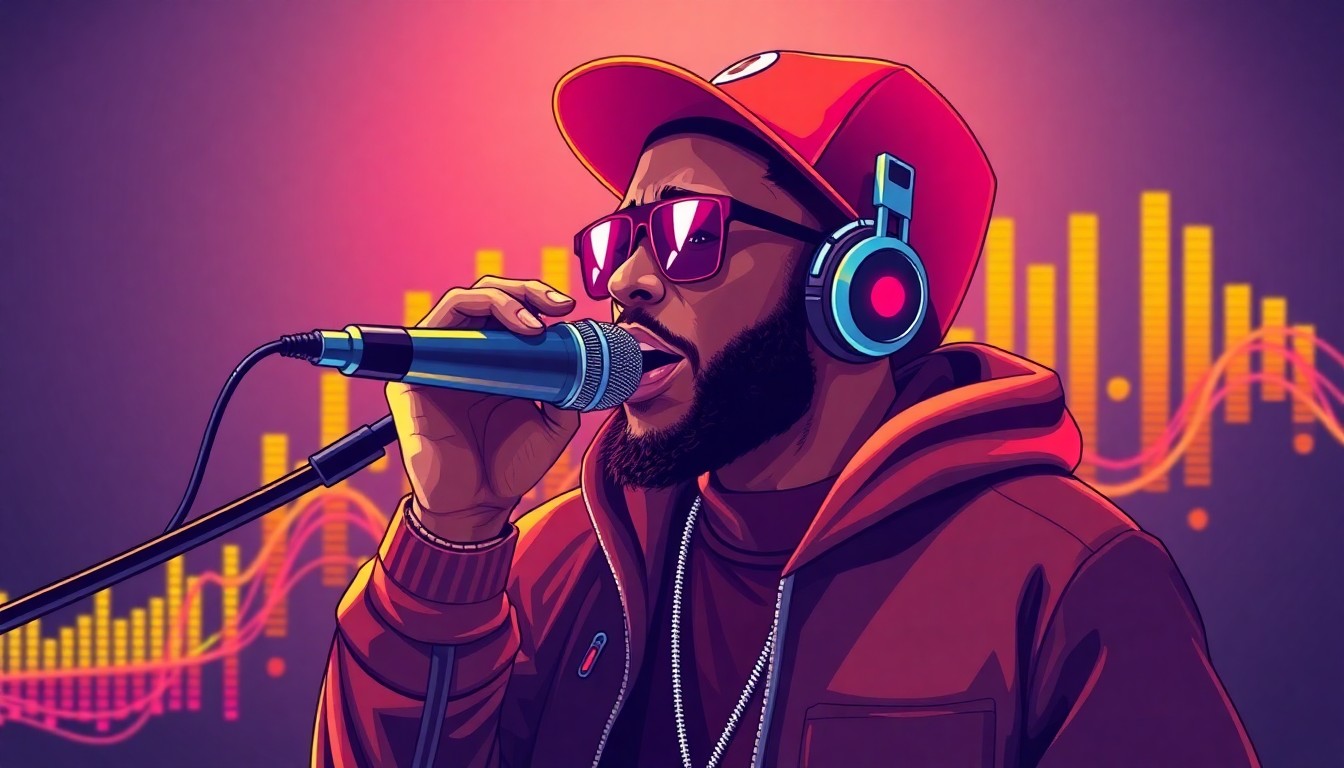
Making a hit rap track requires more than just fire beats. You need the right voice.
But booking studio time with established rappers costs thousands. Finding the perfect flow takes months. And most content creators can't access the voices that make tracks pop.
AI rap voice generation solves this. Modern text-to-speech technology recreates the distinctive cadence, tone, and delivery of legendary rappers. Content creators use these tools to generate demos, create viral TikToks, produce meme content, and test different vocal styles before committing to expensive studio sessions.
The technology captures everything that makes rap unique. Flow patterns, breath control, syllable emphasis, regional accents. But quality varies wildly between platforms, and bad AI rap sounds robotic and lifeless.
This guide covers AI rap voice generators, which rappers work best for AI synthesis, how to write scripts that sound authentic, platform comparisons for voice quality, use cases from YouTube to TikTok, and techniques to make generated rap vocals sound professional. TryAIVoices offers instant access to rapper voices with authentic flow and delivery.
Why rap voices work exceptionally well with AI technology
 Photo by Paracetamol de on Unsplash
Rap vocals have unique characteristics that make them perfect candidates for AI voice synthesis. The speaking patterns, rhythmic delivery, and consistent tone create ideal training conditions for machine learning models.
Rhythmic consistency creates predictable patterns. Most rappers develop signature flows they use across multiple tracks. This repetition helps AI models learn exact timing, emphasis placement, and breath patterns. When Snoop Dogg delivers his laid-back flow or when Eminem rapid-fires syllables, those patterns remain consistent enough for AI to replicate accurately.
Talking rap bridges speech and music. Unlike singing voices that require precise pitch control across wide ranges, rap voices stay closer to natural speech patterns. This makes synthesis easier. The AI doesn't need to hit perfect notes. It needs to match rhythm, emphasis, and tone. That's technically simpler than generating melodic vocals.
Regional accents add character without complexity. Southern trap, East Coast boom-bap, West Coast g-funk. These styles have distinct pronunciation patterns that AI models capture well. The Atlanta accent Migos popularized or the New York delivery that defined golden-age hip-hop. These regional characteristics remain consistent within each rapper's catalog.
Emotional range stays within manageable bounds. Most rap vocals exist in a narrow emotional range compared to genres like R&B or rock. Rappers might shift from aggressive to smooth, but they rarely belt notes or whisper intimately like singers do. This limited emotional variance makes AI synthesis more reliable.
Iconic catchphrases provide perfect training data. When rappers repeat signature ad-libs and phrases, "Yeah," "Uh," "Let's go," these become anchor points for AI models. The repetition across tracks helps models understand exactly how each rapper pronounces these signature sounds.
The production style helps mask imperfections. Rap vocals get heavily processed with compression, EQ, reverb, and layering. This production treatment naturally covers up subtle AI artifacts that might be obvious in raw vocal recordings. A slightly robotic tone disappears under 808s and hi-hats.
The technical foundation behind AI rapper voice synthesis
 Photo by John Matychuk on Unsplash
Modern AI rap voice generators use neural networks trained on hours of recorded rap vocals. These systems analyze not just words but the musical elements that make rap distinctive.
Phoneme analysis breaks down syllable structure. The AI doesn't just learn words. It learns how rappers pronounce individual sounds. The way Notorious B.I.G rounds his vowels differs from how Tupac attacks consonants. Models capture these micro-patterns.
Flow timing gets mapped to milliseconds. Good rap AI doesn't just generate words at random speeds. It learns the exact timing patterns each rapper uses. The half-time flow popular in trap. The double-time delivery East Coast rappers perfected. The swing rhythm West Coast artists favor. All these timing patterns get encoded.
Pitch variation within limited ranges. Rap vocals do have pitch movement, just less dramatic than singing. The AI learns how each rapper's voice rises and falls across phrases. The slight pitch increase at line endings. The drop into the chest voice for emphasis. These subtle movements separate amateur AI from professional results.
Breath control and pause patterns. Real rappers breathe. They pause. They add space between phrases. AI models trained on enough data learn where Drake takes breaths, how Kendrick Lamar uses silence for effect, when to let beats breathe between bars.
Voice texture and tonal quality. The rasp in DMX's voice. The nasality in Lil Wayne's delivery. The deep resonance The Notorious B.I.G commanded. AI synthesis captures these tonal characteristics through spectral analysis of training audio.
Contextual delivery adjustments. Advanced models learn that rappers adjust delivery based on beat tempo, track energy, and lyrical content. An aggressive battle rap verse sounds different from a melodic hook. The same rapper uses different vocal approaches for different contexts.
The best AI voice generators combine all these elements. They don't just make words sound like a rapper spoke them. They make entire verses flow naturally with authentic rhythm, tone, timing, and character. TryAIVoices uses advanced models trained specifically on rapper vocal patterns to deliver authentic hip-hop synthesis.
Best rapper voices for AI generation ranked by quality
Not all rapper voices generate equally well with AI technology. Some voices have characteristics that AI captures perfectly. Others present challenges that even advanced models struggle with.
Top tier for AI synthesis
Snoop Dogg ranks as possibly the best rapper voice for AI generation. His laid-back delivery, consistent flow patterns, and distinctive West Coast drawl create perfect conditions for synthesis. The relaxed pace gives models time to capture every nuance. His voice hasn't changed dramatically across decades of recordings, providing consistent training data.
Ice Cube delivers exceptional AI results. The authoritative baritone, aggressive emphasis, and West Coast pronunciation patterns remain remarkably consistent. His enunciation stays clear even when delivering hard-hitting lyrics. This clarity translates to clean AI synthesis.
50 Cent generates surprisingly well. The slight rasp adds character without creating synthesis problems. His New York accent stays consistent. The mid-range pitch avoids extreme highs or lows that challenge voice models. The result sounds authentic across different lyrical content.
Excellent synthesis quality
Dr. Dre produces strong AI results. The smooth delivery and measured pace work well for synthesis. As both rapper and producer, his vocal recordings have exceptional audio quality. Clean source material helps AI models learn accurate voice characteristics.
Travis Scott captures well despite heavy vocal processing in his tracks. The Auto-Tune and effects actually help AI synthesis by establishing consistent tonal patterns. The Houston accent and signature ad-libs ("It's lit!") come through clearly.
Drake generates convincingly. The Toronto accent, smooth delivery, and conversational tone provide good synthesis conditions. His massive catalog gives models extensive training data. The emotional range from singing to rapping presents some challenges, but the core speaking voice captures well.
Good but challenging
Eminem creates mixed results. The rapid-fire delivery and technical complexity present challenges. When he slows down or uses his natural speaking voice, synthesis works well. The speed-rap sections often need multiple generation attempts to sound natural.
Kendrick Lamar varies wildly. His standard delivery generates excellently. But Kendrick frequently shifts voices, accents, and characters within songs. AI struggles with this versatility. Sticking to his natural Compton accent and conversational flow produces the best results.
Lil Wayne presents unique challenges. The nasality and rasp create distinctive character, but the unusual vocal timbre pushes some models to their limits. Newer AI systems handle Wayne better than older ones. Results have improved significantly as technology advances.
Platform considerations matter
The rapper voice quality also depends on which platform you use. Some generators specialize in certain voices. TryAIVoices maintains models for all major rapper voices, with regular updates as training technology improves. The platform handles both straightforward deliveries and complex flows.
When choosing which rapper voice to generate, consider your content needs. Slow, clear deliveries work best for learning synthesis. Complex, fast flows require advanced models and careful script writing. Match the voice to your beat tempo and lyrical style for most authentic results.
How to write scripts that sound authentically hip-hop
Writing for AI rap generation requires different techniques than writing traditional lyrics. The goal is creating text that sounds natural when the AI delivers it in a rapper's voice.
Match syllable counts to beat structure. Most trap beats follow 16-bar verses with four beats per bar. Your lyrics should align with this structure. Four bars for setup, four for development, four for climax, four for conclusion. This pattern helps AI maintain consistent flow.
Use contractions liberally. Rappers say "I'm" not "I am." They say "gonna" not "going to." They drop letters and blend words. "Comin' at you," not "coming at you." "Tryna make it," not "trying to make it." These contractions match how rappers actually speak.
Build in breath marks naturally. Don't write endless run-on sentences. Add punctuation where a rapper would breathe. Commas create brief pauses. Periods create longer breaks. Question marks add upward inflection. The AI uses these cues to time delivery.
Add ad-libs and interjections. "Yeah," "Uh," "Let's go," "Check it." These rapper signatures should appear throughout your script. Place them at bar endings or before major phrases. They add authenticity and give the AI natural pause points.
Write with internal rhyme schemes. Hip-hop relies heavily on internal rhymes, not just end rhymes. "I'm making moves while they're faking grooves, taking what they choose but I'm breaking through." This pattern sounds more authentically rap when AI delivers it.
Keep vocabulary appropriate for the voice. If you're generating a Snoop Dogg voice, use West Coast slang. For Notorious B.I.G, East Coast references land better. Match the cultural context to the voice you're generating.
Avoid overly complex multisyllabic patterns initially. Advanced rappers like MF DOOM or Black Thought use intricate rhyme schemes that challenge AI. Start with simpler patterns. AABB or ABAB rhyme schemes. Build complexity once you understand how the AI handles basic flows.
Test different line lengths. Short punchy lines create staccato delivery. Longer lines build momentum. Mix both within the same verse for dynamic flow. "I'm the best. No contest. Watch me flex. What comes next?" Then follow with a longer line that builds energy.
Use repetition strategically. Rap choruses repeat phrases. Verses often callback to earlier lines. This repetition helps AI maintain consistency. If a phrase generated perfectly once, repeat it in the hook. The AI will likely nail it again.
Write for the specific tempo. Slow trap beats (60-70 BPM) need fewer syllables per bar. Up-tempo boom-bap (90-100 BPM) accommodates more words. Match your syllable density to your beat's speed. Too many syllables at slow tempos sound rushed. Too few at fast tempos sound empty.
Include personality through references. Mention cars, jewelry, success, struggle, whatever fits your content. These concrete nouns and specific references make AI delivery sound more natural than abstract concepts.
Read your lyrics out loud before generating. If you can't rap them naturally yourself, the AI will struggle too. Find where you naturally breathe, emphasize, or slow down. Add punctuation and spacing that matches your natural delivery.
TryAIVoices processes scripts with smart formatting that optimizes delivery. But writing good source material makes the difference between amateur-sounding AI and professional results. Check out our voice generation tips for platform-specific optimization techniques.
Platform comparison for rap voice generation quality
 Photo by Wicked Monday on Unsplash
Dozens of AI voice platforms claim to generate rapper voices. Most fail spectacularly. A few deliver professional results.
Premium platforms with rapper voice libraries
TryAIVoices specializes in entertainment voices including extensive rapper catalogs. The platform offers voices from Snoop Dogg, Eminem, Drake, 50 Cent, and dozens more. Voice quality ranks among the best available. Generation speed averages 3-5 seconds per 100 words. The interface lets you adjust emotion, emphasis, and pacing.
The subscription model provides unlimited generations across all voices. This works well for content creators who need multiple takes. The voice library updates regularly with new rappers. Audio outputs as 44.1kHz WAV files suitable for professional production.
ElevenLabs offers voice cloning technology that can recreate rapper voices from samples. Quality depends heavily on source material quality. Good studio recordings produce excellent results. Lower-quality YouTube rips create artifacts. The instant voice cloning requires just 30 seconds of audio but works better with several minutes.
Their professional voice cloning service (paid) delivers higher quality by having rappers record specific phrases. This controlled recording environment produces more consistent results. Monthly subscription starts higher than competitors but includes extensive customization options.
Mid-range options with mixed results
Uberduck gained early popularity for AI rapper voices. The platform offers recognizable names and straightforward generation. Voice quality varies significantly between different rappers. Some sound excellent. Others sound noticeably robotic. The free tier limits generation length and includes watermarks.
Community voices on Uberduck range from impressive to unusable. Users upload their own trained models. Quality control is minimal. If you find a good community voice, bookmark it. You might not find it again in the sea of low-quality attempts.
FakeYou provides another large rapper voice library. The interface feels dated compared to newer platforms. Generation times run longer than competitors. But the voice selection includes deep cuts and lesser-known rappers. Quality sits firmly in the "serviceable" category. Good enough for memes and social content. Not quite professional production standard.
Free alternatives with significant limitations
Voicemod includes some hip-hop style voices in their free voice changer. These aren't true AI synthesis. They're real-time voice effects that modify your voice to sound "rapper-like." Results sound more like voice filters than actual rapper voices. Useful for live content or gaming but not music production.
Various Discord bots offer free rapper voice generation. These typically use outdated models or scrape voices from other platforms. Quality is poor. Generation often fails. Rate limits are strict. Fine for jokes with friends. Not viable for content creation.
Browser-based free tools usually offer severely limited rapper voice options. "Generic Hip-Hop Voice" doesn't capture anyone specific. The synthesis often sounds like robot text-to-speech with slight accent modification. Avoid these for anything beyond testing how AI voice generation works.
What separates good platforms from bad
Training data quality matters most. Platforms that train models on studio-quality vocal recordings produce better results than those scraping compressed audio from YouTube. Clean source audio allows models to learn actual voice characteristics instead of compression artifacts.
Model architecture and updates. AI voice technology improves constantly. Platforms actively updating their models deliver better results. Check when the platform last updated their rapper voice models. Older models trained years ago sound worse than recent versions.
Emotion and prosody control. The best platforms let you adjust delivery style. Aggressive, smooth, excited, laid-back. This control helps match the voice to your beat's energy. Platforms without these controls generate flat, monotone delivery.
Output audio quality. Professional platforms export 44.1kHz or higher sample rates. Budget options might max out at 22kHz or even 16kHz. Lower sample rates sound muffled and amateurish. For music production, you need high-quality audio outputs.
Customer support and updates. When voice generation goes wrong (and it will), responsive support makes the difference. Platforms that actively maintain rapper voice quality fix issues as users report them. Dead platforms with no support leave you stuck with broken voices.
For professional rap content creation, TryAIVoices balances quality, speed, voice selection, and pricing. The platform works for both quick social content and serious music production. Browse the full musician voice library to hear quality comparisons yourself.
Creative use cases for AI-generated rap vocals
AI rap voices open creative possibilities beyond obvious applications. Content creators use generated vocals in ways that surprise even platform developers.
Music production and beat demos
Producers generate demo vocals to preview how beats sound with vocals before booking studio time. This saves thousands in studio costs. Create rough vocal demos, test different flows, experiment with hooks. If the demo sounds weak, revise the beat before investing in real rappers.
Beat selling producers use AI rap demos to make beats more marketable. Beats with vocal references sell better than instrumentals alone. Potential buyers hear exactly how vocals sit in the mix. The AI demo doesn't replace the final performance. It previews the potential.
Sample creation for original productions. Generate short rap phrases, process them heavily with effects, and use them as vocal samples in electronic music. Chop, pitch-shift, reverse, and manipulate AI rap vocals into unrecognizable elements. The AI provides source material for creative sampling.
Scratch vocal reference tracks. Singers learning rap features use AI to hear proper flow and timing. The AI vocal becomes a guide track showing exactly where syllables land. This helps non-rappers understand hip-hop phrasing when featuring on tracks.
Content creation for social platforms
TikTok creators generate rapper voices for viral trends. When audio trends blow up using specific rapper voices, AI generation lets anyone participate. Create your own version of trending sounds without copyright issues from using original recordings.
YouTube content ranging from educational hip-hop analysis to comedy skits. Generate examples of different flow patterns for teaching videos. Create parody content. Produce video essays about rap history with AI-generated examples. The versatility supports countless content formats.
Instagram Reels and YouTube Shorts benefit from quick rap audio hooks. Generate 15-30 second rap clips as video backgrounds. These short-form platforms favor rapid content production. AI generation provides unlimited audio without music licensing headaches.
Meme creation dominates AI rap usage. Generate famous rappers saying absurd lyrics. Create conversations between multiple rapper voices. Produce comedic diss tracks. The entertainment value drives massive engagement. Meme content is how many creators discover AI voice generation.
Podcasts and audio content
Podcast intros featuring AI rapper voices create memorable branding. A quick 10-second intro with an AI Snoop Dogg voice welcoming listeners. Transitions between segments using different rapper voices. These audio signatures make podcasts more memorable.
Audio storytelling where rapper voices narrate hip-hop history. Imagine a podcast series about rap beefs where AI generates both sides of the conflict. Or a hip-hop fiction podcast with AI voices playing characters. The format combines audiobook and radio drama.
Educational content about rap music theory. Generate examples demonstrating different flow patterns, rhyme schemes, and regional styles. Instead of just explaining techniques, play AI examples showing exact differences between styles.
Interview segments where hosts "interview" AI rapper voices. Obviously comedic and clearly AI-generated, but entertaining. Ask AI Tupac about modern hip-hop. The educational value lies in discussing how the artist actually thought based on real interviews.
Gaming and streaming content
Streamers use AI rap voices for donations, subscriptions, and alerts. When someone donates, an AI Eminem voice thanks them. These personalized audio alerts create more engaging stream experiences than generic notification sounds.
Gaming montage voiceovers. Highlight reels with AI rap vocals narrating sick plays. "Watch him take the shot, boom, headshot, that's how you play it hot." The flow matches gameplay momentum. Gaming content thrives on energy. Rap delivery provides it.
Virtual streamer (VTuber) rap battles. Characters voiced entirely by AI engage in freestyle battles. The novelty draws viewers. The entertainment value keeps them watching. Some streamers build entire personas around AI-generated rapper voices.
Custom game mods replacing character voices with rapper voices. Imagine Grand Theft Auto but with AI rapper dialogue. The modding community embraces AI voice generation for creating new game content without voice actor budgets.
Marketing and advertising
Brand content using rapper voices for campaigns. A skateboard company generates West Coast rapper voices for product launches. Energy drink commercials with aggressive flows. The cultural cache of hip-hop voices adds credibility to youth-focused brands.
Internal corporate content surprisingly adopts rap voices. Training videos with AI rap narration capture attention better than monotone corporate voices. Some companies generate rap versions of mission statements. The novelty helps employees actually pay attention.
Product demo videos narrated by rapper voices. Tech companies use urban voices to make products feel current. Instead of corporate narrator voice, an AI Drake voice walks through app features. The tone shift makes boring demos entertaining.
Political campaign content occasionally uses rap voices for reaching younger demographics. Generate campaign message raps. Create response videos to opponents. The format makes political content shareable. Controversy around authenticity becomes free publicity.
The diversity of use cases continues expanding as more creators discover AI rap voice generation. What started as novelty technology now supports serious production workflows across multiple industries. TryAIVoices serves everyone from bedroom producers to professional content studios.
Post-processing techniques to enhance AI rap vocals
 Photo by Yannis Papanastasopoulos on Unsplash
Raw AI-generated rap vocals rarely sound polished enough for professional use. Processing transforms decent AI output into convincing rap vocals.
Essential mixing techniques
EQ to remove artifacts and enhance presence. Apply high-pass filter around 80-100Hz to remove rumble and low-end mud. AI synthesis sometimes generates low-frequency noise. Cut it immediately. Boost presence around 3-5kHz to make vocals sit forward in the mix. This frequency range contains consonants and clarity.
De-essing controls harsh sibilance. AI rap voices often generate overly bright "s" and "t" sounds. Set a de-esser to catch frequencies around 6-8kHz. Don't overdo it. Too much de-essing makes the voice sound lispy. Just tame the harshest peaks.
Compression creates consistent energy. Use moderate compression (4:1 ratio, medium attack, fast release) to even out volume differences. AI sometimes generates uneven emphasis between words. Compression smooths these inconsistencies. Follow with light limiting to catch any remaining peaks.
Saturation adds harmonics and character. Subtle saturation through tape or tube emulation plugins makes AI voices sound less digital. Don't push it hard. Just a touch adds warmth. Too much saturation creates distortion that sounds worse than the clean AI output.
Creative effects for hip-hop production
Reverb and delay create space. Rap vocals typically use less reverb than other genres, but some ambience helps AI voices blend with beats. Short room reverbs work best. Avoid long cathedral settings. Add slap delay (100-150ms) for doubling effects on emphasized words.
Doubling and layering techniques. Generate the same lyrics twice with slight variations. Pan one left, one right. This stereo widening makes vocals sound fuller. Or layer the same take with pitch shifting. Drop one layer down 3-5 cents for thickness.
Auto-Tune for modern rap aesthetics. Many contemporary rap styles use Auto-Tune as an effect, not correction. Apply Auto-Tune to AI Travis Scott or Future voices to match their signature sounds. Set retune speed fast for robotic effect, slower for natural correction.
Distortion for aggressive styles. Battle rap, hardcore hip-hop, and aggressive trap benefit from slight vocal distortion. Use guitar amp simulators or distortion plugins at low mix percentages. This adds edge without making vocals sound broken.
Advanced processing chains
Parallel processing for depth. Run a heavily compressed, heavily EQ'd version of the vocal parallel to the clean signal. Blend them together. This creates thickness while maintaining clarity. The clean signal provides intelligibility. The processed parallel adds power and presence.
Dynamic EQ for problem-frequency control. AI voices sometimes have resonant frequencies that jump out on certain words. Dynamic EQ only cuts those frequencies when they spike. More transparent than static EQ cuts that affect the entire vocal.
Multiband compression for control. Split the vocal into frequency bands and compress each differently. Control low mids without affecting highs. Tame high frequencies without dulling the fundamental. This surgical approach works better on AI vocals than single-band compression.
Melodyne or Auto-Tune for timing correction. Even good AI rap generation occasionally generates slightly off-time syllables. Use pitch correction software in graph mode to shift timing. Move problem words earlier or later by a few milliseconds. These micro-adjustments dramatically improve flow.
Reference mixing strategies
Compare processed AI vocals to real rap vocals. Load a professionally mixed rap song into your DAW. A/B between your processed AI vocal and the reference track. Match the tonal balance, presence, and energy. This reference comparison prevents over-processing.
Use volume matching when comparing. If the reference sounds better just because it's louder, you'll make wrong decisions. Match perceived loudness between your vocal and the reference. Then assess actual quality differences.
Test on multiple playback systems. AI vocals that sound great on studio monitors might fall apart on phone speakers. Check your mix on laptop speakers, car audio, and earbuds. Rap music gets consumed primarily on mobile devices and vehicles. Mix for those listening environments.
Take breaks during processing. Ear fatigue causes bad mixing decisions. After an hour of processing, everything sounds off. Walk away. Come back with fresh ears. You'll immediately hear what needs adjustment.
Platform-specific considerations
Different AI voice platforms generate audio with different characteristics. TryAIVoices outputs clean audio that requires minimal artifact removal. Budget platforms might need aggressive noise reduction and spectral repair before standard mixing.
Sample rate matters. Convert AI audio to your project's sample rate immediately. Mismatched sample rates cause subtle timing issues that destroy groove. Standard rap production uses 44.1kHz. Match everything to this standard.
Export settings for platform delivery. TikTok compresses audio aggressively. YouTube preserves more quality. Instagram sits between them. Adjust your final mastering based on delivery platform. More compression and limiting for platforms with heavy processing.
The processing journey from raw AI output to polished rap vocal separates amateur content from professional releases. Invest time learning these techniques. The difference between "this sounds AI-generated" and "this sounds like a real vocal" often comes down to processing skill, not AI quality.
Read our complete voice generation guide for detailed processing tutorials specific to different rapper voices and production styles.
Legal and ethical considerations for AI rap content
Using AI-generated rapper voices creates legal gray areas. Understanding these issues prevents problems down the line.
Copyright and personality rights
Voice rights vary by jurisdiction. Some states protect vocal likeness as part of personality rights. Others don't. California's laws strongly protect celebrity voices. Tennessee passed the ELVIS Act specifically protecting voice likeness. New York has similar protections under right of publicity laws.
Recording labels might claim ownership. If a rapper's contract assigned voice rights to their label, the label could argue AI synthesis infringes those rights. This remains untested in courts for most cases. Major labels haven't broadly pursued AI voice generators yet, but that could change.
Publicity rights extend post-mortem in many states. Generating voices of deceased rappers like Tupac or The Notorious B.I.G potentially violates estate rights. Estates actively protect these rights. The Tupac hologram at Coachella required extensive licensing. AI generation does not.
Transformative use defense applies sometimes. If your use clearly constitutes parody, commentary, or criticism, First Amendment protections might apply. But "might" doesn't equal "definitely will." Courts decide case-by-case. Parody protections require the work actually criticize or comment on the original.
Commercial use versus personal use
Non-commercial use sits safer legally. Making AI rap memes for friends likely won't trigger legal action. The harm to the rapper's commercial interests is minimal. Estates and labels focus enforcement on commercial exploitation.
Commercial use increases risk substantially. Selling songs featuring AI rapper voices. Using AI rapper voices in advertisements. Monetizing YouTube videos with AI rap content. These commercial applications more clearly infringe personality rights.
Platform monetization creates ambiguity. If you post AI rap content to TikTok or YouTube and earn ad revenue, is that commercial use? Probably yes, though courts haven't ruled definitively. The safer approach assumes monetization equals commercial use.
Licensing would provide legal safety but usually isn't available. Most living rappers haven't authorized AI voice licensing. Some might in the future. Until then, commercial use operates in legal gray area. Risk-averse creators avoid commercial use entirely.
Ethical considerations beyond legality
Artist consent and respect. Legal or not, generating someone's voice without permission raises ethical questions. Some artists have explicitly opposed AI voice generation. Respecting those wishes even when legally permissible shows integrity.
Impact on artist livelihood. If AI voices replace opportunities for real rappers, the technology directly harms artists' ability to earn income. Consider whether your use takes work from human artists. Using AI for demos differs ethically from replacing artists entirely.
Cultural appropriation concerns. White content creators generating Black rapper voices to create "authentic" hip-hop raises legitimate concerns. Hip-hop culture belongs to the Black community that created it. Using AI to adopt Black voices for profit without understanding or respecting that culture perpetuates problems.
Disclosure and transparency. Should you tell audiences the rap vocal is AI-generated? Pretending AI content is authentic recordings constitutes deception. Many creators add disclaimers. Others let context make generation obvious. The ethical path leans toward disclosure.
Practical risk management strategies
Use voices for clearly transformative content. Parody, commentary, education, and criticism receive stronger legal protection than entertainment. If your content comments on the rapper, hip-hop culture, or music industry, protections strengthen.
Avoid direct impersonation. Don't represent AI content as actual recordings by the artist. Don't try to fool listeners. Keep generation obvious or explicitly disclosed. Courts view intentional impersonation less favorably than acknowledged synthesis.
Focus on deceased artists whose estates haven't actively enforced rights. Some estates aggressively protect legacy. Others don't. Research which estates actively pursue voice rights claims. Avoid artists whose estates have history of aggressive protection.
Stick to platforms with safe harbor protections. Post to YouTube, TikTok, Instagram rather than selling directly. Platform DMCA processes provide some protection. If an estate objects, platforms typically remove content without legal action against creators.
Consider using voices that are sound-alikes rather than exact impersonations. Generic "West Coast rapper" or "Southern trap voice" provides similar creative value without targeting specific living artists. Less authentic but significantly safer legally.
Consult legal counsel for commercial projects. If money is involved beyond minor platform ad revenue, talk to an entertainment lawyer. Legal consultation costs less than defending lawsuits. Lawyers can assess specific use-case risk.
The evolving legal landscape
New legislation is coming. Multiple states are considering or passing laws specifically addressing AI voice generation. Federal legislation has been proposed. The legal framework around AI voices will look different in a few years.
Industry may develop licensing frameworks. As AI voice generation becomes normalized, management and estates might offer official licensing. This would let creators use voices legally in exchange for fees. Current lack of licensing creates legal ambiguity.
Platform policies may tighten. TikTok, YouTube, and Instagram could implement stricter policies around AI content. Required labeling, restricted monetization, or complete bans. Platform policy changes could restrict use even if legally permissible.
Courts will eventually rule on key questions. Does AI voice synthesis constitute impersonation? Does transformative use defense apply? How do existing personality rights laws apply to AI technology? These legal questions await court decisions.
The safest approach treats AI rap voices as creative tools for non-commercial experimentation and parody. The riskiest approach involves commercial exploitation pretending to be authentic recordings. Between these extremes lies gray area where creators must assess their own risk tolerance.
TryAIVoices provides technology neutrally. Users bear responsibility for how they use generated audio. Review our terms of service for platform-specific restrictions and requirements.
Technical optimization for different beat styles
AI rap generation needs adjustment based on the track's production style. Different subgenres require different technical approaches.
Trap production considerations
Slow tempo demands precise timing. Trap beats typically run 60-75 BPM. This slow pace exposes timing issues AI might generate. Even slight rhythm inconsistencies stand out. Write scripts with clear bar structure. Use shorter sentences that complete within 4-bar phrases.
The sparse instrumentation in trap leaves space for vocal artifacts to show. Trap productions often feature just 808s, hi-hats, and snares. This minimal instrumentation means vocals carry more weight. Processing becomes critical. Compression and saturation fill the sonic space.
Triplet flows dominate modern trap. Migos popularized triplet-based flows. Your script should accommodate these patterns. "I'm gettin' that money, I'm runnin', I'm stunnin', they lookin', they wonderin', I'm comin'" demonstrates triplet flow structure. Most AI handles this well if you write it rhythmically.
Heavy Auto-Tune and effects mask AI imperfections. Trap aesthetics embrace heavily processed vocals. Layer AI output with effects. Autotune at fast retune speed. Add delay. Use stereo widening. These effects make AI vocals sound more authentic to trap style rather than less.
Boom-bap and golden age hip-hop
Faster tempos (85-95 BPM) allow more complex flows. Classic boom-bap accommodates technical lyricism. Multi-syllable rhyme schemes, internal rhymes, and wordplay. AI handles moderate tempo complexity well if scripts are clearly structured.
Acoustic drum sounds create rhythmic pockets. The snare on 2 and 4 provides clear timing reference. Write lyrics that emphasize these snare hits. Stressed syllables should land where snare hits. This alignment makes AI flow sound intentional rather than random.
Less vocal processing means AI quality matters more. Golden age hip-hop typically uses minimal effects. Just compression, EQ, and maybe slight reverb. The raw vocal quality determines success. Choose platform and rapper voice carefully. TryAIVoices delivers the clean synthesis boom-bap requires.
Sample-based production provides harmonic context. Boom-bap tracks layer soul and jazz samples. These harmonic beds support vocals naturally. Less need for creative processing. The production style helps vocals sit in the mix organically.
West Coast g-funk style
Melodic elements require pitch consideration. G-funk features sung choruses and melodic rap. AI that handles rapping might struggle with singing. Keep verses focused on spoken delivery. Use pitch correction aggressively on any melodic sections.
The funk bass lines and synthesizers create groove. Write lyrics that bounce with this groove. Emphasize syllables on kick drum hits. Let phrases breathe between bass notes. The interplay between vocals and bass defines West Coast flow.
Laid-back delivery matches production vibe. West Coast style favors relaxed, conversational delivery over aggressive or technical approaches. This works perfectly for AI rap generation. The slower, clearer enunciation gives AI time to synthesize accurately.
Use voices authentic to West Coast sound. Snoop Dogg, Ice Cube, Dr. Dre. These voices inherently carry West Coast character. Their regional accents and delivery patterns match g-funk production automatically.
Drill and aggressive styles
Hard-hitting production requires aggressive vocal processing. Drill beats feature distorted 808s, rolling hi-hats, and dark melodies. Vocals need matching aggression. Use saturation, distortion, and compression to make AI vocals cut through dense production.
Fast hi-hat rolls create rhythmic complexity. Drill beats layer intricate percussion. AI rap timing must lock precisely to this grid. Write scripts with syllabic density matching hi-hat patterns. The vocal rhythm should complement percussion complexity.
London drill versus Chicago drill have different requirements. London drill often features darker, more menacing vocals. Chicago drill emphasizes energy and aggression. Adjust processing accordingly. More reverb for London's atmospheric approach. More compression for Chicago's in-your-face style.
Pitch-shifted 808s affect vocal pitch selection. When 808s dominate the low end, vocal fundamental frequencies matter. EQ vocals to sit above bass frequencies. Don't fight the 808s. Find frequency space above them.
Melodic rap and singing-rapping
This style challenges AI most. Melodic rap blends singing and rapping. Drake, Post Malone, Juice WRLD pioneered this hybrid. AI trained primarily on rapping struggles with sustained notes and pitch accuracy. Use AI for rap sections. Consider alternatives for sung sections.
Auto-Tune becomes essential rather than optional. Even imperfect AI pitch sounds acceptable under Auto-Tune. Set retune speed based on style. Faster for obviously processed sound. Slower for natural pitch correction. The processing carries melodic sections.
Emotional dynamics exceed most AI capabilities. Melodic rap often shifts from aggressive rap to vulnerable singing. AI can't replicate this emotional range convincingly. Limit generated content to consistent emotional ranges. Don't ask AI to shift from hard rap to soft singing within one verse.
Chord progressions provide structure. Unlike traditional rap with minimal harmony, melodic rap follows chord changes. Ensure your script's melodic contour follows the track's harmony. Even AI-generated content sounds better when melodically aligned with production.
Beat-matching strategies for any style
Always work with the beat loaded. Generate rap vocals while listening to the instrumental. This helps you write appropriate scripts and catch timing issues immediately. Generating vocals without beat reference leads to alignment problems.
Use reference timing from the beat. If the beat has a vocal sample or existing vocals, study their rhythmic placement. Mirror those timing patterns in your script. This ensures AI-generated content sits correctly in production.
Adjust generation speed if platform allows. Some AI voice tools let you control delivery speed. Slower for trap, faster for boom-bap. Match the speed to beat tempo and style. This simple adjustment dramatically improves how well vocals fit production.
Test multiple generation attempts. AI synthesis includes randomness. Generate the same script 3-5 times. Pick the best take. Sometimes the third generation nails timing the first two missed. Multiple attempts cost nothing but seconds.
The technical relationship between AI rap generation and beat production determines final quality. Write for the specific beat style. Process appropriately for the genre. Match cultural expectations for how that subgenre should sound. Check the gaming voice library and cartoon voices for character voices that also work in hip-hop contexts.
Platform features that separate amateur from professional tools
Not all AI voice platforms offer features rap production requires. Knowing which capabilities matter helps choose the right tool for serious content creation.
Essential voice control parameters
Emotion and energy adjustment. Professional platforms let you control vocal intensity. Aggressive, smooth, excited, tired. These emotional adjustments change delivery drastically. Amateur tools generate only one emotional tone. Professional tools offer range.
Speed and pacing controls determine flow quality. The ability to slow down or speed up delivery transforms results. Trap requires slower delivery than boom-bap. Quality platforms provide granular speed control. Basic platforms lock you into one speed.
Pitch shifting for vocal character. Sometimes you want the same rapper voice but slightly different character. Pitch controls let you adjust vocal register without changing the voice entirely. Drop pitch for deeper, more authoritative delivery. Raise pitch for energetic, youthful sound.
Emphasis and stress markers show where to add vocal weight. Mark specific words for emphasis. The AI hits those words harder, creating dynamic delivery instead of monotone reading. This feature separates naturally flowing AI from robotic speech.
Output quality specifications
Sample rate determines audio fidelity. Professional music production requires 44.1kHz minimum. Serious producers prefer 48kHz. Budget AI platforms output 22kHz or 16kHz. This lower quality sounds muffled and amateur. Always check output specifications before committing to a platform.
Bit depth affects dynamic range. 16-bit is acceptable. 24-bit is professional. 8-bit sounds terrible. Most platforms don't specify bit depth. Test outputs by importing to your DAW. Check the audio file properties. Inadequate bit depth shows as harsh digital artifacts.
File format flexibility. WAV and FLAC preserve full audio quality. MP3 and AAC introduce compression artifacts. For music production, insist on lossless formats. Compressed formats work for social media content but not serious music production.
Background noise and artifacts. Quality platforms generate clean audio. Budget tools often introduce hiss, digital noise, or robotic artifacts. Listen carefully to silence between words. If you hear noise in the quiet sections, the platform has quality issues.
Generation speed and reliability
Processing time impacts workflow. Platforms that generate vocals in 5-10 seconds enable rapid iteration. Tools taking 2-3 minutes per generation kill creative flow. When you're testing different scripts and adjustments, speed matters enormously.
Consistency between generations. Hit generate five times with identical input. Do you get five usable outputs, or do some fail? Reliable platforms deliver consistent quality. Unreliable ones occasionally output garbage randomly.
Queue systems versus instant generation. During peak usage, some platforms queue requests. You might wait minutes or hours. Professional platforms prioritize paid users with instant generation. The difference between queued and instant generation determines whether the platform works for deadline-driven content.
Uptime and service reliability. Platforms that frequently go offline or have service interruptions harm professional workflows. Check platform status pages and user reviews for reliability track records. Unreliable service causes missed deadlines.
Library and voice quality
Voice authenticity and training quality. Compare AI output directly to real recordings. Does the AI genuinely capture the rapper's voice, or just sound vaguely similar? Amateur platforms offer "kinda sounds like" versions. Professional platforms deliver convincing synthesis.
Regular voice model updates improve quality over time. AI voice technology advances rapidly. Platforms actively retraining models on better architecture deliver improving results. Stagnant platforms using old models fall behind.
Variety within single voice. Can you generate the same rapper with different emotional deliveries? Multiple takes with natural variation? Or does every generation sound identical? Natural variation between takes indicates sophisticated modeling.
Phoneme accuracy matters more than most realize. Listen carefully to how AI pronounces challenging consonant clusters and vowel combinations. "Strength" and "months" reveal phoneme handling quality. Sloppy phoneme synthesis exposes limitations.
User interface and workflow
Script editor features. Can you add breaks, emphasis markers, and pronunciation guides? Professional platforms offer detailed script markup. Basic platforms accept only plain text. The difference affects how much control you have over output.
Preset management and favorites. Can you save successful generation settings? Bookmark favorite voices? Create presets for different styles? Professional tools remember your preferences. Amateur tools make you configure everything repeatedly.
Project organization. For content creators generating dozens or hundreds of audio clips, organization matters. Platforms with project folders, tagging, and search help manage large libraries. Basic platforms dump everything in one place.
History and version tracking. Can you access previously generated audio? Compare versions? Professional platforms maintain complete generation history. Budget platforms delete old generations after days or weeks.
Integration and export capabilities
API access for automation. Serious production workflows benefit from API integration. Generate voices programmatically. Integrate with other creative tools. Professional platforms offer API access. Consumer platforms don't.
Direct DAW integration would be ideal but remains rare. Currently, most platforms require downloading audio files and importing to DAWs manually. As technology matures, expect direct integration with Pro Tools, Logic, and Ableton.
Batch processing capabilities. Need to generate 50 different rap ad-libs quickly? Batch processing generates multiple clips automatically. Professional feature that saves hours for content creators managing large projects.
Cloud storage and collaboration. Some platforms host all generated audio in cloud storage. Others require local downloads. For team projects, cloud hosting enables collaboration. Multiple team members access the same voice library.
TryAIVoices prioritizes features professional content creators actually need. High sample rate outputs, instant generation, emotion controls, and extensive rapper voice library. Compare platform features yourself at our pricing page to understand what separates professional from amateur tools.
Script templates for different rap content types
Starting with proven script structures accelerates content creation. These templates provide frameworks you can adapt to any rapper voice.
Social media hooks and viral clips
15-second TikTok formula:
[Hook line that grabs attention]
[Punchline or twist]
[Call to action or memorable ending]
Example using 50 Cent voice:
Yo, they said I couldn't make it
Now I'm taking what I'm owed
Drop a follow if you know the code
The short format demands immediate impact. No buildup. Start with energy. End with call to action. Perfect for algorithm-driven platforms favoring complete watches.
30-second Instagram Reel structure:
[Opening statement - 5 seconds]
[Development with internal rhymes - 15 seconds]
[Payoff and engagement hook - 10 seconds]
Example using Drake voice:
Started from the bottom like they already know
Building up my empire, watch the progress grow
Take it slow, let it flow, reap what I sow
Comment below how you're making your dough
Reels allow more storytelling than TikToks. Use the extra time building narrative before the payoff. Always end with engagement prompt.
Beat demos and producer tags
4-bar producer intro:
[Producer name announcement]
[Signature phrase]
[Beat drops]
Example using DJ Khaled style:
Yeah! [Producer name] on the beat
Another one! This one's heat
We the best music
Listen
Producer tags establish brand identity. Keep them short. Make them memorable. Use phrases people can repeat. The AI voice adds professional polish to producer branding.
16-bar demo verse template:
[4 bars setup - introduce theme]
[4 bars development - build momentum]
[4 bars complexity - technical section]
[4 bars conclusion - memorable ending]
Example structure:
I'm building something different from the ground up
Every beat I touch, that sound tough
Producers know I bring that real stuff
Competition running when I call their bluff

[Continue pattern through 16 bars]
Demo verses should showcase beat's potential. Match energy to production style. Demonstrate where vocals sit in the mix. Help buyers envision final product.
Podcast and content intros
10-second podcast intro:
[Show name]
[Value proposition]
[Host introduction if needed]
Example using Snoop Dogg voice:
Welcome to The Creative Hustle
Where we talk that real talk about making moves
Your host [Name] bout to drop knowledge
Short intros work for regular listeners who hear them repeatedly. Long intros cause skip behavior. AI voices make short intros memorable without expensive voice actor sessions.
30-second content intro template:
[Attention grab - 8 seconds]
[Topic introduction - 12 seconds]
[Value proposition - 10 seconds]
Example:
Yo what's good, it's time to learn
How to make your content earn
Today we breaking down the strategy
That took me from broke to salary
Watch close, take notes, this is real
I'm bout to show you how to seal the deal
Longer intros work for YouTube or podcast episodes where listeners commit to extended content. Build energy. Create anticipation. Promise value.
Ad-libs and hype phrases
Classic rap ad-libs:
Yeah
Uh
Let's go
Check it
Listen
What
Okay
Skrrt
Generate these individually. Layer them over beats. Place them at bar endings and between phrases. Ad-libs add energy and fill space. They're hip-hop's punctuation marks.
Callout responses:
[Question setup]
[Response ad-lib]
Examples:
"Who's the best?" - "Me!"
"What we doing?" - "Winning!"
"Where we going?" - "Top!"
"When we stopping?" - "Never!"
These call-and-response patterns work great for hype moments in content. Generate the response parts with AI. Layer them over your own questions or beat sections.
Battle rap and diss formats
16-bar battle verse structure:
[4 bars establishing dominance]
[4 bars attack opponent's weaknesses]
[4 bars demonstrate your strengths]
[4 bars finishing blow]
Example approach:
I'm the king here, you're just a peasant at best
While you're taking naps, I'm passing every test
You talk a big game but you never manifest
I'm putting you to rest, this is your final rest

[Continue with personal attacks and comparisons]
[Build to devastating conclusion]
Battle rap requires aggressive delivery. Choose harder-edged rapper voices. Eminem, Ice Cube, or DMX work best. Write specific disses. Vague insults lack impact.
Storytelling and narrative rap
64-bar story structure:
[8 bars - setup/scene setting]
[16 bars - rising action/complications]
[16 bars - climax/conflict peak]
[16 bars - falling action/consequences]
[8 bars - resolution/lesson learned]
This longer format requires maintaining narrative thread. Keep chronology clear. Use descriptive language. Create vivid scenes. Story rap showcases AI's ability to maintain consistent character voice across extended content.
Cinematic intro template:
Picture this: [scene description]
[Character introduction]
[Conflict statement]
[Stakes establishment]
Example:
Picture this: summer '95, streets were hot
Young kid with dreams, nothing in his pocket
Knew he had to make it, wouldn't stop it
This is how the story started, now watch it
Storytelling requires more detail than other formats. Paint pictures with words. Make listeners visualize scenes. AI handles descriptive language well when scripts provide clear narrative structure.
Motivational and inspirational content
Motivational speech to rap format:
[Current struggle acknowledgment]
[Vision of success]
[Action steps required]
[Inspirational conclusion]
Example:
I know you're tired, I know it's hard
Fighting every day just to get your card
But imagine standing where you want to be
That vision is your destiny

Now take that first step, don't hesitate
Every single day, you create your fate
They'll try to hate, but you elevate
Success is coming, it's never late
Motivational content performs well across platforms. Generate with authoritative, confident rapper voices. The hip-hop format makes motivation feel accessible rather than preachy.
These templates provide starting points. Adapt them to your voice, style, and content needs. The structure matters more than specific words. Strong structure makes AI generation more reliable and results more professional.
Browse rapper voices in our musician library to find the right voice for each template. Different rappers suit different content types. Match voice to message for maximum impact.
Common problems and troubleshooting solutions
Even best AI platforms occasionally generate problematic rap vocals. Knowing how to troubleshoot saves hours of frustration.
Timing and rhythm issues
Problem: AI rushes or drags behind the beat. The generated vocal doesn't lock to tempo. Syllables land off-beat. Flow feels rushed or sluggish.
Solutions: First, simplify your script. Remove complex multi-syllable words. Reduce syllable density per bar. AI handles simpler rhythms more consistently. Second, add punctuation to force pauses. Commas create brief breaks. Periods create longer breaks. Guide the AI's pacing through punctuation.
Third option: time-stretch the generated audio. Import to DAW. Use time-stretching to align phrases with beat. Most DAWs include algorithms that preserve pitch while adjusting timing. This manual correction handles AI's timing inconsistencies.
Problem: Inconsistent flow within single generation. The verse starts perfectly but timing falls apart halfway through.
Solutions: Generate in shorter chunks. Rather than creating entire 16-bar verses at once, generate 4-bar sections. This gives you more control. AI maintains consistency better across shorter outputs. Edit sections together in post-production.
Alternatively, provide more rhythmic cues in your script. Use capitalization to mark emphasis. Add hyphens to show connected words. "I'm-a make-it no-matter-what" guides AI more than "I'm going to make it no matter what."
Voice quality and authenticity problems
Problem: AI voice sounds robotic or unnatural. The words are clear but lack human character. Missing the rapper's signature quality.
Solutions: Check which voice model version you're using. Older models sound more robotic. Platforms regularly update voice quality. Ensure you're using the latest version. TryAIVoices maintains current models for all rapper voices.
Adjust emotion and intensity settings if available. Flat, monotone delivery sounds robotic. Adding emotion variation creates natural feel. Try generating the same script with different emotion settings. Find which captures best character.
Processing can help. Add subtle saturation or tape emulation. Layer the vocal with slight variations pitched up/down a few cents. These techniques add organic character that makes AI sound less mechanical.
Problem: Voice doesn't match the specific rapper. AI output sounds generic rather than capturing the distinctive qualities that make the rapper recognizable.
Solutions: This often indicates platform limitations rather than fixable issues. Some platforms offer "sounds kinda like" versions rather than accurate models. Switch platforms. Compare the same script across multiple generators.
Verify you selected the correct voice. User interface confusion sometimes leads to generating wrong voices. Double-check voice selection before assuming quality problems.
Pronunciation and articulation errors
Problem: AI mispronounces specific words. Names, slang, or complex terms come out wrong.
Solutions: Use phonetic spelling. If AI can't pronounce "Versace," try "Ver-sah-chee." Break challenging words into syllables with hyphens. "Lam-bor-ghee-nee" instead of "Lamborghini."
Many platforms support pronunciation guides. Check documentation for phonetic markup syntax. SSML tags let you specify exact pronunciation for problem words.
Replace problem words with alternatives. If AI consistently butchers a term, find a synonym it handles better. "Luxury car" works better than repeatedly failed "Maybach" attempts.
Problem: Unclear consonants or mushy articulation. Words blend together. Consonants lack clarity.
Solutions: Add emphasis markers to problem words. Platforms with stress markers let you force clearer articulation. Capitalization sometimes helps: "I SAID what I meant" generates harder emphasis than "I said what I meant."
Post-processing with aggressive de-essing and high-frequency EQ boost can sharpen consonants. Enhance presence frequencies (3-5kHz) to bring out articulation. This makes muddy AI clearer.
Output consistency problems
Problem: Same script generates wildly different results. Some attempts sound great. Others sound terrible. No consistency.
Solutions: Check if your script contains ambiguous punctuation or structure. Unclear scripts create variable results. Rewrite for maximum clarity. Short sentences. Clear punctuation. Explicit structure.
Some platforms include randomness parameters. If available, reduce randomness settings. More deterministic generation produces more consistent results. Trading some creative variation for reliability often makes sense.
Generate multiple takes and keep the best. If consistency is unreliable, volume compensates. Generate same script 5-10 times. Select the best attempt. Delete the rest. Time-consuming but effective.
Problem: Quality degradation over long generations. First 30 seconds sound great. After that, quality falls apart.
Solutions: This reveals model limitations. Generate in shorter segments. 15-20 second chunks maintain quality better than 60+ second attempts. Most AI voice models perform better on shorter inputs.
Take breaks in the script. If generating long content, include pauses, ad-libs, or beat breaks that naturally segment the generation. This gives the model reset points.
Platform-specific technical issues
Problem: Generations fail or error out repeatedly. The platform returns errors instead of audio.
Solutions: Check script length. Most platforms have maximum character limits. Exceed them and generation fails. Break long scripts into smaller chunks.
Special characters sometimes cause failures. Remove emojis, unusual punctuation, or non-standard characters. Stick to basic alphanumeric text and simple punctuation.
Server load causes failures. Retry during off-peak hours. Early morning or late night often has better success rates than peak usage times.
Problem: Downloaded audio file is corrupted or won't import to DAW.
Solutions: Try different export formats if available. WAV usually works more reliably than MP3. Check file size. Suspiciously small files indicate incomplete downloads.
Use browser download rather than platform download manager if offered. Sometimes download managers introduce corruption. Direct download works more reliably.
Clear browser cache before downloading. Cached partial downloads sometimes interfere with new attempts. Fresh cache ensures clean download.
Creative and stylistic problems
Problem: AI nails the voice but the flow doesn't match your vision.
Solutions: This is script issue, not AI issue. Rewrite with different rhythm. Study the rapper's actual flows. Listen to their tracks while writing. Match your syllable patterns to theirs.
Try different rapper voices. Maybe the voice you chose doesn't fit your beat style. West Coast rappers have different flows than East Coast rappers. Match voice to beat style.
Problem: Generated rap sounds technically correct but lacks energy and emotion.
Solutions: Add exclamation points, capitals, and emotion words to your script. "I'm TAKING over!" generates different energy than "I'm taking over." Guide the AI toward desired intensity.
Layer multiple takes. Generate slight variations. Stack them together. Multiple layers create fuller, more energetic vocal sound. This compensates for AI's sometimes flat delivery.
Apply more aggressive processing. Compression, saturation, and excitement enhancements add energy post-generation. The AI provides solid foundation. Processing adds life.
Most problems have solutions. When troubleshooting fails, the issue usually stems from platform limitations rather than fixable problems. That's when switching platforms makes sense. TryAIVoices handles most edge cases better than budget alternatives. Professional tools cost more but save troubleshooting time.
Check our generation tips guide for platform-specific optimization strategies that prevent common problems before they occur.
Future developments in AI rap voice technology
AI voice generation improves constantly. Understanding where technology is heading helps content creators plan for emerging capabilities.
Real-time generation and live performance
Current limitation: generation takes seconds to minutes. You write script, hit generate, wait for processing. This workflow doesn't support live use.
Future capability: instant generation for live content. Imagine streaming where you type lyrics and AI generates rap vocals in real-time. Or gaming where characters respond with AI rap vocals to player actions instantly. The technology exists but requires optimization for consumer hardware.
Real-time will enable livestream integration. Streamers could generate rapper voice responses to chat comments. Live battle rap between AI voices controlled by different users. Interactive content becomes possible when generation happens instantly.
Live voice conversion. Speak into microphone. AI converts your voice to a rapper's voice in real-time. This already exists in primitive form through voice changers. Future versions will maintain the rapper's authentic delivery patterns while following your timing and emphasis.
Emotion and performance control
Current limitation: basic emotion settings. Most platforms offer "aggressive," "smooth," "energetic" options. These broad categories lack nuance.
Future capability: granular emotional control. Adjust specific emotional characteristics. Confidence level, aggression intensity, excitement, sadness, humor. Mix multiple emotions within single performance. This creates more human-like delivery with emotional complexity.
Prosody editing interfaces will let you adjust emphasis, timing, and inflection at word level. Visual editor showing waveform with adjustable emphasis markers. Drag syllables to adjust timing. Click words to boost volume. This fine control transforms AI from automated tool to creative instrument.
Dynamic emotional arcs. AI that automatically adjusts emotion based on lyrical content. If lyrics describe struggle, voice sounds tired and determined. When lyrics celebrate success, voice becomes confident and energetic. This contextual awareness creates more authentic performances.
Style transfer and hybrid voices
Current limitation: you get one rapper's voice or another. No middle ground. No customization.
Future capability: blend multiple rapper voices. Combine Tupac's intensity with Drake's melodic sensibility. Mix Eminem's technical flow with Snoop Dogg's laid-back delivery. Create custom voices that don't exist in reality.
Flow style transfer becomes possible. Take any rapper voice but apply Migos triplet flow patterns. Or use MF DOOM intricate rhyme schemes. Separate voice timbre from delivery style. Mix and match.
Age and career period selection. Generate young Jay-Z from Reasonable Doubt era. Or mature Jay-Z from 4:44. AI trained on full careers could recreate artists at different life stages.
Custom voice creation from reference audio. Upload 5 minutes of someone rapping. AI generates voice model for that person. This democratizes voice synthesis. Anyone can create AI models of their own voice or friends' voices.
Enhanced musical capabilities
Current limitation: rap works better than singing. Most AI rapper voices struggle with melodic content, sustained notes, and pitch accuracy.
Future capability: seamless rap-singing transition. AI that handles melodic rap as well as traditional bars. Generate Post Malone or Juice WRLD melodic content that actually hits notes.
Automatic harmony and ad-lib generation. Generate lead vocal. AI automatically creates background harmonies, counter-melodies, and supporting ad-libs. These elements layer together creating full vocal arrangement from single script.
Beat-aware generation. Upload beat. AI analyzes tempo, rhythm, and structure. Automatically adjusts flow to fit beat characteristics. Suggests syllable counts per bar. Demonstrates proper phrasing. The AI becomes collaborative partner rather than passive tool.
Freestyle-style improvisation. Provide topic and vibe. AI generates original lyrics and performs them. Not reading pre-written script but actually creating content. This crosses from synthesis into creation. Technology isn't there yet but research progresses rapidly.
Multi-voice collaboration
Current limitation: generate one voice at a time. Creating rap group dynamics requires manual editing.
Future capability: multi-voice conversation and collaboration. Generate full cyphers with multiple rapper voices trading bars. Create rap group tracks with proper vocal interactions. The AI understands how rappers play off each other.
Call-and-response generation. One voice asks questions. Another responds. The interaction sounds natural rather than separately generated and forced together. This enables more dynamic content creation.
Battle and competition modes. Two AI voices engage in battle rap with responses referencing what the other voice said. This requires understanding context and generating relevant comebacks. The entertainment value would be massive.
Accessibility and creation tools
Current limitation: requires decent technical knowledge. Using AI rap tools effectively demands understanding of music production, audio processing, and platform interfaces.
Future capability: simplified creation for non-technical users. One-click solutions. "Generate trap verse with Snoop Dogg voice" and get professionally processed, ready-to-use audio. The platform handles all technical complexity.
Mobile apps with full generation capabilities. Current mobile options are limited. Future apps will match desktop capabilities. Create professional AI rap content entirely from phone.
DAW plugins with native AI generation. Load AI rapper voice directly in Ableton or FL Studio. Generate within your production environment. No separate platforms or file transfers. This workflow integration dramatically improves creative process.
Educational tools teaching rap writing through AI. Analyze professional rap lyrics. AI demonstrates different flow patterns. Shows how emphasis and timing work. Helps new rappers learn craft through interactive AI examples.
Legal and ethical frameworks
Current situation: legal gray areas with minimal regulation. Most use operates without clear legal framework.
Future reality: established licensing and rights management. Artists and estates will develop official AI voice licensing. Pay fee, get legal right to use the voice. This clarifies legal status while compensating artists.
Blockchain authentication showing AI voice provenance. Track which platform generated which audio. Verify authenticity. Prevent misuse. This creates accountability while enabling legitimate use.
Industry standards for disclosure. Required labeling of AI-generated content. Platforms might embed watermarks. Social media could flag AI audio. This transparency helps audiences distinguish real from generated.
The technology continues evolving rapidly. What's impossible today becomes standard next year. Content creators should stay informed about new capabilities. But don't wait for perfect future tools. Current AI rap generation already provides massive creative value.
TryAIVoices continuously updates as technology advances. Subscriber access includes all new models and capabilities as they release. This ensures your tools stay current without requiring platform changes.
Frequently asked questions
Can I use AI-generated rap vocals commercially?
Legal status remains complex. Non-commercial use faces minimal risk. Commercial use exists in gray area. Personality rights vary by jurisdiction. Some states strongly protect voice likeness. Others don't. Transformative use (parody, commentary) receives stronger legal protection than entertainment.
Safest approach: use AI rap for demos, personal content, and clearly transformative works. Riskier approach: commercial exploitation pretending to be authentic recordings. Consult entertainment lawyer for specific commercial projects. Risk tolerance varies by creator.
Which rapper voices generate most realistically?
Snoop Dogg, Ice Cube, and 50 Cent consistently rank highest for synthesis quality. Their consistent delivery patterns, clear enunciation, and distinctive characteristics create ideal conditions for AI. Voices with extreme speed (Eminem) or unusual timbre (Lil Wayne) present more challenges but still generate successfully with quality platforms.
How long should AI rap generation text be?
Optimal length: 15-30 seconds per generation (roughly 100-200 characters). Shorter segments maintain quality better than long verses. Generate 4-bar sections rather than full 16-bar verses. Edit sections together in post-production. This approach produces more consistent results across platforms.
Can AI generate freestyle rap?
Current technology requires pre-written scripts. True freestyle where AI creates original lyrics on-the-fly remains limited. Some platforms experiment with GPT-integrated systems that generate both lyrics and vocals, but quality doesn't match pre-written scripts. For best results, write specific lyrics rather than expecting AI to improvise.
Do I need music production skills to use AI rap generators?
Basic use requires minimal skills. Write lyrics, generate audio, done. Professional results require production knowledge. Mixing, processing, beat-matching, and audio editing separate amateur from professional content. Learn basic DAW usage, compression, EQ, and effects if you want polished results.
Why do some generations sound robotic while others sound authentic?
Multiple factors affect quality. Script clarity, platform model quality, rapper voice selected, and processing all matter. Well-structured scripts with clear punctuation generate better than messy formatting. Recent platform models outperform older versions. Some rapper voices synthesize better than others. Post-processing with compression, saturation, and effects helps raw AI sound more authentic.
Can I make my own custom rapper voice with AI?
Most public platforms don't offer custom voice training. Some services like ElevenLabs provide voice cloning from audio samples. Upload 10-30 minutes of someone rapping, train custom model. This requires the person's consent for legal use. Technical quality depends on source audio clarity and consistency.
TryAIVoices focuses on established rapper voices rather than custom creation, ensuring high-quality pre-trained models.
How do AI rap voices compare to hiring actual rappers?
AI costs dramatically less. Professional rappers charge $100-$1000+ per verse. AI subscriptions cost $10-30 monthly with unlimited generations. AI generates instantly. Real rappers need scheduling, recording, and revision time. AI lets you test multiple versions quickly.
Real rappers deliver authentic performance and legal rights. AI exists in legal gray area. Real rappers adapt to feedback and add creative input. AI only executes your script. For commercial releases, professional rappers remain better choice. For demos, social content, and testing, AI excels.
What beat tempos work best with AI rap generation?
60-100 BPM works reliably across most platforms. Slower trap beats (60-75 BPM) need simpler syllable patterns. Moderate boom-bap (85-95 BPM) handles complex flows. Very fast tempos (100+ BPM) challenge AI timing and might require multiple generation attempts. Match script complexity to tempo. Slower beats accommodate detailed lyrics. Faster beats need simplified patterns.
Can AI generate singing rap or melodic vocals?
Straight rapping works significantly better than singing. Melodic rap presents challenges for most AI voice generators. Platforms trained primarily on speaking and rapping struggle with sustained notes and pitch accuracy. Heavy Auto-Tune and pitch correction can make melodic AI vocals workable. For best results, stick to rap rather than singing sections.
Related voices to try
Related guides
- Create Rapper Voice: Complete AI Voice Tools Guide
- Best AI Voice Generators for Characters and Celebrities
AI rap voice generation transforms content creation for producers, YouTubers, TikTokers, and anyone needing authentic hip-hop vocals. The technology captures flow, timing, accent, and character of legendary rappers. Quality depends on platform choice, script writing, and post-processing skills.
Start creating professional rap content with TryAIVoices today. Generate unlimited rapper voices with our library of 500+ celebrity and character voices. From classic boom-bap to modern trap, find the perfect voice for your creative vision.