Star Wars AI Voice Generator: Create Iconic Character Voices
Star Wars has defined cinematic voice acting for nearly five decades. From Darth Vader's mechanical menace to Yoda's wise warble, these voices carry instant recognition across generations. Content creators, game developers, and fans now leverage AI voice technology to recreate these iconic sounds for videos, podcasts, gaming content, and creative projects.
This changes everything for Star Wars content creation. Where voice impressions once required rare talent and years of practice, AI voice generators now deliver film-quality character voices in seconds. You type the script, select your character, and generate audio that captures the essence of your favorite Star Wars personalities.
But not all Star Wars AI voice generators deliver equal quality. Some produce robotic, unconvincing audio that breaks immersion immediately. Others nail the character traits, emotional delivery, vocal textures that made these characters legendary. The difference between amateur-sounding content and professional-quality productions comes down to choosing the right tool and understanding how to use it effectively.
This guide covers everything you need to create authentic Star Wars character voices with AI technology. We'll explore which characters work best for AI voice generation, how to choose quality platforms, writing techniques that sound natural for each character, creative applications across different content types, legal considerations for Star Wars voice content, and technical tips for enhancing your AI-generated audio.
TryAIVoices offers the most comprehensive library of Star Wars character voices we've tested, with models trained specifically to capture the vocal characteristics, speech patterns, and emotional range of characters from across the franchise.
Why Star Wars voices dominate AI voice generation
Star Wars characters possess vocal signatures unlike anything else in entertainment. These voices weren't just performed. They were engineered, processed, enhanced to create sounds that transcend normal human speech.
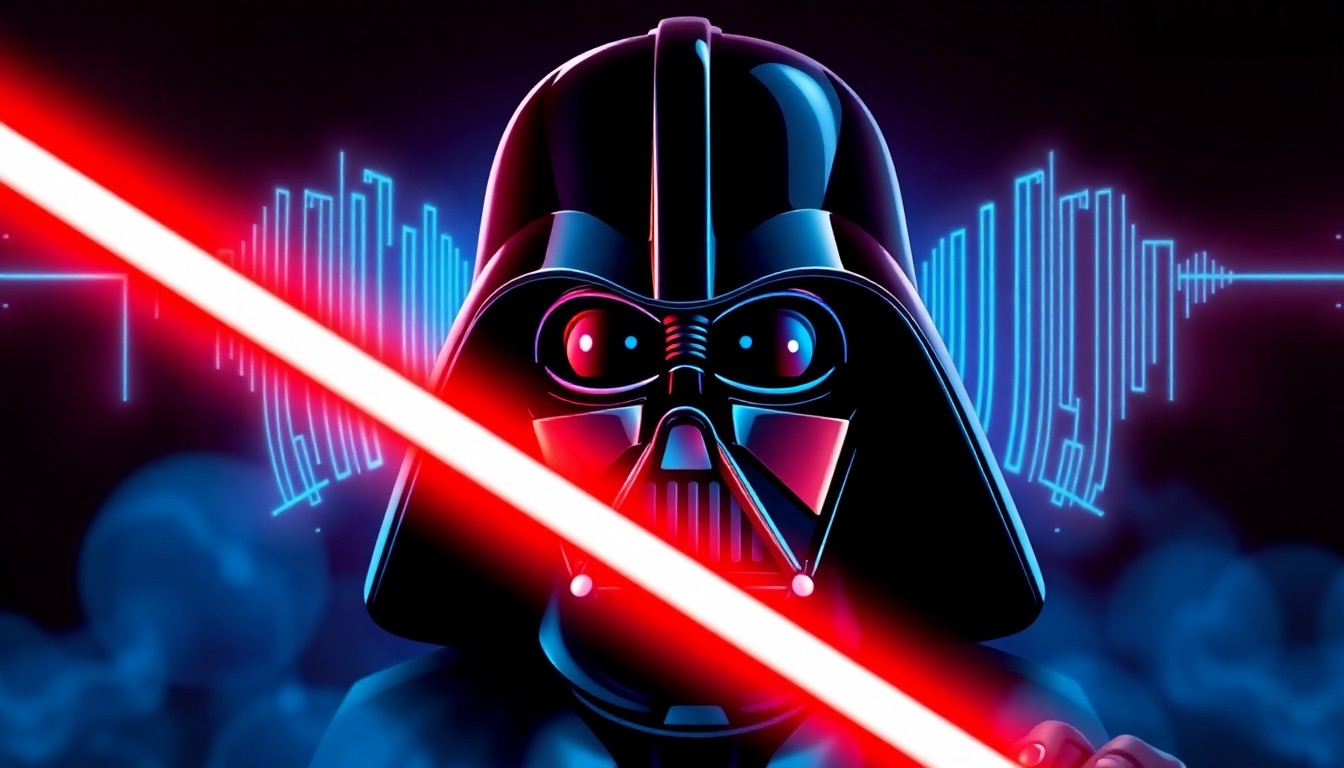
Darth Vader's voice combines James Earl Jones' commanding bass with mechanical breathing and helmet filtering effects. The result is instantly recognizable after just three syllables. Yoda's distinctive syntax and raspy vocal quality make him impossible to confuse with any other character. These deliberate design choices create perfect templates for AI voice modeling.
 Photo by Alphacolor on Unsplash
The franchise spans nine main films, multiple series, animated shows, games. This massive content library provides extensive voice data for training AI models. More source material means better accuracy, more natural delivery, stronger emotional range in the generated voices.
Star Wars voices also carry cultural weight that amplifies content impact. A video using the Darth Vader AI voice immediately signals tone, genre, character. Audiences recognize these voices instantly, creating instant connection and engagement that generic AI voices can't match.
Content creators exploit this recognition factor across platforms. TikTok videos using Yoda voice for comedy sketches regularly hit millions of views. YouTube gaming content featuring Star Wars character commentary builds subscriber bases quickly. Podcast intros narrated by iconic Star Wars characters establish memorable branding from the first episode.
The franchise continues expanding with new series, new characters, fresh voice models. This ongoing evolution keeps Star Wars AI voice generation relevant for current trends while maintaining the timeless appeal of classic characters.
Best Star Wars characters for AI voice generation
Not every Star Wars character translates equally well to AI voice generation. Characters with distinctive vocal traits, consistent speech patterns, and extensive screen time produce the most convincing results.
Darth Vader
The ultimate Star Wars voice for AI generation. Vader's mechanically enhanced voice features clear articulation, deep resonance, deliberate pacing that AI models replicate exceptionally well. The helmet filtering effect actually helps AI generation by masking subtle imperfections.
The Darth Vader voice generator excels at dramatic declarations, threatening statements, authoritative commands. Best for villain monologues, dramatic narration, intimidating content, gaming voiceovers. The mechanical breathing between phrases adds authentic Star Wars atmosphere to any project.
Write scripts with measured pacing and powerful declarations. Vader never rushes. Each word carries weight. Use short, commanding sentences and avoid casual language that breaks character.
Yoda
Yoda's distinctive syntax and raspy voice create unique challenges and opportunities for AI generation. His backward sentence structure ("Do or do not, there is no try") requires specific script formatting, but produces instantly recognizable results.
Quality Yoda AI models capture the vocal rasp, thoughtful pauses, wise cadence that define the character. The Yoda AI voice works brilliantly for philosophical content, comedic sketches playing with the syntax, motivational messages, tutorial narration with a twist.
Format your scripts with Yoda's inverted grammar. Place verbs before subjects, predicates before actions. Keep sentences relatively short. Let the unusual word order create the character rather than relying solely on vocal imitation. Add contemplative pauses between thoughts.
Obi-Wan Kenobi
Obi-Wan's refined British accent and measured delivery make him ideal for narration, explanatory content, mentor characters. The voice carries authority without Vader's menace, wisdom without Yoda's eccentricity.
Both Alec Guinness' original portrayal and Ewan McGregor's prequel performance offer distinct vocal qualities for AI models. The classic version skews older and more world-weary. The younger version brings energy and occasional humor. Choose based on your content tone.
Scripts for Obi-Wan should emphasize clear explanation, patient teaching, dry wit. The character works well for educational content, lore explanations, character analysis, thoughtful commentary. His voice bridges serious and lighthearted content naturally.
Emperor Palpatine
Palpatine's sinister rasp and theatrical delivery create perfect villain energy for content. The voice drips with manipulation, false kindness masking evil intent, cackling menace that audiences love.
The Emperor works exceptionally well for evil plan reveals, villainous commentary, horror content, dark comedy sketches. His tendency toward dramatic exclamations and drawn-out vowels gives scripts natural entertainment value.
Write Palpatine scripts with theatrical flair. Embrace the melodrama. Use ellipses for menacing pauses. Build to cackling laughter. The character thrives on over-the-top delivery, so scripts can push boundaries other characters can't.
Ahsoka Tano
Ahsoka represents the newer generation of Star Wars characters with strong voice recognition. Her determined, confident vocal quality appeals to younger audiences familiar with The Clone Wars and recent live-action series.
The Ahsoka voice suits action commentary, motivational content, strong character perspectives, behind-the-scenes Star Wars analysis. Her voice combines youthful energy with warrior discipline.
Scripts should reflect her direct communication style, tactical thinking, loyalty themes, and growth mindset. Ahsoka speaks plainly but thoughtfully, making her voice accessible for various content types.
C-3PO
Protocol droid perfection for comedy content. C-3PO's fussy British accent, worried tone, precise articulation create instant humor potential. The character's tendency toward stating the obvious and panicking works brilliantly for reaction content.
Use C-3PO for comedic narration, robot character voices, etiquette content with ironic twist, gaming commentary where constant worry adds humor. The voice pairs well with R2-D2 sound effects for classic Star Wars duo content.
Write scripts emphasizing proper grammar, worried interjections, statistical improbabilities, protests about dangerous situations. C-3PO's personality emerges through anxious precision and reluctant participation in adventures.
How Star Wars AI voice generators work
Star Wars AI voice generation uses neural networks trained on voice samples from films, shows, games. These models analyze vocal characteristics including pitch patterns, speech rhythms, accent markers, emotional inflections, and unique audio processing like Vader's helmet effect.
Quality generators employ deep learning algorithms that don't just copy and paste voice segments. They learn the underlying vocal patterns enabling them to generate entirely new speech in the character's voice. This distinction separates professional tools from basic voice changers.
 Photo by Matheus Bertelli on Unsplash
The process starts with text input. You type the script you want the character to speak. The AI analyzes the text for emotional context, emphasis points, natural pause locations. It then generates audio matching the selected character's voice while delivering your specific words.
Advanced platforms like TryAIVoices allow emotion control beyond the base character voice. You can specify whether Darth Vader sounds angry, contemplative, or threatening. Yoda can sound wise, amused, or concerned. This emotional variation prevents the monotone delivery that plagues simpler generators.
The generation typically takes seconds for short scripts, under a minute for longer passages. Output quality depends heavily on the training data volume, model sophistication, and ongoing refinement. Platforms that update their models regularly produce noticeably better results than static systems using older technology.
Some generators include post-processing for character-specific effects. Vader voice generation might automatically add breathing sounds between phrases. Yoda models might slightly emphasize the backward syntax. These details separate convincing character voices from simple impressions.
Choosing the best Star Wars AI voice generator
The Star Wars AI voice generator market includes dozens of platforms with vastly different quality levels. Selecting the right tool determines whether your content sounds professional or obviously artificial.
Start with character library size. Platforms offering only one or two Star Wars voices limit creative options. TryAIVoices provides comprehensive character coverage including main characters, supporting roles, and newer series characters, giving you flexibility for different projects.
Test audio quality through sample generation before committing to paid plans. Listen specifically for natural breathing, emotion variation, pronunciation accuracy, and absence of robotic artifacts. Quality voices sound like the character speaking naturally, not like a computer trying to imitate them.
Evaluate script length limits. Some platforms restrict generations to single sentences, forcing you to create longer content through multiple clips that may sound inconsistent. Better platforms handle paragraph-length scripts while maintaining voice consistency throughout.
Consider generation speed. Content creation workflows demand quick turnaround. Platforms taking several minutes per generation slow projects significantly. The fastest generators produce quality audio in under ten seconds, enabling rapid iteration and experimentation.
Check pricing models against your usage needs. Subscription services work well for regular content creators. Pay-per-generation suits occasional users. TryAIVoices pricing plans scale from starter creators to professional production teams with different credit allocations and generation limits.
Voice customization options separate basic from advanced platforms. Can you adjust speaking speed? Control emphasis on specific words? Modify emotional delivery? These controls help match generated voices to your exact creative vision rather than accepting one-size-fits-all output.
Look for platforms supporting commercial use in their terms of service. Many free or cheap generators prohibit commercial content, creating legal risks for monetized videos, paid podcasts, client projects. Read the fine print before building business content on a platform.
Writing scripts for Star Wars AI voices
Script quality determines AI voice output quality more than any other factor. Even perfect voice models produce awkward results from poorly written scripts. Each Star Wars character requires specific writing approaches.
Match character speech patterns
Darth Vader speaks in complete sentences with formal grammar. He never uses contractions. "I find your lack of faith disturbing" not "I find your lack of faith's disturbing." Every word receives deliberate emphasis.
Yoda inverts normal sentence structure consistently. Place objects before verbs, verbs before subjects. "Strong you are, Luke" instead of "You are strong, Luke." But don't force every sentence into backward grammar. Yoda occasionally speaks normally when making simple statements.
Han Solo uses casual language, incomplete thoughts, sarcastic delivery. He interrupts himself, changes direction mid-sentence, speaks in fragments. "Look, I ain't in this for your revolution" captures his dismissive, self-interested personality.
Study actual dialogue from the films and shows. Notice how each character's vocabulary, sentence structure, and speaking rhythm creates their voice. Replicate these patterns in your scripts for authentic-sounding AI generation.
Control pacing with punctuation
Periods create hard stops. Use them for dramatic pauses, emphasis, commanding tone. Commas indicate brief pauses for natural breathing and thought transitions. Ellipses suggest trailing off, uncertainty, or menacing silence.
Darth Vader scripts benefit from periods over commas. "I am your father. Search your feelings. You know it to be true." Each sentence stands alone with gravitational weight.
C-3PO scripts need commas for his anxious, run-on speaking style. "Oh my, I do believe they've been damaged, and I'm afraid the situation appears rather dire, wouldn't you say?"
Question marks change delivery significantly. AI models typically raise pitch at the end of questions. Use them deliberately rather than in every sentence, which creates unnatural vocal patterns.
Optimize script length
Short scripts of one to three sentences generate the most consistent quality. The AI maintains character voice, pacing, and emotion throughout brief passages more reliably than lengthy monologues.
For longer content, break scripts into logical segments. Generate each segment separately. This approach produces better quality and allows you to adjust subsequent segments based on how earlier ones sound.
Paragraph-length scripts work well for characters with consistent speaking styles like Obi-Wan or Mon Mothma. More variable characters like Han Solo or Ahsoka benefit from shorter generation segments that you can piece together.
Very long scripts (over 200 words) often develop quality issues. Pacing may accelerate or slow unnaturally. Voice characteristics might drift. Emotion may flatten. Break these into multiple generations instead.
Include emotional direction
Many advanced platforms including TryAIVoices allow emotional tagging in scripts. Indicate whether lines should sound angry, sad, excited, or contemplative. This prevents the flat, monotone delivery that makes AI voices sound robotic.
For platforms without explicit emotion controls, write emotion into the words themselves. Strong verbs and vivid descriptions prompt appropriate delivery. "You fool!" generates different energy than "You made a mistake."
Consider context within your larger content. A Darth Vader line needs different energy if it's responding to defiance versus addressing subordinates. Write scripts acknowledging the implied conversation even when generating isolated lines.
Test and iterate
Generate test audio before finalizing scripts. Listen for awkward phrasing, unnatural pauses, mispronunciations. Adjust spelling for words the AI struggles with. Some generators handle "gonna" better than "going to," while others do the opposite.
Common problem areas include numbers, acronyms, unusual names, technical terms. Test these specifically. Write out numbers as words if the AI mispronounces numerals. Spell acronyms phonetically if needed.
Read scripts aloud before generation. If the words feel awkward in your mouth, they'll sound awkward from the AI. Star Wars characters speak dramatically but naturally. Avoid tongue-twisters and overly complex sentence structures.
Creative applications for Star Wars AI voices
Star Wars AI voices unlock possibilities across content creation, entertainment, and professional applications. The iconic character recognition provides instant audience connection regardless of platform or format.
YouTube content
Gaming channels use Star Wars voices for commentary that transforms standard gameplay into narrative experiences. A Darth Vader voiceover commenting on Dark Souls deaths adds thematic consistency and humor. Yoda providing tips for strategy games creates memorable content hooks.
Lore explanation videos benefit from in-universe narration. Having Obi-Wan explain Star Wars history or Ahsoka break down Clone Wars battles adds authenticity that generic narrators can't match. The character voice reinforces the content topic.
Comedy sketches leveraging Star Wars characters in unexpected situations generate viral potential. C-3PO reviewing everyday objects, Emperor Palpatine reacting to minor inconveniences, Yoda dispensing life advice about modern problems all create shareable content.
Review channels can use character voices thematically. Star Wars movie reviews narrated by franchise characters, sci-fi game reviews by Vader, ethics discussions by Jedi council members all align content and delivery style.
TikTok and short-form video
Star Wars voices excel in short-form content where instant recognition matters. A 15-second video needs immediate impact. Opening with Darth Vader's "Impressive" or Yoda's "Patience you must have" hooks viewers instantly.
Trend participation works well with character voices. Take popular audio trends and recreate them with Star Wars voices for the novelty factor. The contrast between trending audio formats and iconic character voices creates engagement.
 Photo by Vahid Asadi on Unsplash
Duet and stitch content using AI voices adds creative options. Respond to other creators using Darth Vader, join conversations as Yoda, react to content as C-3PO. The character voice becomes your content personality.
Educational content condensed to TikTok length gains personality through Star Wars narration. History facts delivered by Emperor Palpatine, science explanations from protocol droids, life tips from Obi-Wan all make learning content more entertaining.
Podcast intros and outros
Star Wars AI voices create memorable podcast branding. A Darth Vader intro immediately establishes tone for Star Wars discussion podcasts, sci-fi content, pop culture analysis. The voice becomes associated with your show.
Segment transitions narrated by different characters add variety to longer episodes. Yoda introduces the wisdom segment, Han Solo leads the controversial takes, Obi-Wan presents the history deep dive. Each character signals the content shift.
Guest introductions using character voices inject personality into standard podcast formats. Having the Emperor announce guests with ominous flair, or C-3PO worry about controversial topics entertains while maintaining podcast flow.
Outro calls-to-action delivered by Star Wars characters outperform generic requests. Ahsoka asking listeners to subscribe, Vader commanding ratings, Yoda suggesting sharing all leverage character authority for conversion.
Gaming content and streams
Tabletop RPG sessions incorporate Star Wars voices for NPC characters, narration, dramatic moments. A game master using various Star Wars character voices from a generator creates production value impossible to achieve through personal voice acting alone.
Streaming overlays and alerts tied to Star Wars voices enhance viewer experience. Darth Vader announcing new subscribers, Yoda welcoming raiders, C-3PO worrying about follower goals all create memorable stream personality.
Machinima and game video projects use AI voices for character dialogue without hiring voice actors. Star Wars-themed game mods, story videos, and creative projects achieve professional vocal quality through generators.
Speed-running commentary and challenge run narration gain entertainment value from character voices. Darth Vader providing serious analysis of frame-perfect jumps creates humorous contrast. Yoda's wisdom applied to gaming achievements adds comedy.
Educational content
Star Wars characters make excellent educators when properly leveraged. Obi-Wan explaining historical events, Yoda teaching philosophical concepts, Mon Mothma discussing politics all use character authority to enhance lesson engagement.
Younger students particularly respond to character-based learning. Math problems presented by C-3PO, science facts from R2-D2, reading comprehension questions from Ahsoka make educational content more accessible and entertaining.
TryAIVoices' character library includes voices suitable for different educational tones. Serious topics benefit from authoritative characters like Vader or Obi-Wan. Lighter subjects work well with comedic characters like C-3PO or quirky voices like Yoda.
Language learning content uses Star Wars voices for pronunciation practice, dialogue examples, and conversation scenarios. The character recognition helps students remember lessons associated with familiar voices.
Marketing and advertising
Star Wars voices in ads require careful legal consideration, but parody and transformative use provides options. Product announcements delivered by Darth Vader, service explanations from protocol droids, testimonials in character voices all attract attention in crowded markets.
Social media marketing campaigns using Star Wars voices for branded content stand out from competitors. A brand personality expressed through iconic character voices creates memorable presence across platforms.
Internal corporate content like training videos, announcement videos, team updates gains viewership when narrated by Star Wars characters. Employees more willingly watch Yoda explain new policies than generic corporate narration.
Event promotion videos, convention announcements, and pop culture business content naturally align with Star Wars voice usage. Comic shops, game stores, entertainment venues can leverage franchise voices for thematic consistency.
Technical tips for enhancing AI-generated Star Wars voices
Raw AI voice generation provides the foundation, but post-processing elevates quality to professional standards. Understanding basic audio enhancement techniques maximizes your Star Wars AI voice content impact.
Audio editing fundamentals
Import AI-generated audio into editing software like Audacity, Adobe Audition, or Reaper. Even free tools provide sufficient capability for voice enhancement. The goal is polishing raw generation into finished production quality.
Normalize audio levels first. AI generators may produce varying volume levels across different generations. Normalization ensures consistent loudness throughout your content, preventing viewers from adjusting volume repeatedly.
Apply noise reduction to clean background artifacts. Even quality generators occasionally introduce subtle background noise. Most editing software includes noise reduction filters that sample unwanted sound and remove it from the main audio.
Adjust equalization to enhance voice characteristics. Boosting lower frequencies reinforces Darth Vader's bass tones. Reducing harshness in higher frequencies smooths Yoda's raspy quality. Small EQ adjustments significantly improve listening experience.
Layering effects for specific characters
Darth Vader benefits from subtle reverb suggesting the helmet interior space. Small room reverb settings create appropriate acoustic environment. Add mechanical breathing between phrases using sound effects libraries or generated breath sounds.
Yoda's voice sometimes needs slight treble reduction and warmth enhancement to emphasize the aged, wise quality. Compression helps even out volume variations in his contemplative pauses and emphatic statements.
C-3PO and other droid voices can benefit from slight metallic filtering effects. Very subtle modulation or chorus effects suggest mechanical voice production without sounding obviously processed. Less is more with these effects.
Outdoor scenes need environmental audio matching the voice. Echo for large spaces, natural ambience for outdoor settings, room tone for indoor scenes all help generated voices fit their context rather than sounding isolated.
Combining with music and sound effects
Star Wars music immediately establishes franchise context. Layer AI voices over iconic themes during intros and outros. Ensure voice remains clearly audible over music by adjusting relative volumes appropriately.
Sound effects from Star Wars (lightsabers, blasters, ship engines) reinforce the universe your character voices inhabit. Strategic effect placement during voice pauses adds production value and maintains thematic consistency.
Create dynamic audio by ducking music volume when characters speak. This technique automatically lowers background music during dialogue, then raises it again during pauses. Most editing software includes audio ducking automation.
Background ambience specific to Star Wars settings enhances immersion. Cantina background chatter, Imperial ship hum, forest planet sounds all provide environmental context. Mix these subtly beneath character voices.
Pacing and timing adjustments
AI-generated voices sometimes need pacing adjustment. Speed up slightly sluggish delivery or slow down rushed passages using time-stretch features. Modern algorithms maintain voice quality while adjusting tempo.
Add pauses between sentences for dramatic effect. Particularly for Darth Vader and Emperor Palpatine, strategic silence amplifies impact. Insert silent gaps in your audio timeline where additional pause enhances delivery.
Trim breaths and mouth sounds that sound unnatural in AI generation. Some generators include these human voice characteristics, but they may occur at odd intervals. Clean them up for more polished results.
Align voice with video precisely. Character voices need to match on-screen action, visual cuts, text appearances. Use audio editing to shift voice timing by fractions of seconds for perfect synchronization.
Exporting for different platforms
YouTube and long-form content benefits from higher quality audio exports. Use 192kbps or higher bitrates for minimal compression artifacts. Stereo output maintains richness even though voices are primarily mono sources.
TikTok and Instagram prioritize file size and mobile playback. Export at 128kbps, optimize for small speakers and earbuds. Test on mobile devices before publishing to ensure voice clarity on target platforms.
Podcast audio needs consistent levels and format compatibility. Export to MP3 at 128kbps for broad compatibility. Apply compression and limiting to maintain even volume suitable for various listening environments.
Gaming content and streams require low-latency audio formats if incorporating live. Pre-generated voice clips should use lossless formats like WAV during editing, then compress only for final export to preserve quality through processing.
Legal and ethical considerations
Star Wars AI voice generation exists in complicated legal territory. Understanding copyright, trademark, fair use, and ethical implications protects your content and respects intellectual property while enabling creative expression.
Copyright and trademark issues
Star Wars characters, names, voices, and likenesses are protected intellectual property owned by Lucasfilm and Disney. Creating AI voices of these characters does not grant rights to commercial exploitation without licensing.
However, fair use doctrine provides exceptions for transformative work, commentary, parody, education. Content that comments on Star Wars, creates parody, teaches about the franchise, or transforms characters into new creative contexts may qualify for protection.
Monetization complicates fair use arguments. Ad revenue from YouTube videos using Star Wars voices doesn't automatically violate copyright, but it increases scrutiny. Courts consider multiple factors including purpose, nature, amount used, market effect.
 Photo by Alphacolor on Unsplash
Platform-specific considerations matter. YouTube's Content ID system may flag Star Wars voices even in fair use contexts. TikTok, Instagram, and other platforms have varying policies. Understand each platform's approach before publishing.
Commercial products (apps, games, paid content) face stricter restrictions. Selling products featuring Star Wars character voices almost certainly requires licensing. Consult intellectual property attorneys before commercial ventures.
Disclosure and transparency
Audiences deserve to know when voices are AI-generated rather than original actors. Ethical content creation includes clear disclosure that generated voices are not official Star Wars content or original actor performances.
Simple disclaimer text in video descriptions, podcast show notes, or content captions addresses transparency. "Voices generated using AI technology" or "Unofficial AI-generated character voices" set appropriate expectations.
Some audiences specifically seek AI-generated content, while others prefer authenticity. Disclosure allows viewers to make informed choices about engagement. This transparency builds trust and protects against accusations of deception.
Deepfake concerns surrounding AI voices require extra care. While Star Wars character voices don't impersonate real living people the way politician deepfakes do, the technology overlap creates societal concerns worth acknowledging.
Respecting original performances
Star Wars voices represent iconic performances by talented actors. James Earl Jones, Frank Oz, and others created these characters through skill and artistry. AI generation should acknowledge this creative foundation.
Consider crediting original voice actors in content using AI versions. "Inspired by James Earl Jones' performance as Darth Vader" respects the source material while clarifying your content's nature.
Avoid using AI voices in ways that diminish original performances or create offensive content. Star Wars characters expressing views contrary to their established personas, engaging in inappropriate situations, or saying offensive things disrespects both characters and actors.
The technology enables creativity but shouldn't replace appreciation for original work. Use AI voices to create new content inspired by Star Wars rather than attempting to substitute for or compete with official productions.
Platform terms of service
Review terms of service for both AI voice generators and publishing platforms. Some generators explicitly prohibit commercial use, require attribution, or restrict specific applications like political content or impersonation.
TryAIVoices terms of service clearly outline acceptable use policies for generated content. Understanding these terms before creating prevents violations and potential account restrictions or legal issues.
Publishing platforms (YouTube, TikTok, podcasting services) maintain separate policies regarding AI-generated content, copyright claims, and character usage. Violating platform terms can result in content removal, demonetization, or account suspension regardless of legal standing.
Stay informed about evolving regulations. Several jurisdictions are developing specific AI-generated content laws. What's permissible today may face new restrictions tomorrow. Follow industry news and adjust practices accordingly.
Comparing Star Wars AI voice generators
The competitive landscape includes multiple platforms offering Star Wars character voices with varying quality, features, and pricing. Direct comparison helps identify the best tool for your specific needs.
Voice quality comparison
TryAIVoices leads in overall voice quality across multiple Star Wars characters. Their Darth Vader model captures the mechanical filtering, breathing, and bass resonance that defines the character. Yoda's raspy wisdom and inverted syntax sound natural rather than forced.
Alternative platforms often excel at specific characters while struggling with others. One competitor produces excellent Obi-Wan but disappointing Emperor Palpatine. Another nails C-3PO but can't capture Ahsoka convincingly.
Test multiple platforms using identical scripts for direct quality assessment. Generate the same Vader monologue across three platforms and compare nuance, emotion, clarity, naturalness. Quality differences become immediately apparent through A/B comparison.
Listen specifically for emotional range. Can the generator produce angry Vader, contemplative Vader, commanding Vader? Or does every generation sound identical regardless of script emotion? Versatile voice models serve more creative applications.
Feature comparison
Character library size varies dramatically. Some platforms offer five Star Wars voices, while TryAIVoices provides comprehensive coverage across films and series. Larger libraries support diverse projects without platform switching.
Generation speed affects workflow significantly. Platforms producing quality audio in under ten seconds enable rapid iteration and experimentation. Slower generators (30+ seconds per clip) frustrate creative processes and extend production timelines.
Script length limits constrain long-form content. Platforms restricting generations to single sentences force inefficient workflows for podcast content, long narration, dialogue scenes. Better platforms handle several paragraphs seamlessly.
Customization controls separate professional from basic tools. Can you adjust speaking speed, emphasis, emotion, tone? These parameters provide creative control missing from one-size-fits-all generation.
Pricing comparison
Subscription models dominate the market. Monthly fees typically range from fifteen to fifty dollars depending on generation limits, voice access, commercial licensing terms. Evaluate pricing against your usage volume.
Pay-per-generation systems suit occasional users but quickly become expensive for regular content creators. Generating twenty clips at fifty cents each costs more than monthly subscriptions offering hundreds of generations.
TryAIVoices pricing tiers scale from starter creators through professional production teams. Lower tiers provide sufficient credits for weekly content creation. Higher tiers support daily generation needs for business users.
Free trials enable risk-free testing before financial commitment. Quality platforms offer trial periods or limited free generations demonstrating voice quality and platform features before requiring payment.
Commercial use policies
Some platforms prohibit commercial content creation, limiting usage to personal projects. This restriction eliminates monetized YouTube channels, client work, business applications from permissible use cases.
Others allow commercial use but require attribution, watermarks, or usage reporting. These terms may prove impractical for certain content types or professional applications.
Professional platforms like TryAIVoices explicitly permit commercial content creation within their terms of service, providing legal clarity for business users, content creators, marketing professionals needing generated voices for commercial purposes.
Read licensing terms carefully. "Personal use only" clauses prohibit any monetization including ad revenue, sponsorships, affiliate marketing. Violations risk account termination and potential legal liability.
Advanced techniques for Star Wars AI voices
Mastering basic AI voice generation enables content creation. Advanced techniques elevate that content to professional production quality distinguishing your work from competitors.
Creating character conversations
Generate both sides of conversations using different Star Wars characters. A debate between Darth Vader and Obi-Wan, banter between Han Solo and C-3PO, wisdom exchange between Yoda and Ahsoka all create engaging dialogue content.
Script conversations with natural back-and-forth rhythm. People interrupt, pause, react to previous statements. Write dialogue reflecting these patterns rather than formal turn-taking. This creates realistic conversation flow.
Generate each character's lines separately to maximize quality control. Edit the timing between responses for natural conversation pacing. Slight overlaps, variable pause lengths, and reaction timing make dialogue sound spontaneous rather than scripted.
Add background ambience matching the conversation location. Cantina background for casual conversations, Imperial ship hum for formal exchanges, outdoor forest sounds for secret meetings all enhance immersion beyond isolated voices.
Voice acting direction techniques
Punctuation guides AI emphasis but doesn't replace good writing. Instead of "You WILL do as I command," write "You will do as I command" and let the Vader voice model naturally emphasize authority. Over-indicating creates forced delivery.
Break long speeches into emotional segments. Generate the calm introduction separately from the angry climax. This prevents emotional flattening that occurs when AI processes long scripts with varying intensity.
Use dialogue tags in scripts even though they won't be spoken. Writing "(angrily) You have failed me for the last time" provides context that improves generation quality on platforms supporting contextual processing.
Test alternative phrasings for problem sections. If "I find your lack of faith disturbing" sounds off, try "Your lack of faith disturbs me" or "I find your faith lacking." Small wording changes sometimes produce significantly better results.
Mixing AI voices with human performance
Combine AI character voices with human narration for contrast. You narrate the story setup, then AI characters deliver dialogue. This technique provides clarity while maintaining character authenticity for key moments.
Human voice provides flexibility for varied content while Star Wars AI voices deliver impact for specific moments. Opening with your voice establishes personal connection, then character voices create entertainment value.
Record human voices in similar audio quality to AI generation for seamless integration. Match volume levels, acoustic environment, and production quality between AI and human recording for professional results.
Use AI voices for consistent recurring elements while handling variable content yourself. A Darth Vader intro and outro bookending your narrated content combines personal authenticity with character branding.
Creating voice packs for games and mods
Game modifications often need character voice packs for NPCs, announcements, player character options. AI generation enables creating comprehensive voice sets without voice actor hiring.
Plan complete dialogue trees before generation. Script all variations, responses, questions, and reactions needed for interactive content. Batch generate similar lines together for consistency.
Name audio files systematically for easy implementation. "vader_greeting_01.wav," "vader_combat_taunt_03.wav," "vader_death_01.wav" enable developers to quickly locate and assign appropriate audio.
Test dialogue variations in game context before considering voice pack complete. Some lines that sound good isolated may not work in actual gameplay situations. Iterate based on implementation testing.
Voice cloning for custom characters
Some advanced platforms enable training custom voice models on provided audio samples. While this primarily targets cloning your own voice, the technology allows creating original Star Wars-inspired characters.
Combine characteristics from multiple official voices to create original characters. Mix Vader's mechanical quality with Ahsoka's youth, blend Yoda's wisdom with Dooku's sophistication. These hybrid voices suit original Star Wars content.
Record voice samples in Star Wars character style, then train models on those samples. This creates voices inspired by but legally distinct from official characters, providing creative freedom for original projects.
Custom voice models require significant training data, typically hours of recorded speech. This investment makes sense only for major projects needing unique, consistent character voices throughout extensive content.
Troubleshooting common issues
Even quality AI voice generators occasionally produce problematic results. Understanding common issues and solutions ensures consistent output quality.
Mispronunciations and awkward delivery
AI models sometimes struggle with unusual words, names, technical terms, acronyms. When this occurs, try phonetic spelling to guide pronunciation. "R2-D2" might need "Artoo-Deetoo" for correct generation.
Numbers often generate awkwardly. "2024" might sound like "two thousand twenty four" when you wanted "twenty twenty-four." Write numbers as words for precise control over spoken delivery.
Character names from expanded universe content may not exist in training data. Break complex names into phonetic components. "Ahsoka Tano" separates clearly, but less common names need experimentation to find pronunciation the AI handles correctly.
Technical jargon benefits from simplification. Instead of "The hyperdrive motivator needs replacement," try "The hyperdrive needs fixing." Simpler language typically generates cleaner results while maintaining meaning.
Emotional flatness
Long scripts often develop emotional monotony. The AI maintains base character voice but loses intensity variation. Breaking scripts into shorter segments with specific emotional tags for each prevents this flattening.
Vary sentence structure and length to prompt natural delivery variation. All short sentences sound choppy. All long sentences drag. Mixing creates rhythm that AI interprets as emotional variation even without explicit tags.
Strategic punctuation creates emphasis and pause variation. Compare "You will pay for your insolence" to "You will pay. For your insolence." The second version generates different pacing and impact through period placement.
Some content demands flat delivery. Protocol droid explanations, automated announcements, certain Vader pronouncements work better without exaggerated emotion. Recognize when flatness serves the content rather than undermining it.
Inconsistent quality across generations
Different generations of the same script sometimes produce varying quality. AI models include randomization preventing identical outputs, but this occasionally creates noticeably worse results.
Generate multiple versions of important lines. Create three variations, listen to all, select the best. This quality control step costs additional credits but ensures optimal audio for critical content moments.
Regenerate problematic sections rather than accepting flawed audio. If Yoda's wisdom sounds rushed or Vader lacks menace, try again. AI variation means the next generation often improves significantly.
Save particularly good generations for potential reuse. When AI nails a difficult line perfectly, archive that audio file. You might adapt it for future projects or use it as reference for scripting similar content.
Background noise and artifacts
Digital artifacts like clicks, pops, subtle static occasionally appear in AI-generated audio. These result from generation algorithms rather than recording environment issues.
Post-production noise reduction removes most artifacts without affecting voice quality. Audacity's noise reduction tool samples unwanted sound and eliminates it from the main audio with minimal processing.
Some generators produce better or worse artifact levels. If one platform consistently delivers cleaner audio than competitors, that quality difference justifies potential cost or feature trade-offs.
Export at higher quality settings if your generator provides bitrate options. More data preserved during export means cleaner audio with less compression artifacting in final content.
Character voice drift
Very long scripts sometimes exhibit voice drift where character qualities shift subtly partway through generation. Vader might lose mechanical quality, Yoda's syntax might normalize, accents might weaken.
Prevent drift by limiting individual generation length. Scripts under one hundred fifty words typically maintain consistency. Longer content should be generated in multiple segments.
Monitor consistency when generating series content across multiple sessions. AI models sometimes update between your generations, creating subtle voice changes. Generate all related content in single sessions when possible.
Reference previous generations when creating sequel content. Listen to earlier audio before scripting new material to ensure continued character consistency across your content series.
Star Wars AI voices for different content types
Different content formats demand specific approaches to Star Wars AI voice integration. Optimizing for platform and format maximizes impact and audience engagement.
Long-form YouTube videos
Videos exceeding ten minutes benefit from voice variety preventing monotony. Mix multiple Star Wars characters for different segments, alternate between character voices and your own narration, use characters for specific content types within longer videos.
Opening hooks using dramatic Vader or Emperor lines capture attention immediately. First fifteen seconds determine viewer retention. Starting with iconic character voice signals entertainment value and production quality.
Segment transitions narrated by appropriate characters guide viewers through content structure. Yoda introducing philosophy sections, Obi-Wan leading historical segments, Ahsoka presenting action analysis all provide clear content signposting.
End screens and calls-to-action delivered by Star Wars characters outperform generic requests. Vader commanding subscriptions, Yoda suggesting video sharing, C-3PO worrying viewers might forget to like all leverage character personality for conversion.
Educational content and tutorials
Star Wars character voices make learning content more engaging for students resistant to traditional educational materials. Yoda teaching philosophy, Vader explaining power dynamics, Obi-Wan discussing strategy all add entertainment value to lessons.
Match character to subject matter for thematic consistency. Science content suits protocol droids with their technical knowledge. History lessons work well with elder characters like Yoda or Obi-Wan. Combat tactics benefit from warrior characters.
Keep educational voiceovers clear and precisely paced. While entertainment content allows dramatic delivery variation, educational material prioritizes comprehension. Ensure character voices maintain clarity over stylistic flourish.
Quiz questions and knowledge checks delivered by Star Wars characters increase participation. Students more readily engage with Ahsoka asking questions than generic narrator voice, particularly in younger demographics.
Podcast content
Podcast intros using Star Wars voices create immediate brand identity. Consistent character voice across episodes builds recognition. Listeners associate that voice with your content, creating sonic branding as effective as visual logos.
 Photo by Karolina Grabowska on Unsplash
Interview podcasts use character voices for segment introductions, questions, reactions without interrupting conversation flow. Quick character comments between interview segments add personality while maintaining focus on human guests.
Story-based podcasts incorporate AI voices for character dialogue when dramatizing events, creating accessible audio drama without full voice acting casts. One narrator plus AI character voices produces sophisticated audio storytelling.
Outro calls-to-action benefit from character authority. Emperor Palpatine demanding reviews, Yoda requesting subscriptions, Vader commanding social media engagement all outperform standard host requests for listener action.
Social media content
Short-form content thrives on immediate impact. Opening with recognizable Star Wars voice within first second prevents scrolling. Darth Vader's breathing, Yoda's distinctive syntax, C-3PO's fussy greeting all provide instant hooks.
TikTok trends adapted with Star Wars voices offer novelty factor. Take popular audio formats and recreate them with character voices. The contrast between trending content and iconic voices drives engagement.
Twitter/X audio tweets using Star Wars character voices stand out in predominantly text feeds. Brief character commentary on news, trends, daily observations creates unique content personality.
Instagram reels benefit from matching visual Star Wars content with appropriate character voices. Show Star Wars locations while Obi-Wan narrates, display merchandise while collector character voices react, pair cosplay content with matching character audio.
Gaming streams and content
Live streaming chat interaction using AI voices creates entertainment value. TTS donations delivered in Darth Vader voice, subscriber alerts using Yoda, raid notifications from C-3PO all enhance stream production.
Gameplay commentary using character personas adds consistent entertainment beyond game content. Maintaining Vader character throughout difficult game sections, Yoda wisdom during strategy games, Han Solo snark during competitive gaming all create unique stream personality.
Highlight reel narration using Star Wars voices produces shareable clips. Epic gaming moments narrated by epic character voices amplify impact and encourage social sharing beyond your regular audience.
Charity stream events benefit from character voice integration for donation milestones, goal announcements, thank-you messages. These production elements elevate stream quality and encourage continued donations through entertaining feedback.
Commercial and marketing content
Product announcements gain attention through unexpected character voice usage. Darth Vader revealing new features, Yoda explaining product benefits, C-3PO detailing specifications all entertain while informing.
Social media marketing campaigns using Star Wars voices cut through advertising noise. Character voices in promotional content attract engagement from fans who normally ignore brand marketing.
Internal business content becomes more engaging through character narration. Training videos, policy updates, team announcements all gain viewership when delivered by entertaining Star Wars voices rather than dry corporate narration.
Event promotion for conventions, movie releases, themed events naturally aligns with Star Wars voice usage. Character voices provide thematic consistency while building excitement for Star Wars-adjacent events.
The future of Star Wars AI voice generation
AI voice technology evolves rapidly, with significant improvements emerging regularly. Understanding development trajectory helps content creators prepare for coming capabilities and challenges.
Improving voice quality
Neural network training continues advancing, producing increasingly realistic voice synthesis. Next-generation models will capture subtle emotional nuances, breath patterns, micro-expressions in vocal delivery that current systems approximate but don't perfectly replicate.
Real-time generation will eventually replace current processing delays. Typing scripts and receiving instant audio enables conversational workflows impossible with current multi-second generation times. This immediacy will transform interactive applications and live content.
Longer context understanding will allow AI to maintain consistent character voice, emotion, and energy across extended scripts. Current paragraph-length limits will expand to chapter-length consistency, enabling audio book narration and long-form content from single generation runs.
Custom emotion control will become more granular. Instead of selecting "angry" or "sad," creators will adjust intensity sliders for dozens of emotional variables. Precise emotional direction will separate professional from amateur AI voice content.
New character availability
Emerging models will include characters from recent Star Wars series as training data accumulates. Mandalorian characters, Andor voices, Ahsoka series cast all represent expansion opportunities as more source material becomes available.
Comprehensive character coverage across all Star Wars media will enable creators to match voices precisely to their content themes. Need a Separatist droid? Jedi council member? Underworld character? Future platforms will provide options current libraries lack.
Quality platforms like TryAIVoices continue adding characters based on user demand and cultural relevance. Popular new characters from successful series get prioritized for model development, keeping libraries current with franchise evolution.
Language variations will expand beyond English. Multilingual Star Wars AI voices enable international content creators to produce character voices in their native languages, dramatically expanding the technology's global accessibility and utility.
Regulatory landscape
Governments worldwide are developing AI-generated content regulations. Disclosure requirements, deepfake restrictions, intellectual property clarifications all will shape how creators legally use Star Wars AI voices in coming years.
Platform policies will likely standardize around AI content labeling. YouTube, TikTok, podcasting platforms may require creators to tag AI-generated voice content, enabling users to filter based on preference and helping platforms enforce policies.
Voice actor protections may emerge through legislation or industry agreements. Potential restrictions on AI voice generation could affect availability, licensing costs, permissible use cases for character voices based on original actor contracts.
Licensing frameworks might develop allowing legitimate commercial use of Star Wars voices through official channels. Disney could offer licensed AI voice generation, creating clear legal pathway for commercial content currently existing in gray areas.
Creative possibilities
Interactive storytelling will leverage real-time AI voices for choose-your-own-adventure content, gaming experiences, virtual reality applications where Star Wars characters respond dynamically to user choices and actions.
Personalized content using AI voices will enable custom birthday messages, educational tutoring, therapy applications featuring Star Wars characters. The technology becomes tool for individual experience rather than just broadcast content.
Accessibility applications will expand, using character voices for text-to-speech assistance that's more engaging than generic TTS. Vision-impaired users could experience books, articles, messages delivered by Star Wars characters rather than robotic narration.
Mixed reality experiences will combine AI voices with augmented reality, enabling conversations with virtual Star Wars characters appearing in physical spaces through AR devices, creating immersive experiences previously impossible.
Frequently asked questions
Can I use Star Wars AI voices for commercial content?
Star Wars characters are protected intellectual property. However, transformative use including parody, commentary, and educational content may qualify for fair use protection. TryAIVoices permits commercial use of generated audio within fair use parameters, but creators assume responsibility for ensuring their specific content complies with intellectual property law. Consult legal counsel for high-stakes commercial projects.
Do AI-generated Star Wars voices sound like the real actors?
Quality varies significantly between platforms. The best generators including TryAIVoices produce voices closely matching original character portrayals, capturing distinctive vocal traits, speech patterns, and emotional delivery. However, trained ears can typically distinguish AI generation from original actor performances. Quality continues improving as technology advances.
How long does it take to generate Star Wars AI voices?
Generation speed depends on platform and script length. TryAIVoices produces quality audio for short scripts in under ten seconds, paragraph-length content within thirty seconds. Some platforms require several minutes for generation. Speed varies based on server load, model complexity, and script parameters.
Can I create my own custom Star Wars character voices?
Advanced platforms support custom voice model training using audio samples you provide. This enables creating original Star Wars-inspired characters rather than recreating established ones. Custom model training requires significant audio data (typically several hours) and technical understanding. Most creators use existing character models rather than training custom voices.
What's the difference between AI voice generators and voice changers?
Voice changers modify existing audio in real-time, typically applying pitch and formant shifts to your voice during recording. AI voice generators create entirely new audio from text input using machine learning models trained on character voice samples. Generators produce higher quality character voices but can't operate in real-time like changers. Choose based on whether you need live modification or scripted generation.
Are there free Star Wars AI voice generators?
Several platforms offer free tiers or limited free generations. However, free options typically restrict commercial use, impose generation limits, include watermarks, or produce lower quality than paid alternatives. TryAIVoices offers affordable subscription plans providing commercial use rights and unlimited access to comprehensive character libraries, representing better value for regular content creators.
How do I avoid copyright issues with Star Wars AI voices?
Focus on transformative content including commentary, parody, education, or original creative work inspired by but distinct from Star Wars media. Avoid merely reproducing Star Wars scenes or dialogue without adding value. Include clear disclosure that voices are AI-generated. Respect original performances and credit voice actors. Review platform terms of service and consult intellectual property attorneys for commercial projects.
Can AI voice generators capture different Star Wars character emotions?
Advanced platforms including TryAIVoices support emotional variation in generated voices. You can specify whether Darth Vader sounds angry, contemplative, commanding, or threatening. Yoda can sound wise, amused, or concerned. Emotional control prevents monotone delivery and enables nuanced character portrayals across different content contexts.
What script length works best for Star Wars AI voices?
Short scripts of one to three sentences generate most consistently. Paragraph-length scripts work well for characters with consistent speech patterns. Very long scripts (over two hundred words) often develop quality issues. Break longer content into segments, generating each separately for optimal quality and consistency throughout extended content.
Do I need professional audio editing skills?
Basic AI voice generation requires no editing skills. Simply type scripts and generate audio. However, post-production editing significantly enhances quality through normalization, noise reduction, EQ adjustment, and effect layering. Free tools like Audacity make basic editing accessible to beginners. Advanced production benefits from professional editing but isn't mandatory for casual content creation.
Related voices to try
Related guides
Star Wars AI voice generation transforms content creation for fans, creators, educators, and professionals. The technology delivers iconic character voices that took decades to become cultural touchstones, making them accessible for projects ranging from YouTube videos to educational content to professional productions.
Success with Star Wars AI voices comes from choosing quality platforms, writing scripts that match character speech patterns, applying basic audio enhancement techniques, respecting intellectual property, and understanding your specific content requirements. The voices provide tools for creativity, not replacements for original artistic work.
Start creating authentic Star Wars character voiceovers with TryAIVoices today. Access our comprehensive library of film and series characters, generate unlimited professional-quality audio, and bring your Star Wars content ideas to life with voices that capture the essence of the galaxy far, far away.