Create AI Voice Movie Trailer: Epic Cinematic Voiceovers
Movie trailer voices work through specific acoustic properties. Deep resonance around 85-120 Hz creates perceived authority. Controlled vocal fry adds gravitas. Strategic pauses build tension. These aren't artistic choices. They're psychological triggers refined over decades of audience testing.
AI voice technology now replicates these patterns with precision. The same vocal characteristics that make audiences lean forward in theater seats work identically in YouTube videos, TikTok content, gaming trailers, podcast intros. Content creators generate professional-grade cinematic voiceovers without studio time, voice talent costs, or technical expertise.
This comprehensive guide reveals everything about creating movie trailer voices with AI. You'll discover which vocal qualities separate amateur attempts from Hollywood-caliber results, how to write scripts that build maximum tension, and the audio techniques that transform generated voices into theatrical experiences. The technology behind trailer voices, platform comparisons, legal considerations, monetization strategies.
Epic trailer voices have dominated entertainment marketing since the late 1970s. What started with legendary announcers like Don LaFontaine evolved into an entire industry of specialized voice talent. Now TryAIVoices brings that cinematic power to every creator with voice models trained on iconic theatrical delivery.
 Photo by Felix Mooneeram on Unsplash
The psychology of movie trailer voices
Trailer voices manipulate emotion through precise acoustic engineering.
Research from the University of Glasgow shows voices below 100 Hz trigger subconscious perceptions of dominance and trustworthiness. Movie trailers exploit this biology. When Don LaFontaine intoned "In a world..." in his signature 85 Hz register, audiences didn't just hear words. They felt authority. Their nervous systems responded to frequency patterns signaling power and credibility.
Modern trailer voices maintain this frequency range while adding layers of psychological manipulation. Vocal fry creates texture that reads as authenticity. Strategic breath placement suggests barely contained emotion. Pacing variations mirror narrative tension. These elements combine into what audio psychologists call "cinematic urgency."
How frequency shapes audience perception
Human ears process low frequencies differently than high ones. Deep voices activate the amygdala, the brain region handling threat assessment and emotional memory. This isn't cultural. It's biological. Across every studied population, low voices correlate with perceived authority regardless of language or social context.
Movie trailers weaponize this response. They compress dialogue into deep frequency bands that trigger primal attention mechanisms. Your conscious mind focuses on words. Your subconscious responds to frequencies that evolution taught you meant danger or dominance. That's why epic trailer voices work even when viewers consciously recognize the manipulation.
AI voice models capture these frequency patterns through spectral analysis of thousands of trailer recordings. The technology identifies which frequency bands create specific emotional responses. It learns that 85-95 Hz reads as "authoritative hero." 100-110 Hz suggests "mysterious threat." 110-120 Hz conveys "epic scale." When you generate a trailer voice with quality AI, you're deploying frequency patterns refined through decades of audience testing.
The role of vocal fry in perceived authenticity
Vocal fry got dismissed as linguistic laziness for years. Then audio engineers discovered its psychological value.
That creaky, rattling quality at the bottom of someone's vocal range creates texture. Smooth voices sound processed. Artificial. Voices with subtle fry read as authentic human speech. Movie trailers learned this early. They add controlled fry to create the impression of someone speaking with barely restrained intensity.
The technique works because fry appears when vocal cords relax slightly, creating irregular vibration patterns. This happens naturally during emotional speech. When someone fights to control strong feelings, their voice shows fry at phrase endings. Trailer voices reproduce this pattern deliberately. They create the impression that the speaker feels such intensity about the content that maintaining smooth delivery requires visible effort.
AI voice technology replicates vocal fry through careful manipulation of the generated audio waveform. Quality models add just enough irregularity to create texture without crossing into excessive creak. The best trailer voices on TryAIVoices balance smooth authority with authentic texture, creating the sweet spot between Hollywood polish and genuine emotion.
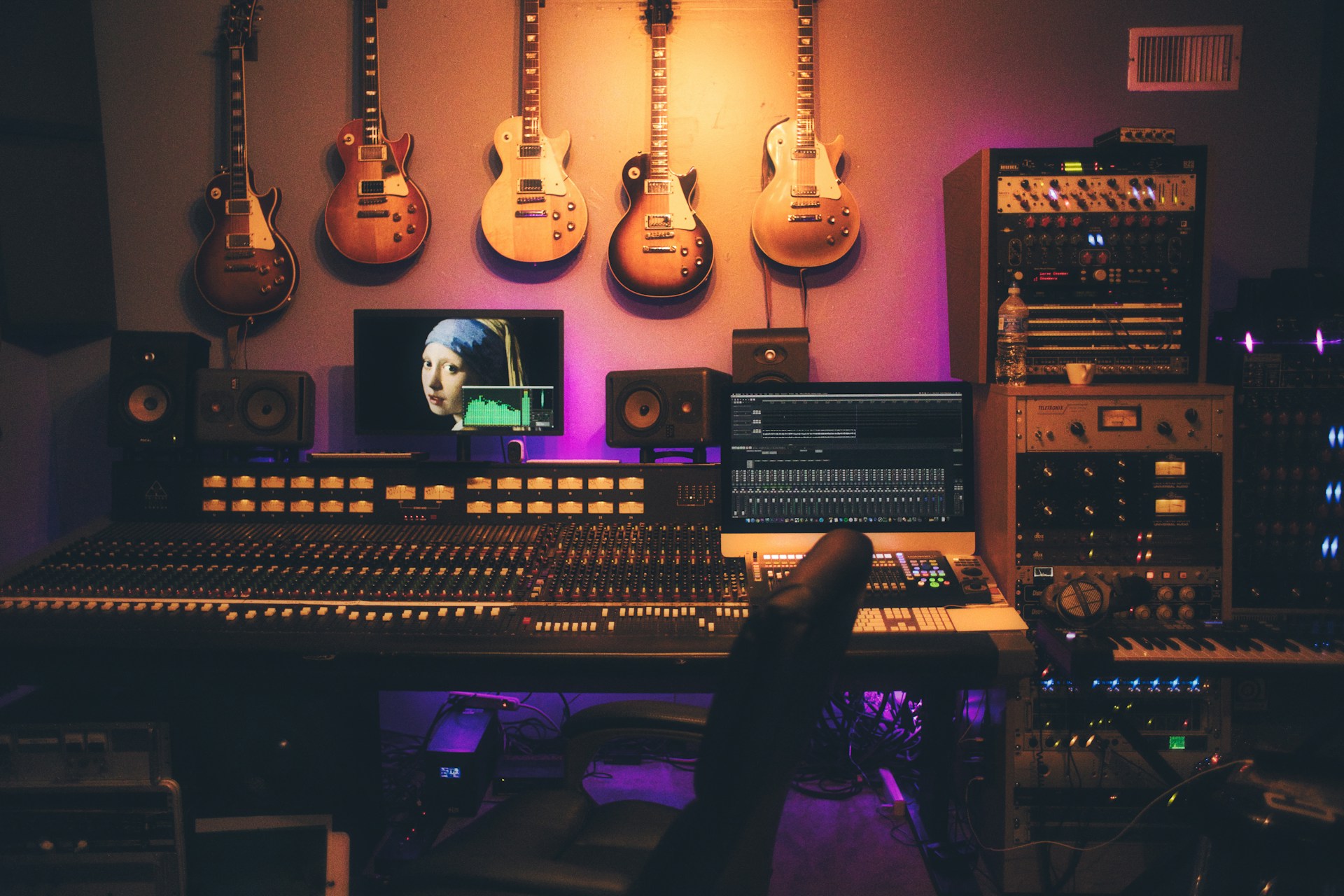 Photo by Krists Luhaers on Unsplash
Building tension through strategic silence
Silence does more work than words in great trailers.
Watch any blockbuster movie trailer and count the pauses. You'll find extended silence before major reveals. Brief gaps that let tension accumulate. Spaces where audiences fill emptiness with anticipation. These aren't accidents. They're calculated psychological manipulation through audio pacing.
The human brain hates uncertainty. When narrative momentum builds then suddenly stops, your mind races to fill that gap. You generate possibilities. You imagine outcomes. You become mentally invested in resolution. That's why "In a world... [pause] where everything changed... [pause] one man..." works better than the same words delivered smoothly. The pauses force audience participation.
AI-generated trailer voices require manual pause insertion during script writing. Unlike human voice actors who improvise dramatic timing, AI reads what you feed it. You control tension through ellipses, periods, and deliberate line breaks. The script writing techniques for trailer voices differ completely from conversational content. You're composing silence as much as speech.
Essential characteristics of cinematic voiceover
Movie trailer voices share specific qualities regardless of genre or era.
Vocal range and resonance requirements
Professional trailer voices operate in a narrow frequency band. Male voices typically sit between 85-110 Hz. Female trailer voices (increasingly common in modern marketing) work in the 165-185 Hz range. These aren't just deeper than normal speech. They're carefully tuned to specific psychological triggers.
Resonance matters more than raw pitch. A voice at 95 Hz with poor resonance sounds thin and unconvincing. The same frequency with proper resonance fills acoustic space, creates perceived power, triggers attention responses. Professional announcers develop resonance through years of training. AI models learn it by analyzing how theatrical voices distribute energy across frequency bands.
The technology identifies which resonance patterns create "epic" versus "intimate" versus "terrifying" qualities. It learns that trailer voices for horror films emphasize different frequency bands than trailers for romantic comedies. When you select a trailer voice on TryAIVoices, you're choosing between different resonance profiles engineered for specific emotional effects.
Articulation patterns that project authority
Movie trailer voices over-articulate compared to normal speech.
Listen to how professional announcers handle consonants. They hit T's and D's with precision. They sustain S sounds slightly longer than conversation requires. They separate words that normally blur together in casual speech. This creates perceived professionalism while ensuring every word cuts through background music and sound effects.
The articulation pattern serves multiple functions. Clear enunciation ensures comprehension even when trailers play in noisy environments. Precise consonants create rhythmic punctuation that guides listener attention. Extended sustain on certain sounds adds dramatic weight to key words. When someone says "In a world where hope... [pause] ...dies," that extended D creates impact beyond the word's literal meaning.
AI voice models struggle with articulation nuance more than frequency matching. Teaching an AI when to over-articulate versus when to use natural speech requires massive training data showing context-appropriate delivery. Quality platforms like TryAIVoices solve this through voice models trained specifically on theatrical content rather than conversational speech. The AI learns articulation patterns from source material that already demonstrates cinematic delivery.
Emotional range within controlled delivery
Great trailer voices convey intense emotion while maintaining perfect control.
This creates fascinating psychological tension. The speaker clearly feels passion about the content. But they never lose composure. They channel emotion into precise vocal choices rather than letting it overwhelm their delivery. This controlled intensity suggests mastery. Authority. Someone who has seen everything and remains unshaken.
The technique requires balancing multiple vocal elements simultaneously. Pitch rises slightly during emotional peaks but never breaks into excited speech. Volume increases but stays within a narrow dynamic range. Pacing accelerates during action descriptions but maintains clarity. Professional voice actors train for years to master this balance. AI achieves it through pattern recognition across thousands of trailer recordings.
When generating trailer voices, you control emotional intensity through script structure rather than explicit emotion tags. The AI voice models on TryAIVoices respond to content context. Writing "He would destroy everything" naturally triggers different delivery than "He would save everyone." The AI reads emotional weight from word choice, sentence structure, and narrative context.
Best AI platforms for movie trailer voices
Not all voice generators handle theatrical delivery equally.
Platform comparison: TryAIVoices versus alternatives
TryAIVoices specializes in entertainment voices with models trained specifically on theatrical content. The platform offers multiple trailer voice options covering different tonal ranges. Deep authoritative voices for action content. Mysterious whisper-quality voices for horror trailers. Epic fantasy narrator voices for animated content.
The interface prioritizes speed. You paste your script, select voice characteristics, generate in seconds. No complex emotion tagging. No manual phoneme adjustment. The AI handles delivery choices based on content analysis. This matters for trailer voices because theatrical delivery requires dozens of micro-decisions per sentence. Manual control becomes counterproductive.
ElevenLabs offers high-quality voices with extensive customization options. Their voice design tools let you adjust pitch, stability, clarity independently. This granular control benefits users who understand audio engineering but adds complexity for creators who just want great results fast. The platform excels at conversational voices but handles theatrical delivery less naturally than specialized alternatives.
Murf AI focuses on corporate and educational content. Their voice library includes some deeper male voices that work for trailer content, but the models aren't trained specifically on theatrical delivery. You'll get professional-sounding results that lack the subtle dramatic qualities separating trailer voices from generic narration.
Play.ht provides extensive language support and voice cloning features. Their strength lies in replicating specific voices rather than generating stylized theatrical delivery. This works better for celebrity voice content than movie trailer voices where you want cinematic qualities more than specific person mimicry.
Voice model selection for different trailer types
Action trailer voices demand aggressive energy. You want voices that sound like they're announcing war. Deep, resonant, slightly raspy. The vocal quality suggests someone who has seen combat and lived to tell about it. TryAIVoices' action-oriented voices capture this intensity through training on military film trailers and combat video game marketing.
Drama trailers require intimate authority. Less bombast. More emotional intelligence. The voice should sound like someone who understands human complexity. Slightly softer than action voices but maintaining authority. These voices work for character-driven content where psychological depth matters more than explosive spectacle.
Horror trailer voices operate in whisper territory. You want unsettling rather than authoritative. Voices that suggest something fundamentally wrong. Less resonance. More breath. Strategic vocal fry that sounds like damaged vocal cords. The creepy voice models on quality platforms achieve this through training on psychological thriller marketing rather than mainstream movie trailers.
Comedy trailer voices break all the rules. They often use conversational delivery, unexpected tonal shifts, deliberate awkwardness. These voices work through subversion of trailer voice conventions. You want AI models trained on diverse content rather than pure theatrical delivery. The variety of character voices available on TryAIVoices lets you experiment with unconventional choices that match comedy's need for surprise.
Technical quality indicators
Sample rate matters for trailer voices more than conversational content. You're working with frequencies at the bottom of human vocal range. Low sample rates lose bass information that creates perceived authority. Quality platforms generate at 44.1 kHz minimum. The professional voices on TryAIVoices output at 48 kHz, ensuring deep frequencies remain intact through the audio chain.
Bit depth affects dynamic range. Movie trailers swing from whispered intensity to booming proclamations. Limited bit depth causes distortion during these swings. Consumer-grade voice generators often output at 16-bit, which works for consistent delivery but struggles with trailer voice dynamics. Professional platforms provide 24-bit output, giving you headroom for dramatic volume changes without audio artifacts.
Noise floor becomes critical in theatrical contexts. Background hiss or digital artifacts that disappear in conversation become obvious during dramatic pauses. Quality voice generators implement aggressive noise reduction without compromising vocal texture. Listen for smooth silence between words. Any persistent hiss or digital artifacting indicates inadequate noise management.
 Photo by Matt Botsford on Unsplash
Writing scripts for maximum impact
Movie trailer scripts follow strict psychological formulas.
The three-act structure compressed
Film trailers condense entire narratives into 90-120 seconds. They don't tell stories linearly. They sell emotional experiences through strategic information disclosure.
Act One (Setup): The first 20-30 seconds establish world and stakes. "In a world where..." or "When everything you know..." or "They thought it was over..." These phrases create context through implication rather than explanation. You're triggering audience pattern recognition. Everyone knows how these stories work. You just activate those memories.
Act Two (Complication): The middle 40-60 seconds introduce conflict and raise stakes. "But when..." or "Until..." or "Now..." These transition words signal narrative shift. You're showing that initial setup wasn't the whole story. Something disrupted equilibrium. Tension escalates. Each sentence builds on previous ones, creating crescendo effect.
Act Three (Resolution Hook): The final 20-30 seconds promise resolution without delivering it. "This summer..." or "One chance..." or "The final battle..." You're selling the experience of resolution rather than showing actual resolution. Audiences pay to see the complete story.
Strategic keyword placement
Certain words carry disproportionate psychological weight in trailer contexts.
"World" appears in nearly every blockbuster trailer because it triggers scope perception. Your brain interprets "world" as maximum possible stakes. "Everything" works similarly. "Nothing" creates existential dread. These aren't sophisticated choices. They're psychological shortcuts refined through decades of audience testing.
Action words need careful selection. "Destroy" outperforms "damage." "Annihilate" beats "destroy." You're not aiming for accuracy. You're maximizing emotional impact per syllable. Every word must justify its presence through psychological return on investment.
Time-related words build urgency. "Now" triggers immediate attention. "Finally" suggests long-awaited resolution. "Last" implies missed opportunity. "First" promises novelty. The script templates that work best for trailer voices pack these urgency triggers into every sentence.
Pause structure for dramatic effect
Ellipses indicate brief pauses. Periods create longer breaks. Line breaks force dramatic silence.
This punctuation becomes your primary tool for controlling AI-generated trailer delivery. Where you place pauses matters more than word choice in many cases. Consider these two versions of identical content:
"In a world where heroes fall one man rises to save them all."
Versus:
"In a world where heroes fall... one man... rises to save them all."
The second version builds tension through strategic silence. Your brain fills those gaps with anticipation. You imagine what comes next. You become emotionally invested in resolution. The first version just delivers information.
Professional trailer writers often spend more time on pause placement than word selection. They read scripts aloud repeatedly, feeling where natural tension builds. They add pauses at points where audiences need processing time. They remove pauses where momentum matters more than comprehension.
When writing for AI voice generation, over-indicate pauses. Human voice actors interpret emotional context and add appropriate pauses automatically. AI reads literally. If you want a dramatic pause, you must specify it through punctuation. The voice generation guide explains how different platforms interpret punctuation as timing cues.
Power word combinations
Certain word pairs create outsized impact through psychological resonance.
"Last hope" triggers survival instincts. "Final stand" activates underdog narrative patterns. "Ultimate sacrifice" promises emotional catharsis. These phrases work because they compress entire story archetypes into two words. Your brain recognizes the pattern and fills in surrounding context automatically.
Contrast combinations build interest. "Darkness rises" pairs negative with active verb for dynamic tension. "Heroes fall" combines positive noun with negative verb for shocking juxtaposition. "Legends die" destroys assumed permanence. Each pairing creates cognitive dissonance that forces audience attention.
Alliterative combinations increase memorability. "Brutal battle." "Terrifying truth." "Secret survival." The repeated consonant creates rhythmic emphasis that helps phrases stick in memory. This matters less for AI generation than human performance, but it still improves script flow and delivery quality.
Voice generation techniques
Getting theatrical quality from AI requires understanding technical process.
Optimal input formatting
AI voice models parse text differently than humans read it. They need explicit guidance about pacing, emphasis, pronunciation. Standard prose creates flat delivery. Trailer scripts require special formatting.
Capitalize words requiring emphasis. "NOTHING will stop him" tells the AI to hit that word harder. "Nothing will STOP him" shifts emphasis to action rather than negation. "Nothing will stop HIM" personalizes the conflict. Same words. Completely different emotional impact based on capitalization patterns.
Use ellipses generously. Three dots indicate brief pause. Six dots create longer silence. Some platforms interpret multiple periods as extended pause duration. Test your chosen platform's parsing rules. Generate the same script with different pause indicators. Find which notation produces desired timing.
Break long sentences across multiple lines. AI often interprets line breaks as natural pause points. Instead of "In a world where everything changed one man rises," write it as:
"In a world where everything changed...
One man rises."
The line break creates dramatic pause that builds tension more effectively than inline ellipses.
Post-generation audio enhancement
Raw AI output rarely matches theatrical quality without processing. Professional trailer voices go through multiple enhancement stages. You can replicate most of these with basic audio software.
Compression: Trailer voices need consistent volume levels. Dialogue compression with 3:1 or 4:1 ratio, fast attack, medium release brings quiet parts up while controlling peaks. This creates the perceived loudness that makes trailer voices cut through background music and sound effects.
EQ adjustment: Boost frequencies around 100-120 Hz to enhance perceived authority. Cut frequencies above 8 kHz to reduce digital harshness. Add gentle boost around 3-5 kHz for clarity and presence. These adjustments transform generic AI voice into theatrical delivery.
Subtle reverb: Small room reverb (0.5-0.8 second decay) adds perceived space without creating echo effect. Trailer voices need some ambiance to feel cinematic rather than dry and sterile. Keep reverb subtle. Too much ruins clarity.
De-essing: AI voices sometimes produce harsh S sounds during processing. Dedicated de-esser plugin tames these without dulling overall clarity. Set threshold so only the harshest sibilance gets reduced. Over-processing makes speech sound lispy.
The audio enhancement tips on TryAIVoices cover these techniques in detail with specific plugin recommendations and settings for different content types.
Combining multiple takes for perfect delivery
Generate the same script multiple times with slight variations. AI introduces randomness into each generation. Sometimes the third take nails a particular phrase better than the first. Sometimes the opening works perfectly but the ending falls flat.
Import all takes into your audio editor. Listen through each version. Mark the best sections. Then composite your final delivery from the strongest parts of each take. This technique mirrors how professional voice actors record multiple takes and editors compile the best performances.
Ensure smooth transitions between takes. Match volume levels. Align pacing. Add tiny crossfades at edit points to eliminate clicks or abrupt changes. When done properly, composited AI voice delivers quality that no single generation achieves alone.
This approach lets you chase perfection without endless regeneration. Instead of hoping the next generation fixes everything, you cherry-pick the best moments from multiple attempts. It's more efficient and produces better results than repeated full script regeneration.
 Photo by
 Creative applications beyond movie marketing
Trailer voice techniques work anywhere dramatic presentation adds value.
Gaming content and live streams
Gaming videos benefit enormously from cinematic voiceover. Your Fortnite highlight reel becomes exponentially more shareable with theatrical narration. "In a world of 100 players... one squad... would claim victory." Corny? Absolutely. Effective? Massively.
The gaming content use case drives significant AI voice adoption. Streamers generate trailer-style intros for their channels. Esports teams create dramatic player introductions. Tournament organizers produce hype videos that rival professional sports productions. All powered by AI voices that used to require expensive voice talent.
Strategy game content particularly benefits from narrator-style trailer voices. These games feature complex systems that benefit from authoritative explanation. A deep, resonant voice describing faction abilities or tech tree options adds perceived weight to game mechanics. The strategy game voices on TryAIVoices capture this gravitas perfectly.
Podcast intros and episode hooks
Podcast intros set tone and expectations. Conversational shows often use trailer voice juxtaposition for comedic effect. "In a world where two idiots discuss Marvel movies..." The contrast between epic delivery and mundane content creates humor through subversion.
Serious podcasts use trailer voices straight. True crime shows particularly benefit from dramatic narration. "They thought they knew the truth... but the evidence... would change everything." This delivery pattern matches the psychological thriller marketing that trained these voice models.
Educational podcasts leverage trailer voice authority to establish credibility. When a deep, confident voice introduces complex topics, audiences assume expertise. This psychological shortcut helps new podcasts establish legitimacy faster than conversational delivery alone.
Social media content that demands attention
TikTok and Instagram Reels fight for attention in feeds filled with competing content. Trailer voice audio creates pattern interruption. Scroll-stopping power. "What if I told you..." opens countless viral videos because that phrase triggers movie trailer recognition patterns.
The TikTok content use case for AI voices shows explosive growth. Creators generate dramatic narration for everything from cooking videos to fitness transformations. The juxtaposition of epic delivery with mundane content creates engagement through unexpected framing.
Meme content exploits trailer voices mercilessly. "In a world without pizza..." introduces food content with mock seriousness. "One man dared to ask... why?" frames absurd questions as philosophical inquiries. The humor derives from applying Hollywood gravitas to trivial topics. The meme content use case section explores this application in detail.
YouTube video production
YouTube's recommendation algorithm favors watch time and click-through rate. Trailer-style openings boost both metrics. When your video opens with dramatic voiceover teasing upcoming content, viewers stay to see payoff. "What you're about to see... will change how you think about..."
Tutorial content gains perceived professionalism from cinematic narration. "Master the ancient art... of Excel pivot tables" frames boring topics as epic quests. This playful delivery makes educational content more shareable while maintaining information density.
Product review channels use trailer voices for comparison videos. "Two cameras enter... only one survives" turns specifications into gladiatorial combat. The dramatic framing makes technical content entertaining without sacrificing useful information.
The YouTuber use case page covers trailer voice applications across multiple content genres with specific examples and script templates.
Legal and ethical considerations
Movie trailer voices exist in complicated legal territory.
Fair use and parody protections
Generic trailer voice characteristics enjoy no copyright protection. You can freely create content using deep, resonant, dramatic delivery. What you cannot do is deliberately impersonate specific voice actors with trademark delivery styles.
Don LaFontaine's "In a world..." opening became his signature. Using that specific phrase in that specific delivery could theoretically constitute trademark violation if it creates confusion about endorsement. However, parody use receives strong legal protection. Creating intentionally over-the-top versions for comedic effect generally falls under fair use.
The key legal question: Would reasonable audiences believe the content received endorsement from the voice actor or their estate? If your AI-generated trailer voice sounds generically cinematic, you're fine. If you're specifically trying to trick audiences into thinking Don LaFontaine recorded your content, you have legal problems.
Most AI voice platforms train models on generic theatrical delivery rather than specific performer imitation. The voice models on TryAIVoices capture cinematic qualities without replicating protected individual characteristics. This provides legal safety while delivering desired dramatic effect.
Disclosure requirements
Most jurisdictions don't currently require disclosure that voiceover uses AI rather than human talent. However, ethical content creation suggests disclosure in appropriate contexts.
Commercial content where audiences might assume human performance warrants disclosure. If you're selling products or services using AI-generated voice claiming professional authority, transparency helps maintain trust. "Voiced by AI" in video descriptions or end cards satisfies this ethical requirement.
Entertainment and creative content generally doesn't require disclosure. Your TikTok meme video doesn't need "AI Voice Used" disclaimers any more than you need "Stock Music Used" warnings. Audiences assume creative content uses available tools. As long as you're not claiming specific human performance, disclosure becomes personal choice rather than ethical requirement.
The legal guide covers these considerations across different content types and jurisdictions.
Commercial licensing considerations
Most AI voice platforms distinguish between personal and commercial use in their terms of service. Personal use typically covers social media content, YouTube videos, personal projects. Commercial use includes paid advertisements, commissioned client work, content created for business purposes.
TryAIVoices' pricing plans include commercial licensing rights at all subscription tiers. You generate trailer voices for client projects without additional licensing fees. This differs from platforms that charge per commercial use or require enterprise contracts for business applications.
Read platform terms carefully. Some restrict commercial use entirely on basic plans. Others limit the types of commercial content allowed. Some prohibit reselling generated audio as stock content. Understanding these restrictions prevents legal complications after you've built content around generated voices.
Attribution and credit practices
AI voice platforms typically don't require attribution in final content. You're not obligated to credit TryAIVoices in your video descriptions or podcast notes. However, attribution can benefit your content through community engagement.
Creator communities appreciate transparency about tools and processes. "Generated with TryAIVoices" in your description helps other creators discover resources while supporting the platform that enables your content. This becomes particularly relevant for tutorial content where your workflow itself provides value.
Some creators build brand identity around AI tool transparency. They explicitly frame their content as "AI-assisted creation" and showcase the tools that make their workflow possible. This approach builds audience while contributing to broader conversations about AI in creative production.
Monetization strategies using trailer voices
Movie trailer voice skills create multiple income streams.
Freelance voiceover services
Many small businesses, indie game developers, and content creators need cinematic voiceover but lack budgets for professional voice talent. You fill this gap by offering AI-generated trailer voices as a service.
Your value proposition combines three elements. First, you understand AI voice generation technical process. Most clients don't. Second, you bring script writing skills that transform their rough ideas into trailer-ready copy. Third, you provide audio post-production that elevates raw AI output to professional quality.
Pricing typically falls between traditional voice actor rates and DIY solutions. A professional voice actor might charge $300-500 for trailer narration. You can offer comparable results for $75-150 depending on project complexity. This undercuts expensive talent while delivering better results than clients achieve themselves.
Market your services on Fiverr, Upwork, and social media. Create portfolio samples demonstrating range. Show action trailer voices, horror trailer voices, drama trailer voices, comedy trailer voices. Clients want proof you understand different emotional tones before committing to paid work.
YouTube and social media content creation
Consistent trailer voice content builds audience. Consider channels focused on:
Movie/Game trailer recreations: Take existing film or game trailers and recreate them with AI voices. Add your own creative spin. This showcases your skills while providing entertainment value. Audiences enjoy seeing familiar content reimagined.
Original dramatic narratives: Create short stories told entirely through trailer voice narration with stock footage or simple animation. These demonstrate storytelling skills while building portfolio content. Strong narratives go viral, driving channel growth.
Tool tutorials: Teach audiences how to create their own trailer voices. Meta-content about content creation consistently performs well. You build authority while helping others, creating engagement loop that sustains channel growth.
The YouTube creator guide explores content strategies that leverage AI voice capabilities for channel growth and monetization.
Template and asset sales
Package your trailer voice scripts as templates. Creators constantly seek proven formulas they can adapt. Sell script packs organized by genre: action trailers, horror trailers, drama trailers, comedy trailers. Each pack contains 10-20 customizable scripts with formatting optimized for AI generation.
Create audio asset packs combining AI voices with music and sound effects. Sell ready-to-use trailer packages on platforms like Envato Market or Creative Market. Clients purchase complete audio packages they drop into their video projects.
Develop presets and processing chains for trailer voice enhancement. Package your compression, EQ, and reverb settings as installable presets for popular audio software. Creators pay for convenience. Your technical knowledge becomes scalable product.
Client video production
Many businesses need promotional videos with cinematic production value. Small product launches, real estate presentations, event promotions, corporate announcements. These projects benefit from trailer voice treatment that adds perceived professionalism.
Position yourself as video producer rather than just voiceover provider. Offer complete packages: script writing, AI voice generation, video editing, music selection, sound design. Your trailer voice skills become one component of comprehensive production service.
Target clients who need consistent content. Monthly retainers for ongoing video production provide stable income while building long-term relationships. As clients' businesses grow, your production services grow with them.
Platform comparison and recommendations
Different voice generators serve different needs in trailer voice production.
TryAIVoices for instant theatrical quality
TryAIVoices prioritizes speed and specialization. The platform focuses on entertainment voices with models trained specifically on dramatic delivery. You paste your script, select voice characteristics, generate in seconds.
The voice library includes multiple trailer-appropriate options. Deep authoritative male voices for action content. Mysterious male voices for thriller content. Strong female voices for modern trailer styles. Each voice model captures specific theatrical qualities rather than attempting to be all things to all users.
Pricing structure suits content creators. Subscription plans include generous monthly generation credits. No per-use fees. No complex licensing tiers. You pay monthly rate and create unlimited content within your credit allocation. This predictable pricing model makes budgeting straightforward for professional creators.
The platform handles common trailer voice challenges automatically. Appropriate dramatic pacing. Natural emphasis patterns. Authentic vocal texture. You don't need audio engineering knowledge to get professional results. The AI makes delivery choices based on content analysis rather than requiring manual phoneme adjustment.
ElevenLabs for voice customization
ElevenLabs provides granular control over every voice characteristic. Pitch, stability, clarity, style all adjust independently. This benefits users who understand voice production and want precise control over generated output.
The platform's voice design tools let you create custom voice profiles. You dial in exact frequency characteristics, resonance patterns, vocal texture. This matters for creators who need very specific vocal qualities or want to match existing brand audio.
However, this customization creates complexity. Getting theatrical quality requires understanding which parameters create cinematic delivery. You're essentially engineering the voice rather than selecting pre-optimized theatrical models. This slows workflow compared to specialized alternatives like TryAIVoices.
Murf AI for script-to-video workflow
Murf integrates voice generation with video timeline editing. You generate voiceover and sync it with visual elements in unified interface. This streamlines production for creators who need complete video packages rather than just audio files.
The platform includes teleprompter features, pronunciation libraries, and team collaboration tools. These benefit agencies and production teams working on client projects. Multiple team members contribute to single project without file sharing complications.
Voice quality tends toward professional corporate delivery rather than theatrical drama. The models excel at clear, authoritative narration but lack the subtle dramatic qualities that define movie trailer voices. You can generate acceptable trailer content but might need more audio post-processing than specialized platforms require.
Specialized voice actors versus AI
Professional voice actors still outperform AI in specific contexts. Complex emotional delivery, improvised timing adjustments, subtle tonal variations. Human performers make micro-decisions that AI doesn't yet replicate consistently.
However, voice actors cost $200-500 per project minimum. They require scheduling coordination. They need detailed direction. They may require multiple takes with associated fees. This makes financial sense for high-budget professional productions. For YouTube content, social media videos, or indie projects, AI provides 80% of the quality at 5% of the cost.
The decision comes down to budget and audience expectations. Professional film marketing still uses human talent. Independent creators and small businesses get better ROI from AI voices. As technology improves, this calculus shifts toward AI even for higher-budget applications.
 Photo by Jakob Owens on Unsplash
Technical troubleshooting
Common issues when generating trailer voices and their solutions.
Fixing flat or monotonous delivery
AI reads your script literally. When delivery sounds flat, the problem usually traces to input formatting rather than voice model quality.
Add more emphasis indicators. Capitalize important words. Insert more pauses using ellipses or line breaks. Break long sentences into dramatic fragments. Each of these changes tells the AI where to add dramatic energy.
Try this transformation:
Original: "In a world where everything has changed one man will rise to face the ultimate challenge."
Improved: "In a world where EVERYTHING has changed... One man... Will RISE... To face the ULTIMATE challenge."
The capitalization and pauses transform flat delivery into dramatic narration. Same words. Completely different energy.
If formatting changes don't solve the issue, try different voice models. Some voices handle theatrical delivery more naturally than others. The voice library on TryAIVoices includes multiple dramatic options. Test several models with the same script to find which captures desired energy.
Addressing pronunciation issues
AI occasionally mispronounces uncommon words or proper nouns. Brand names particularly cause problems. The voice model hasn't seen these words during training and guesses at pronunciation.
Most platforms let you specify phonetic pronunciation using SSML tags or similar notation. If your trailer mentions "Xantheron Prime," provide phonetic guidance: "Zan-ther-on Prime." The AI reads phonetic spelling and generates correct pronunciation.
Alternative approach: spell words phonetically in your script. Instead of writing "Xantheron," write "Zanthuron." The different spelling guides the AI toward correct pronunciation. You sacrifice written accuracy for audio accuracy.
For persistent issues, contact platform support. Many voice generators add custom pronunciation rules for commonly requested terms. Your pronunciation problem might help other users if the platform integrates your solution into their models.
Managing pacing and timing
AI-generated timing sometimes feels off despite careful pause placement. Certain phrases rush when they should build. Other sections drag when momentum matters.
Export your generated audio and edit manually. Audio editing software like Audacity (free) or Adobe Audition (paid) lets you adjust timing with precision. Stretch dramatic pauses. Compress rushed sections. You're essentially conducting the performance after generation.
Split your script into smaller chunks. Instead of generating entire trailer in one pass, create separate generations for each major section. This gives you flexibility to adjust timing between sections while the AI handles internal timing within each chunk.
Some platforms offer speed adjustment parameters. Slowing playback 10-15% sometimes creates better dramatic pacing. Test different speeds. The pitch adjustment algorithms in quality platforms maintain natural sound even with timing changes.
Eliminating digital artifacts
AI voices sometimes include subtle digital noise, clicks, or processing artifacts. These become particularly obvious during dramatic pauses where you want clean silence.
Run your generated audio through noise reduction. Audacity includes noise reduction tool that analyzes silent sections and removes similar patterns throughout the audio. This eliminates consistent background noise without affecting voice quality.
Use de-click processing to remove sudden artifacts. Most DAWs include de-click plugins designed for vinyl restoration. These same tools eliminate digital clicks in AI-generated audio.
If artifacts persist, the problem might be voice model quality rather than post-processing issue. Try alternative voice generators. The professional voice models on TryAIVoices implement aggressive artifact reduction during generation, producing cleaner output that requires less post-processing.
Advanced creative techniques
Push trailer voice applications beyond obvious uses.
Layering multiple voice styles
Combine different voice characteristics for unique effects. Start with authoritative male voice for main narration. Add whispered male voice during horror sections. Include strong female voice for key phrases. This creates texture and variation that single-voice approach can't match.
The technique requires careful volume balancing. Background voices should enhance without distracting. Use EQ to separate frequency ranges. Put main voice in 100-120 Hz range. Set background voices in 80-95 Hz range. This prevents frequency masking while creating layered effect.
Action trailers particularly benefit from multi-voice approach. Use different voices for different characters or factions. "The heroes thought they won... but the darkness... returns." Different voice for each phrase creates narrative dimension that engages audiences more deeply than monotone delivery.
Integrating sound design elements
Movie trailers combine voice with sophisticated sound design. Whoosh effects during transitions. Sub-bass hits on dramatic words. Ambient texture underlying quiet moments. These elements transform good trailer voice into great theatrical experience.
Time sound effects to match vocal emphasis. When the voice hits "RISE," trigger impact sound simultaneously. This audio-visual synchronization creates perceived weight that voice alone doesn't achieve. The sound design reinforces psychological impact of vocal delivery.
Use music bed selection strategically. Trailer music should support vocal delivery without competing for attention. Lower music volume during key phrases. Bring it up during pauses. Create dynamic mix where voice and music trade focus rather than fighting for space.
Build custom ambient beds. Layer subtle sound effects: wind, distant thunder, electronic drones. These create mood that makes your trailer voice feel situated in specific world rather than floating in acoustic void. The sound design guide covers ambient creation in detail.
Hybrid human-AI approaches
Record your own voice speaking the script naturally. Then replace individual words or phrases with AI-generated delivery. This hybrid approach captures human timing and emotion while adding AI's vocal characteristics where they create strongest impact.
The technique works particularly well for emphasis words. When you want "DESTROYED" to hit with maximum bass response, replace your naturally spoken word with AI version generated at lower frequency. You maintain human performance naturalness while adding theatrical power where it matters most.
Reverse approach: Use AI for main narration but record your own voice for emotional peaks. AI handles consistent delivery across bulk content. Your human voice carries moments requiring subtle emotion or unexpected tonal shifts. This gives you best of both approaches.
Creating signature voice styles
Develop unique voice characteristics that become your brand identity. Maybe you combine British accent with American action movie delivery. Or use female voice for traditionally male-dominated trailer styles. These unconventional choices create recognition and differentiation.
Test unusual combinations. Morgan Freeman-style voice for comedy trailers. SpongeBob voice delivered with complete seriousness. The juxtaposition creates novelty that captures attention in crowded content landscape.
Document your process. When you find voice style that works, record exact settings, post-processing chain, script formatting approach. This lets you replicate successful results consistently. Your signature style becomes repeatable rather than accidental.
Industry trends and future developments
Trailer voice technology continues evolving rapidly.
Emotional intelligence improvements
Current AI voices make delivery choices based on content analysis. Future models will understand nuanced emotional context. They'll recognize when script suggests building dread versus excitement. When subtle uncertainty enhances delivery versus confident authority.
This advancement eliminates formatting tricks currently required. You won't need excessive capitalization or pause indicators. The AI will interpret emotional intent from content structure alone. Script writing becomes more natural while generated delivery improves.
Early versions of emotion-aware models already appear on platforms like TryAIVoices. These systems analyze sentence structure, word choice, narrative arc to determine appropriate delivery style. The technology still requires refinement but demonstrates clear trajectory toward more intelligent voice generation.
Real-time voice generation
Current workflow requires script writing, generation, post-processing. Future tools will generate theatrical voice in real-time during video editing. You type narration directly into timeline. Voice generates instantly with preview playback. Adjustments happen immediately without regeneration delays.
This transformation changes content creation workflow. Video editing and voice production merge into unified process. You iterate faster. Test more variations. Polish delivery while maintaining creative momentum rather than waiting for generation cycles.
Gaming applications particularly benefit from real-time generation. Live streamers could trigger dramatic narration on demand. "And with that kill... LEGENDARY" generated instantly in trailer voice quality. This creates production value currently impossible without pre-recorded audio.
Personalization and voice cloning
Voice cloning technology lets you create trailer voice version of your own voice. You provide voice samples. AI generates model that speaks with your vocal characteristics but adds theatrical qualities you lack naturally.
This enables consistent brand voice across content while maintaining dramatic quality. Your audience recognizes your voice but hears professional theatrical delivery. The voice cloning features on advanced platforms already enable this application.
Ethical considerations around voice cloning require attention. Cloning someone else's voice without permission creates legal and ethical problems. Platforms implement verification systems ensuring only rightful voice owners create clones. As technology improves, these safeguards become increasingly important.
Integration with video generation
AI video generation combines with AI voice generation for complete trailer automation. You provide script and visual preferences. System generates voice narration and matching video content simultaneously. The output requires editing polish but handles 70-80% of production work automatically.
This technology enables creators without video editing skills to produce theatrical content. Your script becomes finished trailer through largely automated process. The democratization of video production accelerates dramatically.
Current limitations include visual coherence across generated video and occasional voice-video synchronization issues. These challenges decrease monthly as competing platforms improve their models. The trajectory points toward creator empowerment rather than professional displacement.
Frequently asked questions
What makes a good movie trailer voice?
Great trailer voices combine deep resonance (85-120 Hz for male voices), controlled emotional intensity, clear articulation, and strategic vocal fry. They convey authority while maintaining perfect composure. The voice suggests someone who has seen everything and remains unshaken. AI models on TryAIVoices capture these elements through training on thousands of professional trailer recordings.
Can I use AI trailer voices commercially?
Most platforms including TryAIVoices include commercial licensing rights with paid subscriptions. You can use generated voices for client projects, YouTube monetization, sponsored content, and advertisements. Always verify specific platform terms as licensing varies between providers. Some restrict commercial use on basic plans or charge additional fees for business applications.
How do I make AI voices sound less robotic?
Add more dramatic pauses using ellipses and line breaks. Capitalize words requiring emphasis. Vary sentence length and structure. Break long sentences into shorter fragments. Use post-processing like compression, EQ adjustment, and subtle reverb. The voice enhancement guide covers specific techniques that transform flat AI delivery into theatrical performance.
What's the best voice for action trailers?
Action trailers benefit from deep male voices (85-100 Hz) with slight raspy quality and aggressive energy. Look for voices described as "authoritative," "powerful," or "intense." The action-oriented voices on TryAIVoices train specifically on military and combat content marketing, capturing the aggressive delivery action content requires.
Do I need expensive software for trailer voices?
Free tools like Audacity handle most post-processing requirements. You need compression, EQ, and reverb capabilities. Any modern DAW includes these features. Paid options like Adobe Audition offer more sophisticated tools but aren't necessary for professional-quality results. Your script writing and voice model selection matter more than software choice.
How long should movie trailer scripts be?
Traditional film trailers run 90-120 seconds. YouTube content works at 30-60 seconds. TikTok and Instagram Reels need 15-30 seconds maximum. Write approximately 150-180 words for 60-second delivery when accounting for dramatic pauses. Test your script timing by reading aloud with exaggerated pauses before generation.
Can AI voices replace professional voice actors?
AI provides excellent results for independent creators, small businesses, and digital content. Professional film marketing still predominantly uses human talent for subtle performance nuances and brand relationships. The gap narrows yearly as AI improves. For most content creators, AI delivers 80% of professional quality at 5% of the cost, making it the practical choice.
What's the difference between trailer voices and narrator voices?
Trailer voices emphasize dramatic intensity and psychological manipulation. They build urgency and excitement. Narrator voices prioritize clarity and information delivery. They explain rather than excite. Trailer voices use more vocal fry, dramatic pauses, and emotional variation. The narrator voices on TryAIVoices optimize for extended listening rather than short-form intensity.
Related voices to try
- Morgan Freeman AI voice - Authoritative narrator perfect for dramatic trailer delivery
- Darth Vader AI voice - Iconic villain voice for dark or epic content
- Samuel L Jackson AI voice - Intense action delivery with natural gravitas
Related guides
- Best AI voice generators for characters and celebrities - Platform comparison and recommendations
- How to make text to speech sound natural - Techniques for improving AI voice quality
Movie trailer voices transform ordinary content into cinematic experiences. The deep resonance, controlled intensity, and strategic pacing trigger psychological responses refined through decades of audience testing. AI technology now provides these theatrical qualities to every content creator without expensive voice talent or professional studio time.
Success requires understanding the psychological mechanics behind trailer voices. Frequency ranges that trigger authority perceptions. Vocal fry that creates authentic texture. Pause placement that builds narrative tension. Script structures that compress entire emotional arcs into seconds. These elements combine into theatrical delivery that makes audiences lean forward and pay attention.
Start creating professional trailer voices with TryAIVoices today. Generate cinematic voiceovers with voice models trained specifically on theatrical content. Transform your YouTube videos, social media content, gaming highlights, and creative projects with Hollywood-caliber narration.