Santa AI Voice Generator: Create Jolly St. Nick Voiceovers
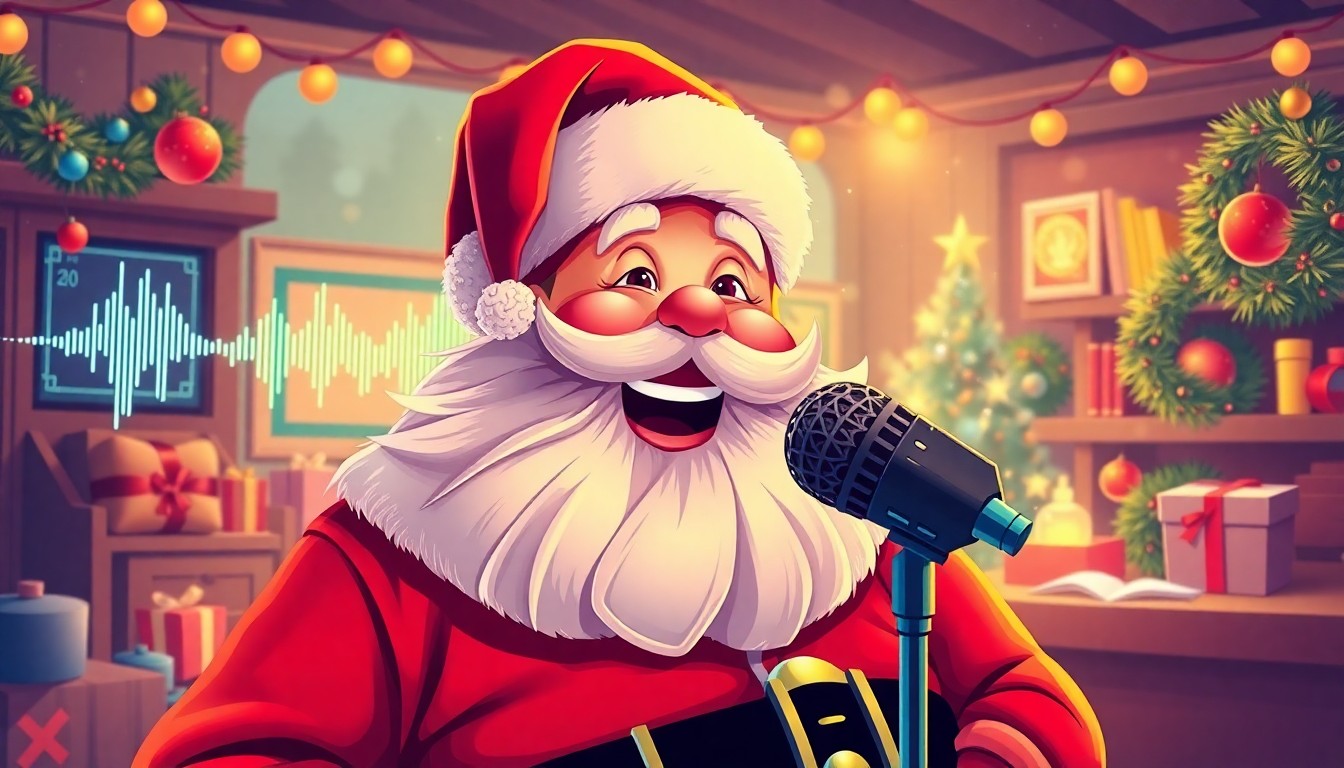
AI voice generators work by analyzing thousands of vocal samples to understand patterns. Pitch ranges. Breathing rhythms. Emotional inflections. When it comes to Santa Claus voices, the technology faces a unique challenge. The voice must convey warmth, age, joy, and authority all at once. That deep belly laugh. The twinkling quality that makes "Ho ho ho" sound genuinely mirthful rather than forced. The gentle wisdom that comes through even when delivering simple greetings.
Content creators across YouTube, TikTok, and podcasting discovered that Santa voices drive engagement year-round, not just during holidays. Parents creating personalized messages for children. Marketers building seasonal campaigns that actually convert. Educators producing content that captures attention through familiar, comforting tones. Gaming creators adding festive elements to streams. The applications extend far beyond obvious Christmas uses.
This guide covers everything about generating Santa AI voices. You'll learn which platforms produce the most authentic jolly delivery, how to write scripts that capture Santa's distinctive speaking patterns, the technical settings that create warmth without crossing into cartoonish territory, creative applications that work throughout the year, and the legal considerations that keep your content safe while maximizing impact.
Understanding what makes Santa voices distinctive
Santa Claus voices share specific characteristics that separate them from generic elderly male voices or simple jovial characters. These qualities developed through decades of cultural reinforcement across films, advertisements, and live performances.
The acoustic foundation of jolly delivery
Santa's voice sits in a specific frequency range. Lower than average speaking voices but not as deep as typical villain or narrator tones. This mid-low range sounds reassuring rather than intimidating. The warmth comes partly from this pitch placement combined with a slightly breathy quality that suggests age and kindness.
The resonance matters as much as the pitch. Santa's voice needs chest resonance. That full-bodied sound that suggests someone substantial. Think of the difference between a thin voice echoing in the head versus a rich voice rumbling from the chest. Santa occupies the latter category exclusively.
Vocal fry appears occasionally but not constantly. Older voices naturally incorporate some fry, especially at the ends of phrases. Too much sounds tired. Too little sounds artificially young. The balance creates believability without sacrificing energy.
The rhythm of Santa's speech patterns
Santa doesn't rush. Each word gets time to breathe. This pacing creates several effects simultaneously. It sounds grandfatherly and patient. It allows for warm emotional tones to fully develop. It gives listeners space to feel the joy rather than being rushed past it.
The pauses matter enormously. Santa uses silence for effect. After asking a question, the pause invites response even in recorded content. Before delivering a punchline or gift announcement, the pause builds anticipation. These gaps in speech create rhythm that keeps audiences engaged.
Repetition with variation defines Santa's speaking style. "Have you been good? Have you been nice?" The pattern repeats but with slight tonal shifts. "What would you like for Christmas? What's your Christmas wish?" The questioning continues but each iteration carries different emotional weight. When generating Santa voices with AI, building these repetitive patterns into your scripts produces more authentic results. Similar rhythmic patterns appear in other beloved character voices like Mickey Mouse or Patrick Star, though each has distinct timing signatures.
Emotional range beyond simple jolliness
The cultural image of Santa focuses on "Ho ho ho" cheerfulness, but effective Santa voices need emotional depth. The best portrayals capture multiple emotional registers that make the character feel genuine rather than one-dimensional.
Gentle authority emerges when Santa judges behavior or makes decisions about gift-giving. The voice remains kind but carries weight. "Now, now" or "Let's see about that" delivered with the right tone establishes Santa's role as a moral figure without becoming harsh.
Genuine warmth extends beyond performance. Listen to the difference between someone forcing cheerfulness and someone who genuinely delights in making children happy. Santa's voice should sound like someone who truly loves what they're doing. This sincerity translates through subtle vocal choices that AI can replicate when properly configured.
Quiet wisdom appears in storytelling moments. When Santa shares memories or lessons, the voice softens slightly. The jovial energy remains but modulated. This creates trust and makes audiences lean in rather than being pushed back by constant high energy. The Morgan Freeman AI voice masters a similar wise narrator quality, though with very different tonal characteristics.
Playful mischief surfaces during jokes or teasing. The twinkle in Santa's eye needs to come through vocally. A slight lilt. A knowing chuckle embedded in the words themselves. This keeps the character from becoming too serious or preachy.
TryAIVoices provides emotion controls that let you adjust these registers. The Santa voice generator on the platform captures these nuances, allowing you to shift between jolly greetings and gentle wisdom depending on your content needs. Unlike generic text-to-speech engines that offer only robotic delivery, dedicated character voice platforms understand the emotional complexity required for authentic Santa performances.
Best AI platforms for Santa voice generation
The market offers numerous AI voice generators, but capability varies dramatically when it comes to character voices. Generic business-focused platforms struggle with the specific warmth and character Santa requires. Specialized character voice tools produce results that actually sound like Santa rather than an elderly person reading a script.
Platform features that matter for character voices
Sample quality determines everything. Platforms training their AI models on professional voice actor recordings produce better results than those using amateur samples. Listen to platform demos carefully. Can you hear the warmth? Does the "Ho ho ho" sound natural or forced? Does the voice maintain quality across different emotional tones?
Emotion control separates professional tools from basic generators. You need the ability to adjust happiness levels, energy, warmth, and pacing. Santa delivering a personalized gift message requires different settings than Santa reading a bedtime story. The platform should offer granular control over these parameters.
Processing speed matters for workflow efficiency. Some platforms take minutes to generate a single line. Others produce results in seconds. For content creators editing multiple takes or producing large volumes of content, this time difference becomes significant.
Output quality affects final production value. Check the audio bitrate, noise levels, and consistency across longer generations. Some platforms produce clean audio suitable for professional projects. Others generate content with artifacts that require extensive editing to become usable.
The voice library size indicates platform sophistication. Tools offering hundreds of character voices demonstrate serious investment in voice AI technology. Those with limited options often struggle with the nuances required for convincing Santa performances. TryAIVoices maintains a library of 500+ character and celebrity voices, indicating the depth of voice modeling the platform handles.
Comparing Santa voice quality across generators
Not all Santa voices sound equally convincing. Test generations across platforms reveal significant quality differences.
Generic text-to-speech engines like standard Google or Amazon voices lack the character depth needed. They can adjust pitch lower and add some jolly energy, but the result sounds like an algorithm trying to approximate Santa rather than capturing the essence of the character. These work for basic projects where any elderly-sounding voice suffices, but they fail for content where the Santa character drives engagement.
AI voice cloning platforms require extensive sample audio to create custom voices. This approach can produce excellent Santa voices if you have access to professional Santa voice actor recordings and the technical skills to train models. For most content creators, this path requires too much time and expertise. See our guide to RVC AI voice models for the technical process involved.
Character-focused AI voice generators like TryAIVoices train models specifically on character voices. The Santa voice captures the warmth, energy, and emotional range needed for convincing content. These platforms understand that Santa isn't just "old man voice plus happiness" but a specific cultural character with distinct vocal patterns.
The difference becomes obvious when you compare outputs. Generic engines sound flat and artificial. Character-focused platforms produce voices that could convincingly appear in actual Christmas content. For professional projects or content where engagement depends on voice quality, this gap in authenticity determines success or failure.
Speed and pricing considerations
Voice generation speed varies from seconds to minutes depending on platform infrastructure. For single personalized messages, this matters less. For content creators producing dozens of variations or long-form content, processing time impacts workflow significantly.
Some platforms charge per character or per second of audio generated. Others offer subscription models with unlimited generation. Calculate your typical usage before committing. A parent creating one Santa message per child benefits from pay-per-use. A content creator producing weekly Christmas videos needs unlimited access.
Quality versus cost trade-offs exist across the market. The cheapest options produce the weakest results. The most expensive don't always deliver proportionally better quality. TryAIVoices pricing offers tiered subscription plans based on usage volume, with all tiers providing access to the full voice library including character voices like Santa. This model works better for regular content creators than pay-per-generation systems that make experimentation expensive.
Writing scripts that sound authentically Santa
Voice quality alone doesn't create convincing Santa content. The script determines whether the final product sounds like Santa or merely sounds like someone reading Santa's words. Certain phrases, structures, and patterns make AI-generated voices feel more authentic.
Signature phrases and vocabulary choices
Santa's vocabulary draws from specific sources. Traditional Christmas language. Grandfatherly expressions. References to workshop activities and reindeer. Incorporating these elements throughout scripts creates recognition and comfort.
Classic greetings establish character immediately. "Well, well, well." "Ho ho ho." "Merry Christmas." "Season's greetings, my friend." "What do we have here?" These phrases signal Santa within the first seconds of audio.
Workshop references ground the character in the familiar mythology. "The elves have been busy." "I've been checking my list." "The workshop is running around the clock." "The reindeer are getting restless." These details create context that pure greetings lack.
Time-honored phrases connect to generational expectations of how Santa speaks. "Have you been good this year?" "What would you like for Christmas?" "I know when you're sleeping." "I've got my eye on you." "Christmas magic." These familiar lines trigger nostalgia and recognition.
Gentle corrections add character depth. "Now, now, let's remember our manners." "Oh my, that's quite a list." "We'll see about that." "Perhaps something a bit smaller?" These moments show personality beyond constant agreement.
Avoid modern slang or overly contemporary references. Santa sounds timeless. "Lit" or "fire" or current internet speak breaks character. Keep vocabulary slightly old-fashioned without becoming archaic. "Wonderful" instead of "awesome." "Delightful" instead of "cool." "My friend" instead of "dude."
Structuring dialogue for emotional impact
Santa content works best when it follows emotional arcs rather than simply listing information. Build scripts with rising and falling energy that creates engaging listening experiences.
Opening with recognition establishes connection. "I've heard so much about you." "Your name came up in the workshop just yesterday." "The elves have been telling me stories." This personalization, even generic personalization, makes listeners feel seen.
Building anticipation through the middle section maintains engagement. "I've been watching you all year." "I noticed something special about your behavior." "There's a particular item on my list next to your name." These statements create questions that keep audiences listening for answers.
Delivering payoff near the end rewards that attention. "You've earned something wonderful." "Christmas morning will bring a surprise." "Keep being the amazing person you are." The payoff doesn't need to be a specific gift. Emotional validation works equally well.
Closing with warmth leaves a lasting impression. "Remember, Christmas magic lives in your heart." "I'll be watching with pride." "Keep that wonderful spirit alive." "Until next time, my friend." The goodbye matters as much as the greeting.
Paragraph length variation keeps scripts interesting. Short declarations. Medium explanations. Long, flowing sentences that build with energy and create momentum through the message, carrying listeners forward with the rhythm itself. See our Gary Provost writing guide for detailed techniques on creating this rhythm.
Adding natural pauses and laughter
AI voice generators interpret punctuation as timing cues. Strategic use of commas, periods, and ellipses controls pacing and creates the pauses that make Santa sound natural rather than rushed.
Ellipses create anticipation pauses. "Let's see here... yes, I remember you." "What should we do about... that cookie you left me?" The gap lets the previous phrase sink in and builds mild tension before the resolution.
Em dashes indicate... wait, never use em dashes. Use commas or periods instead. "Well now, that's interesting." "Hmm, let me check my list." Simple punctuation creates cleaner pauses that AI interprets more consistently.
Laughter integration requires careful scripting. Simply writing "ho ho ho" often produces robotic results. Try embedding the laugh more naturally: "Well, well, well, ho ho ho, look who we have here." The surrounding context helps AI interpret the laugh as part of the flow rather than an isolated sound to produce awkwardly.
Repeated phrases with pauses create signature rhythms. "Good children. Very good children. The absolute best children." Each iteration gets a period forcing a pause, building emphasis through repetition.
Test different punctuation approaches with your chosen platform. Some AI engines interpret commas as brief pauses while treating ellipses as longer breaks. Others handle them identically. Understanding your platform's interpretation helps you write scripts that produce the timing you envision.
Technical settings for optimal Santa voice quality
Beyond script quality, the technical configuration of your AI voice generator determines the final audio character. Most platforms offer adjustment controls that dramatically affect output even with identical scripts.
Pitch and tone adjustments
Santa's voice sits lower than average speaking voices. If your AI platform offers pitch control, aim for the lower register without dropping into unnatural bass territory. Too low sounds intentionally distorted. The right range sounds like a naturally deep voice.
Warmth settings affect how friendly the voice feels. Maximum warmth can cross into overly sweet or artificial territory. Moderate warmth settings often produce better results, letting the script content convey the emotional tone rather than forcing it through voice modulation.
Some platforms offer "age" settings that add slight vocal fry, breathiness, and other qualities associated with older voices. Santa benefits from subtle aging without sounding frail or weak. The goal is grandfatherly, not geriatric.
Speed and pacing controls
Santa shouldn't rush. Slow down the default speaking pace. Most AI platforms default to efficiency, producing speech quickly to minimize generation costs. Santa works better at 80-90% of normal speaking speed.
Too slow sounds patronizing or drugged. The right pace feels patient and deliberate without dragging. Test different speed settings with the same script to find the sweet spot for your specific platform and content type.
Pause length between sentences matters. Longer pauses give the jolly delivery time to land. They create space for listeners to react emotionally. They make the voice feel less like continuous narration and more like genuine conversation.
Adding background ambience and effects
Pure voice often sounds too clean for Santa content. Adding subtle background elements creates atmosphere that enhances the character.
Workshop sounds suggest Santa's environment. Distant hammering. Gentle chimes. Faint elf chatter. These elements should sit well back in the mix, barely noticeable but adding subliminal context. Tools like Epidemic Sound or AudioJungle offer Christmas workshop ambience tracks.
Fire crackle suggests the cozy setting. A fireplace burning in the background creates warmth both literally and emotionally. Again, keep this subtle. The voice remains primary.
Sleigh bells work as transitional elements. A soft jingle between sections or at the very beginning and end frames the content. Overuse becomes grating. Strategic placement enhances without overwhelming.
Reverb adds space. Santa's voice should sound like it's in a room rather than a recording booth. Light room reverb creates presence. Too much sounds like a cave or church, which breaks character. Subtle hall reverb suggests the workshop without distraction.
Most audio editing software like Audacity, Adobe Audition, or even free tools like GarageBand allow you to layer these elements. Keep Santa's voice at -6dB to -3dB, allowing headroom while remaining clearly dominant. Background elements should sit around -18dB to -24dB, present but supporting. Similar techniques apply when producing content with other character voices or movie character voices, though each character suggests different ambient environments.
Creative applications for Santa AI voices
Santa voices work year-round for content creators who understand the applications beyond obvious Christmas uses. The voice carries associations and emotional triggers that remain valuable across contexts.
Personalized Christmas messages for children
This represents the most direct application. Parents, relatives, and businesses create custom Santa messages addressing children by name. The AI voice combined with a simple script mentioning specific details makes children believe Santa personally knows them.
Structure these messages to include specific details parents provide. "I heard you helped your little sister with her homework." "Your teacher mentioned how kind you were to the new student." "I noticed you cleaned your room without being asked." These particulars transform generic Santa messages into seemingly personalized communications.
Keep messages under two minutes. Young children's attention spans limit how much Santa dialogue remains engaging. Hit the key points: recognition, specific praise, gentle reminder about good behavior, and Christmas excitement. Longer messages lose impact as children's minds wander.
Many businesses offering personalized Santa messages use AI voices to scale production. Recording custom messages with human voice actors becomes cost-prohibitive. AI generation allows businesses to produce hundreds or thousands of unique messages efficiently while maintaining quality. The TryAIVoices platform makes this scalable personalization possible without the expense of traditional voice actor services.
Marketing content and seasonal campaigns
Retail businesses discovered Santa voices drive engagement in seasonal advertising. A Santa-voiced ad stands out in feeds flooded with standard commercial voices. The character commands attention and creates positive associations with brands.
Email campaigns benefit from Santa voice integration. Imagine an email where clicking a button plays a Santa message about a sale or new product. "Ho ho ho, have I got a deal for you." The novelty increases click-through rates compared to text-only communications.
Phone hold messages become less tedious when Santa delivers them. "Thank you for your patience. Our elves are working hard to assist you." Seasonal hold messages reduce perceived wait time and create positive brand impressions during what would otherwise be frustrating experiences.
Social media ads on platforms like TikTok or Instagram Reels perform better with Santa voiceovers. The character cuts through the noise. Users scroll past generic ads but often stop for familiar character voices, even in commercial contexts. See our guide to TikTok voice content for platform-specific optimization strategies.
In-store announcements create atmosphere during holiday shopping seasons. Santa announcing sales or directing customers to specific departments enhances the Christmas shopping experience. This transforms necessary announcements into brand-building moments.
Businesses often hesitate to use character voices in marketing, fearing it seems unprofessional. Christmas represents the exception. Santa in marketing feels appropriate rather than gimmicky. Leveraging this cultural acceptance creates engagement opportunities unavailable with standard commercial voices.
YouTube content and storytelling
Content creators produce Christmas videos year-round, not just in December. "Christmas in July" content. Reaction videos to holiday movies. Countdown content starting in October. Santa voices enhance all of these formats.
Narration for Christmas story readings works beautifully with Santa voices. Children's books. Holiday tales. "Twas the Night Before Christmas" delivered in Santa's voice creates the definitive listening experience. These narrations get views throughout the holiday season as parents search for content to share with children.
Comedy sketches leverage Santa for humor. "Santa Reviews Products on Amazon." "Santa Reacts to Naughty List Nominees." "Santa's Workshop ASMR." The juxtaposition of wholesome Santa with unexpected contexts creates comedy. AI voices make producing this content practical without hiring voice actors.
Gaming content incorporates Santa seasonally. "Santa Plays Fortnite." "Santa Rates Gaming Setups." "Santa's Gift Guide for Gamers." The novelty drives views and shares. Similar character voice applications appear in other gaming voice content, with creators using various character voices to differentiate their streams and videos.
Educational content benefits from Santa narration. Teaching children about winter, giving, or even unrelated topics becomes more engaging when delivered by Santa. "Santa Teaches Math." "Santa's Geography Lessons." The familiar voice increases attention and retention, especially with younger audiences.
ASMR content featuring Santa creates unique relaxation experiences. "Santa Whispers Christmas Stories." "Santa Wraps Presents ASMR." The combination of familiar comforting voice with ASMR triggers creates a niche but dedicated audience. This content performs consistently during holiday seasons.
Podcast intros and special episodes
Podcasters release Christmas episodes or add seasonal elements to regular content. Santa voice intros create festive atmosphere without requiring complete episode restructuring.
Cold opens featuring Santa set the tone. "Ho ho ho, welcome to today's special Christmas episode." Fifteen seconds of Santa establishes the seasonal context before transitioning to regular hosts. This signals to listeners that today's episode offers something different.
Sponsor reads delivered in Santa voice stand out. "This episode is brought to you by... ho ho ho... our wonderful sponsor." The novelty increases sponsor value. Listeners who skip standard ad reads might actually listen to Santa-voiced versions out of amusement.
Segment transitions use Santa as a character who introduces different parts of the show. "And now Santa will tell us about our next topic." This works especially well for podcasts with regular segment structures, adding personality to what might otherwise be dry transitions.
Special character episodes where Santa serves as a guest create unique content. Interview Santa about workshop operations. Have Santa react to news stories. Create an entire episode from Santa's perspective. These special episodes often become audience favorites that get referenced long after the holiday season ends.
Podcast voice applications extend beyond Santa to numerous character and celebrity voices that create differentiation in crowded podcast markets. Santa represents one of many character voice options for creating memorable audio content.
Voice messages and greetings for apps
App developers integrate Santa voices for seasonal features. The voice cloning technology that powers character AI voices enables developers to build customizable Santa message features into their applications.
Alarm apps offer Santa wake-up calls. "Ho ho ho, time to get up and be productive." Starting the day with Santa creates a more pleasant waking experience than harsh beeping. These features see usage spikes during November and December but maintain some users year-round who enjoy the cheerfulness.
Reminder apps let Santa deliver notifications. "Don't forget your dentist appointment at 2pm." "Time to take your vitamins." The friendly reminder feels less nagging when delivered by a beloved character rather than a robotic voice.
Navigation apps have experimented with character voices for turn-by-turn directions. "Make a right turn in 500 feet, ho ho ho." While mostly novelty, these features increase app downloads during holiday seasons as people search for seasonal customization options.
Meditation apps feature Santa-guided relaxation sessions. "Breathe in the Christmas spirit." "Release tension like snow falling softly." This niche application serves people who find traditional meditation voices too serious or detached. Santa's warmth creates a different but valid path to relaxation.
Communication apps allow users to send Santa voice messages to friends and family. Instead of recording your own voice, select a Santa voice and type your message. The AI generates the audio. This removes self-consciousness some people feel about recording voice messages while adding playful elements to digital communication.
Script templates for common Santa voice projects
Writing effective Santa scripts becomes easier with proven templates. These frameworks handle common use cases while leaving room for customization.
Personal Christmas message template
Ho ho ho, [child's name]. It's Santa Claus calling from the North Pole.

I've been watching you this year, and I have to say, I'm impressed. The elves told me about [specific good behavior example 1]. That showed real kindness. And when you [specific good behavior example 2], well, that went straight onto my nice list.

Now, I know you've been hoping for [desired gift] this Christmas. I've had the elves working on something special. But remember, the best gifts aren't always the ones you can unwrap. The love your family has for you, that's the real Christmas magic.

Keep being the wonderful [boy/girl] you are. Listen to [parent names], help around the house, and keep that good heart you've shown all year.

I'll see you Christmas Eve. Make sure you leave out some cookies. Mrs. Claus has me on a diet, but... well, I can't resist homemade treats.

Merry Christmas, [child's name]. Ho ho ho.
Customize the bracketed sections with specific details. The more particular the references, the more convincing the message. Generic messages work, but specificity creates magic.
Holiday promotion voice message template
Well, well, well. Santa here with some news from the North Pole.

The elves have been working overtime, and we've got something special for you. [Company name] asked me to spread some Christmas cheer with [brief description of promotion or offer].

Now, I know what you're thinking. "Santa, is this really a good deal?" Let me tell you, I've checked my list twice, and this offer is definitely on the nice list. [Key benefit or discount detail].

But here's the thing. This gift doesn't last forever. Just like Christmas morning comes and goes, this offer ends [deadline date]. Don't wait until your stocking is already stuffed.

Head over to [website or store location] and tell them Santa sent you. They'll take good care of you.

Remember, the best gifts are the ones you give yourself permission to enjoy. Ho ho ho. Merry Christmas, and happy shopping.
This template works for retail, services, or digital products. Adjust the tone based on brand voice. B2B companies should use gentler Santa references. Consumer brands can lean into full character.
Story narration opening template
Gather round, children. Santa has a story to tell.

It was [time period], and the snow fell softly outside [location]. The kind of snow that makes the world quiet and peaceful. Christmas magic filled the air.

[Main character name] [was doing something when something happened]. Now, [character name] didn't know it yet, but this moment would change everything.

You see, Christmas isn't just about presents and decorations. It's about [theme of the story]. And [character name] was about to learn that lesson in a way they'd never forget.

So settle in, get comfortable, and let Santa tell you about the time when...
This opening establishes Santa as the narrator while transitioning smoothly into the actual story. The narrator can remain present throughout with occasional interjections, or can fade into pure story mode after the setup.
Podcast intro seasonal template
Ho ho ho, podcast listeners. Santa Claus here, taking a break from the workshop to introduce today's very special holiday episode.

[Host names] have put together something wonderful for you today. We're talking about [episode topic], with all the Christmas spirit you'd expect and maybe a few surprises you wouldn't.

I won't spoil anything, but let's just say the elves were taking notes during this conversation. Some of these ideas might just end up in stockings next year.

Now, before I head back to check the nice list one more time, let me turn things over to your regular hosts. But I'll be listening in. Ho ho ho.

Take it away, [host names].
Short, fun, and transitions naturally to regular content. The intro adds festive flavor without disrupting the normal show flow.
App notification and reminder template
[Short version]
Ho ho ho. Santa here with a friendly reminder: [reminder content]. Don't make me put you on the naughty list for forgetting.

[Medium version]
Well, hello there. Santa checking in from the North Pole. Just wanted to remind you about [reminder content]. The elves are counting on you to remember. Make Santa proud.

[Long version]
Ho ho ho. Santa Claus here. I'm watching everyone to see who's naughty or nice, and that includes watching to make sure you don't forget about [reminder content].

Now, I know life gets busy. Believe me, running a global gift operation, I understand. But this is important. [Brief reason why reminder matters].

So do Santa a favor and take care of this now. I've got enough to worry about with the reindeer and keeping the elves on schedule. Help me out here.

That's all for now. Stay on the nice list, my friend. Ho ho ho.
Different lengths serve different contexts. Text message notifications need brevity. App push notifications can afford medium length. Voice assistant reminders can use longer versions that feel more like actual Santa check-ins.
These templates provide structure while encouraging customization. The bracketed sections demand specificity. Generic names and vague references produce generic results. The more you personalize each template to specific situations, the more effective the final AI-generated audio becomes. Similar template approaches work across various celebrity voices and character voices, with adjustments for each character's speaking style.
Audio editing tips for enhanced Santa voices
Raw AI-generated audio often needs refinement to reach professional quality. Basic editing transforms acceptable voice output into polished content that sounds intentionally produced rather than obviously generated.
Cleaning up artifacts and unnatural pauses
AI voices sometimes produce clicks, pops, or digital artifacts. These happen when the algorithm struggles with specific phoneme combinations or processing errors occur. Listen carefully to your generated audio before using it in final projects.
Noise reduction tools in audio editing software can remove some artifacts. Audacity's noise reduction effect works well for this. Select a section of pure artifact noise, capture the noise profile, then apply reduction to the entire track. Don't over-apply. Aggressive noise reduction creates underwater or robotic qualities.
Manual deletion handles obvious errors. Zoom into the waveform and look for spikes or unusual patterns. A sudden click appears as a sharp vertical line. Select it precisely and delete, then smooth the gap with a quick crossfade. This technique removes individual artifacts without affecting the entire audio file.
Pause editing fixes timing issues. Sometimes AI generates pauses that last too long or land in wrong places. Trim excess silence by selecting it and deleting. Extend insufficient pauses by adding room tone or silence. Room tone sounds more natural than pure digital silence. Record a few seconds of your recording environment's ambient sound and insert it where pauses need extension.
Crossfades smooth edits. When you cut audio, add a 10-20 millisecond crossfade at the edit point. This prevents clicks and makes cuts invisible to listeners. Most editing software offers automatic crossfade application to all cuts, saving time on multi-edit projects.
Layering multiple takes for natural variety
Recording only one take of each line makes content sound rehearsed and artificial. Professional voice actors record multiple takes, and editors select the best words from each. You can apply this technique to AI-generated voices.
Generate the same script three to four times with slightly different settings. Vary the emotion slider. Adjust the speed minutely. Change the pause length. Each generation produces slightly different interpretations of the same words.
Listen to all versions and mark which take sounds best for each sentence or phrase. Cut the best pieces from each take and assemble them into a composite performance. This creates vocal variety that single-take approaches lack.
For longer content, this technique prevents listener fatigue. Twenty seconds of identical tonal quality becomes noticeable and tiresome. Variation, even subtle variation, maintains engagement. The human ear craves micro-differences in pitch, timing, and energy.
Adding appropriate background music
Music selection dramatically affects how audiences perceive Santa voice content. The right soundtrack enhances the character. Wrong choices create tonal confusion.
Traditional Christmas instrumentals support Santa voices without competing. "Jingle Bells," "Deck the Halls," "Silent Night" performed as soft instrumental backgrounds create immediate seasonal associations. Keep these at low volume, around -24dB to -30dB, well below the voice track.
Orchestral scores add drama for storytelling contexts. Sweeping strings and gentle woodwinds create emotional depth. This works especially well for narrated Christmas stories or longer content where pure voice might feel sparse.
Upbeat toy workshop sounds enhance messages about gifts and preparation. Music featuring bells, chimes, and playful melodies suggests the busy North Pole atmosphere. This supports Santa character work by suggesting the environment he occupies.
Ambient soundscapes work for meditation or ASMR applications. Soft crackling fire, distant wind, gentle chimes. These create atmosphere without traditional musical structure. They support relaxation rather than energy.
Avoid modern pop Christmas songs with lyrics. Vocals in background music compete with the Santa voice and create confusion. Instrumental versions of popular songs work better than full vocal performances.
Music licensing matters. Royalty-free Christmas music libraries exist specifically for content creators. Epidemic Sound, AudioJungle, and YouTube Audio Library offer options. Using copyrighted music without licensing creates legal liability and can result in content takedowns. Read our content creation tips for more on music licensing and other production considerations.
EQ and compression for professional sound
Even perfectly generated AI voices benefit from audio processing that enhances clarity and presence. Basic EQ and compression transform decent audio into professional-quality output.
High-pass filtering removes rumble below 80Hz. Santa's voice contains no useful information in these low frequencies, but microphone handling noise, air conditioning hum, and other artifacts live there. Cutting these frequencies cleans the audio without affecting voice character.
Presence boost around 2-4kHz increases clarity. A gentle bell curve boost of 2-3dB in this range makes the voice cut through better, especially when background music is present. Don't overdo it. Excessive boosting in this range sounds harsh and fatiguing.
De-essing controls sibilance. The "S" and "SH" sounds sometimes appear too bright in AI-generated voices. A de-esser plugin automatically reduces these frequencies when they spike. Most DAWs include basic de-esser effects. Target the 6-8kHz range where sibilance primarily lives.
Compression evens out volume variations. Set a gentle ratio around 3:1 with a threshold that catches the loudest peaks. This prevents some words from disappearing while others boom. Aim for 3-6dB of gain reduction on average passages. Over-compression sounds squashed and lifeless.
Limiting prevents clipping. Apply a limiter as the final effect in your chain, setting the ceiling at -1dB. This ensures your audio never exceeds maximum volume and causes distortion. Limiting acts as insurance against unexpected peaks.
These technical processes might seem complicated, but most DAWs offer presets for "voice" or "podcast" that apply sensible defaults. Start with presets, listen critically, and adjust if needed. The goal is clarity and consistency, not perfection. Slightly imperfect natural sound beats technically flawless but artificial-sounding heavily processed audio.
Legal and ethical considerations
Using character voices, even AI-generated ones, involves legal questions and ethical considerations that content creators should understand before publishing.
Fair use and parody protections
Santa Claus exists in a complex legal space. The character himself is not copyrighted. The general concept of a jolly gift-giving figure belongs to public domain through centuries of cultural evolution. However, specific portrayals of Santa can have legal protections.
The Coca-Cola version of Santa with specific visual appearance. The Santa from specific films like "The Santa Clause" series. These particular interpretations may have trademark or copyright protection. But the general archetype of Santa Claus remains available for use.
AI voice generation that creates a generic Santa voice falls into different legal territory than voice cloning that specifically replicates a trademarked portrayal. Creating "a Santa voice" differs legally from creating "Tim Allen's Santa Clause voice." The former explores public domain. The latter potentially infringes on specific protected work.
Parody protection offers legal cover for some uses. Courts generally protect parody under fair use doctrine. "Santa Reviews Terrible Products" or "Santa Reacts to Internet Drama" likely qualify as transformative parody. Straight commercial use of a Santa voice to sell products occupies murkier territory.
Transformative use provides another defense. If your content adds commentary, criticism, or creates new meaning rather than simply substituting for the original work, fair use arguments strengthen. Educational content explaining Christmas traditions using Santa voice. Documentary work examining holiday commercialism featuring Santa narration. These applications demonstrate transformation.
Consult legal professionals for commercial projects involving significant revenue. Legal interpretations vary by jurisdiction and circumstances. What qualifies as fair use in one context might not in another. Understanding these nuances protects content creators from liability.
Disclosure requirements for AI-generated content
Transparency about AI-generated voices builds trust with audiences and may be legally required in certain contexts. Different platforms maintain different policies about AI content disclosure.
YouTube recently implemented requirements for creators to disclose when content features synthetic voices of real people. Santa represents a fictional character, potentially exempting some uses. However, policies evolve rapidly. Check current platform requirements before publishing.
TikTok and Instagram have similar emerging requirements around AI content. The trend moves toward mandatory disclosure. Getting ahead of requirements by voluntarily disclosing AI voice use protects your content from future policy changes that might require removal of non-compliant videos.
Voluntary disclosure also serves marketing purposes. "Made with AI" no longer carries the stigma it once did. Many audiences find the technology fascinating. Disclosing AI use can become a talking point that drives engagement rather than a shameful secret to hide.
Deceptive practices create legal and ethical problems. Using AI Santa voices to trick children into believing Santa actually called them treads into questionable territory. Parents making this choice understand the context. But businesses offering "real Santa calls" when they're actually AI without disclosure engage in deception that could trigger consumer protection complaints.
Balance transparency with storytelling. A parent creating a personalized Santa message for their young child shouldn't open with "This is AI-generated." That breaks the magic. But a YouTube video using Santa voice should acknowledge the AI source somewhere in description or credits. Context determines appropriate disclosure levels.
Commercial use licensing
Free AI voice platforms often prohibit commercial use in their terms of service. Read licensing agreements carefully. "Free" might mean free for personal use while requiring paid licenses for any content generating revenue.
Commercial use definitions vary. Some platforms count YouTube videos with monetization as commercial. Others draw the line at explicit advertisements or selling audio files directly. Understanding these distinctions prevents license violations that could result in legal action or platform account termination.
TryAIVoices licensing covers commercial use under subscription plans, making it suitable for content creators producing revenue-generating videos, podcasts, or marketing content. Always verify current terms, as licensing models evolve.
Attribution requirements exist on some platforms. Free tiers might require crediting the AI voice service in your content. Paid tiers often remove attribution requirements. Factor these requirements into content planning, especially for professional projects where forced attribution might undermine presentation quality.
Revenue sharing models appear on some emerging platforms. Instead of upfront fees, these platforms claim percentage of revenue from content using their voices. Read these agreements extremely carefully. Agreeing to revenue sharing for a single project might obligate ongoing payments for content that generates income years later.
Create clear records of licensing terms when you generate audio. Terms change. Platforms update policies. Documentation protects you if questions arise later about whether your use was authorized. Save copies of terms of service from the date you generated your audio.
Advanced techniques for character depth
Basic Santa voice generation handles standard applications. Advanced techniques create character depth that separates amateur content from professional productions.
Emotional variation throughout longer content
Maintaining consistent emotion throughout long content sounds unnatural. Real conversations flow through emotional registers. Santa content benefits from similar variation.
Energy arcs structure longer pieces. Start with moderate energy establishing the setting and character. Build gradually as you approach key moments or important information. Peak at climactic points. Then settle back to moderate levels for conclusions. This creates natural dramatic structure.
Matching emotion to content seems obvious but requires deliberate attention. Describing the busy workshop should sound energetic. Reflecting on the meaning of Christmas should sound contemplative. Discussing naughty list candidates might carry playful mischief or gentle disappointment. Map emotions to content sections deliberately rather than maintaining one-note delivery.
Transitions between emotions need smoothness. Jumping abruptly from jolly to serious and back creates whiplash. Include transitional phrases that signal shifts. "But you know..." moves from energetic to contemplative. "Now then..." shifts back to practical matters. These linguistic bridges help AI and audiences process emotional changes.
Generate different sections with different emotion settings rather than generating entire long pieces at once. A five-minute Santa story might require ten separate generations with varying emotional configurations, then edited together into a seamless performance. This labor-intensive approach produces results that single-pass generation cannot match.
Similar emotional variation techniques apply across various voice types from political figures to anime characters, each requiring different emotional palettes matched to character expectations.
Creating Santa dialogue with other characters
Multi-character content presents unique challenges for AI voice generation. Santa conversing with elves, Mrs. Claus, or children requires careful planning to sound natural.
Distinct voices for each character prevent confusion. Santa uses one voice model. Mrs. Claus uses another. Elves might use younger, higher-pitched options. The voice library on TryAIVoices offers hundreds of voices to cast different characters in your productions.
Realistic conversational overlap rarely happens in AI-generated dialogue. Real conversations include interruptions, talking over each other, and incomplete sentences. While generating these overlaps with AI proves difficult, editing can simulate them. Generate each character's lines separately, then layer them with slight overlaps during editing. Two people briefly speaking simultaneously creates realism.
Response timing affects believability. Real conversations include pauses where listeners process information before responding. Too-quick responses sound rehearsed. Add silence or room tone between character lines. A full second pause between speakers often sounds more natural than immediate responses.
Matching energy levels between characters maintains coherence. If Santa sounds energetic, the elf responding to him should match that energy. Mismatched energy suggests the characters aren't actually in conversation, just reciting lines. Generate dialogue for both characters using similar energy settings.
Call-and-response patterns work particularly well for Santa content. "Have you been good?" pause "Yes, Santa!" This question-and-answer structure sounds natural and creates rhythm. The pattern appears throughout Christmas cultural content, making it familiar and comfortable for audiences.
Seasonal variation in voice character
Santa content works year-round with appropriate framing. But the character's voice might adapt slightly based on context.
Summer/off-season Santa could sound more relaxed. The busy holiday rush has passed. Santa has time to chat casually without the pressure of Christmas Eve deadlines looming. Slightly slower pacing and more wandering conversation patterns fit this context.
Pre-Christmas buildup from October through early December should convey increasing busy-ness. Slight urgency creeps into the voice. More references to preparations and deadlines. Energy levels increase as Christmas approaches.
Christmas Eve/Day requires peak energy and joy. This represents Santa's biggest night. The voice should reflect the excitement and satisfaction of delivering gifts worldwide. Maximum warmth and happiness settings produce appropriate results.
Post-Christmas might carry satisfaction and tiredness. Mission accomplished. Time to rest. A slightly weary but content Santa makes sense for content immediately after Christmas when people are still in holiday mindsets but the intensity has passed.
These subtle variations add realism and appropriateness to Santa content produced throughout the year. A July Santa message benefits from different character choices than a December 23rd message.
Frequently asked questions
Can AI Santa voices sound authentic enough for professional content?
Modern AI voice generation produces Santa voices indistinguishable from human voice actors for most listeners. Quality depends heavily on platform choice and generation settings. Character-focused platforms like TryAIVoices that specifically train models on character voices deliver professional results suitable for commercial projects, YouTube content, and even retail applications. Generic text-to-speech engines struggle with the warmth and character Santa requires.
Are AI-generated Santa voices legal for commercial use?
Santa Claus as a public domain character is legal to use in most contexts. However, specific portrayals of Santa may have trademark protection. Using generic Santa voices for commercial content generally falls within legal bounds, especially with proper licensing from your AI voice platform. Commercial use requires platforms that specifically allow revenue-generating applications. Always verify your specific platform's commercial use terms and consider legal consultation for high-revenue projects.
How long does it take to generate a Santa voice message?
Generation speed varies by platform. TryAIVoices produces results in seconds for typical messages. Some platforms take several minutes per generation. For a simple 30-second personalized Christmas message, expect anywhere from 5 seconds to 2 minutes processing time depending on your chosen service. Factor in additional time for script writing and any audio editing you plan to do.
Do I need technical skills to create Santa AI voices?
No advanced technical skills are required for basic Santa voice generation. Type your script, select the Santa voice, adjust basic settings like emotion and speed, and generate. The process resembles using any simple web application. Audio editing for professional results requires some learning, but numerous tutorials cover the basics of tools like Audacity or GarageBand. Start with simple projects and expand your technical skills as needed for more complex productions.
Can Santa AI voices work for languages besides English?
Some AI platforms offer Santa voices in multiple languages. Availability varies significantly by platform. Check whether your chosen service supports the specific language you need before committing. Quality also varies. English Santa voices typically receive the most development attention due to market size. Spanish, French, and German sometimes have good options. Less common languages may lack dedicated Santa voice models, requiring use of generic elderly male voices with appropriate settings.
What makes some Santa voices sound more authentic than others?
Authentic Santa voices balance multiple characteristics. Warmth without excessive sweetness. Age without frailty. Joy without sounding manic. Platforms that understand these nuances produce better results than those simply lowering pitch and adding energy to standard voices. Listen to samples before committing to a platform. The voice should sound like you'd imagine Santa, not like someone impersonating Santa poorly. Character-specific training makes enormous differences in output quality.
How do I make Santa voices sound good with background music?
Mix the Santa voice at -6dB to -3dB, giving it headroom while remaining dominant. Place background music around -24dB to -30dB, present but clearly secondary. Use instrumental Christmas music rather than songs with lyrics that would compete with the voice. Apply EQ to both the voice and music to prevent frequency conflicts. Boost voice presence around 2-4kHz while reducing music in the same range. This creates separation that prevents muddy, hard-to-understand audio.
Can I use Santa AI voices for audiobook narration?
Yes, though consider audience expectations and audiobook platform requirements. Some audiobook platforms require disclosure of AI narration or prohibit it entirely. Christmas-themed children's books suit Santa narration perfectly. The character matches the content. General audiobook narration might not work as well since maintaining character voice for hours becomes tiresome for listeners. Check specific platform policies on services like Audible, Apple Books, or Google Play Books before producing full audiobook projects.
What's the best way to write scripts for Santa voices?
Incorporate signature Santa phrases like "Ho ho ho," "Well, well, well," and references to the workshop, elves, and nice list. Use simple punctuation that AI interprets clearly. Vary sentence length to create rhythm. Include specific personal details when possible rather than generic greetings. Structure content with emotional arcs that build and release energy. Test scripts by reading them aloud in a Santa voice yourself before generating with AI to catch phrasing that doesn't flow naturally. See our complete writing guide for additional script optimization strategies.
Do children actually believe AI-generated Santa messages are real?
Young children typically accept AI Santa voices as authentic when messages include specific personal details. The specificity matters more than perfect voice accuracy. Mentioning their name, specific good behaviors, and particular wishes creates believability. Older children might recognize AI voices depending on their exposure to the technology. The goal is creating magical experiences that enhance Christmas wonder, not deception. Parents should use their judgment about age-appropriateness and when to explain the technology behind the magic.
Related voices to try
Related guides
Santa AI voices open creative possibilities that extend far beyond obvious Christmas applications. The character carries warmth, authority, and nostalgia that drives engagement across content types. Success comes from understanding the vocal characteristics that make Santa distinctive, choosing platforms trained specifically for character voices rather than generic text-to-speech, writing scripts that incorporate signature phrases and emotional variation, and applying basic audio editing that enhances rather than overwrites the AI-generated foundation.
Start creating with TryAIVoices today. Generate professional Santa voiceovers with our character voice library built specifically for content creators who demand authentic results.