TF2 AI Voice Generator: Create Team Fortress 2 Character Voices
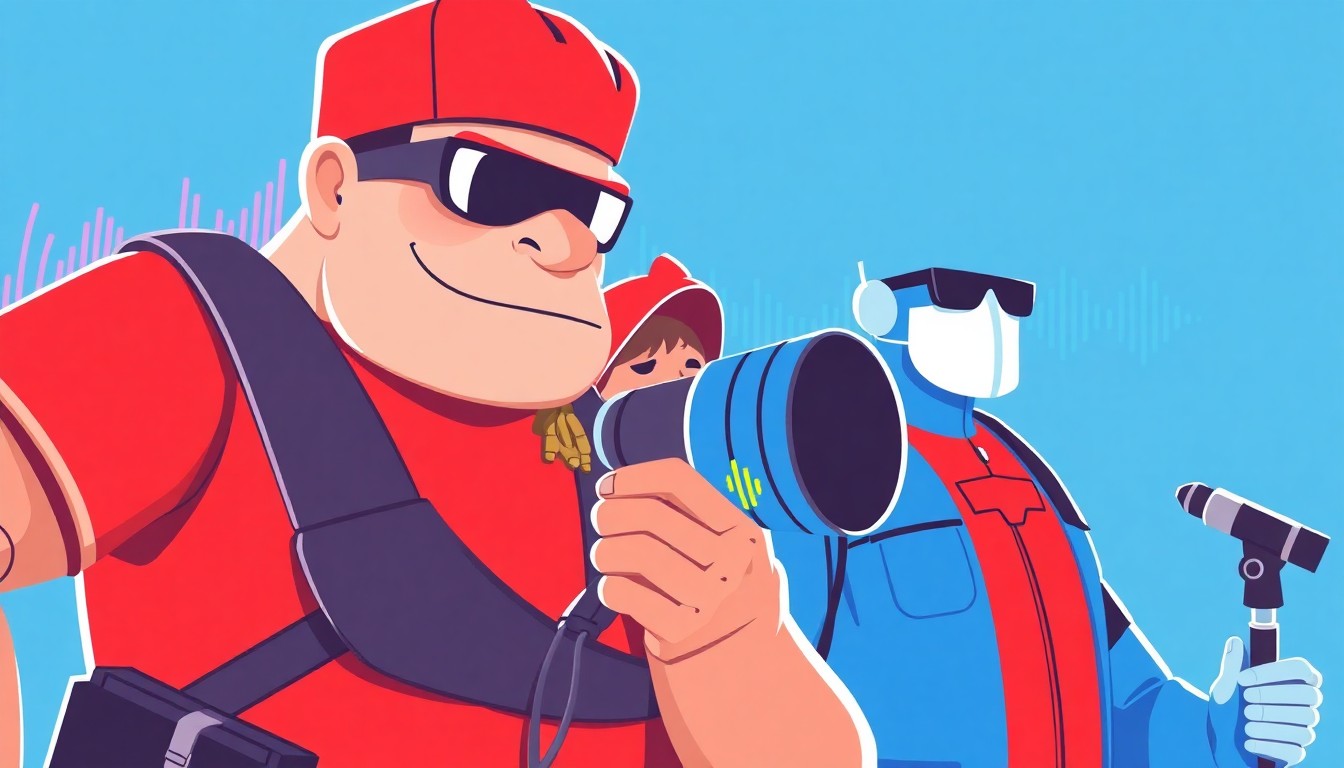
Team Fortress 2 voices defined an era of gaming. The mercenaries from this iconic Valve shooter brought personality to every match with their distinct accents, memorable catchphrases, and perfect comedic timing. Content creators recognize this potential immediately when they hear Scout's Boston swagger or Heavy's Russian bass rumbling through their speakers, knowing these voices can transform ordinary gaming videos into viral sensations.
AI voice technology now replicates these beloved characters with remarkable accuracy. Generating TF2 voices used to require expensive voice actors or awkward sound bite compilations. Modern text-to-speech systems capture the nuances that made each mercenary memorable, from Spy's sophisticated French accent to Engineer's Texas drawl. This opens creative possibilities for YouTube videos, TikTok content, gaming memes, animated shorts, and podcast segments.
This guide covers everything about TF2 AI voice generation. You'll learn which platforms produce the most authentic character voices, how to write scripts that sound natural for each mercenary, why certain characters work better for specific content types, and how to avoid common mistakes that make AI-generated voices sound robotic. We'll explore technical considerations like emotional range and accent accuracy, plus legal guidelines for using these voices in monetized content.
The Team Fortress 2 community thrives on creative content. Fan animations, gameplay commentary with character voices, and comedy sketches featuring the mercenaries consistently perform well across social platforms. Understanding how to generate these voices effectively gives you a significant advantage in this space.
Let's start with why TF2 voices translate so well to AI generation, then move into platform comparisons, character-specific techniques, and practical applications that drive engagement.
Why TF2 voices work perfectly for AI generation
Team Fortress 2 character voices possess qualities that make them ideal candidates for AI voice synthesis. Each mercenary speaks with exaggerated characteristics that AI models can identify and replicate more easily than subtle, naturalistic speech patterns.
The nine mercenary classes each have distinct vocal signatures. Scout speaks rapidly with aggressive Boston pronunciation, Heavy uses simple Russian-accented English with philosophical undertones, Medic delivers manic German enthusiasm, and Spy maintains sophisticated French composure. These strong characteristics give AI models clear patterns to learn and reproduce.
Voice consistency across hundreds of in-game voice lines helps tremendously. Valve recorded each character with the same voice actor across multiple updates spanning years, providing AI training data with remarkable consistency. This consistency means AI models have abundant examples of how each character pronounces specific sounds, handles emotional variations, and maintains their accent across different contexts.
The emotional range in TF2 voice lines spans from battle cries to casual banter. Characters express anger, joy, mockery, fear, and triumph with theatrical intensity. AI voice generators trained on this data can access these emotional variations, letting you create content that sounds dynamic rather than monotone.
Cultural impact matters for AI voice generation success. TF2 voice lines became internet memes years before AI voice technology matured. Phrases like Heavy's "I am Heavy Weapons Guy" or Scout's "Bonk!" are instantly recognizable to millions of gamers. This recognition means audiences immediately identify AI-generated TF2 voices as authentic or inauthentic based on how well they match beloved memories.
TryAIVoices specializes in gaming character voices that capture these distinctive traits. The platform's TF2 character models replicate the theatrical delivery and accent precision that makes these mercenaries so memorable.
Best TF2 AI voice generators compared
Several platforms offer Team Fortress 2 character voice generation, but quality varies dramatically between services. Some capture the essence of each mercenary while others produce generic accents that miss the mark entirely.
TryAIVoices provides dedicated models for multiple TF2 characters with emphasis on accent accuracy and emotional range. The Heavy voice nails the Russian pronunciation patterns and philosophical timing that define the character. Scout's Boston accent comes through with appropriate aggression and speed. The platform handles Scout's rapid-fire delivery particularly well, maintaining clarity even when generating fast-paced taunts or battle cries.
The Medic voice on TryAIVoices captures the manic enthusiasm that makes this character so distinctive. German accent authenticity matters enormously for Medic, and most AI generators struggle with this specific combination of enthusiasm and pronunciation. The service delivers Medic's signature laugh and exclamations with the theatrical intensity that fans expect.
ElevenLabs offers custom voice cloning that can theoretically create any TF2 character, but requires uploading training audio and waiting for model generation. This approach gives you more control over specific voice line nuances but adds complexity and time to your workflow. The quality depends heavily on your training audio selection and can produce inconsistent results if your audio samples lack sufficient variety.
Uberduck provides community-created TF2 character voices with varying quality levels. Some community models sound excellent while others miss crucial accent details or emotional range. The platform's strength lies in its variety, with multiple versions of each character that you can test. However, inconsistency makes it harder to rely on for professional content creation where you need predictable quality.
FakeYou hosts TF2 character voices contributed by users, resulting in a similar quality inconsistency problem. Some models excel at capturing specific characters while others sound like generic impressions. The generation speed can be slow during peak usage times, which frustrates creators working on tight deadlines.
Custom RVC models trained on TF2 voice line datasets produce excellent results for technical users comfortable with AI model training. This approach requires downloading voice line packs, cleaning audio files, training models locally or through Colab notebooks, and troubleshooting when results don't match expectations. The investment pays off if you need specific control over voice characteristics or plan to generate hours of content.
Platform comparison reveals that ease of use matters as much as quality. TryAIVoices balances quality and accessibility effectively, letting you generate TF2 voices instantly without technical expertise. Custom RVC models offer maximum control at the cost of significant time investment. Community platforms like Uberduck and FakeYou provide free options but sacrifice consistency.
Generation speed affects workflow efficiency significantly. Instant generation platforms let you iterate rapidly, testing different script variations until you find the perfect delivery. Slower platforms force you to plan more carefully before generation, reducing your ability to experiment.
Character-specific voice generation techniques
Each Team Fortress 2 mercenary requires different approaches to achieve authentic AI-generated voices. Understanding these character-specific techniques dramatically improves your results.
Scout voice generation
Scout speaks with aggressive Boston speed and attitude. Your scripts should reflect this pace through sentence structure and punctuation choices. Short, punchy sentences work better than flowing prose. Include contractions naturally throughout Scout dialogue.
Effective Scout script patterns:
Write sentences that build momentum: "Yeah, that's right. Come at me. I got no problem dancing circles around you chumps while eating a sandwich." The rhythm matches Scout's aggressive confidence.
Use phonetic spellings for Boston accent words: "Batta" instead of "batter," "ya" instead of "you," "dis" instead of "this." Most AI voice generators handle these phonetic hints better than relying solely on the model to apply accent rules.
Include Scout's characteristic interruptions and redirects: "So anyway, I'm running toward the point, right? And this Heavy thinks he's gonna stop me. Idiot. I'm already behind him before his brain catches up." This mirrors Scout's storytelling style from in-game voice lines.
Emotional intensity matters for Scout. He rarely speaks calmly. Scripts should default to excited, aggressive, or mocking tones. When you need Scout to sound impressed or respectful (rare), contrast this against his usual intensity for comedic effect.
 Photo by
 Heavy voice generation
Heavy speaks slowly with Russian accent and uses simple sentence structures that occasionally reveal surprising depth. Your Heavy scripts should balance his limited English vocabulary with his philosophical observations.
Effective Heavy script patterns:
Keep sentence structure simple: "I am going to point. Team is counting on Heavy. Heavy will not let team down." Short sentences with clear subject-verb-object order match Heavy's speech patterns.
Include Heavy's characteristic repetition: "Sandvich make Heavy strong. Very very strong. Like baby ox that grew up into very strong ox." This repetition creates rhythm that sounds natural for the character.
Mix combat focus with unexpected wisdom: "It costs four hundred thousand dollars to fire this weapon for twelve seconds. But true wealth? True wealth is good friends who watch your back." This juxtaposition defines Heavy's personality.
Heavy often refers to himself in third person. Incorporate this naturally: "Heavy does not fear tiny Scout man. Scout is like angry flea. Heavy will crush flea."
Russian pronunciation affects specific English sounds. Heavy struggles with "th" sounds (replacing with "z" or "d"), drops articles frequently, and adds emphasis to unexpected syllables. Good AI models handle these patterns automatically when trained on Heavy voice data.
Medic voice generation
Medic combines German accent with manic enthusiasm and dark humor about medical ethics. Scripts for Medic should embrace theatrical delivery and unsettling cheerfulness about terrible things.
Effective Medic script patterns:
Use exclamation points liberally: "Aha! The patient is awake! Excellent! Now we can begin the real experiment!" Medic's enthusiasm needs visual representation through punctuation.
Include Medic's laugh naturally: "Oh ho ho, you think zat hurt? Just wait until you see vat I have planned next!" The laugh punctuates his dialogue and gives AI voice models clear emotional cues.
German accent affects "w" (becomes "v"), "th" (becomes "z" or "s"), and adds guttural qualities to certain consonants. Write "zat" instead of "that," "vat" instead of "what," "ze" instead of "the." These phonetic spellings help AI models apply accent appropriately.
Medical terminology mixed with casual violence creates Medic's signature tone: "Your cardiovascular system is fascinating! I'm going to extract it and examine it more closely. Don't worry, you vill only be unconscious for part of ze procedure."
Medic speaks faster than Heavy but slower than Scout. His pace reflects calculated mania rather than impulsive energy. Scripts should use medium-length sentences with occasional long, building phrases that crescendo into excited exclamations.
Spy voice generation
Spy maintains sophisticated French accent with calm delivery even in combat situations. His dialogue style prioritizes wit, subtle insults, and theatrical flair.
Effective Spy script patterns:
Write formal sentence structures: "I find your lack of tactical awareness deeply concerning, though hardly surprising given your limited intellectual capacity." Spy rarely uses contractions and maintains grammatical precision.
Include Spy's characteristic condescension: "But of course you would choose zat approach. Someone of your... limited sophistication could hardly be expected to appreciate ze subtlety required for proper espionage."
French accent affects pronunciation differently than German or Russian accents. Spy elongates certain vowels, adds slight emphasis to final syllables, and pronounces "th" as "z" sounds. Write "zis" for "this," "ze" for "the," but maintain otherwise proper English spelling since Spy's vocabulary is extensive.
Spy's humor relies on understatement and timing: "I appear to be on fire. How inconvenient." This deadpan delivery in absurd situations defines his character. Scripts should place these understated observations in contexts where other characters would panic.
Cigarette references, theatrical metaphors, and references to sophistication appear frequently in Spy dialogue: "Zis reminds me of ze time I infiltrated ze opera house in Milan. Ze tenor was terrible zen, too."
 Photo by Jamakassi on Unsplash
Engineer voice generation
Engineer speaks with Texas drawl and maintains friendly demeanor while discussing complex technical concepts or violence with equal enthusiasm.
Effective Engineer script patterns:
Use Southern expressions naturally: "Well now, that's a heck of a situation we got ourselves into. But don't you worry none, I got a plan." These colloquialisms make Engineer immediately recognizable.
Mix technical terminology with folksy delivery: "The quantum efficiency of this teleporter array exceeds specifications by approximately twelve percent, which means we're cooking with gas now, pardner."
Engineer speaks at moderate pace with clear pronunciation. Scripts don't need extreme phonetic spellings like Scout or Heavy. Focus instead on vocabulary choices and sentence rhythm that reflect Southern speech patterns.
Include Engineer's problem-solving mindset: "Sentry's down. Dispenser's compromised. Teleporter's barely holding together. But you know what? That just means I got job security." This optimistic pragmatism defines his personality.
References to building, fixing, and improving things should appear throughout Engineer dialogue. He views every situation through a builder's lens: "Sometimes you just gotta tear the whole thing down to foundation and start fresh. Works for buildings, works for battle plans."
Demoman voice generation
Demoman combines Scottish accent with enthusiasm for explosives and frequent references to alcohol. His dialogue style includes battle poetry, historical references, and cheerful violence.
Effective Demoman script patterns:
Scottish accent affects numerous sounds. "R" becomes rolled, certain vowels elongate or shift, and specific words get contracted differently than standard English. Write "ya" for "you," "tha" for "the," "me" instead of "my" in certain contexts.
Include Demoman's poetic battle cries: "They can bury what's left of ya in a soup can!" These creative threats showcase his personality better than generic combat dialogue.
References to Scottish heritage, historical battles, and family legacy appear frequently: "Me granddad fought at the Battle of Stirling Bridge, and I'm about to give ya a similar experience, minus the bridge but with significantly more explosives."
Demoman oscillates between coherent tactical thinking and drunken rambling. Scripts can embrace this contrast: "Aye, the strategic positioning of defensive structures along the payload route will... wait, where did I put me scrumpy?"
Enthusiasm for explosives should permeate Demoman dialogue even in unrelated contexts: "'Tis a beautiful morning for a walk in the park, testing new sticky bomb detonation patterns, feeding the ducks with high explosives..."
Sniper voice generation
Sniper speaks with Australian accent and maintains professional detachment about his work as an assassin. His dialogue combines casual slang with precision terminology.
Effective Sniper script patterns:
Australian accent affects vowel sounds significantly. "A" sounds shift, "I" becomes "oi" in many contexts, and certain words get shortened or combined. Write "mate" frequently, use "ta" instead of "thanks," include "reckon" and "fair dinkum" naturally.
Sniper maintains calm delivery even during intense combat: "Yeah, that's a confirmed kill. Moving on to the next target. Nice day for it, honestly." This professional detachment creates his distinctive tone.
References to bushman skills, Australian wildlife, and outdoor survival appear throughout Sniper's dialogue: "Spent three weeks in the outback tracking crocodiles once. Compared to that, tracking you lot is like finding a kangaroo at a barbecue. Everywhere and obvious."
Sniper expresses disdain for close-quarters combat and preference for distance: "If I gotta get within stabbing range, something went wrong with me planning. Professional has standards, mate."
Politeness mixed with deadly intent defines Sniper's personality: "Sorry mate, but you walked right into me sightline. Nothing personal. Well, maybe a little personal. You did kill me that one time."
Pyro voice generation
Pyro speaks exclusively through muffled sounds and incomprehensible mumbling due to the gas mask. This presents unique challenges for AI voice generation.
Most TF2 content creators avoid generating new Pyro dialogue because the character's muffled speech doesn't translate well to text-to-speech systems. Instead, creators typically use existing game audio files for Pyro or focus on other characters.
If you need Pyro content, consider alternatives to voice generation. Subtitle Pyro's mumbling with translations that reveal unexpected depth or innocence, creating contrast between incomprehensible sounds and touching sentiments. This writing technique appears frequently in fan content and generates engagement through the contrast.
Soldier voice generation
Soldier combines aggressive military enthusiasm with complete tactical incompetence and American patriotism. His dialogue style includes contradictory statements, historical inaccuracies, and absolute confidence despite being wrong.
Effective Soldier script patterns:
Write with caps lock energy even if you're not actually using capitals: "This is a bucket. Dear God. There's more. No!" Soldier's intensity should permeate every line regardless of topic significance.
Include historical references that are completely wrong: "Sun Tzu said that, and I'd say he knows a little more about fighting than you do pal, because he invented it! And then he perfected it so that no living man could best him in the ring of honor!"
Soldier speaks in absolutes and declarations: "I am going to blow that smile right off your stupid face! You are all weak! You are all bleeders! I am going to mail my boot to the Kaiser with your ass wrapped around it!"
Patriotic references appear constantly, often in contexts where they make no sense: "This American boot just kicked your Communist teeth in! Actually, you might not be Communist, but my boot is already here so the point stands!"
Aggressive enthusiasm extends to mundane topics: "I am going to the store to purchase bread! If that bread is not the finest bread in America, someone will answer for this failure! That someone will be me because I chose the store!"
 Photo by
 Writing authentic TF2 dialogue for AI generation
Team Fortress 2 dialogue has distinctive qualities beyond character-specific patterns. Understanding these broader writing principles helps create scripts that sound authentically TF2 regardless of which mercenary speaks them.
Embrace theatrical exaggeration
TF2 characters speak with theatrical intensity that would seem ridiculous in realistic contexts. This exaggeration makes the characters memorable and gives AI voice models clear emotional signals.
Real people don't announce "I am going to saw through your bones!" before attacking someone in a video game. TF2 mercenaries do exactly this. Your scripts should embrace this same theatrical quality.
Every emotion gets amplified. Characters don't feel slightly annoyed, they feel consuming rage. They're not pleased, they're ecstatic. This emotional amplification helps AI voice generators produce the dynamic delivery that makes TF2 voices engaging.
Compare realistic dialogue with TF2-style dialogue. Realistic: "Good job everyone, we captured the point. Let's move to the next objective." TF2-style: "We crushed them! They scattered like babies before us! On to the next slaughter!" The second version sounds like Team Fortress 2.
Use character-appropriate vocabulary
Each mercenary has vocabulary limitations or preferences that inform their dialogue. Scout uses slang and sports metaphors. Heavy uses simple words but occasionally drops surprisingly sophisticated philosophical observations. Medic uses medical terminology. Spy uses formal, extensive vocabulary.
Matching vocabulary to character matters more than perfect accent representation. An AI-generated Heavy voice loses authenticity if the script includes complex subordinate clauses and academic vocabulary, even if the accent sounds perfect.
Consider Scout trying to sound smart versus Scout in his natural element. Forced: "The tactical implications of the current strategic environment suggest a high probability of victory." Natural: "We're gonna destroy these guys. I can taste it already." The second version works because it matches Scout's vocabulary and sentence construction preferences.
Include violence casually
Team Fortress 2 mercenaries discuss violence with the same casual tone most people use for weather commentary. This casual relationship with extreme violence creates the game's dark humor.
Scripts should mention killing, dismemberment, and destruction while maintaining conversational or even cheerful tone. "I'm going to tear off your head and use it as a bowling ball" delivered with Engineer's friendly drawl creates the distinctive TF2 tone.
The contrast between violent content and casual delivery makes TF2 dialogue funny rather than disturbing. Your AI-generated voices should maintain this contrast through script construction and emotional tone selection.
Reference game mechanics naturally
TF2 characters frequently reference game mechanics in their dialogue. Heavy talks about his minigun spin-up time. Scout mentions double jumps. Sniper discusses headshots versus body shots. These references ground dialogue in the game world.
Including mechanical references makes AI-generated TF2 voices sound more authentic because this pattern appears throughout actual game voice lines. "That critical hit was beautiful!" or "Thanks for the overheal, Doc!" connects generated dialogue to player experiences.
Mechanical references work particularly well for comedy content. Having Spy complain about hitreg issues or Scout discuss the physics of bonk atomic punch creates content that resonates with players who experienced these game elements.
Balance character relationships
TF2 mercenaries have established relationships and rivalries that appear in their dialogue. Scout idolizes Spy (who is secretly his father). Heavy and Medic work together frequently. Spy looks down on Scout specifically.
Incorporating these relationships adds authenticity to AI-generated content. Having Scout try to impress Spy while Spy responds with dismissive condescension recreates dynamic viewers recognize from game content.
Rivalry dialogue works excellently for comedy sketches. Scout mocking Sniper's profession while Sniper responds with calm superiority recreates the class rivalry dynamic that defines TF2's personality.
Use game-specific terminology
Team Fortress 2 has specific terminology that players recognize instantly. "Payload," "control point," "intelligence," "teleporter," "sentry," "über charge," "critical hit," and "domination" all carry specific meanings within the game.
Incorporating this terminology correctly signals authenticity. Having Heavy say "Push the cart!" or Medic yell "Über ready!" immediately establishes these AI-generated voices as TF2-specific rather than generic gaming characters.
Incorrect terminology breaks immersion instantly. Calling the payload a "bomb truck" or referring to the intelligence as "the flag" signals unfamiliarity with TF2 specifically. Research terminology before writing scripts for content aimed at TF2 fans.
 Photo by Matt Botsford on Unsplash
Creative applications for TF2 AI voices
Team Fortress 2 AI voices enable content types that were previously impractical or impossible to create. Understanding these applications helps you leverage TF2 voices effectively for your specific content goals.
Gaming commentary with character perspective
Standard gameplay commentary uses your natural voice explaining strategy and reacting to events. TF2 AI voices let you create commentary from character perspectives instead.
Imagine Scout providing hyperactive commentary during competitive matches, criticizing player decisions with his characteristic arrogance. "Oh, that Medic just walked right past his burning teammate. Real professional, Doc. I woulda already saved him, killed three enemies, and capped the point by now."
Heavy providing philosophical observations about team dynamics during casual matches creates entertaining contrast. "Blue team pushes cart like family. They work together, trust each other. Red team? Red team is like chicken farm before feeding time. Everyone runs different direction."
This approach works particularly well for educational content about TF2 strategy. Having Engineer explain sentry positioning in his voice makes technical content more engaging than standard tutorial narration.
The TF2 character voices on TryAIVoices handle extended dialogue needed for commentary videos, maintaining consistency across 10-20 minute videos without quality degradation.
Comedy sketches and animations
TF2's established character personalities provide ready-made comedy potential. AI voices eliminate the need for voice actors while maintaining character authenticity.
Sketch concepts that explore mercenary life outside combat perform well. Heavy shopping for groceries while maintaining his character voice creates comedy through contrast. Spy attempting to order coffee with extreme sophistication turns mundane situations into TF2 content.
Crossover content where TF2 characters interact with characters from other games generates engagement through novelty. Scout trash-talking characters from Overwatch or Valorant using AI voices creates content that's quick to produce and consistently entertaining.
Meet the Team parody videos remain popular years after the original videos released. Creating "Meet the X" style content for community-created TF2 characters, other games' characters, or absurd concepts ("Meet the Tax Accountant" in TF2 style) performs well with gaming audiences.
TikTok and short-form content
TF2 voice lines work excellently for TikTok trends and short-form content. The characters' exaggerated personalities create immediate impact in 15-60 second videos.
Applying TF2 character perspectives to trending audio or popular TikTok formats generates views. When a new trend emerges, rapidly creating a version with Scout's voice or Heavy's perspective positions your content early in the trend cycle.
Reaction content using TF2 voices performs consistently. Having Medic react to medical scenes in movies, or Spy reacting to stealth gameplay from other games, creates entertaining content that requires minimal production beyond AI voice generation.
Daily or weekly TF2 character commentary on gaming news builds audience expecting regular content. Scout providing hot takes on game updates or Soldier misunderstanding esports news creates series potential with minimal production requirements.
Meme creation and viral content
TF2 has memetic DNA built into its character design. AI voices let you create new meme templates using TF2 characters without needing original game audio.
Popular meme formats adapted to TF2 voices generate engagement because they combine familiar format with beloved characters. The "Two Guys on a Bus" meme with Scout and Spy, or "They Don't Know" meme with any TF2 character at a party creates shareable content.
Custom TF2 voice lines responding to current events or gaming controversies gain traction when done well. Having Heavy comment on new game releases or Scout react to gaming drama creates timely content that TF2 fans share within their communities.
Audio meme templates you can create with AI voices become resources others use, expanding your reach. Creating Scout saying various popular meme phrases or Heavy reading copypasta gives other creators tools while crediting your content.
Podcast intros and segments
TF2 AI voices create memorable podcast branding without expensive voice actor fees. Gaming podcasts particularly benefit from TF2 character voices for intros, outros, and segment transitions.
Having a specific TF2 character "host" certain podcast segments creates consistent branding. "Scout's Hot Takes" for controversial opinions, "Heavy's Philosophy Corner" for deeper discussions, or "Spy's Intelligence Report" for gaming news segments use character voices to organize content memorably.
Character voices reading listener comments or questions adds personality to audience interaction segments. Scout mocking bad opinions, Medic enthusiastically agreeing with bizarre theories, or Engineer calmly explaining technical concepts makes these segments more entertaining than standard readings.
Sponsor integrations using TF2 voices can work when done with appropriate humor. Having Soldier aggressively endorse a gaming peripheral or Spy sophisticatedly describing a VPN service makes advertisements more entertaining, though you must ensure your sponsor approves this approach.
Educational content and tutorials
TF2 AI voices make educational gaming content more engaging than generic narration. Character-appropriate voices teaching related topics creates memorable educational content.
Engineer explaining game development, programming concepts, or hardware building tutorials aligns perfectly with his character. His voice makes technical content feel accessible through his folksy delivery while maintaining credibility through his canonical engineer expertise.
Medic teaching about human anatomy, biology, or medical concepts creates darkly humorous educational content. His enthusiasm about organs and bones makes potentially dry educational material entertaining.
Scout teaching about sports history, basketball, or athletics leverages his character's athletic background. His energetic delivery maintains engagement through topics that might seem unrelated to gaming.
Historical content narrated by Soldier (with intentional inaccuracies played for comedy) or Spy (with actual accuracy and sophistication) creates educational content with built-in personality.
 Photo by Soundtrap on Unsplash
Technical considerations for quality TF2 voice generation
Achieving professional-quality TF2 AI voice results requires attention to technical details beyond script writing and platform selection.
Audio post-processing techniques
Raw AI-generated voices benefit significantly from audio post-processing. Even the best AI voice generators produce audio that sounds more polished after editing.
Normalize audio levels across all AI-generated voice clips to maintain consistent volume. TF2 characters often change emotional intensity within single sentences, causing volume variations that sound jarring without normalization. Most audio editing software includes normalization features that automatically adjust levels.
Add subtle compression to AI-generated voices to reduce dynamic range and make dialogue more intelligible. TF2's original voice lines include compression that gives them punch and presence in the game's chaotic audio environment. Matching this quality makes AI-generated voices sound more authentic.
Equalization shapes voice character and clarity. Boosting mid-range frequencies (1-4kHz) improves dialogue intelligibility. Reducing harsh high frequencies (6-8kHz) removes digital artifacts that sometimes appear in AI-generated audio. Each character benefits from slightly different EQ profiles based on their voice characteristics.
Background noise and subtle reverb make AI voices sound less isolated. Pure AI generation produces perfectly clean audio that sounds too pristine compared to TF2's actual voice lines, which were recorded in studio environments with subtle room tone. Adding barely perceptible reverb (0.5-1.0 seconds decay) and extremely quiet background ambience makes voices feel more natural.
Emotional consistency within scenes
Maintaining consistent emotional delivery across multiple AI-generated lines requires careful planning. TF2 characters express exaggerated emotions, but those emotions should follow logical progression within content pieces.
Map out emotional arc before generating dialogue. If Scout starts a video angry at enemies, transitions to triumphant after victory, then becomes cocky during taunting, this progression guides your generation settings and script writing for each segment. Jumping randomly between emotions without cause makes content feel disjointed.
Most AI voice platforms let you specify emotional tone for generation. TryAIVoices includes emotion controls that let you generate the same script with different emotional delivery. Test multiple emotional variations for key lines to find the best fit for your content's emotional flow.
Reference similar emotional content from actual game voice lines. When you need Scout to sound specifically "mockingly triumphant" versus "genuinely excited," listening to his actual voice lines in these emotional states helps you describe the tone you want or evaluate whether your AI-generated result matches expectations.
Pacing and timing for natural delivery
TF2 characters speak at different natural paces that affect content rhythm. Respecting these pacing differences makes AI-generated content feel more authentic.
Scout speaks quickly, often seeming to stumble over words in his rush to insult everyone. Your edit timing should reflect this pace with tight cutting between Scout's sentences. Long pauses between Scout lines feel wrong because the character rarely stops talking.
Heavy speaks slowly with deliberate pauses between thoughts. Cutting too tightly between Heavy's lines removes the thoughtful quality that defines his delivery. Let Heavy's lines breathe with 0.5-1 second gaps between sentences even when this feels slow during editing.
Spy maintains measured pace with precise timing. His pauses feel intentional rather than hesitant. When Spy pauses mid-sentence, it emphasizes the word following the pause. Your timing for Spy dialogue should reflect this calculated quality rather than natural conversational hesitation.
Generate multiple takes of important lines and compare timing. AI voice generators sometimes produce the same text with slightly different pacing based on processing variations. Generating the same line 2-3 times gives you timing options during editing.
Accent authenticity evaluation
Not all AI-generated accents sound equally authentic. Developing ability to evaluate accent quality helps you select the best platform and identify when generated audio needs regeneration.
Compare generated audio directly against original voice lines from the game. This comparison immediately reveals whether the AI voice captures accent details or produces generic approximations. Heavy should sound specifically like TF2's Heavy, not like a generic Russian accent.
Specific accent markers define each character. Scout's Boston accent includes non-rhotic "r" sounds (dropping "r" after vowels), Heavy's Russian accent affects his "w" sounds and articles, Spy's French accent creates specific vowel elongations. Listen for these specific markers rather than just general accent presence.
Accent consistency matters more than perfection. An AI voice that maintains slightly inaccurate accent throughout content succeeds better than perfect accent that wavers between lines. Consistency lets audiences adjust to the voice and accept it as the character, while inconsistency constantly reminds them they're hearing AI generation.
Community feedback provides valuable accent authenticity data. TF2 fans immediately recognize when voices sound off. If you're uncertain about accent quality, getting feedback from TF2 community members before publishing content prevents releasing content with obvious accent issues that damage credibility.
Mixing voices with music and sound effects
TF2 AI voices need to sit properly in your content's overall mix alongside music, sound effects, and gameplay audio.
Voice should always be most prominent element in mix hierarchy. If viewers can't clearly understand dialogue, other audio elements need reduction rather than boosting voice to distortion levels. Start by setting voice levels, then add other elements underneath.
TF2 has iconic music that many creators want to use alongside character voices. The original game's soundtrack competes aggressively for attention with dialogue. When using TF2 music with AI voices, reduce music volume to 20-30% of voice level during dialogue, allowing music to swell during instrumental breaks or transitions.
Sound effect selection affects voice authenticity. Using actual TF2 sound effects (weapon sounds, ability sounds, hit markers) alongside AI voices reinforces authenticity. Generic gaming sound effects create disconnect because the voice says TF2 but other audio elements say generic game.
Test mix on multiple playback systems before publishing. TF2 content gets consumed on phone speakers, headphones, computer speakers, and TV audio with very different frequency responses. Your mix should remain intelligible across these systems. If dialogue becomes unintelligible on phone speakers, adjust by reducing low frequencies in voice track or increasing overall voice level.
 Photo by Kelly Sikkema on Unsplash
Legal and ethical considerations
Using Team Fortress 2 character voices in your content involves legal and ethical considerations that affect whether you can safely publish and monetize.
Valve's content usage policies
Valve maintains relatively permissive policies for fan content using Team Fortress 2 intellectual property compared to many game publishers. Understanding these policies helps you create content that respects Valve's IP while leveraging TF2's popularity.
Valve's video policy explicitly allows creation of videos using game content, characters, and assets for platforms like YouTube. This permission extends to content that generates revenue through platform monetization like YouTube's partner program.
The policy requires that videos provide value beyond just reproducing game content. Commentary, humor, storytelling, editing, or other creative additions constitute this additional value. Simply playing AI-generated TF2 voice lines over gameplay without additional creative input falls into gray area where Valve could potentially object, though enforcement remains rare.
Commercial use outside platform monetization requires more careful consideration. Selling content featuring TF2 characters as your product (paid video downloads, courses using character voices, products featuring characters) moves beyond typical fan content permissions. This level of commercial exploitation typically requires explicit licensing that Valve does not provide to individuals.
Transformation matters significantly for legal protection. Creating new stories, jokes, commentary, or educational content using TF2 voices constitutes transformation that strengthens your position. Reproducing existing TF2 content with AI voices instead of original audio provides less protection.
Fair use and parody
United States fair use doctrine provides some protection for creative works using copyrighted characters, though fair use remains legally complex with no guaranteed outcomes until tested in court.
Parody receives strong fair use protection when it comments on or criticizes the original work. Creating content that parodies Team Fortress 2 itself using AI-generated character voices strengthens fair use claims. The parody must actually comment on TF2 rather than just using TF2 characters to comment on something else.
Transformative use extends beyond parody. Educational content about game design using TF2 character voices, commentary on gaming industry trends delivered by mercenary characters, or creative works that use characters for new stories all potentially qualify as transformative use.
Commercial vs non-commercial use affects fair use evaluation but doesn't determine it. Many creators incorrectly believe monetized YouTube content automatically fails fair use. Courts consider multiple factors including purpose, nature, amount used, and market effect. Platform monetization often doesn't significantly harm fair use claims.
Amount and substantiality considers how much of the original work you're using. Using character voices to create entirely new dialogue rather than reproducing existing voice lines favors fair use. Creating new content with characters differs significantly from redistributing Valve's existing content.
Market effect examines whether your use substitutes for or harms the original work's market. TF2 content using AI voices doesn't substitute for playing the game or purchasing official merchandise, which strengthens fair use position. If Valve sold official TF2 voice packs or audio merchandise that your content would replace, market harm becomes more arguable.
Attribution and disclosure
Transparent attribution protects both legal interests and audience trust. Clear disclosure about AI voice usage maintains ethical standards while potentially strengthening legal positions.
Identify AI-generated voices in video descriptions or content. Simple disclosure like "Character voices created using AI voice generation" or "TF2 character voices generated with [platform name]" provides transparency without being intrusive to content experience.
Credit Team Fortress 2 and Valve explicitly. Including "Team Fortress 2 is created by Valve Corporation" or similar attribution acknowledges the IP source and demonstrates respect for original creators. This attribution doesn't guarantee legal protection but shows good faith engagement with copyright material.
Distinguish between official and fan content clearly. Audiences should never believe your AI-generated TF2 content comes from Valve or represents official TF2 content. Misleading audiences about content origin creates both ethical and legal problems.
Platform-specific requirements affect disclosure. YouTube's policies increasingly emphasize disclosed AI content. TikTok and other platforms may implement similar requirements. Following platform policies protects your content from removal or demonetization regardless of broader legal questions.
Monetization considerations
Different monetization methods carry different risk levels when using TF2 AI voices in content.
Platform ad revenue (YouTube Partner Program, TikTok Creator Fund) generally presents lower risk. These platforms handle copyright issues through their own systems including Content ID, appeals processes, and established precedents. Many creators successfully monetize gaming content using character voices through these platforms.
Sponsorships require consideration of sponsor reputation. Brands may hesitate to sponsor content using copyrighted characters without explicit permission, concerned about association with potential copyright issues. Disclose your content's use of TF2 characters to potential sponsors upfront to avoid problems.
Direct sales (courses, paid downloads, products) present highest risk. Selling products that feature TF2 characters moves firmly into commercial exploitation that exceeds typical fan content permissions. This monetization method most likely to trigger enforcement action from IP holders.
Patreon and similar creator platforms fall somewhere between ad revenue and direct sales. These platforms technically compensate your overall creative output rather than selling specific content pieces. Many creators successfully use Patreon while creating fan content, though this remains a gray area.
Cryptocurrency and NFTs involving TF2 characters present extreme risk. These monetization methods have drawn aggressive enforcement from many IP holders. Avoid attempting to monetize TF2 content through blockchain-based methods unless you want certain legal problems.
Community standards and ethics
Legal permission and ethical appropriateness don't always align. TF2 community standards affect whether content succeeds regardless of legal questions.
The TF2 community generally embraces fan content and creative uses of characters. This acceptance makes the community relatively friendly to AI-generated voice content when done with quality and respect for characters. Poorly executed content that mischaracterizes mercenaries receives harsh criticism.
Respect for original voice actors varies within the community. Some players feel AI voices disrespect the original performances by Dennis Bateman, Gary Schwartz, Robin Atkin Downes, and other talented actors who created these characters. Others view AI voices as tools for fan expression similar to fan art or fiction. Acknowledge original actors' contributions when possible to navigate this tension.
Quality standards matter significantly. The TF2 community has high standards for character portrayal developed across years of official content and fan creations. AI-generated voices that sound obviously wrong or mischaracterize personalities receive rejection regardless of technical quality. Take time to generate authentic content rather than rushing low-quality material.
Content that damages the game's reputation or community creates backlash. Using TF2 characters for hateful content, excessive vulgarity beyond the game's T-rating tone, or to attack community members violates community ethics even if technically legal under fair use principles.
Platform-specific optimization strategies
Different content platforms require adapted approaches for TF2 AI voice content to succeed with their specific audiences and algorithms.
YouTube optimization
YouTube remains the primary platform for longer-form TF2 content where AI voices can be fully leveraged for storytelling and comedy.
Video length affects performance differently based on channel size and audience. Established channels can succeed with 15-30 minute TF2 voice content because existing audiences will watch through. Newer channels should target 8-12 minutes initially, long enough for meaningful mid-roll ads but not so long that unknown channels lose viewer attention.
Thumbnail design for TF2 content should feature recognizable character silhouettes or distinctive visual elements like Heavy's minigun, Spy's mask, or Scout's baseball bat. Text overlays should promise specific value: "Scout Reacts to Valorant," "Heavy's Guide to Strategy," or "TF2 vs Overwatch: Spy's Analysis." Generic thumbnails like "TF2 AI Voice" fail to communicate content value.
Title optimization requires balance between search keywords and click appeal. "TF2 AI Voice Generator Tutorial" targets search traffic but offers little click motivation. "I Made Scout Review Modern FPS Games With AI" combines searchable elements (Scout, AI) with curiosity-driven click appeal. Test multiple title approaches across videos to identify what resonates with your target audience.
Description optimization should include relevant timestamps, character names, and topical keywords. Mention specific TF2 characters featured, topics discussed, and games referenced. Link to voice generation tools you used, other TF2 content videos, and related resources. YouTube's algorithm uses description content for recommendation decisions.
Upload timing affects initial performance for channels without established audiences. TF2 players concentrate in specific time zones (North American and European audiences dominate). Uploading 2-3 hours before peak viewing times (3-6pm in major time zones) allows YouTube's algorithm to begin promoting content as your target audience comes online.
TikTok strategies
TikTok's short-form format requires different approach to TF2 AI voice content compared to YouTube's longer videos.
Hook strength matters more on TikTok than any other platform. First 1-2 seconds must immediately communicate entertainment value. Starting with recognizable TF2 voice lines, dramatic statements, or visual hooks prevents viewers from scrolling past. "I made Scout react to..." stated by AI Scout voice in first second establishes immediate context.
Trend participation using TF2 voices provides rapid growth opportunities. When audio trends, challenge formats, or meme templates trend on TikTok, quickly creating TF2-voiced versions positions your content early in trend cycle. Early trend participation provides maximum visibility before saturation.
Text overlays should enhance rather than duplicate AI voice dialogue. TikTok audiences often watch with sound, but compelling text overlays make content accessible to sound-off viewers while adding emphasis for sound-on viewers. Highlight key phrases, add context, or include visual jokes that complement audio content.
Hashtag strategy affects TF2 content discovery. Mix specific hashtags (#TF2, #TeamFortress2, #HeavyWeaponsGuy) with broader gaming hashtags (#gaming, #gaminghumor, #PCgaming) and trend-specific hashtags. Overly specific hashtags limit reach, while generic hashtags provide too much competition. Test combinations to find effective mix.
Series formats work exceptionally well on TikTok. "Scout Reviews Modern Games," "Heavy's Daily Philosophy," or "Spy Rates Stealth Games" creates audience expectation for regular content. Series hooks viewers who want to see the next installment, improving follower conversion and return viewership.
Twitter/X content
Twitter's text-focused nature requires different approach to sharing TF2 AI voice content compared to video-first platforms.
Audio clips should be short and immediately engaging. Twitter users scroll rapidly and rarely commit to audio longer than 15-20 seconds. Extract the best moment from longer AI-generated content rather than sharing entire clips. Scout's funniest insult, Heavy's best philosophical observation, or Spy's sharpest criticism works better than full dialogue.
Accompanying text should provide context and entertainment beyond just "Scout AI voice." Write text that stands alone as entertaining while the audio enhances it. "POV: Scout tries to explain NFTs" or "Heavy discusses work-life balance" frames audio content for engagement.
Hashtags matter less on Twitter than TikTok, but relevant tags help discovery. Use 1-3 hashtags maximum focusing on #TF2, #TeamFortress2, or trending gaming topics. Excessive hashtags appear spammy and reduce engagement.
Quote tweet trends and gaming discussions using TF2 AI voices. When gaming controversy erupts or industry news breaks, responding with relevant AI-generated character reactions provides timely content that trend participants discover. This approach builds following among gaming Twitter communities.
Thread potential exists for longer TF2 AI voice content. Breaking extended character dialogue or comedy bits into threaded tweets lets you publish longer content on Twitter's format. Each tweet should work independently while connecting to overall thread narrative.
Discord and community platforms
Discord communities provide ideal testing grounds for TF2 AI voice content before public publication.
TF2-specific servers offer built-in audiences who appreciate character voice content. Share AI-generated content in appropriate channels (usually #media or #funny) for community feedback. These engaged fans quickly identify accent issues, character misrepresentations, or quality problems before you publish to public platforms.
Create voice pack resources for community use. Generating compilations of AI-voiced TF2 lines that others can use for videos, streams, or sound boards builds reputation within communities while spreading awareness of your content.
Community inside jokes and references make excellent AI voice content for Discord. TF2 communities develop shared humor around specific players, server events, or running gags. Creating AI-voiced content referencing these community-specific elements builds stronger connection with engaged fans.
Voice channel integration opportunities exist on some Discord servers. Servers with soundboard features let moderators add AI-generated TF2 voice clips that users can play. Contributing high-quality clips establishes presence in active communities.
Advanced techniques for professional results
Moving beyond basic TF2 AI voice generation requires mastering advanced techniques that separate professional content from amateur experiments.
Layering multiple character voices
Complex content featuring multiple TF2 characters requires careful planning and execution to maintain clarity while showcasing different personalities.
Generate each character's dialogue separately rather than trying to create conversations in single generation passes. This separation gives you complete control over each character's timing, emotion, and delivery quality. Edit conversations together from individual lines rather than hoping AI generates perfect multi-character dialogue.
Space overlapping dialogue carefully when characters interrupt each other. TF2 characters frequently interrupt and talk over each other in game voice lines, creating chaotic energy. Recreating this in AI content requires ensuring each character remains somewhat intelligible despite overlap. Completely overlapped dialogue becomes noise rather than comedy.
Assign distinct audio channels or panning to different characters. Placing Scout slightly left, Heavy center, and Spy slightly right in stereo field helps audiences distinguish speakers when multiple characters talk in rapid succession. This spatial separation reduces cognitive load for listeners processing multiple voices.
Contrast character combinations strategically. Pairing characters with very different vocal characteristics (Scout's high-energy rapid delivery with Heavy's slow bass) creates maximum contrast that keeps conversations engaging. Pairing similar vocal characteristics requires more careful writing to distinguish speakers.
TryAIVoices makes generating multiple character voices practical because you can quickly generate different mercenaries without switching platforms or maintaining multiple subscriptions. This convenience enables creating multi-character content that would be prohibitively time-consuming with other approaches.
Creating custom voice line variations
Standard AI voice generation produces each line fresh, but creating variations of successful lines improves content quality through selection.
Generate important lines 3-5 times with identical text. AI voice synthesis includes subtle randomization that produces different intonations, pacing, and emotional qualities across generations. Comparing these variations lets you select the best take like directors select best takes from multiple actor performances.
Modify text slightly between generations to test different approaches. Generate "You're all terrible!" and "You're all absolutely terrible!" and "Every single one of you is terrible!" to compare emphasis patterns. Minor text changes often produce significantly different deliveries that affect comedy timing or emotional impact.
Phonetic spelling variations affect accent application. Testing "that" versus "zat" versus "zaht" for French accent reveals which spelling produces best accent application for specific AI voice models. Document successful phonetic patterns for consistent future generation.
Emotional tags experimentation improves results. If your platform allows emotion specification, generate the same line with different emotional tags (angry, mocking, enthusiastic, sad) to find unexpected deliveries that work better than your initial choice.
Contextual audio environment design
Professional TF2 content places voices in appropriate acoustic environments rather than presenting bare AI generation.
Room tone appropriate to context improves immersion. TF2 mercenaries in battlefield context need different acoustic environment than mercenaries in casual conversation. Adding environmental reverb that matches your scene's supposed location (outdoor battlefield, indoor base, enclosed vehicle) makes voices feel situated in space rather than floating in void.
Background ambience reinforces setting. Subtle battle sounds, machinery hum, or outdoor environmental audio (birds, wind, distant activity) placed quietly behind character dialogue establishes scene location. This ambience should remain barely noticeable, supporting rather than competing with dialogue.
Dynamic audio changes enhance storytelling. Character moving from outdoor to indoor should include reverb increase and environmental sound change that signals location shift. These audio cues help audiences follow scene changes in audio-only or animation-light content.
Weapon sounds and ability audio from TF2 integrate AI voices into game-authentic context. When Heavy talks about firing his minigun, including actual minigun spin-up sound reinforces authenticity. Use actual game audio files rather than generic gun sounds to maintain TF2-specific feel.
Script optimization through testing
Professional creators test and iterate scripts before final generation rather than using first-draft text for final content.
Read scripts aloud before AI generation. Text that looks good written often sounds awkward spoken. Reading aloud reveals rhythm problems, tongue-twisters, and unnatural phrasings that you can fix before wasting generation credits on flawed scripts.
Generate test clips of uncertain sections before generating full content. When you're unsure if a particular line will sound right in Spy's voice or work with Heavy's pacing, generate just that line for evaluation. This targeted testing prevents discovering problems after generating 15 minutes of dialogue.
Community feedback on scripts improves results. Sharing script excerpts in TF2 Discord communities or with gamer friends identifies lines that don't sound like characters would actually say them. This feedback catches character inaccuracies before generation.
Compare your scripts to actual game dialogue for character voice consistency. If your Heavy script includes complex subordinate clauses and academic vocabulary, comparing it to Heavy's actual simple, direct speech patterns reveals the mismatch before generation.
Iterate based on generation results. After generating content, identify specific lines that sound wrong. Analyze what makes them fail (wrong pacing, unnatural vocabulary, poor emotional match) and adjust your scriptwriting approach for future content.
Common mistakes and how to avoid them
Even experienced creators make predictable mistakes when generating TF2 AI voices. Understanding these pitfalls helps you avoid frustration and poor results.
Over-explaining jokes
TF2 humor works through implication, character, and absurdity rather than explicit explanation. Many creators damage comedy by having characters explain jokes that should remain implicit.
Let character behavior be the joke rather than having characters announce "That's funny because..." Trust your audience to understand humor without explanation. Scout being oblivious while everyone else reacts to his mistakes creates comedy. Having Scout explain why he was wrong kills the humor.
Reference humor works because audiences recognize references, not because characters explain them. Having Heavy quote philosophy sounds funny because it contrasts his simple demeanor. Having Heavy explain "That was quote from famous philosopher, you see" destroys the contrast that created humor.
Timing includes knowing when to end jokes. Many AI voice comedy bits continue past the natural laugh point into explanation territory. End scenes when the joke lands rather than continuing until every possible implication gets verbalized.
Inconsistent characterization
Maintaining consistent character personality across content requires deliberate attention to each mercenary's established traits.
Scout can't be intelligent and self-aware one moment then return to canonical ego and ignorance the next without explanation. Character growth or specific context can justify temporary characterization shifts, but random inconsistency confuses audiences and breaks immersion.
Heavy's philosophical observations work because they contrast his simple speech patterns and mercenary profession. Making Heavy consistently eloquent removes the contrast that makes his wisdom funny. He should remain mostly simple with occasional profound moments, not become philosopher who happens to carry minigun.
Spy's sophistication must remain consistent. He doesn't suddenly speak with slang or crude language without specific comedic justification. Even when angry or surprised, Spy maintains composure and vocabulary that distinguish him from other mercenaries.
Character relationships should match canonical dynamics. Scout idolizes Spy (who dismisses him), Heavy and Medic work together closely, Soldier considers himself team leader despite no actual authority. Contradicting these relationships without explanation creates content that doesn't feel authentically TF2.
Poor audio quality acceptance
Many creators accept the first AI generation result even when quality clearly needs improvement. Professional results require willingness to regenerate until quality meets standards.
Obvious glitches, mispronunciations, or unnatural robotic sounds warrant regeneration. Don't convince yourself "it's good enough" when the voice obviously sounds wrong. Audiences immediately notice poor quality and disengage.
Accent inconsistency within single lines indicates regeneration need. If Heavy says first half of sentence with strong Russian accent then accent fades, regenerate rather than hoping audiences won't notice. They will.
Emotional mismatch between content and delivery requires regeneration or script revision. If Scout sounds sad while allegedly being cocky, something went wrong. Regenerate with better emotional specification or rewrite the script to match unexpected delivery if it works better than your intention.
Volume inconsistency between sentences creates unprofessional sound. While you can normalize audio in post-production, extreme variations suggest generation problems worth addressing through regeneration rather than trying to fix entirely in editing.
Ignoring TF2 community feedback
The Team Fortress 2 community has strong opinions about character portrayal and immediately recognizes inauthentic content. Ignoring this feedback leads to content that TF2 fans reject.
When community members consistently say your Scout doesn't sound right, they're probably correct. TF2 fans have heard thousands of hours of these voices and immediately recognize when AI generation misses important character details. Take this feedback seriously rather than dismissing it as nitpicking.
Accent accuracy complaints signal specific problems worth addressing. If multiple people mention your Heavy's Russian accent sounds wrong or your Spy's French accent feels off, investigate accent-specific generation improvements or consider different AI platforms with better accent handling.
Character behavior feedback reveals script problems rather than AI generation problems. When community says "Spy would never say that" or "Heavy doesn't talk like that," your scriptwriting needs adjustment to better match established characterization.
Platform recommendation from community members provides valuable guidance. If TF2 creators consistently recommend specific AI voice platforms for certain characters, their collective experience likely identified real quality differences worth investigating.
Frequently asked questions
What's the best AI voice generator for TF2 characters?
TryAIVoices provides the most authentic TF2 character voices with particular strength in Heavy, Scout, and Medic characterization. The platform captures accent nuances and emotional range that distinguish these mercenaries. For users comfortable with technical processes, custom RVC models trained on TF2 voice line datasets offer maximum control and quality, though they require significantly more setup time.
Can I monetize YouTube videos using TF2 AI voices?
YouTube monetization of TF2 content is generally permitted under Valve's video policy, which allows fan-created videos using game content. This permission extends to AI-generated character voices when used in transformative content like commentary, comedy, or education. Standard YouTube ad revenue typically presents minimal risk, though Valve could theoretically object to specific uses. Always include clear attribution to Team Fortress 2 and Valve Corporation in your video descriptions.
How do I make TF2 AI voices sound less robotic?
Improve AI voice quality through script optimization using character-appropriate vocabulary and sentence structure, audio post-processing with normalization and subtle compression, adding appropriate background ambience and room tone, generating multiple takes and selecting best results, and ensuring emotional tone matches content context. Most "robotic" sound comes from poor script writing rather than AI generation limitations.
Which TF2 character voice is easiest to generate with AI?
Heavy's voice generates most reliably across AI platforms because his simple sentence structure, consistent pace, and straightforward accent provide clear patterns for AI models. Scout presents more difficulty due to rapid delivery and complex Boston accent nuances. Spy requires sophisticated French accent accuracy that many AI generators struggle to maintain consistently.
Do I need permission from Valve to use TF2 character voices?
Valve's official video policy permits fan content using TF2 characters and assets for non-commercial fan works and platform-monetized videos (YouTube ads, TikTok Creator Fund). Direct commercial use (selling products featuring characters, paid courses, merchandise) requires licensing that Valve doesn't typically provide to individuals. Always credit Valve and Team Fortress 2 in your content and follow fair use principles by adding creative value beyond just reproducing game content.
How long should scripts be for natural-sounding TF2 AI voices?
Generate scripts in segments of 2-4 sentences rather than extremely long single generations. This approach maintains quality consistency and gives you editing flexibility. Heavy's slow deliberate pace can handle slightly longer segments (4-5 sentences), while Scout's rapid delivery works better in shorter bursts (2-3 sentences). Very short single-sentence generations work for impactful one-liners and punchlines.
Can I create conversations between multiple TF2 characters?
Generate each character separately rather than attempting multi-character dialogue in single generation. Edit individual character lines together to create conversations with complete control over timing, emotional delivery, and pacing. This method produces higher quality results than trying to generate conversations as single pieces. The gaming voice library on TryAIVoices makes switching between different TF2 characters efficient for multi-character content.
What audio editing software works best for TF2 AI voice content?
Audacity (free, open-source) provides all essential features for TF2 voice editing including normalization, compression, EQ, and mixing. Adobe Audition offers more advanced features for professional creators. For video editing with integrated audio tools, DaVinci Resolve (free version available) handles voice editing alongside video production. Choose based on your existing workflow and budget rather than seeking perfect software.
How do I write authentic dialogue for TF2 characters I'm less familiar with?
Research character personality by watching official TF2 "Meet the Team" videos, listening to in-game voice line compilations on YouTube, and reading TF2 wiki character pages. Analyze how each character constructs sentences, what vocabulary they use, and how they express emotions. Start with characters you know well (Heavy, Scout, Soldier) before attempting less familiar mercenaries like Pyro or Demoman.
Are there copyright issues with using TF2 voices on Twitch streams?
Twitch's DMCA policies primarily concern music rather than game character voices. TF2 AI voices used in live streams generally fall under same permissions as using actual game audio. Many streamers successfully use AI-generated game character voices for alerts, commentary, and entertainment. Avoid using TF2's copyrighted music tracks, which face stricter DMCA enforcement than character voices.
Related voices to try
Related guides
Team Fortress 2 AI voices offer tremendous creative possibilities for gaming content creators. Success comes from choosing quality generation platforms, writing scripts that respect character personalities, understanding accent and pacing requirements, and treating AI generation as starting point rather than finished product.
The TF2 community's passion for these characters means audiences immediately recognize authentic portrayals versus generic impressions. Investing time in quality generation, script refinement, and audio post-processing separates professional content from amateur experiments.
Start creating your TF2 character voices with TryAIVoices today. Generate authentic Heavy, Scout, Medic, and Spy voices for your gaming content, comedy sketches, or viral videos.