FNAF AI Voice Generator: Create Animatronic Horror Voices
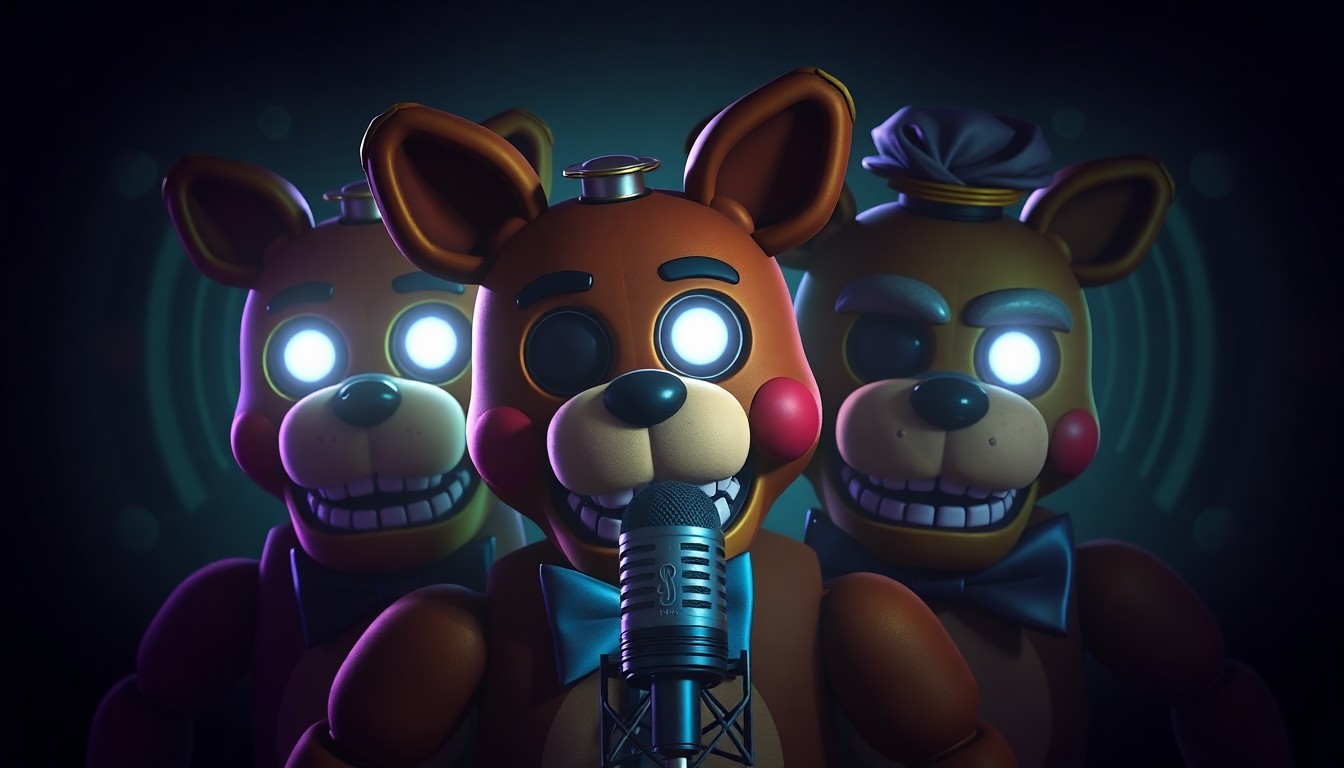
You're building FNAF fan content. Animations, gameplay commentary, horror skits. But without authentic animatronic voices, your project feels flat. Generic robot filters don't capture that specific mechanical horror that makes Five Nights at Freddy's iconic.
The FNAF franchise built its reputation on distinctive voice work that blends childlike innocence with corrupted machinery. Each animatronic has personality encoded in distorted audio, glitchy delivery, and unsettling tonal shifts. Recreating these voices used to require expensive voice actors, complex audio engineering, and deep knowledge of horror sound design.
AI voice generation changed everything. Modern text-to-speech technology can replicate the mechanical degradation, emotional range, and signature vocal characteristics that define FNAF animatronics. Whether you're creating YouTube animations, TikTok horror content, or game mods, AI tools let you generate authentic FNAF voices in seconds.
This guide covers everything you need to generate professional FNAF animatronic voices. We'll explore which AI platforms deliver the most accurate character voices, how to write dialogue that captures each animatronic's personality, technical tricks for adding that signature glitchy horror quality, and creative applications across different content formats. You'll learn voice-specific tips for Freddy, Bonnie, Chica, Foxy, and other fan favorites, plus advanced techniques for layering effects that make AI-generated audio indistinguishable from official game audio.
TryAIVoices provides instant access to high-quality AI voice generation perfect for FNAF content creation. Generate voices with emotional control and instant preview, no complex audio engineering required.
Why FNAF voices work perfectly for AI generation
Five Nights at Freddy's created a vocal aesthetic that AI voice technology handles exceptionally well. The animatronic voices aren't meant to sound perfectly human, they're corrupted, mechanical, filtered through decades of decay. AI voice generators naturally produce the slight imperfections and tonal variations that make these characters believable.
Traditional voice acting for FNAF content presents major challenges. Professional voice actors charge hundreds per session. Recording equipment needs careful calibration to capture both clarity and controlled distortion. Post-production requires expertise in audio filtering, pitch manipulation, and glitch effects. For indie creators, fan animators, and content producers, these barriers made authentic FNAF voice work nearly impossible.
Mechanical degradation as a feature: FNAF voices embrace audio artifacts that would be flaws in normal speech. The robotic undertones, occasional distortion, and mechanical quality that sometimes appears in AI-generated audio actually enhances authenticity when creating animatronic characters. What sounds wrong for human voices sounds perfect for possessed arcade machinery.
The emotional range in FNAF voices spans from childlike playfulness to menacing threats, often within the same character. Freddy can sound friendly and inviting before shifting to predatory and dangerous. This tonal flexibility maps perfectly to AI voice controls for emotion, pitch, and intensity. Modern generators let you dial in exact emotional states, creating the psychological horror that defines the franchise.
Voice recognition matters for FNAF content. Fans instantly identify character-specific vocal patterns. TryAIVoices' voice library includes models trained on distinctive FNAF character voices, capturing the nuances that make each animatronic unique. Freddy's deeper authoritative tone differs completely from Bonnie's slightly higher, more aggressive delivery. Chica's cheerful corruption contrasts with Foxy's raspy pirate cadence.
Gaming content creators use FNAF voices for multiple applications. Let's play commentary with animatronic hosts brings fresh personality to gameplay videos. Horror storytelling narrated by corrupted animatronics adds immersive atmosphere. Theory videos gain credibility when FNAF characters themselves present evidence. The voices aren't just decoration, they're strategic tools that increase viewer engagement and content shareability.
Animation projects benefit enormously from AI voice generation. Fan animations require multiple takes, script revisions, and iteration as projects evolve. Recording with human voice actors means expensive re-recording sessions for every change. AI generators let you regenerate dialogue instantly as scripts develop. Test different emotional deliveries. Experiment with pacing. Polish dialogue without worrying about studio time costs.
Sound design flexibility: FNAF voices need post-processing. Static, reverb, mechanical humming, tape degradation. AI-generated audio serves as the perfect foundation for these effects because the underlying voice already has appropriate character quality. You're enhancing, not trying to artificially roboticize a human performance that fights against the processing.
Content monetization works differently with AI voices versus traditional recording. YouTube gaming content requires clear audio rights. AI-generated FNAF voices avoid complex licensing negotiations with voice actors. You own the generated audio. No royalty splits. No usage restrictions. Create freely, monetize directly.
The FNAF community thrives on fan content. Thousands of creators build animations, games, stories, and art inspired by the franchise. AI voice generation democratizes voice acting quality, putting professional-grade character voices in every creator's toolkit. The barrier isn't talent anymore, it's creativity and storytelling skill.
 Photo by Matthias Groeneveld on Unsplash
Best FNAF AI voice generators compared
Several platforms offer AI voice generation, but quality varies dramatically for FNAF animatronic voices. The technical challenge isn't just replicating human speech, it's capturing mechanical horror aesthetics, character-specific distortion patterns, and that unsettling blend of friendly and threatening that defines the franchise.
TryAIVoices specializes in character voice generation with models optimized for gaming and entertainment content. The platform provides instant generation, emotional controls for adjusting delivery tone, and high-quality audio output ready for content production. FNAF character voices on TryAIVoices maintain consistency across different text inputs, critical when you're generating dialogue for longer projects.
Voice quality evaluation for FNAF requires different criteria than standard text-to-speech assessment. You're not looking for perfectly clean human replication. You need controlled imperfection, mechanical undertones that feel intentional rather than algorithmic, and emotional range that can shift from welcoming to horrifying within a single line.
Character accuracy matters most: Generic robot voices don't work for FNAF content. Freddy doesn't sound like a generic male robot. He has specific vocal characteristics that fans recognize instantly. Deeper tone, authoritative delivery, slight reverb that suggests speaking from within a metal chassis. AI platforms with dedicated character models outperform generic text-to-speech with robot filters applied.
Platform comparison reveals major differences in usability. Some AI voice tools require technical expertise, complex API integration, or multi-step workflows involving external audio editing software. Others provide simple interfaces where you type text, select a character, and generate instantly. For content creators focused on storytelling rather than audio engineering, simplicity matters.
TryAIVoices' emotion controls let you adjust delivery without regenerating multiple takes. Slide intensity from calm to aggressive. Shift pitch for age variation. Control speaking speed for dramatic effect. These real-time adjustments save enormous time compared to platforms where you need to regenerate audio repeatedly until you get the delivery right.
Audio quality for video production needs specific technical standards. Gaming videos, horror animations, and streaming content require clear dialogue that survives compression and platform encoding. Low-quality AI voices produce muddy audio that sounds worse after YouTube or TikTok processing. Professional generators output high-bitrate audio files that maintain clarity through multiple encoding stages.
Subscription pricing structures vary significantly across platforms. Some charge per character, making long-form content prohibitively expensive. Others use credit systems where voice generation depletes your allocation quickly if you're iterating on scripts. Subscription plans with predictable costs work better for content creators who generate voice content regularly. TryAIVoices pricing includes multiple plan tiers suited for different production volumes.
Voice variety within the FNAF universe matters for larger projects. If you're creating a fan animation with multiple characters, you need distinct voices for Freddy, Bonnie, Chica, Foxy, Springtrap, and supporting cast. Platforms with comprehensive character libraries eliminate the need to cobble together voices from multiple services.
Processing speed impacts workflow: Some AI generators take minutes to process each request. When you're working on a project with dozens of dialogue lines, slow generation creates painful bottlenecks. Instant or near-instant generation keeps creative momentum going.
Community support and documentation make platforms more accessible for creators without audio engineering backgrounds. Clear guides for achieving specific effects, active user communities sharing techniques, and responsive support teams help you solve problems quickly. FNAF voice generation often requires experimentation to nail character-specific delivery, so learning resources matter.
Comparison testing reveals that dedicated character voice platforms consistently outperform general-purpose text-to-speech tools for FNAF applications. The training data quality, model specificity, and output controls designed for entertainment content produce noticeably better results than adapting business-focused voice AI.
Writing dialogue that sounds authentically FNAF
Script quality determines whether AI-generated FNAF voices sound like authentic characters or generic robots reading text. The animatronics have distinct speech patterns, vocabulary choices, and psychological delivery that you must encode in your writing.
Character voice consistency: Freddy Fazbear speaks as the de facto leader. His dialogue carries authority mixed with false friendliness. He doesn't use slang or casual speech. His tone suggests he's in control, performing hospitality as a predator performs camouflage. Write dialogue that maintains formality even when delivering threats.
Example Freddy dialogue: "Welcome back to Freddy Fazbear's Pizza. We've been waiting for you. The show is about to begin, and you have the best seat in the house. Don't worry, we'll take excellent care of you. All of us will."
Notice the structure. Complete sentences. No contractions in the threatening parts. Pauses that let menace build. The false hospitality layered over clear threat. This pattern works consistently for Freddy's character.
Bonnie's aggressive edge: Bonnie Bunny has less patience than Freddy. His dialogue shows more direct aggression, less pretense of friendliness. He's frustrated, hunting, less interested in performance. Write shorter sentences. More direct language. Let the mask slip faster.
Example Bonnie dialogue: "You're still here. That's unfortunate. For you. The stage is empty now. We don't perform anymore. We have different entertainment in mind. Much more fun. Much more personal."
The sentence fragments create aggressive pacing. Bonnie doesn't waste words on elaborate threats. He's direct, almost eager to drop the pretense.
Chica's corrupted cheerfulness: Chica maintains childlike speech patterns twisted into something wrong. She uses playful language but the context makes it horrifying. Her dialogue needs juxtaposition between innocent vocabulary and predatory intent.
Example Chica dialogue: "Let's play a game. It's so much fun. You hide, and we seek. We always find everyone eventually. Everyone gets a turn. Then we get our turn. It's only fair, right? Games should be fair."
The childlike "let's play," "so much fun," and "it's only fair" create unsettling contrast with the hunting implications. Chica's corruption lies in maintaining innocence while doing horrible things.
Foxy's pirate deterioration: Foxy speaks in partial pirate dialect, but degraded and inconsistent like his animatronic maintenance. His dialogue shows more personality breakdown, less coherent character performance, suggesting the machinery is failing.
Example Foxy dialogue: "Aye, there ye are. Been waitin' in me cove. The others play their games, but old Foxy runs straight for ye. More honest that way. More sporting. Give ye a fighting chance before the show ends. Before everything ends."
The pirate vocabulary mixed with broken coherence, the shift between accent and standard English, creates Foxy's distinctive deterioration.
Dialogue rhythm for AI delivery: AI voice generators handle certain text structures better than others. Short punchy sentences create clear emphasis. Long sentences with commas allow for dramatic builds. Ellipses indicate pauses but can sound awkward if overused. Test your script rhythm by reading aloud before generating.
Avoid overly complex vocabulary. The animatronics aren't sophisticated speakers. They're children's entertainment corrupted into predators. Simple words delivered with perfect timing create more horror than elaborate descriptions. "We're going to hurt you" works better than "We shall inflict upon you considerable suffering."
Voice generation tips emphasize natural speech patterns. Write how characters would actually speak, not how written description would explain their speech. Avoid stage directions in the text itself. Let the words carry the emotion rather than explaining the emotion.
Punctuation controls pacing in AI voice generation. Periods create full stops. Commas suggest brief pauses. Dashes indicate interruption. Question marks affect inflection. Exclamation points increase intensity. Use punctuation deliberately to guide the AI's delivery rhythm.
Script iterations improve output quality. Generate your dialogue, listen critically, identify what doesn't land, and rewrite. Maybe a line needs shorter sentences for impact. Maybe emotional build needs longer runway. AI voice generation lets you iterate freely, so take advantage of unlimited refinement.
Context matters for character consistency. If you're writing a longer scene, maintain each character's speech patterns throughout. Freddy doesn't suddenly start talking like Bonnie. Chica doesn't drop her playful corruption halfway through. Consistency makes characters believable.
Emotional direction without telling: Don't write "he said menacingly" in your script. Write sentences that force menacing delivery through word choice and structure. "We've been waiting for you" reads neutral. "We've been waiting for you, and patience has limits" reads menacing automatically.
Test dialogue against canon. Watch FNAF game footage, listen to official character voices, analyze speech patterns. Your fan content gains authenticity by respecting established character voices rather than reinventing them.
 Photo by Alexey Ruban on Unsplash
Technical tricks for adding that signature FNAF glitch quality
Generated AI voices provide excellent foundation, but authentic FNAF sound requires post-processing. The animatronics don't speak through perfect audio systems. They broadcast through deteriorating equipment with decades of mechanical failure creating distinctive distortion patterns.
Layering static and interference: Real FNAF audio contains ambient static, electromagnetic interference, and mechanical noise underneath the voices. These elements create the sense of listening through old speakers, intercoms, and failing animatronic sound systems.
Add background static at low volume beneath your voice tracks. Don't overdo it. Subtle static suggests aged equipment without making dialogue hard to understand. Audio editing software like Audacity offers static generation, or you can layer royalty-free static textures from sound libraries.
Horror voice effects rely heavily on frequency manipulation. FNAF animatronic voices often have slight high-frequency distortion suggesting speaker damage, combined with low-frequency rumble from mechanical components. Apply multi-band EQ to boost presence around 3-4kHz for speaker character, and add subtle low-end around 100-200Hz for mechanical depth.
Compression creates the constrained sound of voices broadcast through limited-range speakers. Apply moderate compression to AI-generated dialogue to reduce dynamic range. Animatronic speakers can't handle full vocal dynamics, so compressed audio sounds more authentic than pristine recordings.
Pitch instability mimics failing machinery: FNAF animatronics occasionally show pitch drift, like tape players with worn motors. Apply subtle pitch variation automation, slight wobbles and shifts that suggest mechanical instability. Don't make it obvious. Tiny imperfections register subconsciously as "wrong" without listeners consciously identifying why.
Reverb suggests physical space and speaker characteristics. Short room reverb makes voices sound like they're coming from within metal chassis. Longer reverb suggests empty pizza restaurant acoustics. Layer both, short reverb on the voice itself, longer reverb on the overall mix, creating spatial depth.
Glitch effects for horror emphasis: Strategic glitches and digital artifacts emphasize threatening moments. When dialogue shifts from friendly to menacing, adding a glitch effect right at the transition amplifies psychological impact. Use glitch effects sparingly. Constant glitching becomes predictable and loses impact.
Tape degradation simulation adds analog warmth and age. VST plugins like RC-20 or XLN Audio's RC-20 Retro Color provide tape emulation with wow, flutter, and degradation controls. Apply subtly to suggest decades-old audio equipment rather than modern digital generation.
Bit-crushing for digital corruption: Some FNAF audio, especially Phone Guy recordings and certain animatronic sounds, has digital artifacts from low-bitrate compression or intentional digital degradation. Bit-crushing reduces audio resolution, creating that distinctive digital crunch. Apply bit-crushing to specific words or phrases for emphasis.
Filtering creates telephone and intercom characteristics. Apply bandpass filters to narrow frequency range, cutting extreme highs and lows, leaving only midrange frequencies. This mimics old intercoms, phone lines, and PA systems. Different characters might broadcast through different equipment quality levels.
Stutter and repetition for malfunction: Mechanical failure manifests as stuck audio, repeated words or syllables, and playback glitches. Edit your AI-generated audio to repeat specific words or phonemes, suggesting the animatronic is malfunctioning. Place these glitches strategically for maximum horror impact.
Dynamic automation makes audio feel alive and unstable. Automate volume slightly, creating fluctuations that suggest failing amplifiers or inconsistent power delivery. Automate pitch minutely for mechanical instability. Automate panning for disorienting spatial shifts. Small automated changes create unease without obvious effects.
Gaming content audio needs to balance character effects with dialogue clarity. You can heavily process FNAF voices for atmospheric horror scenes, but gameplay commentary requires more clarity. Adjust processing intensity based on content context.
Layering multiple takes with slight variations creates thickness and mechanical quality. Generate the same line twice with slightly different emotion settings, then layer them with one very quiet beneath the other. This creates subtle phasing and depth suggesting multiple deteriorating speakers playing slightly out of sync.
Reference actual FNAF game audio while processing. Import official audio clips into your editing software, analyze their frequency content, reverb characteristics, and distortion patterns. Match your processing to replicate those sonic signatures.
Test processed audio in context. What sounds perfect in your audio editor might sound wrong in your video edit. Export test clips, add them to your video project, and evaluate how processing survives video encoding and platform compression.
Creative applications for FNAF AI voices
FNAF AI voices open creative possibilities across multiple content formats. The voices aren't just for fan animations, they're versatile tools for different storytelling approaches and content strategies.
YouTube horror gaming content: Gaming commentary narrated by FNAF animatronics creates unique perspective. Instead of standard YouTuber voice-over, imagine Freddy himself hosting gameplay of FNAF games, providing insider perspective and dark humor. The novelty attracts attention in crowded gaming content space.
Generate intros and outros with animatronic hosts. "Welcome back to Freddy Fazbear's Gaming Channel" delivered in authentic Freddy voice immediately establishes brand identity. Consistent character hosting makes your channel memorable and shareable.
TikTok horror content uses FNAF voices for quick horror storytelling. 60-second stories narrated by corrupted animatronics perform well in horror content communities. The voices provide instant atmosphere without requiring visual effects or elaborate production.
Short-form content works perfectly with AI voice generation. TikTok videos rarely exceed 2-3 minutes, so you're generating minimal dialogue per video. Quick turnaround from concept to finished video becomes possible when you don't need to record voice-overs manually.
Fan animations gain production value: Full animated shorts require synchronized dialogue. AI voice generation lets you iterate on dialogue timing, adjust performance, and regenerate lines without expensive voice actor sessions. Animation workflows improve dramatically when voice changes don't require studio bookings.
Generate scratch audio for animatics using AI voices, then if budget allows, re-record with professional voice actors for final production. Or go fully AI-generated and use budget on animation quality instead of voice acting costs.
Podcast introductions with character voices: Horror storytelling podcasts benefit from FNAF character intros. Open episodes with Freddy welcoming listeners to another night at the pizza place, then transition into your narration. Character framing devices increase production value.
Podcast voice content requires consistent audio quality. AI-generated voices maintain perfect consistency across all episodes. Your animatronic host sounds identical in episode 1 and episode 100, unlike human voice actors whose voices change over time or between recording sessions.
Game mods and fan games: If you're developing FNAF-inspired games or mods, AI voices provide character dialogue without voice acting casting calls. Generate lines for tutorial prompts, character interactions, and story moments. Professional game audio without professional recording budgets.
Dynamic dialogue generation for games becomes feasible with AI. Rather than recording every possible dialogue permutation, generate variations on demand. If your game has procedural elements, AI voices can provide appropriate dialogue for different situations.
Educational content with entertainment value: Explaining game theories, FNAF lore analysis, or horror game design becomes more engaging when FNAF characters themselves present information. "Today Bonnie is going to explain the FNAF timeline" attracts more attention than standard narrator voice-over.
Gaming education content often struggles with dry presentation. Character voices inject personality and entertainment value into informational content, improving viewer retention.
Social media character accounts: Running character roleplay accounts on Twitter, Instagram, or Threads becomes more engaging with AI-generated voice content. Post audio clips where Freddy responds to current events, Chica comments on food trends, Foxy tells pirate stories. Character accounts need consistent voice content, and AI generation makes this sustainable.
Streaming overlays and alerts: Twitch streamers and YouTubers can use FNAF voices for donation alerts, subscriber welcomes, and stream transitions. "Freddy thanks you for subscribing" with authentic voice audio creates memorable stream personality.
Generate multiple variations of each alert type so your stream doesn't repeat identical audio. AI generation makes creating large alert libraries practical.
Collaborative storytelling projects: FNAF community projects often involve multiple creators contributing to shared universes. AI-generated voices ensure character consistency across different creators' content. Everyone uses the same Freddy voice, maintaining universe coherence.
Meme content creation with FNAF voices performs well across social platforms. Take trending meme formats, add FNAF character voices, and you've got shareable horror-comedy content. The contrast between cute animatronic branding and disturbing dialogue creates humor.
Audio memes spread rapidly on Discord, Reddit, and TikTok. A well-timed FNAF voice delivering meme dialogue can go viral in horror gaming communities.
Voice-over for fan comics and visual novels: Static visual content like comic dubs or visual novel games needs voice acting. AI generation makes voice-acting entire comic series or branching visual novel paths financially feasible for independent creators.
Generate multiple emotional variations of the same line, giving players or viewers different experiences based on story choices or repeat viewing.
 Photo by Alex Haney on Unsplash
Platform-specific optimization for FNAF voice content
Different platforms have unique technical requirements and audience expectations that affect how you should prepare FNAF AI voice content. Optimization strategies vary dramatically between YouTube, TikTok, Instagram, Discord, and streaming platforms.
YouTube long-form content optimization: YouTube videos can run 10-30 minutes, requiring more extensive dialogue generation. Plan your scripts to include natural breaks and pacing variation. Long monotonous AI voice narration loses audiences. Mix animatronic dialogue with music, sound effects, and silence for dynamic pacing.
Audio quality standards for YouTube remain high despite compression. Export AI-generated voices at 48kHz sample rate, 320kbps or higher bitrate. YouTube's audio encoding handles high-quality sources well but amplifies problems in low-quality audio.
YouTube gaming content strategies benefit from character commentary throughout gameplay. Generate lines for specific game moments, reactions to jump scares, commentary on player actions. This requires more planning than generic voice-over but creates significantly higher engagement.
Chapters and timestamps in YouTube videos help viewers navigate content. Structure FNAF voice scripts to align with chapter breaks, making your content more discoverable through YouTube's chapter navigation.
TikTok and short-form vertical video: TikTok's 60-second to 10-minute format favors punchy, immediate content. FNAF voice content on TikTok should open with immediate hook, no lengthy intros. Get to the scary/funny/interesting part in the first 3 seconds.
Audio is critical on TikTok. Many users browse with sound on, unlike other platforms. High-impact FNAF voice one-liners perform exceptionally well. Generate memorable quotable audio that viewers will want to use in their own TikToks.
TikTok's algorithm favors completion rate. Keep voice content tight, eliminate padding, and end with strong conclusion. A 45-second video with 90% completion rate outperforms a 3-minute video with 30% completion.
Instagram Reels optimization: Similar to TikTok but Instagram's audience skews slightly older with different content preferences. FNAF voice content on Reels can be slightly more sophisticated, less meme-focused, with better performance for mini-documentary or lore-explanation formats.
Instagram compression is aggressive. Export with high audio quality but expect some degradation. Test your FNAF voices in Instagram's preview before posting to ensure dialogue remains clear after platform processing.
Discord server content: Gaming communities use Discord extensively. FNAF voice content works well for server soundboards, custom bot responses, and community inside jokes. Generate shorter clips designed for soundboard usage, iconic lines and reactions that server members will spam.
Discord audio channels support streaming and voice chat. Using FNAF AI voices as your voice changer in Discord creates entertaining community interactions. Some creators build entire personas around speaking as animatronic characters during gaming sessions.
Twitch streaming integration: Live streaming presents unique challenges since content isn't pre-edited. Pre-generate a library of FNAF voice clips for different stream situations. Subscriber alerts, donation thanks, raid messages, channel point redemptions. Comprehensive voice libraries make streams feel more produced.
Streaming audio needs to balance game sound, music, alerts, and voice content. Mix FNAF voices louder than you might for pre-recorded content, since live stream audio competes for attention with game audio and music.
Podcast platform distribution: Podcasts require different audio specifications. Most podcast hosting platforms prefer 128kbps mono or 192kbps stereo MP3 files. FNAF voices in podcast context need minimal effects, prioritizing clarity since listeners might be using phone speakers or cheap earbuds.
Podcast audiences listen passively during commutes or chores. Content pacing should account for distracted listening. Clear distinct character voices help listeners follow dialogue without constant visual reference.
Twitter/X audio posts: Twitter supports audio attachments and voice tweets. Short FNAF voice clips work well for building character accounts or commentary on trending topics. Generate reaction audio, character takes on current events, or continuation of ongoing character storylines.
Audio tweets perform better when they're under 60 seconds. Twitter users scroll quickly, so immediate impact matters more than detailed storytelling.
Reddit community sharing: Horror gaming subreddits appreciate high-effort FNAF content. Longer-form analysis videos with animatronic narration perform well. Reddit audiences are more tolerant of longer content compared to TikTok, if quality justifies runtime.
Include transcripts or detailed descriptions with Reddit posts containing AI voice content. Accessibility and context help your posts gain traction in community discussions.
Content repurposing across platforms: Generate FNAF voice content once, then adapt for multiple platforms. Take a 10-minute YouTube video, extract the best 60-second segment for TikTok, pull quotable audio for Twitter, create highlight reels for Instagram. AI-generated voices make this content multiplication strategy efficient.
Different platforms reward different optimization strategies, but the core asset remains your FNAF AI voice content. Smart repurposing multiplies reach without multiplying production effort.
Character-specific voice generation strategies
Each FNAF animatronic requires distinct generation approach to capture their unique vocal characteristics and personality corruption patterns. Generic strategies produce generic results. Character-specific techniques create authentic voices that fans instantly recognize.
Freddy Fazbear generation tactics: Freddy's voice needs gravitas and false warmth. When generating Freddy dialogue, select deeper voice pitch settings. Slower speech rates work better for his authoritative delivery. The emotion should register as "calm" with underlying menace, not overtly aggressive.
Script Freddy dialogue with longer sentences and formal structure. He's the showman, the face of the establishment, so his corruption maintains sophisticated facade. Avoid slang, contractions in threatening moments, or casual speech that breaks character.
TryAIVoices emotion controls let you fine-tune Freddy's menacing hospitality. Set emotion towards "calm" or "neutral" with intensity slightly elevated. This creates controlled threat rather than obvious aggression.
Post-processing for Freddy should emphasize low-frequency richness and slight reverb suggesting his voice projects from metal chassis. Add subtle mechanical rumble underneath his voice, implying his sound system is part of his animatronic construction.
Bonnie Bunny aggressive delivery: Bonnie's voice skews more aggressive and direct than Freddy's false politeness. Generate at medium-high pitch, faster speech rate, with emotion settings leaning toward "aggressive" or "intense." Bonnie's patience is thinner, his dialogue more confrontational.
Script shorter, more direct sentences for Bonnie. He doesn't waste words on elaborate shows. Write dialogue that gets to the point, drops pretense faster, reveals the threat more openly. This matches his character as more unstable and aggressive than Freddy's calculated approach.
Processing Bonnie's voice should include more mid-range bite and presence. Less low-frequency warmth than Freddy, more cutting frequencies that suggest anger and mechanical stress. Add subtle distortion on louder words, suggesting his aggression strains his audio system.
Chica's corrupted innocence: Chica requires the most delicate balance, maintaining childlike vocal qualities while delivering disturbing content. Generate at higher pitch to suggest youthfulness, but pair it with slower speech rate to create unsettling juxtaposition between innocent sound and predatory intent.
Script Chica with playful vocabulary twisted into horror context. She uses words associated with fun, games, sharing, and parties but applies them to hunting. The corruption lies in maintaining innocent speech patterns while doing horrible things.
Emotion settings for Chica should register as "cheerful" or "happy" which creates disturbing contrast with threatening dialogue content. The disconnect between pleasant delivery and dark content generates psychological horror.
Foxy's deteriorated coherence: Foxy's voice suggests more mechanical failure than the others. His pirate persona breaks down mid-speech, accent comes and goes, creating the sense that his character programming is corrupted or failing. Generate at medium pitch with variable speech rate, some lines faster (when accent is thick) and others slower (when coherence returns).
Script Foxy with inconsistent pirate dialect. Use pirate vocabulary and grammar in some sentences, then drop it entirely in others. This inconsistency creates his distinctive deterioration. Mix "Aye, there ye be" with "You can't hide from me" in the same dialogue block.
Processing should include more distortion and glitching than other characters. Foxy's audio should sound the most broken, with more static interference, pitch instability, and occasional digital artifacts suggesting failing sound systems.
Springtrap's menacing sophistication: Springtrap (William Afton) needs intelligent menace. His voice should sound more human than the others but twisted and damaged. Generate at medium-low pitch with slow, deliberate pacing. Emotion settings should convey "sinister" intelligence rather than animalistic aggression.
Script Springtrap with complex sentences showing intelligence and psychological manipulation. He's not a malfunctioning robot, he's a human consciousness trapped in decaying machinery. His dialogue should reflect understanding of fear, anticipation, and sadistic pleasure.
Post-processing needs heavy distortion suggesting voice filtered through decades of decay and biological contamination. Layer in breathing sounds, gurgling, wet mechanical noises creating the horrifying organic-mechanical fusion.
Phone Guy's corporate desperation: Phone Guy represents normal human voice filtered through old recordings. Generate at medium pitch and conversational pace, but emotion should shift from "friendly" early in messages to "anxious" or "fearful" in later messages.
Script with corporate jargon mixed with growing fear. Start professional, include policy reminders and safety protocols, then let cracks show as danger becomes undeniable. The progression from routine training to panicked warning creates narrative arc.
Processing requires heavy telephone filtering, tape degradation, and compression artifacts. Phone Guy sounds like he's recorded on terrible equipment decades ago. Apply aggressive bandpass filtering, reducing frequency range to telephone bandwidth (300Hz-3400Hz), plus tape saturation and noise.
Golden Freddy's supernatural horror: Golden Freddy differs from other animatronics, requiring supernatural rather than mechanical voice characteristics. Generate at very low pitch with slow, echoing delivery. Emotion should register as "ominous" or "unnatural" rather than aggressive.
Script Golden Freddy with minimal dialogue, cryptic phrases, and incomplete sentences suggesting fragmented supernatural consciousness. He doesn't speak like the other animatronics because he's not entirely present or real.
Heavy reverb and delay create disembodied, ghostly quality. Layer multiple takes at different pitches creating unsettling harmonics. Add backwards reverb for supernatural effect. Golden Freddy should sound like he exists partially outside normal reality.
 Photo by John Matychuk on Unsplash
Advanced techniques for multi-character scenes
Creating dialogue scenes with multiple FNAF characters requires techniques beyond generating individual voices. Character interaction needs distinct voices that remain differentiated in the mix while maintaining proper spatial and emotional relationships.
Voice differentiation in ensemble casts: When Freddy, Bonnie, Chica, and Foxy all appear in the same scene, their voices must remain instantly distinguishable. Generate each character at their appropriate pitch and pace, but also apply unique processing to create sonic distinction.
Freddy gets low-frequency emphasis and subtle reverb. Bonnie receives mid-range boost with slight edge. Chica maintains higher pitch with playful modulation. Foxy gets the most distortion and mechanical noise. These processing differences ensure characters remain distinct even when speaking rapidly back and forth.
Voice generation workflow for multi-character scenes requires organization. Label each generated audio file clearly with character name and line number. "Freddy_01", "Bonnie_02", "Chica_03" prevents confusion when assembling dozens of dialogue clips.
Spatial positioning helps differentiation in stereo mixes. Pan Freddy slightly left, Bonnie slightly right, Chica center-right, Foxy hard left. Spatial separation makes individual voices clearer in complex dialogue scenes. Listeners can track conversations more easily when characters occupy distinct positions in stereo field.
Dialogue timing and overlap: Real conversations include interruptions, overlaps, and simultaneous speech. FNAF animatronics might talk over each other, creating chaotic horror atmosphere. Generate individual lines separately, then layer them in your audio editor with intentional overlaps.
Avoid perfect turn-taking where each character waits politely for the previous speaker to finish. Animatronics don't follow conversation etiquette. They interrupt, speak simultaneously, create cacophony that emphasizes their inhumanity.
Emotional progression through scenes: Characters' emotional states evolve through dialogue. Freddy might start calm and become menacing. Bonnie might escalate from annoyed to enraged. Generate multiple versions of lines at different emotional intensities, then select versions that create proper progression.
AI voice generators with emotion controls make this progression smoother. Generate the opening lines at calm setting, middle lines at moderate intensity, climax lines at maximum aggression. The emotional arc makes scenes more dynamic and engaging.
Background animatronic chatter: In FNAF locations, you're surrounded by multiple animatronics. Background dialogue layers create environmental immersion. Generate various short phrases and sounds from different characters, then layer them quietly beneath main dialogue.
Background chatter shouldn't be clearly intelligible. Process it with more distortion, reverb, and filtering so it creates atmosphere without competing for attention with main dialogue. Listeners should feel surrounded by mechanical voices without consciously following every word.
Call and response patterns: FNAF animatronics sometimes echo or respond to each other's phrases, creating unsettling coordinated behavior. Generate complementary lines where one character starts a phrase and another completes it, or multiple characters repeat the same line with slight variations.
"It's time for the show" delivered by Freddy, followed by Bonnie, Chica, and Foxy each repeating with their distinct voices creates chilling coordination suggesting hive mind or shared programming.
Character-specific audio quality variations: Different animatronics might have different states of audio system maintenance. Freddy's voice comes through relatively clear since he's the main attraction. Bonnie has more distortion. Foxy's audio cuts in and out. These quality variations add realism suggesting individual mechanical states.
Generate all voices at high quality, then apply varying degrees of degradation in post-processing. This gives you control over each character's apparent mechanical condition.
Dynamic range across ensemble: In scenes with multiple characters, establish clear foreground and background. The character currently driving the scene should be loudest and clearest. Supporting characters slightly quieter. Background characters significantly quieter. This hierarchy helps listeners follow story focus.
Use automation to adjust character volumes throughout scenes. As focus shifts between characters, automate their volumes to guide listener attention. When Bonnie responds to Freddy, Bonnie's volume rises while Freddy's drops slightly.
Reverb depth for spatial positioning: Beyond stereo panning, reverb amount creates sense of distance. Characters closer to the listener have less reverb. Characters farther away have more reverb suggesting physical space between listener and sound source.
This technique creates three-dimensional audio space. You can suggest Freddy standing close, Bonnie across the room, and Foxy in the distant hallway, all through reverb manipulation.
Synthetic ensemble building: For crowd scenes or multiple animatronic chaos, generate the same lines multiple times with variation, then layer them with pitch shifting and time offset. Take one line of Freddy dialogue, create three copies, pitch one up 5%, pitch another down 5%, offset timing by milliseconds, and suddenly you have three Freddys creating disturbing multiplied effect.
This technique works excellently for nightmare sequences or supernatural horror scenes where normal physical rules don't apply.
Legal and ethical considerations for FNAF fan content
Creating FNAF AI voice content exists in complex legal territory involving intellectual property, fair use, platform policies, and community norms. Understanding these boundaries protects your content and respects the franchise.
Fair use and parody protections: FNAF fan content generally falls under fair use when it's transformative, adds commentary, or serves as parody. Fan animations, theory videos, and comedy content using FNAF voices typically receive fair use protection. Direct reproduction of official content without transformation doesn't qualify.
Scott Cawthon, FNAF's creator, has historically supported fan content and creativity within his universe. The FNAF community thrives on fan work. However, this informal approval doesn't grant unlimited rights. Respect boundaries between fan creation and commercial exploitation.
Content creation guidelines emphasize disclosure when using AI-generated voices. Many platforms and communities expect transparency about synthetic audio. Including brief disclosure in video descriptions or about sections maintains trust with audiences.
YouTube and TikTok policies on synthetic media continue evolving. Currently, neither platform prohibits AI-generated voices, but both encourage disclosure. As AI content becomes more common, platforms may implement stricter labeling requirements.
Monetization considerations: Monetizing FNAF fan content involves additional complexity. YouTube ad revenue on fan content operates in grey areas. The content must be transformative enough to claim fair use while generating revenue. Theory videos, commentary, and parody content generally monetize successfully. Direct story animations may face more scrutiny.
TryAIVoices subscription plans include commercial usage rights for generated audio. You own the AI-generated voice clips and can use them in monetized content. This differs from some platforms where generated content has usage restrictions.
Patreon and membership support for fan content creators typically faces fewer restrictions than direct content sales. Supporting a creator who makes FNAF fan content differs legally from selling FNAF merchandise. Community funding models work better for fan creators than product sales.
Trademark and copyright boundaries: FNAF's characters, names, and designs are trademarked and copyrighted. Using character names and voices in content titles and descriptions for discoverability is generally accepted practice. Creating confusion about whether content is official presents problems.
Never claim your fan content is official. Never use official FNAF branding, logos, or marketing materials in ways that suggest endorsement. Make your fan creator status clear.
Platform content policies: Different platforms enforce intellectual property policies differently. YouTube uses Content ID and copyright strikes. TikTok removes content based on rights holder requests. Discord servers may have rules about shared audio content. Understand the platforms where you'll distribute content.
Some creators receive copyright strikes on FNAF content while others don't. Enforcement inconsistency makes prediction difficult. Focus on creating clearly transformative content and being prepared to dispute invalid strikes.
Community norms and respect: The FNAF creator community has informal norms beyond legal requirements. Credit other creators when building on their concepts. Don't steal fan character ideas or storylines. Respect the community that made FNAF's extended universe possible.
AI voice generation makes copying others' work trivially easy. Resist this temptation. Create original content even when tools make plagiarism simple.
Voice actor considerations: Official FNAF voice actors performed the original character voices. When you generate AI voices trained on their performances, ethical questions arise. The AI learned from their work. Acknowledging this reality shows respect even when legal requirements don't demand it.
The voice acting industry faces disruption from AI voice technology. Many voice actors oppose AI training on their performances. Creating FNAF fan content with AI voices doesn't make you responsible for industry-wide changes, but awareness of these concerns shows professional maturity.
Age-appropriate content warnings: FNAF attracts younger audiences despite horror themes. If you create mature content using FNAF voices, age-gate appropriately and include content warnings. The franchise's broad appeal includes children, so adult content needs clear labeling.
Future-proofing your content: Legal landscapes around AI-generated content and fan works continue evolving. Create content you'd be comfortable defending if challenged. Document your creative process showing substantial transformation and original contribution beyond just using character voices.
Respecting takedown requests: If rights holders request content removal, respond professionally and promptly. Fighting takedowns on fan content rarely succeeds and can damage your channel or account. Most FNAF fan content coexists peacefully with the franchise, but prepare for possibility of content removal.
Monetization strategies for FNAF voice content
Creating FNAF AI voice content offers multiple monetization paths beyond direct content sales. Smart creators build sustainable income through platform ad revenue, community support, and value-added services rather than selling fan content directly.
YouTube ad revenue optimization: Gaming and horror content on YouTube generates decent CPM rates. FNAF content attracts dedicated audiences with strong engagement metrics. Focus on watch time, video length over 8 minutes for mid-roll ads, and consistent upload schedule.
Videos combining FNAF AI voices with original storytelling, game analysis, or entertainment perform better than simple voice showcases. Add value beyond the novelty of AI voices. Theory videos, lore analysis, and comedy content have longer shelf life than basic voice demonstrations.
YouTube content strategy for FNAF creators emphasizes series formats and ongoing narratives. Viewers return for continuing stories featuring AI-voiced animatronic characters. Serialized content builds loyal audiences with better retention than one-off videos.
Longer videos (15-30 minutes) maximize ad revenue potential. Structure FNAF voice content in episodic formats with multiple segments, allowing natural ad break placement without disrupting story flow.
TikTok Creator Fund and brand partnerships: TikTok monetization comes primarily from Creator Fund payments and brand deals rather than direct platform ads. FNAF content creators can attract gaming peripheral brands, horror entertainment sponsors, and content creator tool partnerships.
Build substantial following (100k+ followers) before expecting significant brand interest. Brands want reach and engagement, so focus on creating shareable FNAF voice content that goes viral in gaming and horror communities.
Patreon and membership models: Community funding works excellently for FNAF fan content creators. Offer tiered memberships providing:
Early access to videos before public release. Exclusive behind-the-scenes content showing AI voice generation process. Custom voice messages in FNAF character voices for supporters. Access to private Discord with creator interaction. Extended cuts or alternate versions of public content.
Patreon supporters understand they're funding a creator rather than buying products, which sidesteps some intellectual property concerns around directly selling fan content.
Commission services for other creators: Once you've established expertise in FNAF AI voice generation, offer services to other fan creators. Generate voices for their animations, games, or videos for flat fees or revenue shares. Position yourself as technical specialist helping other creators bring their FNAF projects to life.
This monetizes your skills rather than FNAF IP itself, creating clearer legal standing.
Educational content about AI voice generation: Tutorials teaching others how to create FNAF AI voices have clear monetization paths. Educational content adds significant transformation, firmly establishing fair use. Create courses, tutorial series, or guides for aspiring FNAF fan content creators.
TryAIVoices affiliate partnerships let you earn commissions recommending AI voice tools to your audience. When you teach FNAF voice generation techniques, affiliate links to the platforms you use generate passive income.
Streaming revenue through Twitch or YouTube Live: Live content featuring FNAF AI voices attracts donations, subscriptions, and ad revenue. Create interactive streams where chat requests affect animatronic dialogue, choose story directions, or challenge you with voice generation prompts.
Streaming builds direct relationships with audiences more effectively than pre-recorded content, increasing likelihood of direct financial support through donations and subscriptions.
Merchandise through print-on-demand: While selling direct FNAF merchandise creates IP problems, creating designs inspired by your specific content series works better. If you've built original characters or storylines within the FNAF universe using AI voices, merchandise your original creations rather than copying official characters.
Taglines, inside jokes, and references specific to your content community create merchandise that's legally clearer than reproducing official character designs.
Ko-fi and tip jar models: Simple tip jar approaches through Ko-fi, PayPal, or Venmo allow audience support without formal membership structures. Include links in video descriptions and social media profiles. Many viewers want to support creators directly with one-time payments rather than ongoing subscriptions.
Premium content through Gumroad or similar platforms: Sell production assets like sound effect libraries, audio processing tutorials, or voice generation preset packs. These are tools for other creators rather than FNAF content itself, creating clearer monetization paths.
Sponsorships from AI voice platforms: As FNAF content creator demonstrating AI voice capabilities, you're valuable marketing for AI voice platforms. Reach out to TryAIVoices and similar services about sponsorship opportunities. Platforms pay creators to showcase their tools to relevant audiences.
Building toward original IP: Use FNAF fan content as portfolio and audience-building exercise while developing original horror characters and universes. Once you've proven ability to create engaging content, pivot toward original IP you fully own. Many successful creators started with fan content before launching original projects.
The goal isn't milking FNAF's intellectual property. It's building sustainable creative business using fan content as initial audience development tool.
 Photo by Lukas Hron on Unsplash
Troubleshooting common FNAF AI voice generation issues
Even with quality AI voice generators, FNAF character voices sometimes don't sound right. Specific problems require specific solutions rather than generic regeneration.
Voice sounds too human and clean: The most common issue with FNAF AI voices is they sound too natural. FNAF animatronics shouldn't sound like humans, they should sound like corrupted machines attempting human speech. This requires post-processing rather than generation adjustments.
Add mechanical undertones with EQ boosting around 100-200Hz for metal chassis resonance. Apply subtle distortion suggesting speaker damage. Layer in background mechanical noise like humming, clicking, or servo motors. These elements transform clean AI voices into animatronic audio.
Emotional delivery misses the mark: AI emotion controls don't always map perfectly to FNAF's specific emotional palette. You select "menacing" but get generic anger. The solution involves combining emotion settings with script adjustments.
Write dialogue that forces desired emotional interpretation. Instead of relying on AI to make "hello" sound menacing, write "Hello. We've been waiting for you. All of us." The expanded context guides the AI toward appropriate delivery.
Character voices sound too similar: If Freddy and Bonnie sound nearly identical, generation settings need more differentiation. Increase pitch difference between characters. Adjust speech rate more dramatically. Apply character-specific post-processing creating unique sonic signatures.
Reference official FNAF audio to identify each character's distinctive traits. Freddy's lower pitch, Bonnie's aggressive edge, Chica's higher cheerfulness, Foxy's raspy deterioration. Exaggerate these differences in your generation settings.
Audio quality too low for professional use: Some AI platforms generate voices at insufficient sample rates or bitrates for professional content. If possible, use services offering high-quality output. TryAIVoices provides broadcast-quality audio suitable for professional video production.
If stuck with lower-quality generation, avoid heavy processing that emphasizes digital artifacts. Use subtle effects and consider the lo-fi aesthetic as feature rather than bug, leaning into the degraded animatronic equipment vibe.
Pronunciation errors on specific words: AI voices occasionally mispronounce unusual words, names, or FNAF-specific terminology. Try alternate spellings that guide pronunciation. "Fazzbear" might pronounce more accurately as "Faz-bear" with hyphen. "Animatronic" might need "an-ih-muh-TRON-ik" phonetic spelling.
Most platforms allow phonetic spelling adjustments. Experiment with different spellings until pronunciation matches your intent.
Inconsistent character voice across multiple generations: AI platforms should maintain character consistency, but variations happen. When generating dialogue for longer projects, generate all lines in single session when possible. This increases consistency by keeping generation conditions constant.
If generating across multiple sessions, keep detailed notes on exact settings used (pitch, pace, emotion values). Replicate settings precisely for consistent results.
Dialogue pacing feels wrong: AI voices sometimes deliver lines too quickly or slowly. Adjust speech rate settings, but also edit generated audio directly. Cut pauses shorter or add silence extensions between words for proper timing.
Audio editing gives you frame-by-frame control over pacing that generation settings can't achieve. Generate close to target delivery, then fine-tune in your editor.
Background noise in generated audio: Occasionally AI generation produces artifacts, clicks, or noise in supposedly clean audio. Run generated voices through noise reduction in audio editing software. Audacity's noise reduction effect works well for cleaning algorithmic artifacts.
Be conservative with noise reduction. Aggressive noise reduction creates metallic artifacts that sound worse than original noise. FNAF voices tolerate some noise since animatronic audio shouldn't be perfectly clean anyway.
Voices lack presence and impact: Thin, weak character voices fail to command attention. Apply multi-band compression to increase presence and impact. Boost mid-range frequencies where vocal intelligibility lives (1-4kHz). Add subtle harmonic excitement with saturation plugins.
Presence and power come from frequency balance and dynamic control. Well-processed AI voices compete effectively with professionally recorded voice acting.
Export formats cause quality loss: Exporting generated voices in wrong formats degrades quality. For video production, use WAV or AIFF uncompressed formats during editing. Only compress to MP3 or AAC as final export after all processing complete.
Video editing software handles uncompressed audio better than compressed formats, preventing cumulative quality loss through multiple encoding stages.
Difficulty matching voices to character animations: When syncing AI voices to animated mouth movements, timing discrepancies create obvious sync issues. Generate voices before finalizing animation timing, then animate mouth movements to match actual audio waveforms.
Most animation software includes audio waveform displays. Sync mouth movements to amplitude peaks in the waveform for convincing lip sync.
Generated voices sound robotic despite character selection: Some AI platforms have distinct "AI quality" that's hard to disguise. Layering subtle human vocal textures underneath AI-generated voices adds organic warmth. Record your own "uh-huh," breathing sounds, or subtle vocalizations, layer them very quietly beneath AI voices for subtle humanity.
This technique makes AI voices less algorithmically perfect without requiring full human voice acting.
Future of FNAF content creation with AI voices
AI voice technology evolves rapidly, opening new creative possibilities for FNAF content creators. Understanding emerging trends helps position your content creation strategy for upcoming opportunities.
Real-time voice generation during streaming: Current AI voice generation requires pre-generated audio clips, but emerging technology enables real-time voice transformation. Soon streamers will speak in FNAF character voices live during gameplay, creating interactive experiences where viewers communicate directly with animatronic hosts.
Real-time processing impacts streaming content significantly. Interactive storytelling where chat influences character dialogue becomes feasible. Viewers suggest lines, streamers speak them in character using AI transformation, creating collaborative storytelling experiences.
Improved emotional range and nuance: Early AI voices struggled with subtle emotional expression. Current technology handles basic emotions well but misses nuanced performance. Next-generation models will capture complex emotional states like "friendly menace" or "desperate cheerfulness" that define FNAF characters perfectly.
Better emotional modeling means less post-processing and editing. Generate exactly the performance you envision on first try rather than selecting best take from multiple attempts.
Character voice consistency across platforms: As AI voice technology standardizes, official character voice models may become available through licensing agreements. Imagine Scott Cawthon or Steel Wool Studios releasing official FNAF character voice models for creator use, ensuring consistency across all fan content.
Official models would resolve legal ambiguity around fan content while maintaining franchise control over character representation. This benefits both creators and rights holders.
Integration with animation and game engines: AI voice generation is integrating directly into animation software and game engines. Unity and Unreal Engine plugins already exist for some AI voice platforms. FNAF fan game developers will generate character dialogue directly within development environments without external audio processing.
Seamless integration removes technical barriers, making voice-acted games and animations accessible to developers without audio engineering expertise.
Procedural dialogue generation: Combining large language models with AI voice generation enables procedural dialogue where characters respond dynamically to player inputs. FNAF fan games could feature animatronics with unscripted conversations, responding naturally to player questions and actions.
This technology transforms static scripted experiences into dynamic interactive storytelling where every playthrough generates unique dialogue.
Personalized FNAF experiences: Future applications might generate custom FNAF content where animatronics use your name, reference your preferences, or adapt to your behavior. Imagine horror experiences where Freddy specifically hunts you by name with personalized psychological tactics.
Personalization increases engagement and horror effectiveness. Generic threats are scary, but threats specifically targeting you individually are terrifying.
Accessible content creation tools: AI voice generation democratizes content creation, removing barriers that previously limited FNAF fan content to creators with expensive equipment and professional skills. As technology improves and simplifies, anyone with creative ideas can produce professional-quality FNAF content.
This democratization will flood platforms with FNAF content, making quality and originality more important than ever for standing out. Technical execution becomes baseline expectation rather than differentiator.
Preservation of character voices: If original voice actors become unavailable, AI models preserve character voices indefinitely. FNAF's extended timeline spanning multiple games and media requires consistent character voices. AI technology ensures characters sound consistent across decades of franchise development.
Cross-language FNAF content: AI voice generation with translation enables FNAF content in any language while maintaining character vocal characteristics. A Spanish Freddy Fazbear sounds like Freddy speaking Spanish rather than generic Spanish voice actor. This expands FNAF's global community by making authentic localized content creation feasible.
Community collaboration tools: Emerging platforms may offer collaborative FNAF voice generation where multiple creators work on shared projects with consistent character voices. Imagine collaborative FNAF universe-building where dozens of creators contribute stories using officially licensed or community-standardized voice models.
Educational applications: FNAF's popularity with younger audiences creates educational opportunities. AI voices could narrate educational content in FNAF character voices, teaching game development, storytelling, digital art, and content creation using franchise characters as engaging hosts.
The TryAIVoices platform continues developing features specifically designed for content creators working with character and celebrity voices. As technology advances, expect improved quality, faster generation, and more sophisticated emotional and prosodic control.
Getting started with your first FNAF AI voice project
Starting your first FNAF AI voice project feels overwhelming with all the technical possibilities and creative decisions. A systematic approach produces better results than jumping directly into complex productions.
Step one begins with concept development: Before generating any voices, define your project clearly. Are you creating a YouTube video, TikTok series, fan animation, or game mod? Different formats require different approaches. YouTube video scripts differ from TikTok hook-driven content. Animation demands perfectly timed audio. Game mods need dynamic dialogue variations.
Write a brief project description including format, target length, characters involved, and core story or concept. This document guides all subsequent decisions and prevents scope creep that kills projects.
Character selection impacts everything: Choose FNAF characters appropriate for your story and your skill level. Freddy Fazbear is iconic but requires careful delivery of menacing formality. Foxy's pirate deterioration is more forgiving of imperfect generation. Start with characters whose vocal characteristics match your technical capabilities.
For first projects, limit character count. Single-character narration is easier than ensemble scenes. Master one character voice completely before adding others.
Script your dialogue completely before generating: Never generate voices without finalized scripts. Every regeneration costs time and potentially credits depending on your platform. Write complete dialogue including character directions, emotional notes, and pacing guidance.
Read scripts aloud before generating to catch awkward phrasing, breathing issues, or unnatural speech patterns. What looks fine written often sounds wrong when spoken.
TryAIVoices platform provides straightforward generation workflow. Select your character, adjust emotion settings, input dialogue, and generate. Preview audio before finalizing to ensure delivery matches expectations.
Generate all dialogue for your project in one session when possible. Batch generation maintains consistency and efficiency. Export each line as separate audio file with clear naming convention. "Project_Character_LineNumber" format prevents confusion during editing.
Audio organization prevents editing chaos: Create structured folder system before editing begins. Separate folders for raw generated audio, processed audio, sound effects, music, and final exports. Dozens of audio files become impossible to manage without organization.
Label files descriptively. "Freddy_01" tells you nothing when you're editing. "Freddy_welcome_threatening" immediately identifies content and tone.
Start editing with simple projects: Your first FNAF AI voice project shouldn't be 30-minute epic animation. Create short-form content that's completable in reasonable timeframe. 60-90 second videos teach you entire workflow without overwhelming time commitment.
Use free audio editing software like Audacity or GarageBand while learning. Master fundamentals before investing in professional tools like Adobe Audition or Logic Pro. Software capabilities matter less than your understanding of audio principles.
Learn one technique at a time: Don't attempt every processing technique simultaneously. First project might just use raw AI voices with minimal processing. Second project adds reverb and EQ. Third introduces distortion and glitching. Gradual skill building creates sustainable learning curve.
Reference comparison throughout editing: Keep official FNAF audio open in reference track while editing. A/B comparison between your processed voices and official audio reveals where your processing succeeds or needs adjustment.
Study how official audio handles reverb depth, distortion amount, frequency balance, and dynamic range. Replicate those characteristics in your own processing.
Test audio in context before finishing: Export rough cuts and preview them in your target format. Audio that sounds perfect in your editor might sound wrong in video context or after platform compression. TikTok compression is different from YouTube compression is different from Discord sharing.
Upload test videos privately, check audio quality after platform processing, then adjust source audio to compensate for platform-specific issues.
Community feedback accelerates improvement: Share early projects in FNAF fan communities, horror gaming forums, or content creator groups. Specific feedback identifies blind spots you can't see in your own work.
Accept criticism professionally. "This doesn't sound like Freddy" hurts but helps you improve character accuracy faster than working in isolation.
Study successful FNAF content creators: Analyze top FNAF fan content on YouTube and TikTok. What makes their voice work effective? How do they balance clarity with atmospheric processing? What emotional delivery choices enhance horror impact?
Don't copy directly, but learn from creators who've already solved problems you're facing.
Iterate and improve with each project: Every project should push slightly beyond your current skill level. If you've mastered single-character narration, add a second character. If you've handled simple dialogue, tackle emotional scene with character conflict. Consistent growth prevents plateau.
Build content library over time: Save all your successful audio processing chains, effect settings, and technique notes. Build personal library of FNAF voice processing presets you can apply to future projects instantly.
Document what works. Your memory fades quickly, but detailed notes preserve your learning for future projects.
TryAIVoices enables creators at all skill levels to produce professional FNAF content. Focus on storytelling and creativity rather than technical obstacles. The technology handles complexity, you provide the creative vision.
Frequently asked questions
What's the best AI voice generator for FNAF animatronic voices?
TryAIVoices provides high-quality character voice generation with emotional controls perfect for FNAF content. The platform offers instant generation, broadcast-quality audio, and character-specific models that capture animatronic vocal characteristics. Other platforms may require complex workflows or produce generic robot voices rather than authentic FNAF character sounds.
Can I monetize YouTube videos using FNAF AI voices?
Yes, monetization is possible for transformative fan content under fair use principles. Theory videos, commentary, parody, and original stories using FNAF voices typically qualify for monetization. Ensure content adds substantial transformation beyond simply reproducing official FNAF material. Include disclosure about AI-generated voices in descriptions.
How do I make AI-generated FNAF voices sound more mechanical and corrupted?
Post-processing creates authentic animatronic audio. Add low-frequency rumble for metal chassis resonance, apply light distortion suggesting speaker damage, layer subtle static and interference, use reverb for spatial characteristics, and add occasional glitches on key words. Keep processing subtle, heavy effects make dialogue unintelligible rather than atmospheric.
Which FNAF character voice is easiest to generate with AI?
Freddy Fazbear works well for beginners because his formal speaking style and measured delivery matches standard AI voice output naturally. Foxy is also forgiving since his deteriorated pirate character accommodates imperfect generation. Start with these characters before attempting Chica's corrupted innocence or Springtrap's sophisticated menace.
Do I need expensive audio software to create FNAF AI voice content?
No. Free tools like Audacity provide all necessary processing capabilities for FNAF voice work. EQ, reverb, distortion, and compression available in free software match paid alternatives for this application. Invest in AI voice generation quality before worrying about premium audio editors.
How long does it take to generate FNAF character dialogue?
Generation time varies by platform. TryAIVoices provides instant generation, delivering audio in seconds. Other platforms may require minutes per generation. For typical YouTube video with 50-100 dialogue lines, expect 30-60 minutes total generation time including adjustments and regenerations.
Can I use FNAF AI voices for commercial game development?
Fan games using FNAF IP exist in legal grey area. Entirely free fan games typically avoid legal issues. Commercial sales of fan games using FNAF characters and voices create much higher legal risk. Consider developing original horror characters inspired by FNAF aesthetic rather than using official franchise IP for commercial projects.
What audio format should I export FNAF AI voices as?
Export as WAV or AIFF uncompressed audio during editing and production. Only compress to MP3 or AAC as final export after all processing complete. Uncompressed formats prevent cumulative quality loss through multiple editing and encoding stages. Use 48kHz sample rate and 24-bit depth for professional quality.
Related voices to try
Related guides
FNAF AI voice generation opens incredible creative possibilities for horror gaming content. Success depends on choosing quality generation platforms, writing authentic character-specific dialogue, applying appropriate atmospheric processing, and understanding the technical requirements of different content formats.
Start creating authentic animatronic horror content with TryAIVoices today. Generate professional FNAF character voices instantly with emotional controls and broadcast-quality audio ready for YouTube, TikTok, and streaming content.