Project Sekai AI Voice Generator: SEKAI Characters Guide
Project Sekai has built something genuinely unusual in mobile gaming. Twenty-six characters. Five distinct musical worlds. Six virtual singers with decades of Vocaloid legacy behind them. And a fanbase that doesn't just play the game but creates music, writes fan fiction, produces art, and builds entire creative communities around its characters and their voices.
That creative energy needs tools. Fans want to produce content featuring the voices they love, whether that means Miku delivering a message in Leo/need's rock aesthetic, Kanade singing something melancholic over a Nightcord at 25:00 backing track, or Tsukasa performing with the theatrical flair that defines Wonderlands×Showtime. AI voice generation makes these creative visions possible without requiring professional voice actors or expensive licensing arrangements.
This guide covers everything you need to know about Project Sekai AI voice generation: why the game's voice culture translates so well to AI tools, which platforms handle anime-style voices best, how to write scripts that feel authentic to each SEKAI group's personality, what creative content formats work for this fanbase, and how to build a consistent production workflow. We'll cover the full landscape of Project Sekai voice AI, from the virtual singers through to the original characters, and explore the use cases that the community is already building on.
TryAIVoices offers anime and character voice options that serve the Project Sekai creative community directly, with instant generation and a broad anime voice library that includes iconic Vocaloid and character voices.
What Makes Project Sekai Voice AI Different
Most games generate interest in AI voice tools because fans want to hear famous characters say new things. Project Sekai operates on a different level.
The game's entire premise is about voice and music. Characters aren't just personalities with voices attached. They're musicians. They have backstories defined by their relationship with sound, song, and performance. Each of the five groups has a distinct musical identity that comes through in how the characters communicate even outside their songs.
This means Project Sekai AI voice generation isn't just about sound-alike technology. It's about capturing musical personality through voice, conveying the emotional register of a character who lives and breathes music.
 Photo by Unsplash
The virtual singers add another dimension. Hatsune Miku isn't just a character in Project Sekai. She's a cultural phenomenon spanning fifteen-plus years of Vocaloid history, tens of thousands of community-created songs, and global fanbase engagement that extends far beyond the game itself. When fans want Miku's voice for creative content, they're drawing on all of that history, not just the mobile game version.
Miku's AI voice generator on TryAIVoices taps into this tradition. The voice carries cultural recognition that goes well beyond any single piece of media. For content creators targeting anime fans, Vocaloid enthusiasts, or rhythm game players, Miku's voice works as a universal signal that lands with audiences across languages and fandoms.
The SEKAI Groups and Their Voice Personalities
Understanding the five SEKAI groups helps you use AI voice tools more effectively. Each group has a distinct communication style that goes beyond just musical genre.
Leo/need is a rock band defined by raw emotion and complicated interpersonal dynamics. Ichika Hoshino's introspective quality, Saki Tenma's brightness cut with underlying pain, Honami Mochizuki's grounded warmth, Shiho Hinomori's intensity. The Miku that appears with Leo/need is a performance Miku, stage presence turned up, rock energy channeled through a Vocaloid frame. Content for this group should lean into emotional directness, musical passion, and the specific energy of musicians who have something to prove.
MORE MORE JUMP! brings idol group energy. Minori Hanasato's relentless optimism, Haruka Kiritani's professional composure with hidden vulnerability, Airi Momoi's competitiveness masking genuine warmth, Shizuku Hinomori's quiet determination. The Miku for MORE MORE JUMP! is the idol version, polished and performative. Content for this group works best with upbeat delivery, idol-music cadence, and the enthusiastic sincerity that distinguishes good idol content from hollow hype.
Vivid BAD SQUAD lives in street music and urban authenticity. Kohane Azusawa's growth from nervousness to confidence, An Shiraishi's cool competence, Akito Shinonome's guarded exterior over genuine emotion, Toya Aoyagi's quiet intensity. The MEIKO and Miku of Vivid BAD SQUAD carry street credibility, confidence, directness. Content for this group hits harder with punchy delivery, fewer ornaments, more confidence.
Wonderlands×Showtime is theatrical and over-the-top in the best possible way. Tsukasa Tenma's performative grandiosity, Emu Otori's infectious chaos, Nene Kusanagi's pragmatic professionalism, Rui Kamishiro's eccentric brilliance. The Miku and KAITO of Wonderlands×Showtime lean into performance art. Content for this group benefits from theatrical delivery, dramatic pauses, and a voice that seems to know it's performing.
25-ji, Nightcord de. (Nightcord at 25:00) is defined by vulnerability, late-night emotion, and the specific melancholy of creative people working through difficult feelings. Kanade Yoisaki, Mafuyu Asahina, Ena Shinonome, Mizuki Akiyama. The Miku of Nightcord at 25:00 is quieter, more introspective, softer. Content for this group works with slower pacing, emotional weight, the kind of voice that feels like 3am.
The Virtual Singers and Why They Work for AI
The six Piapro virtual singers, Miku, Kagamine Rin, Kagamine Len, Megurine Luka, MEIKO, and KAITO, bring something unique to AI voice generation. Unlike human celebrities, their entire identity is rooted in audio synthesis. They were born from technology. That makes them conceptually compatible with AI voice tools in ways that feel natural rather than forced.
Fans of these characters have a long history of using technology to create content with their voices. The Vocaloid community has been producing fan music, covers, and original songs using synthesized voices for well over a decade. AI voice tools continue that tradition in text-to-speech form. Generating a Miku AI voice for content creation fits directly into an existing creative culture.
 Photo by Unsplash
Hatsune Miku
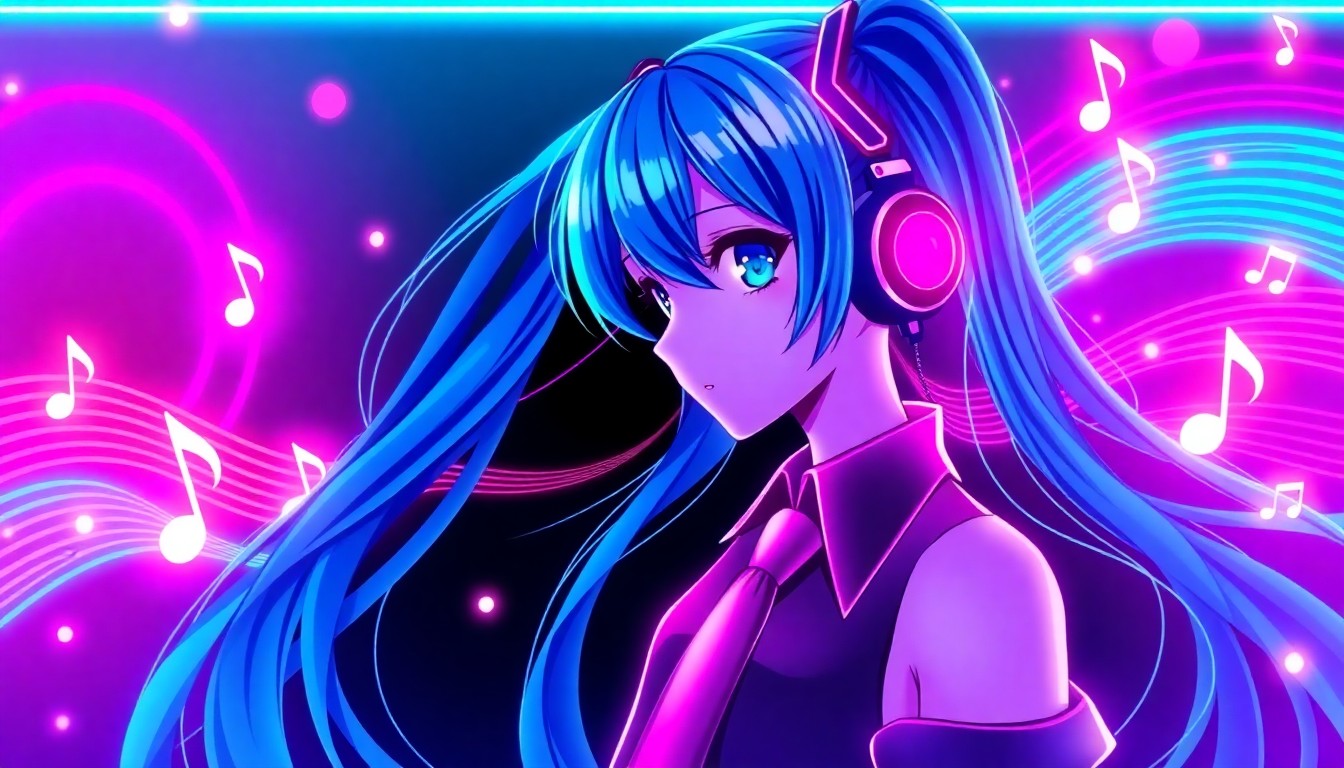
Miku is the most recognizable Vocaloid globally. Her teal twin-tails, her distinctive high voice, and her association with Japanese pop culture and internet creativity have made her a symbol of fan-driven music production that resonates across cultural boundaries.
Miku's voice on TryAIVoices captures the vocal character that makes her instantly recognizable. For content targeting the Vocaloid community, anime fans, Project Sekai players, or anyone who's been online long enough to encounter Miku's cultural footprint, her voice works as immediate recognition and emotional signal.
The use cases are broad. Fan content for SEKAI. Vocaloid-style voice acting. Miku-themed social media posts. Voiceovers for anime-adjacent content. Any content where you want a voice that signals "this is for people who know Japanese pop culture."
Kagamine Rin and Len
Rin and Len are twins who share a vocal source with different processing, resulting in two distinct but related voices. Rin is bright and slightly higher, Len is warmer and slightly lower. Together they represent one of Vocaloid's most beloved pairings, with a creative output spanning everything from upbeat pop to dark ballads to comedic scenarios.
Their dual-voice nature creates interesting content possibilities. Dialogue between the two. Contrast pieces. Content exploring the difference between bright optimism and grounded warmth.
Megurine Luka
Luka is unique among the Piapro characters for her official bilingual capability, designed to sing in both Japanese and English. Her voice is lower than Miku's, warmer, with a sophistication that made her a favorite for more mature musical styles. She's associated with R&B, jazz, and slower pop styles as much as upbeat Vocaloid fare.
For content creators targeting international audiences or producing multilingual content, Luka's voice carries the specific register of an adult female singer with international appeal.
MEIKO and KAITO
MEIKO and KAITO are the original Vocaloids, predating Miku by several years. MEIKO has a mature, fuller female voice. KAITO has a rich baritone male voice that was underutilized early in Vocaloid's history but gained a dedicated fanbase through the community's creative work.
In Project Sekai, MEIKO appears with Vivid BAD SQUAD, bringing street-level confidence and adult energy. KAITO appears with Wonderlands×Showtime, leaning into theatrical flair and performance instinct. Both voices work well for content that needs something other than the bright high-register sound associated with Miku.
How to Generate Project Sekai AI Voices
Getting good results from Project Sekai AI voice generation involves more than just finding the right platform. Script writing, settings, and post-production choices all affect whether the output actually sounds like it belongs in the SEKAI universe.
Platform Selection
Not all AI voice platforms handle anime-style voices equally well. The vocal processing required for character voices with specific personality characteristics is different from standard text-to-speech. Look for platforms with anime and character voice options rather than generic voice generators.
TryAIVoices focuses specifically on character and celebrity voices, which means its anime voice library is optimized for the kind of expressive, personality-driven voice content that SEKAI fans want. The platform includes Miku's voice along with other anime character voices that fit adjacent creative contexts.
Compare platforms on a few key criteria. Voice range and emotional expressiveness matter because SEKAI content isn't monotone. Generation speed matters because content creation workflows need tools that don't interrupt the creative process with long rendering queues. Audio quality at export matters because the output goes into content that audiences will judge against high standards.
Browse the full voice library to see what character and anime options are available before committing to a workflow.
Writing Scripts for SEKAI Characters
The single biggest factor in AI voice output quality is the script itself. SEKAI characters have strong personalities, and writing that matches those personalities will produce more authentic results regardless of which platform you use.
For Miku specifically: Miku works across registers, from bouncy and enthusiastic to thoughtful and melancholic. The best Miku scripts tend to have a clear emotional center. Don't hedge. If you want her to sound excited, write excitement into every phrase. If you want the 25:00 melancholy, slow the pacing, use more pauses, let the sentences breathe.
For Leo/need scripts: Rock energy comes through in directness. Short sentences. Declarative statements. Avoid filler phrases and qualifiers. The Leo/need voice style is honest to the point of bluntness. Write like someone who has something important to say and won't waste words getting there.
For MORE MORE JUMP! scripts: Idol energy needs enthusiasm that feels genuine rather than hollow. Use upbeat phrasing, specific detail rather than vague positivity, and the kind of sentences that end with energy rather than trailing off. Think of how idol MC speeches actually sound, direct, warm, specific.
For Vivid BAD SQUAD scripts: Street music energy is confident and direct. Don't apologize in the text. Use active voice throughout. Short punchy sentences work well. References to performance, skill, and authenticity land better than abstract positivity.
For Wonderlands×Showtime scripts: Lean into drama. Use phrases that feel theatrical. References to the stage, performance, showmanship, and spectacle. Tsukasa's voice in particular benefits from slightly exaggerated phrasing that would be embarrassing in normal speech but feels exactly right in a theatrical context.
For Nightcord at 25:00 scripts: Slower pacing, more pauses, softer endings to sentences. Use ellipses where you want the voice to trail off. Reflective questions work well. Sentences that don't quite resolve cleanly.
 Photo by Unsplash
Settings and Emotion Controls
Most AI voice platforms offer settings beyond just the voice itself: emotion, pacing, pitch, and other parameters. For SEKAI content, these settings matter.
Pacing is especially important. Standard text-to-speech defaults to a neutral, consistent pace. But SEKAI characters have rhythm. Their speech patterns match the musical culture they live in. Miku tends toward energy and forward momentum. Kanade tends toward stillness and careful phrasing. Match the pacing to the character.
Emotion settings, where available, should be set based on the scene context rather than a default. A Tsukasa line about performing for the crowd needs different emotional color than a Rui line about an engineering problem, even though both are Wonderlands×Showtime characters.
Check out TryAIVoices' voice generation tips for practical settings guidance that applies across different voice types.
Post-Production for SEKAI Content
Raw AI voice output rarely sounds perfect in isolation. Post-production work elevates the quality significantly.
For music content, layering the voice with appropriate instrumental backing makes a huge difference. A Miku voice saying something against a bare background sounds like a voice generator. The same voice against a thoughtful instrumental that matches the SEKAI group's musical style sounds like content.
For video content, syncing the voice to animation or game footage creates context that makes audiences more forgiving of technical limitations in the voice itself. SEKAI's existing visual style, colorful, anime-influenced, music-focused, provides a strong template.
For social media clips, shorter is usually better. The first five seconds of a Project Sekai voice clip need to hook the audience before they scroll away. Lead with the most recognizable character-specific element, whether that's a catchphrase, a reference to the character's musical world, or a moment that only SEKAI fans would understand.
Creative Content Ideas for Project Sekai Fans
The Project Sekai community produces an enormous variety of fan content. AI voice tools open up new categories and expand existing ones.
Fan Covers and Vocal Performances
Vocaloid music and SEKAI songs are community-driven by definition. Fan covers, alternative arrangements, and original songs in the SEKAI style represent the deepest tradition in this creative ecosystem.
Using Miku's AI voice for a fan cover or original song in the SEKAI style connects your content directly to that tradition. The technical bar for this kind of content has dropped significantly with AI voice tools. You don't need to produce a perfect Vocaloid synthesis. You need something that feels authentic to the emotional world of the song.
For creators already producing music content, adding SEKAI-style vocal layers to original compositions creates music that targets the rhythm game and Vocaloid audience directly. Our Japanese AI voice generator guide covers how to produce authentic Japanese music content with AI voice tools.
Character Dialogue and Scene Recreation
One of the most popular content formats in fandom is recreating or extending canonical scenes. "What would Character A say to Character B in this situation?" is a question fans have been answering in fan fiction for decades. AI voice tools let creators do this in audio format.
Writing dialogue that captures the interpersonal dynamics of SEKAI groups produces content that resonates with fans who know the characters well. Ichika and Saki's complicated friendship. Tsukasa's performative confidence masking genuine care for his group. Mafuyu's guarded exterior and the vulnerability underneath.
The quality of this content depends heavily on script writing. Use the character knowledge you've developed through the game to write dialogue that actually sounds like the character, not a generic anime archetype.
Reaction Content and Commentary
Project Sekai regularly releases new events, story chapters, song packs, and seasonal content. Creators who produce timely content about these releases capture audience interest in the moment.
Using AI character voices to "react" to game updates, new songs, or event stories creates a format that feels native to the SEKAI world. Miku commenting on a new MORE MORE JUMP! song pack. Tsukasa reviewing a new Wonderlands×Showtime event story. This format requires staying close to game developments and having a fast enough production workflow to release content while community interest is high.
Our anime girl AI voice generator guide covers how to build fast production workflows for anime-style voice content.
Gaming Content and Rhythm Game Clips
Project Sekai is, fundamentally, a rhythm game. Gameplay content, high score clips, perfect combo achievements, and skill showcase videos are native to the platform.
Adding AI voice commentary to SEKAI gameplay content gives it personality. A voice clip responding to a perfect combo. Character commentary on a particularly difficult song. Emotional reactions to story events shown during gameplay.
Browse the gaming voice library for character voices that work alongside gaming content, including options beyond just SEKAI characters.
Educational Content about SEKAI Lore
Project Sekai's story is genuinely complex, spanning five groups, their relationships with each other, their connections to Miku and the other virtual singers, and an underlying lore about creativity, self-expression, and the power of music.
Lore breakdown videos have a dedicated audience among SEKAI fans, and AI voice tools let you present this content in a format that feels immersive. Character voices explaining their own backstories. Group dynamics described from a member's perspective. The SEKAI world explained by the people who live in it.
Platform Comparison for SEKAI Voice Content
Content creators working in the Project Sekai space have several platform options for AI voice generation. Each has different strengths.
Character-focused platforms like TryAIVoices prioritize specific character voices rather than generic text-to-speech quality. The Miku AI voice on TryAIVoices is designed for the kind of recognizable character performance that SEKAI fans expect, not a generic female voice with slight customization.
The difference matters because SEKAI audiences are sophisticated. They know what Miku sounds like. They've heard thousands of Vocaloid songs, watched years of SEKAI story content, and developed genuine emotional connections to these voices. Content that sounds "close but not quite" stands out negatively in this environment.
 Photo by Unsplash
General text-to-speech platforms offer broad flexibility but often lack the character-specific training that makes SEKAI voice content work. They're useful for narration, informational content, or situations where voice personality matters less than clarity and reliability.
Vocaloid software (the original technology) is still used by dedicated music producers in the SEKAI community, but requires significant technical skill and doesn't work as a simple text-to-voice tool.
For most content creators, a combination approach works best. Use character-specific voice tools for the moments that require recognizable character voices. Use general narration tools for surrounding commentary and structure. The final product benefits from both.
What to Look for in a SEKAI Voice Platform
Evaluate platforms against criteria specific to this use case.
Voice accuracy is the most important factor. Test with lines that are specifically characteristic of the voice you're trying to generate. Generic positive statements sound fine on almost any platform. Character-specific dialogue reveals the quality difference quickly.
Generation speed affects creative workflow. If you're producing reaction content or event-based material, waiting for long rendering times kills the workflow. Instant or near-instant generation matters for creators working on tight timelines.
Export quality determines what you can do with the output. SEKAI fans have high audio quality expectations from years of professional game audio. 44kHz or higher export options matter for music-adjacent content.
Emotional range matters more for SEKAI content than for many other voice applications. Characters in this game run the full emotional gamut. A platform that only handles neutral or mildly expressive delivery will struggle with the Nightcord at 25:00 emotional register or the theatrical Wonderlands×Showtime energy.
Check out TryAIVoices' pricing plans to see what generation volume each tier provides and which plan fits your content output.
Script Writing Masterclass for SEKAI Voice Content
Writing good scripts for AI voice generation is a skill that improves quickly with practice. For SEKAI content specifically, a few principles apply beyond the general voice writing advice.
Know the Character's Relationship with Music
Every SEKAI character has a specific relationship with music that colors how they communicate. Kanade writes music compulsively because it's how she processes the world. Tsukasa performs because he wants to bring joy to people, despite the personal cost. Kohane found her voice through Vivid BAD SQUAD after years of self-doubt.
Scripts that reference this relationship, even subtly, produce more authentic output than generic character dialogue. A line from Tsukasa that references performance and audience resonates differently than a line from Tsukasa that could have come from any confident character.
Use the Specific Vocabulary of Each Group
Each SEKAI group has linguistic tells. Leo/need members talk about music with passion and slightly raw directness. MORE MORE JUMP! uses idol-industry vocabulary, performance, fans, stage. Vivid BAD SQUAD speaks in terms of skill, hustle, the underground music scene. Wonderlands×Showtime embraces theatrical metaphor. Nightcord at 25:00 often speaks in terms of songs as a way of processing emotions.
Incorporating this vocabulary makes scripts feel native to the character's world rather than transplanted from a different context.
Script Length and Pacing
For AI voice generation, shorter scripts usually outperform longer ones. The model maintains character consistency better across thirty seconds than across three minutes. If you need longer content, break it into segments and generate each separately, then join them in post-production.
Pacing markers help when the platform supports them. If you need a pause, write it explicitly with ellipses or a period mid-sentence. If you need emphasis on a specific word, structure the sentence so that word lands at a natural stress point.
For social media content, aim for scripts that deliver their main point in the first three to five seconds. SEKAI fans scrolling through content will give a new clip a moment to prove itself but not more.
Our voice generation tips guide has detailed advice on script length, pacing, and how to get consistent results across multiple generation attempts.
Using Reference Material
SEKAI's game story provides extensive reference material for each character's voice and communication style. Reading the story dialogue before writing scripts gives you a calibration point for what authentic character communication looks like.
Pay attention to how characters use punctuation in the game's text. Emu uses lots of exclamation points. Kanade's dialogue tends toward complete sentences that feel like carefully chosen words. Mafuyu uses short, clipped phrases. These patterns translate to AI voice generation because they change how the voice processor handles pacing and emphasis.
Legal and Ethical Considerations for SEKAI Fan Content
Project Sekai involves licensed intellectual property from multiple sources: SEGA and Colorful Palette for the game and original characters, Crypton Future Media for the Piapro characters including Miku, and SEGA Interactive for various elements. Understanding how to create fan content responsibly matters.
Piapro Guidelines
Crypton Future Media, the company behind Hatsune Miku and the other Piapro characters, has published fan creation guidelines (Piapro guidelines) that are more permissive than most IP holders. They explicitly allow fan-made content including music, art, and video featuring the Piapro characters under specific conditions.
The key conditions: non-commercial use, attribution, no content that damages the characters' image, and no military or political content. For content creators using AI voices to produce fan content for personal channels, most standard uses fall within these guidelines.
Commercial use, where you're directly selling content featuring Miku or other Piapro characters, requires a commercial license. Read the current Piapro guidelines directly before building any commercial content strategy around these voices.
SEGA and Original Characters
The SEKAI original characters (Ichika, Saki, Tsukasa, etc.) are SEGA and Colorful Palette IP with different and generally more restrictive fan content guidelines than Crypton's Piapro approach. Standard fan content creation for personal channels falls into a gray area similar to most major game IP.
The practical guideline used by most content creators: non-commercial fan content that clearly doesn't damage the franchise is generally tolerated. Direct monetization of content where the IP itself is the main value is riskier. Consult current platform terms and SEGA's stated community guidelines before building a monetized channel around SEKAI original character content.
AI-Generated Content Disclosure
Transparency about AI voice generation builds audience trust. Disclosing that voice content was generated with AI tools is increasingly both an ethical standard and a practical audience expectation. SEKAI fans who care about the authenticity of content they consume will appreciate straightforward acknowledgment of how it was made.
A simple disclosure in the video description or a brief on-screen note covers this for most platforms. Some platforms are developing formal AI content labels. Stay current with the requirements of whatever platforms you're publishing on.
Our AI voice cloning regulation guide covers the current regulatory landscape for AI-generated voice content.
Building a Project Sekai Content Channel
Creators who want to build a consistent presence in the SEKAI space need more than one-off viral clips. Sustainable content requires a strategy.
The strongest SEKAI content channels typically focus on one primary content type rather than trying to cover everything. Lore breakdowns. Event reaction content. Music covers. Gameplay content with character voice commentary. Choosing a lane and building expertise in it outperforms a scattered approach.
Posting timing matters more for this fanbase than for most gaming content. SEKAI's event cycle drives audience interest in specific content at predictable times. Building a content calendar around known event schedules, seasonal content, and major updates puts your content in front of an engaged audience rather than relying on algorithmic luck.
TryAIVoices' voice library supports consistent production because character voices generate instantly and reliably. When you need twenty clips for an event reaction video, not having to wait for rendering keeps the workflow moving.
Cross-reference your SEKAI content with adjacent fandoms for broader reach. Vocaloid fans, anime rhythm game fans, general Miku fans, and Japanese pop culture enthusiasts are all adjacent audiences that share significant overlap with the SEKAI fanbase. Content that bridges these communities reaches more people than content targeting SEKAI exclusively.
Our anime girl AI voice guide covers how to build content that works across the anime voice content landscape, which connects directly to SEKAI content strategy.
SEKAI Voices and the Broader Anime Voice Landscape
Project Sekai doesn't exist in isolation. It's part of a broader anime and J-pop cultural landscape that shares characters, voice actors, and creative communities with dozens of other properties.
Content creators working in the SEKAI space often find audiences for adjacent content as well. Genshin Impact players share significant overlap with SEKAI fans. Our Genshin AI voice generator guide covers how to create content for that adjacent fanbase.
Hololive and VTuber content has close cultural ties to SEKAI through the shared anime voice aesthetic and rhythm game interest. Our Hololive AI voice guide covers the VTuber voice content space in depth.
The broader anime voice content category is growing quickly. Our anime girl AI voice generator guide covers the landscape of female anime voice generation tools and creative applications.
For creators interested in the full scope of gaming voice content, browse the gaming voice library for character options beyond the anime space, including options for different gaming genres and aesthetics.
 Photo by Unsplash
Working with Goku, Sukuna, and Anime Voice Neighbors
While Project Sekai's characters are the focus for SEKAI-specific content, the anime voice landscape offers other characters whose voices complement SEKAI content or serve adjacent creative purposes.
Goku's AI voice works for content that bridges the Dragon Ball and anime gaming audiences, two communities with significant overlap in the SEKAI fanbase. Epic training montages, tournament-style competitive gaming content, or anything that benefits from the most recognizable voice in anime history.
Gojo's AI voice serves the Jujutsu Kaisen fanbase that shares substantial overlap with SEKAI players. The confident, slightly eccentric delivery of Jujutsu Kaisen's most popular character brings a different flavor than SEKAI's music-focused aesthetic.
Sukuna's AI voice serves the villainous, dark, powerful character niche. For content exploring the darker aesthetic, antagonist dynamics, or simply for contrast with SEKAI's generally lighter tone.
Browse the anime voice library for the full range of anime character voice options that can work alongside or in contrast with SEKAI-specific content.
Getting Started Guide for New Creators
If you're new to AI voice generation and want to create Project Sekai content, here's a practical starting point.
Start with a single voice and a single content format. Don't try to create content for all five SEKAI groups on day one. Pick one group, ideally the one you know best from the game, and produce a small batch of content to develop your workflow.
Write three to five scripts before generating any audio. Good scripting is the foundation. Writing multiple scripts first lets you see patterns, refine your approach, and batch your generation session more efficiently than writing and generating one at a time.
Test different settings in small doses before committing to a full production run. If your platform offers emotion and pacing controls, run the same script with different settings to calibrate what works for the voice and content type you're producing.
Post your first pieces of content, get audience feedback, and iterate. The SEKAI community is vocal about what resonates and what doesn't. Direct feedback from the community is more valuable than any external advice about what SEKAI fans want.
Get started at TryAIVoices with the setup guide for new subscribers. The platform covers everything from your first voice generation to building a consistent content workflow.
Frequently asked questions
What Project Sekai characters have AI voices available?
The most widely available SEKAI-adjacent AI voice is Hatsune Miku, whose cultural prominence across Vocaloid and anime means multiple platforms have trained voice models on her. SEKAI's original characters (Ichika, Tsukasa, Kanade, etc.) are less commonly available as specific AI voice options, though anime character voice generators can produce voices that match their general aesthetic. Check TryAIVoices' anime library for current available options.
How do I make AI voices sound like different SEKAI groups?
The primary lever is your script. Writing scripts that match each group's communication style, Leo/need's directness, MORE MORE JUMP!'s idol energy, Vivid BAD SQUAD's confidence, Wonderlands×Showtime's theatricality, Nightcord at 25:00's melancholy, makes a bigger difference than platform settings alone. Pair good scripting with appropriate pacing and emotion settings for best results. Our voice generation tips guide covers specific techniques for character-consistent voice output.
Can I use Project Sekai AI voices for monetized YouTube content?
Non-commercial fan content is generally tolerated under both Crypton's Piapro guidelines for the virtual singers and SEGA's community tolerance for SEKAI original characters. Directly monetized content where the IP is the main draw is riskier. Read current Piapro guidelines for Miku and the other virtual singers, and check SEGA's current community terms for SEKAI original characters before building a monetized content strategy. Our AI voice cloning regulation guide covers the broader regulatory context.
What's the best AI voice platform for Project Sekai content?
Platforms with dedicated anime and character voice options outperform generic text-to-speech tools for SEKAI content. TryAIVoices focuses on character and celebrity voices specifically, which means its anime voice library is optimized for the expressive, personality-driven output that SEKAI fans expect. Test with character-specific lines rather than generic sentences to calibrate which platform handles your target voices best.
How long should Project Sekai AI voice clips be?
For social media content, aim for 15-60 seconds. The first five seconds are critical for retaining viewers before they scroll. For YouTube video content, voice segments of 30-90 seconds work well when interspersed with other content elements. For dedicated voice acting content like scene recreations, two to three minutes is a reasonable upper limit before maintaining character consistency becomes difficult across a single generation.
Does TryAIVoices support Japanese text for SEKAI voice content?
SEKAI characters speak primarily in Japanese, and some content creators want to maintain that authenticity. Check TryAIVoices' voice generation guide for current supported text input options. Our Japanese AI voice generator guide covers tools and techniques for Japanese language voice content creation specifically.
Related voices to try
Related guides
Project Sekai's creative community has been building fan content since the game launched, and AI voice generation is just the latest and most powerful tool in that tradition. The technology makes it possible to produce voice content that was previously limited to dedicated teams with significant resources.
Start creating with TryAIVoices today. Generate anime and character voices from our library of 500+ voices and bring your Project Sekai fan content ideas to life.