Spanish AI Voice Generator: Best Voices, Accents & Tools
Spanish is the second most spoken language on the planet. Over 500 million people speak it natively. Another 100 million use it as a second language. On TikTok, Spanish-language content regularly reaches billions of views. On YouTube, Spanish-language channels command audiences that dwarf most English-language competitors in their categories.
And yet, most AI voice generators are built primarily for English.
That gap is exactly the opportunity. Creators who figure out how to generate high-quality Spanish AI voices right now are entering a market with enormous demand and relatively low competition from quality tools. The Spanish-speaking content ecosystem is massive, it's growing, and it's chronically underserved by the AI voice generation industry.
This guide covers everything creators need to know about Spanish AI voice generators. We'll walk through the different Spanish accent types, the best celebrity voices available for Spanish-adjacent content, how to use AI voice tools for Spanish content creation, the use cases where Spanish AI voices make the biggest impact, and how to write scripts that sound authentic. Whether you're targeting Spanish-speaking audiences or adding Spanish character to bilingual content, this is the complete resource.
The Spanish-Language Content Opportunity
The numbers for Spanish-language content are staggering, and they're not static. Spanish is the dominant language in 20 countries across two continents. The United States alone has over 40 million native Spanish speakers, making it the second largest Spanish-speaking nation on earth by population.
On social media, Spanish content punches far above its weight. Puerto Rican reggaeton, Mexican banda, Colombian cumbia, and Argentine trap have all broken through to global mainstream audiences in ways that would have been unimaginable a decade ago. Bad Bunny's AI voice on TryAIVoices captures the sound of an artist who became the most-streamed musician on Spotify globally, singing almost entirely in Spanish.
That's the market. Spanish-speaking audiences are massive, engaged, and actively hungry for more content in their language. Content creators who can generate authentic Spanish AI voices for this market have a structural advantage that compounds over time.
TryAIVoices offers celebrity and character voices that cover the Spanish-speaking world, with Bad Bunny's voice as the flagship option for creators building reggaeton, trap Latino, and general Latin pop content.
Understanding Spanish Accent Diversity
"Spanish" isn't one accent. It's dozens. The differences between Castilian Spanish spoken in Madrid and the Caribbean Spanish of Puerto Rico are roughly as dramatic as the differences between a Scottish accent and a Boston accent in English. Each regional variety carries distinct vocabulary, pronunciation patterns, and cultural associations.
Understanding these differences matters for content creators because your target audience will immediately recognize which Spanish accent you're using, and authenticity requires matching the accent to the content's cultural context.
 Photo by Unsplash
Castilian Spanish (Spain)
Castilian Spanish is what many learners study first. It's characterized by the distinctive "theta" pronunciation of the letters C and Z, a slightly crisper consonant delivery than Latin American varieties, and vocabulary that diverges in interesting ways from the New World forms of the language.
For content creators, Castilian Spanish signals European sophistication and carries different cultural associations than Latin American Spanish. Content targeting audiences in Spain specifically benefits from Castilian pronunciation. Educational Spanish content aimed at European learners often defaults to Castilian as the "standard" reference accent.
The prestige associations of Castilian in Spain are roughly analogous to Received Pronunciation in England. It's the accent of formal education, national broadcasting, and upper-class urban culture. Using it signals something different than Mexican or Caribbean Spanish.
Mexican Spanish
Mexican Spanish is the dominant form of the language in North America and the variety most widely recognized by English speakers. Hollywood Spanish-language films, the massive Mexican-American community in the United States, and the sheer size of Mexico's population (130+ million speakers) make Mexican Spanish the de facto "standard" for Spanish content targeting North American audiences.
It's characterized by clearer vowel pronunciation than Caribbean varieties, a relatively neutral consonant delivery compared to Castilian, and enormous regional variation within Mexico itself. Mexico City Spanish differs from Monterrey Spanish, which differs from Oaxacan Spanish, but they're all recognizably Mexican to trained ears.
For most content creators targeting Spanish-speaking audiences in North America, Mexican Spanish is the safe default. It's the most widely understood across Spanish-speaking communities and carries the broadest recognition.
Caribbean Spanish (Puerto Rico, Cuba, Dominican Republic)
Caribbean Spanish is what you hear in Bad Bunny songs, in much of reggaeton and Latin trap, and in the vibrant street culture content from Puerto Rico, the Dominican Republic, and Cuba. It's characterized by aspiration and reduction of consonants (especially the S sound at the end of syllables), a musical rhythmic quality, and vocabulary loaded with African and indigenous linguistic influences that don't appear in other Spanish varieties.
This is the sound of Latin music globally. When reggaeton went from underground Puerto Rican club music to global phenomenon, it carried Caribbean Spanish pronunciation with it. When Bad Bunny became the most-streamed artist on Spotify, it normalized Caribbean Spanish in markets that had never heard the accent before.
For content creators targeting music culture, reggaeton audiences, and the broader Latin music ecosystem, Caribbean Spanish isn't just acceptable - it's the culturally authentic choice.
South American Spanish (Colombia, Argentina, Chile, Venezuela)
South American Spanish varieties are fascinatingly diverse. Colombian Spanish, particularly the Bogotá dialect, is often cited as the clearest and most neutral Spanish in the continent - some linguists call it the most "standard" Spanish accent. Argentine Spanish is wildly distinctive with Italian-influenced intonation (Argentina received enormous Italian immigration in the 19th and early 20th centuries) and the use of "vos" instead of "tú."
Chilean Spanish is famous for being difficult to understand even for other Spanish speakers - it drops consonants aggressively and uses vocabulary that doesn't appear elsewhere. Venezuelan Spanish has its own musical quality.
For content targeting specific South American markets, matching the regional accent matters enormously. Colombian Spanish is the safest choice for broad South American appeal given its neutrality and clarity.
Spanish Celebrity Voices on TryAIVoices
The TryAIVoices library includes celebrity voices that serve Spanish-language content creators directly and voices from English-speaking artists with significant Spanish-speaking fanbases.
Bad Bunny
Bad Bunny's AI voice generator is the premier Spanish-language celebrity voice for content creation. Benito Antonio Martínez Ocasio from San Juan, Puerto Rico, became the most-streamed musician in the world while rapping and singing almost entirely in Caribbean Spanish. His voice carries the specific cadences, vocabulary, and emotional register of Puerto Rican street culture that defines modern reggaeton.
Use the Bad Bunny voice model for reggaeton-adjacent content, commentary on Latin music culture, social media clips targeting reggaeton audiences, and any content where the authentic sound of modern Puerto Rican Spanish is the goal.
The voice captures his characteristic delivery: relaxed, assured, with the specific consonant patterns of Caribbean Spanish and the rhythmic sensibility that made his music globally irresistible even to listeners who don't speak Spanish.
Exploring Music and Celebrity Voices
Beyond Bad Bunny, the TryAIVoices musicians library includes artists with significant crossover appeal across Spanish and English-speaking markets. Drake has collaborated extensively with Latin artists and represents the kind of bilingual musical culture that defines modern pop music. Snoop Dogg's AI voice brings West Coast flavor that pairs naturally with Latin trap and hip-hop influenced by Chicano culture.
The celebrities category contains voices from across the cultural spectrum that content creators can mix and match for cross-cultural content.
How to Use a Spanish AI Voice Generator
The process of generating Spanish AI voice content is straightforward with the right tools. But a few specific considerations apply to Spanish content that don't matter for English.
Step One: Choose the Right Voice for Your Accent Target
Before you generate anything, identify which Spanish-speaking audience you're targeting. Content for Mexican-American TikTok audiences calls for different accent choices than content for Spanish audiences or Colombian YouTube viewers. The right voice choice depends entirely on who you're speaking to.
For reggaeton and Latin music content, Bad Bunny's voice on TryAIVoices is the authentic choice. For broader Latin American content, consider which regional variety your target audience identifies with most strongly.
Browse the TryAIVoices library to see available voices. Listen to samples on each voice page before generating to understand the specific register and quality you're working with.
Step Two: Write Spanish Scripts That Flow
Spanish has different sentence rhythm than English. It tends toward longer, more subordinate-clause-heavy constructions than English. Where English uses short punchy sentences for emphasis, Spanish can sustain longer flowing sentences without losing momentum.
This matters for AI voice generation because you need to write in the way the target voice would actually speak. Bad Bunny doesn't talk in the same cadences as a Spanish newsreader. Match your script's sentence structure and vocabulary to the specific voice and register you're using.
Write scripts in the Spanish dialect you're targeting. If you're targeting a Puerto Rican audience, use Puerto Rican vocabulary and dropped S sounds deliberately in your text. If you're targeting Mexican audiences, use Mexican slang and clearer consonant spelling. The AI voice model will respond to these cues in how it generates the output.
Step Three: Generate and Listen Critically
Hit generate on TryAIVoices and listen to the output with Spanish-speaking ears. The specific quality markers to check are:
Vowel consistency. Spanish has five pure vowel sounds that should be consistent and clear throughout the generation. If vowels are drifting toward English-influenced sounds, the output will feel inauthentic.
Consonant handling. Depending on the dialect, certain consonants should be handled differently. Caribbean Spanish aspirates or drops the S at the end of syllables. Castilian Spanish uses the theta sound for C and Z. Mexican Spanish produces clearer consonants overall.
Rhythm and flow. Spanish speech has its own natural rhythm that differs from English. A good AI voice generation maintains that rhythm rather than imposing English patterns.
Step Four: Post-Process and Apply
Download your generated audio from TryAIVoices. For Spanish content going to social media, a little EQ and light compression will help the voice cut through background music or environmental sound. For YouTube content, the clean generated output usually works well with minimal processing.
Check our voice generation tips and complete guide for detailed post-processing workflow advice.
 Photo by Will Francis on Unsplash
Best Use Cases for Spanish AI Voice Content
Spanish AI voices open up specific content opportunities that don't exist for English-only creators.
TikTok Spanish-Language Content
TikTok's algorithm serves Spanish-language content to Spanish-speaking users worldwide regardless of where the creator is located. A creator in the United States making Spanish-language TikTok content can reach audiences in Mexico, Colombia, Spain, and Argentina simultaneously.
Spanish is TikTok's second-most-used language. The Spanish-language side of TikTok has its own memes, trends, sounds, and cultural touchpoints that operate largely independently of the English-language side. Getting in on that ecosystem as a content creator requires authentic Spanish voice content.
Using TryAIVoices' Spanish celebrity voices for TikTok voice-overs, reaction content, comedy sketches, or commentary means you can produce Spanish-language content even if your native Spanish isn't at the level of a professional voice actor. The AI handles pronunciation and accent authenticity. You handle the creative direction.
YouTube Spanish-Language Channels
Spanish-language YouTube is enormous. The top Spanish-language YouTube channels command tens of millions of subscribers. Categories that perform best include gaming commentary, music reaction videos, lifestyle content, true crime, and educational content.
The opportunity for AI-assisted Spanish YouTube content is specifically in categories where the voice is separate from the creator's on-camera presence. Documentary-style narration, gaming commentary over gameplay footage, educational explainer videos, and compilation content all work with AI voice narration in ways that don't require your face or natural Spanish accent to be the primary content element.
Spanish AI voice generators let creators build Spanish-language YouTube channels even without native Spanish fluency, as long as the script writing (which can be translated or written by a native Spanish speaker) is authentic.
Reggaeton and Latin Music Content
The global dominance of reggaeton, Latin trap, and Latin pop has created a massive adjacent content ecosystem: music reviews, artist analyses, album breakdowns, concert commentary, music history content, and social media clips about Latin music culture.
All of this content benefits from Spanish-language or bilingual narration. When you're covering Bad Bunny's latest album, generating voiceovers with his voice model adds an authentic musical connection that English-only commentary can't match. When you're creating reggaeton content for Spanish-speaking audiences, Spanish narration is simply the right choice.
The TryAIVoices musicians library has the voices you need for music culture content, from Bad Bunny for reggaeton to Drake for content covering the Latin-hip-hop crossover.
Educational Spanish Content
Online Spanish education is a massive market. Duolingo built a multi-billion dollar company on language learning. YouTube has thousands of Spanish learning channels with millions of subscribers. Platforms like iTalki, Preply, and Lingoda generate significant revenue from Spanish instruction.
Spanish AI voice generators serve this market in a specific way: they can generate example Spanish dialogue, pronunciation examples, and listening exercises for educational content creators. AI-generated voices with specific accent types (Castilian for learners targeting Spain, Mexican for those targeting North America) provide consistent, high-quality audio examples without hiring native speaker voice actors.
Educational content creators can use TryAIVoices to generate dialogue examples, test scripts, listening comprehension audio, and content that demonstrates different Spanish accent varieties.
Gaming Content for Spanish-Speaking Audiences
Gaming is enormous in Latin America and Spain. Latin American countries have some of the fastest-growing gaming markets in the world. Spanish-speaking gaming audiences actively seek Spanish-language gaming content, and the supply consistently falls short of demand.
Content creators who can produce Spanish-language gaming commentary, Let's Plays, tips videos, and gaming news have a structural advantage in this market. Spanish AI voice narration can handle commentary tracks, tutorial narration, and voice-over work for gaming content targeting Spanish speakers.
Browse the gaming voices library for character voices that work in gaming content, or use celebrity voices to add personality to gaming commentary.
Bilingual Content Creation
Some of the most interesting Spanish AI voice content opportunities are in explicitly bilingual content. Code-switching (moving fluidly between Spanish and English) is a natural feature of many Spanish-speaking communities in the United States, and content that reflects that reality resonates deeply with those audiences.
Creating content that includes both Spanish and English voice segments, using different AI voices for each, creates an authentic bilingual experience that pure English or pure Spanish content can't deliver. A video that opens with English narration using a voice like Morgan Freeman's AI voice and then transitions to Spanish content with Bad Bunny's voice is doing something genuinely creative that serves bilingual audiences specifically.
Check our guide on AI celebrities voices for more ideas on mixing celebrity voices for creative content.
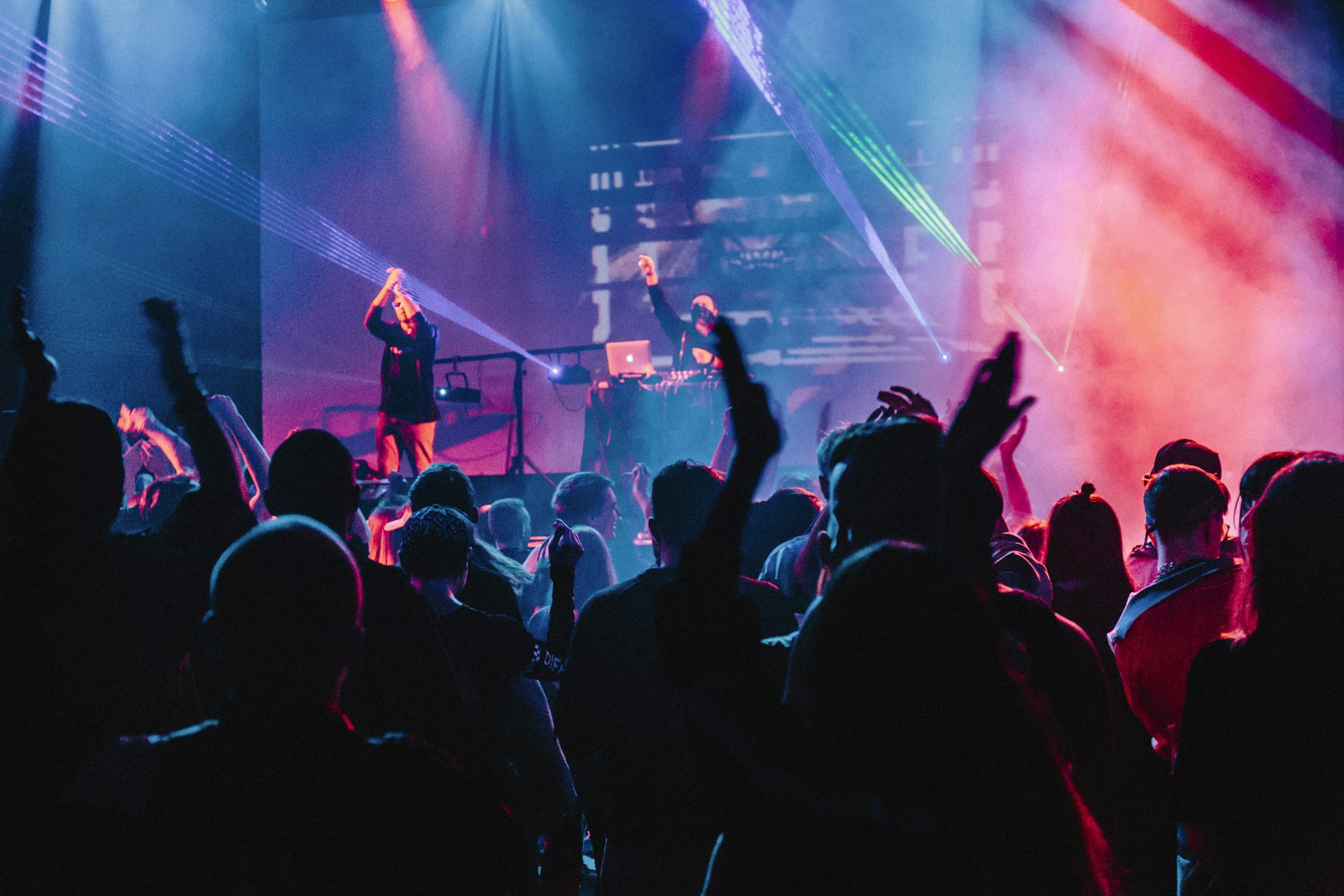 Photo by Unsplash
Script Writing Tips for Spanish AI Voice Content
Writing effective scripts for Spanish AI voice generation requires specific knowledge about how Spanish works as a language.
Sentence Structure
Spanish sentence structure is more flexible than English but also tends toward greater complexity. Subject pronouns are often dropped in Spanish because verb conjugation makes them redundant. "I eat" in Spanish is just "como" (first person singular of comer) rather than "yo como."
For AI voice generation, use complete Spanish sentences with proper grammatical structure. Don't translate English sentences word-for-word into Spanish because the word order and idiom patterns are different enough that word-for-word translation produces unnatural Spanish.
Write in Spanish from the beginning, or have a native speaker translate and adapt your content. Then generate the voice.
Accent Marks and Special Characters
Spanish uses accent marks (tíldes) that carry phonological meaning. The accent mark in "sí" (yes) distinguishes it from "si" (if). The tilde over N in "ñ" (enye) creates a completely different sound than N. The upside-down question and exclamation marks at the start of sentences are standard punctuation.
Include these characters correctly in your scripts. AI voice generators trained on proper Spanish text use these characters as pronunciation cues. Omitting accent marks can lead to mispronunciation of certain words.
Register and Formality
Spanish has formal (usted) and informal (tú, vos) forms that signal different social registers. The choice between formal and informal affects not just pronouns but verb conjugations throughout the sentence.
For casual social media content, use informal register (tú or vos depending on the regional variety). For more formal content - educational material, business explanations, authoritative narration - use formal register (usted). Mixing registers in the same piece sounds jarring and will undermine authenticity.
Caribbean Spanish Specifics
If you're writing for a Caribbean Spanish accent (Puerto Rico, Dominican Republic, Cuba), be aware that written Spanish won't perfectly predict how Caribbean Spanish speakers say things. Caribbean Spanish is characterized by:
Aspiration and dropping of S at the end of syllables. "Los" becomes "loh." "Esto" becomes "ehto."
Reduction of R to L in some positions. "Puerto" can sound like "puelto."
Distinctive vocabulary including many terms from African languages and English loanwords.
Writing your script in standard Spanish and selecting Bad Bunny's voice model will handle much of this automatically, because the voice model was trained on Caribbean Spanish speech patterns. Trust the model to apply the accent naturally rather than trying to phonetically spell Caribbean Spanish pronunciation.
Vocabulary Choices
Different Spanish-speaking regions use different words for the same things. In Mexico, a computer is an "computadora." In Spain and some South American countries, it's an "ordenador." A car is "carro" in some places, "coche" in others, "auto" in still others.
Choose vocabulary that matches your target audience. If you're not sure which variety to use, Mexican Spanish vocabulary is the safest choice for broad Latin American reach, since Mexican Spanish is the most widely understood variety across the Spanish-speaking world.
Audio Post-Processing for Spanish Voice Content
Spanish AI voice content benefits from the same basic audio post-processing as any other AI-generated voice, with a few specific considerations.
Bass and Midrange Balance
Spanish speech tends to have slightly more energy in the lower midrange frequencies than American English. When applying EQ to Spanish AI voice content, be conservative with bass cuts. A light midrange presence boost around 2-4kHz can enhance clarity and the characteristic warmth of Spanish vowels.
Don't apply heavy EQ presets designed for English voice content to Spanish AI voice output. The frequency characteristics differ enough that English voice presets can make Spanish voices sound processed and unnatural.
Pacing and Tempo
Spanish speech is naturally faster than English for the same information content. Spanish uses more syllables per unit of information but processes it at a higher rate of syllables per second. When you generate Spanish AI voice content, don't try to slow it down to match English pacing expectations. The natural speed of Spanish speech is correct. Slowing it down will make it sound unnatural.
If your content needs to sync with visual timing (like a specific clip length), adjust the amount of content in your script rather than the playback speed of the generated audio.
Music Mixing
Much Spanish AI voice content will be mixed with music, especially for reggaeton and Latin music content. Spanish voices typically need slightly more presence in the mix than English voices to cut through upbeat Latin music backgrounds. A gentle 3-5dB boost around 1-2kHz helps the voice sit properly in a mix with Latin percussion and bass.
The Spanish Content Creator Landscape
Understanding who's already succeeding in Spanish content helps you position your own Spanish AI voice content effectively.
The Music Commentary Space
Spanish music commentary and reaction content is one of the most active spaces in Spanish-language YouTube and TikTok. Artists like Bad Bunny, J. Balvin, Maluma, Ozuna, Anuel AA, and dozens of others have passionate global fanbases hungry for commentary, analysis, and reaction content in Spanish.
Using TryAIVoices' Bad Bunny voice for music commentary content creates an immediate connection with the subject matter. Generating commentary about a Bad Bunny album using Bad Bunny's own voice model (clearly disclosed as AI) is the kind of creative meta-content that spreads organically.
Our guide to creating rapper AI voice content covers the specific techniques for music artist content that apply directly to Spanish rap and reggaeton.
The Educational Space
Spanish-language educational content creators serve one of the most underserved markets in online education. While English-language educational YouTube is saturated with content about every possible topic, many topics have relatively few quality Spanish-language resources.
History, science, personal finance, technology - all of these categories have significant unmet demand in Spanish. AI voice generation removes the main bottleneck for non-native Spanish creators who want to serve this market: the need for a perfect Spanish accent and extensive production resources.
Comedy and Entertainment
Spanish-language comedy travels remarkably well across national boundaries within the Spanish-speaking world. The cultural touchpoints that make Mexicans, Colombians, Cubans, and Spaniards laugh are often similar enough that content can reach the entire Spanish-speaking world with the right framing.
Spanish AI voice generators help comedy creators add voiceovers, character voices, and narration to comedic content without needing multiple native speaker voice actors. The efficiency gain is significant for comedy creators who produce large volumes of content.
Comparing Spanish AI Voice Generator Quality
The quality gap between different AI voice generators is more pronounced for Spanish than for English. English is the dominant language in most AI training data, so English voice quality is generally higher across tools. Spanish voice quality varies more dramatically.
TryAIVoices approaches Spanish voice generation through celebrity voice models rather than generic Spanish accent synthesis. The Bad Bunny voice model is trained on his actual speech, which means it captures genuine Caribbean Spanish phonology rather than a synthesized approximation of a "Spanish accent."
This distinction matters. Generic "Spanish accent" AI voices often sound like English speakers doing a Spanish accent rather than actual native Spanish speakers. Character and celebrity voice models trained on real Spanish speakers produce more authentic phonological patterns.
For content targeting sophisticated Spanish-speaking audiences who can tell the difference, the quality of a voice model trained on a native Spanish speaker dramatically outperforms a generic Spanish accent voice.
 Photo by Unsplash
Content Strategy for Spanish AI Voice Creators
Succeeding with Spanish AI voice content requires a specific strategic approach.
Identify Your Target Market Precisely
The Spanish-speaking world is not a monolith. Content that resonates in Puerto Rico may land differently in Argentina. Music culture content travels better across borders than comedy, which relies more heavily on local cultural references.
Before creating Spanish AI voice content at scale, identify which specific Spanish-speaking market you're targeting. The Mexican-American community in the US is different from Mexico proper. The Caribbean market (Puerto Rico, Dominican Republic, Cuba) has its own cultural ecosystem. Spain has its own version.
Match your accent, vocabulary, cultural references, and content topics to your specific target market rather than trying to serve all Spanish speakers equally. Focused targeting outperforms generic broad-market Spanish content.
Use Spanish AI Voices in Your Language
Don't create Spanish AI voice content and release it in an English-language context without translation or adaptation. Spanish-language content should live in Spanish-language spaces: Spanish-language YouTube channels, Spanish hashtags on TikTok, Spanish Facebook groups.
The algorithm rewards audience-language alignment. Spanish-speaking audiences who find Spanish content in English-labeled channels have a weaker algorithm signal than the same content in properly labeled Spanish-language channels.
Cross-Promote Between Languages
One of the most effective strategies for bilingual creators is producing parallel English and Spanish content. A video essay about Bad Bunny's career trajectory can reach English-speaking music fans with one version and Spanish-speaking fans with another version using the Bad Bunny voice model for the Spanish narration.
This approach doubles your potential audience without doubling your research and production effort. The content strategy and research happens once. The voice generation and scripting happens twice.
Build Toward Spanish-Speaking Creator Communities
The Spanish-speaking creator community on TikTok, YouTube, and Instagram is active and collaborative in ways that cross national boundaries. Entering this community means engaging with Spanish content, commenting in Spanish, collaborating with Spanish-language creators, and building relationships across the Spanish-speaking world.
Spanish AI voice content is more effective when it's part of a genuine engagement with Spanish-speaking audiences rather than a cynical reach play from an otherwise English-only creator.
Legal and Ethical Considerations for Spanish AI Voices
The same legal and ethical framework that applies to English-language celebrity AI voices applies to Spanish celebrity voices. The search intent and cultural context are different, but the principles are the same.
Satire, Parody, and Creative Content
Using Bad Bunny's AI voice for creative content that's clearly satirical, parody, or fan appreciation is generally protected. Using it to generate fake statements that could be mistaken for real, or to falsely imply endorsement of products, is both ethically wrong and legally problematic.
The same content rules apply in Spanish-speaking markets. In some Latin American countries, defamation and image rights laws are actually stricter than in the United States, so creators targeting those specific markets should understand local regulations.
Disclosure Requirements
Always disclose AI-generated voice content in your work. "Voz generada con IA" (voice generated with AI) in your video description or at the start of your content covers the basic disclosure requirement. Spanish-speaking audiences are increasingly familiar with AI voice content and respond well to transparent disclosure.
Platform Policies in Spanish-Speaking Markets
TikTok, YouTube, and Instagram operate under the same AI content disclosure policies regardless of language. Spanish-language content using AI voices needs the same disclosures as English-language content. Check each platform's current policies and follow them consistently.
TryAIVoices is designed for legitimate creative, entertainment, and educational use. Use Spanish AI voice content accordingly.
Frequently asked questions
What is the best Spanish AI voice generator?
TryAIVoices offers the most authentic Spanish celebrity AI voices for content creation, particularly Bad Bunny's voice model for reggaeton, Latin music, and Caribbean Spanish content. For broad Spanish content without a specific celebrity voice, the platform's library includes multiple options that work for different content types. Browse the full voice library to find the right fit.
Can I generate Spanish AI voices without speaking Spanish myself?
Yes. The AI voice generator handles pronunciation and accent. You need to provide correctly written Spanish text (or have it translated), and the model generates authentic pronunciation. Working with a native Spanish speaker for script writing and quality check is strongly recommended for professional content. The voice generation itself doesn't require you to speak Spanish.
What Spanish accent does Bad Bunny's AI voice use?
Bad Bunny's voice model uses Puerto Rican Caribbean Spanish - the specific regional variety from San Juan that characterizes his music. This includes Caribbean consonant patterns (S aspiration, etc.) and the vocabulary and rhythm of Puerto Rican Spanish. It's ideal for reggaeton and Latin trap content, and for Spanish content targeting Puerto Rican or broader Caribbean cultural audiences.
How do I write Spanish scripts for AI voice generation?
Write in proper Spanish with correct accent marks and punctuation. Match vocabulary to your target regional audience (Mexican, Castilian, Caribbean, etc.). Use appropriate formal or informal register. Avoid word-for-word English translations - write naturally in Spanish or have a native speaker adapt your English content. Keep sentences at natural Spanish length rather than forcing English-length sentence patterns. Then generate on TryAIVoices and listen critically to output quality.
Are Spanish AI voices good enough for professional content?
Quality has improved dramatically. TryAIVoices' celebrity Spanish voice models like Bad Bunny produce content that's genuinely usable for social media, YouTube, and entertainment content. For content targeting sophisticated Spanish-speaking audiences, the celebrity voice models outperform generic Spanish accent synthesis significantly. Always preview, generate multiple takes, and select the best output.
What subscription plan do I need for Spanish AI voice generation?
All TryAIVoices subscription plans include access to the full voice library including Spanish celebrity voices like Bad Bunny. Starter, Pro, and Unlimited plans differ in the number of credits included. Credits are consumed per generation. Choose the plan that matches your content production volume.
Can I create Spanish content for multiple Latin American countries?
Yes. TryAIVoices voice content works across Spanish-speaking markets. The key is choosing the right accent and vocabulary for each target market. Bad Bunny's Caribbean Spanish voice resonates most strongly in Puerto Rico, the Dominican Republic, Cuba, and Caribbean-diaspora communities in the US. Mexican Spanish vocabulary and accent choices serve broader North American Spanish-speaking audiences. Generate different script versions targeting different regional audiences for maximum reach.
Related voices to try
Related guides
Spanish AI voice generation is one of the clearest opportunities in content creation right now. The market is enormous. The competition for quality Spanish AI voice content is limited. And the tools to generate authentic Spanish voiceovers have reached a quality level where they actually serve the content rather than embarrassing it.
Whether you're building a Spanish-language channel from scratch, adding bilingual content to an existing presence, or creating music culture content for the global reggaeton audience, TryAIVoices gives you the celebrity and character voices you need.
Start with Bad Bunny's AI voice. Browse the full voice library for more options. And start generating Spanish AI voice content for the biggest underserved audience in digital media.