Best AI Voice for Horror Stories: Complete Narration Guide
Horror stories demand voices that crawl under your skin. A great narrator doesn't just read words. They create atmosphere through pacing, tonal shifts, and vocal texture that transforms simple sentences into visceral dread. Finding the right AI voice for horror narration separates forgettable content from stories that haunt listeners long after they finish.
Voice selection impacts everything. Choose wrong and your carefully crafted terror reads like a grocery list. Choose right and the AI becomes an instrument of psychological manipulation, building tension through strategic pauses, pitch variations, and emotional authenticity. The best horror narrators understand timing, when silence speaks louder than screams, when a whisper cuts deeper than a shout.
This guide covers voice characteristics that amplify fear, specific AI voices optimized for different horror subgenres, technical setup for maximum atmospheric impact, script adaptation strategies that work with AI limitations, and production techniques that transform raw AI output into professional-grade horror content. You'll learn which voices suit cosmic horror versus slasher tales, how to layer effects without losing clarity, and why some narration styles fail while others grip audiences.
Why voice matters in horror narration
Voice creates the foundation of fear in audio horror. Visuals show monsters. Audio makes you imagine them, and imagination always conjures worse terrors than any image. The narrator's voice becomes the only guide through darkness, and listeners instinctively trust or distrust based on vocal qualities they often can't consciously identify.
Horror works through delayed revelation. You don't show the monster immediately. You hint. You suggest. You let tension accumulate until release becomes inevitable. The narrator's voice carries this responsibility through pacing control, tonal color, and emotional calibration. A skilled voice knows when to speed up, racing through action sequences that leave listeners breathless. It knows when to slow down, dragging out moments before the kill with agonizing precision.
Different horror subgenres demand different vocal approaches. Analog horror voices lean into distortion and uncanny valley effects, mimicking degraded recordings and emergency broadcasts. Gothic horror needs rich, theatrical delivery with aristocratic overtones. Cosmic horror requires voices that can convey intellectual dread, the terror of incomprehensible realities beyond human understanding. Creepy AI voices work for psychological horror where the threat comes from within rather than external monsters.
Audience expectations shape voice selection. YouTube horror channels serving younger audiences often use energetic, personality-driven narration. Podcast listeners expect subtler, more atmospheric delivery. Audiobook consumers want consistency and endurance across hours of content. TikTok horror thrives on punch and immediate impact within 60 seconds. Each platform creates different constraints.
 Photo by
 Vocal authenticity separates amateur from professional horror content. Listeners detect artificial smoothness immediately. Real voices have imperfections, breath sounds, slight hesitations, micro-variations in pitch and pacing. The best AI horror voices incorporate these humanizing elements rather than producing sterile, perfectly modulated output. You want controlled imperfection, calculated roughness that suggests a real person telling a real story.
The narrator becomes a character in horror stories. First-person narratives require voices that sound like the protagonist. Third-person omniscient needs authority and distance. Found footage formats work best with conversational, unrehearsed delivery. Your voice choice should reflect narrative perspective, creating consistency between story structure and vocal presentation.
Best AI voices for different horror subgenres
Horror splits into distinct subgenres, each requiring specific vocal qualities. Matching voice to subgenre dramatically improves storytelling effectiveness. What terrifies in one context fails completely in another.
Deep, authoritative voices for cosmic horror
Cosmic horror explores existential dread and incomprehensible realities. Think Lovecraft and his modern inheritors. This subgenre needs voices with gravitas and intellectual weight. Listeners should feel they're receiving forbidden knowledge from someone who understands truths that destroy sanity.
Deep male voices excel here. Lower register creates natural authority. The vocal quality suggests age, experience, and reluctant wisdom. You want measured pacing that gives listeners time to absorb disturbing concepts. Rush cosmic horror and you lose the philosophical weight that makes it effective. Morgan Freeman-type voices work brilliantly for this purpose, though you'll adapt delivery to be slightly more ominous.
Vocal control matters enormously in cosmic horror narration. The voice should remain composed even when describing reality-shattering events. This composure creates cognitive dissonance. The content screams madness while the delivery suggests reasoned analysis. That gap generates the specific unease cosmic horror aims for. Contrast this with scary AI voices that lean into obvious fear cues rather than understated dread.
British accents add intellectual credibility to cosmic horror. The accent carries associations with scholarly tradition and academic authority. When a refined British voice describes non-Euclidean geometry and cities that shouldn't exist, listeners unconsciously grant more credibility. David Attenborough-style narration adapted for horror contexts creates perfect tonal balance between documentary observation and creeping dread.
Raspy, textured voices for slasher and gore
Slasher horror thrives on visceral impact and physical threat. The voice should sound like it's survived something traumatic. Raspy textures, slight hoarseness, and vocal damage suggest this narrator has witnessed horrors that left marks. You want rough edges that create discomfort.
Batman's gravelly voice exemplifies this quality. The perpetual growl suggests barely contained violence. When adapted for narration, it creates constant tension even during exposition. Every sentence sounds like a warning. Listeners instinctively recognize danger in that vocal texture.
Energy level matters in slasher narration. Unlike cosmic horror's measured pacing, slasher tales need momentum. Victims run. Killers chase. Death comes fast and brutal. The narrator should match this intensity without devolving into shouting. You want controlled urgency, the vocal equivalent of a racing heartbeat.
Contrast moments amplify impact. The voice drops to near-whisper before kill scenes, forcing listeners to lean in. Then violence explodes with volume spikes and rapid-fire delivery. This dynamic range manipulates audience physiology. Quiet sections lower heart rate. Sudden loud passages trigger fight-or-flight responses. The best slasher narrators orchestrate these physiological responses deliberately.
 Photo by Possessed Photography on Unsplash
Age in the voice adds credibility. A weathered, middle-aged voice suggests someone who's seen enough death to describe it authentically. Young voices work for first-person teen victim perspectives, but omniscient narration benefits from vocal maturity. Charles Luttridge Dodgson offers interesting tonal options when processed with slight distortion for unsettling effect.
Calm, unsettling voices for psychological horror
Psychological horror operates through wrongness rather than overt scares. Something seems off, but you can't identify what. The voice should create this exact sensation. Too friendly. Too calm. Too pleasant given the disturbing content. This mismatch generates profound unease.
Think of voices that smile while describing terrible things. The pleasantness becomes sinister through context. Fred Rogers-style voices deliver this effect when narrating dark content. The gentle, reassuring tone clashes with horrific subject matter, creating cognitive dissonance that burrows under your skin.
Pacing becomes weapon in psychological horror. Long pauses force listeners to fill silence with imagination. Strategic hesitations suggest the narrator knows something they're not sharing. Slight emphasis on wrong words creates subliminal wrongness. "He was a very good father" with stress on "very" implies the opposite through vocal irony.
Monotone delivery works brilliantly for dissociative psychological horror. The narrator recounts trauma with flat affect, suggesting someone whose emotions have shut down. This emotional numbness spreads to listeners, creating the specific alienation psychological horror cultivates. The voice becomes a damaged instrument, beautiful in its brokenness.
Distorted, mechanical voices for analog horror
Analog horror mimics found footage and degraded media from past decades. The aesthetic combines nostalgia with corruption, familiar formats twisted into nightmare fuel. Voices should sound like they're filtered through old equipment, slightly damaged, wrong in ways that activate uncanny valley responses.
Emergency broadcast voices create immediate dread. Everyone recognizes the calm, authoritative tone used for weather alerts and emergency notifications. When that trusted voice delivers impossible warnings or contradictory instructions, it hijacks our conditioning. We're trained to trust emergency broadcasts. Horror that corrupts this trust hits primal fear centers.
Emergency broadcast AI voices work perfectly for this subgenre. Add processing to simulate radio compression, slight distortion, artifacts that suggest degraded recordings. Modern AI voices processed to sound like they're coming through 1970s equipment create temporal dissonance. The content describes contemporary horrors, but the medium suggests we're hearing transmissions from dead timelines.
Educational film narrators from decades past offer another effective template. The cheerful, slightly condescending tone used in classroom films becomes sinister when delivering instructions for surviving impossible scenarios. This voice assumes shared understanding of realities that don't exist, gaslighting listeners into accepting absurd premises.
Robotic text-to-speech voices work for certain analog horror contexts. Early TTS systems had distinct uncanny valley quality, too close to human but obviously artificial. Modern AI can replicate this aesthetic deliberately. The voice sounds almost right, which makes its wrongness more disturbing. Perfect for stories about corrupted AI or digital entities pretending to be human.
Regional accents for gothic and folklore horror
Regional accents ground horror in specific cultural contexts. Southern Gothic needs Louisiana drawl or Appalachian mountain speech. Irish folklore horror demands authentic regional Irish accents. The accent becomes part of the horror's DNA, inseparable from the story's effectiveness.
Gothic horror thrives on aristocratic British accents. The RP (Received Pronunciation) accent carries associations with old money, ancient estates, and secrets buried in family crypts. When British AI voices describe cursed bloodlines and ancestral evil, the accent adds authenticity and gravitas. The voice sounds like it belongs to someone who genuinely inhabits decaying manor houses.
Southern accents work beautifully for American Gothic horror. Slow, drawling delivery creates languid atmosphere while the content describes rot beneath surface gentility. The accent suggests sweltering summers, insects, decay, and social structures twisted by old sins. Foghorn Leghorn voices can be adapted beyond comedy when you drop the exaggeration and emphasize the accent's darker undertones.
Eastern European accents serve classic vampire and werewolf tales. Romanian, Hungarian, and Slavic accents carry cultural associations with Gothic horror's historical roots. When the voice sounds like it could belong to an actual villager describing actual local legends, the horror gains folkloric authenticity.
Japanese voices suit J-horror when paired with proper context. The specific cadence and pronunciation of Japanese-accented English creates aesthetic consistency with Ring, Ju-On, and the broader J-horror tradition. While many creators default to subtitles, AI voices can deliver English narration with authentic Japanese vocal patterns, bridging accessibility and atmosphere.
Voice characteristics that create fear
Beyond specific voices and accents, certain acoustic qualities generate fear responses regardless of content. Understanding these characteristics helps you select and process AI voices for maximum psychological impact.
Pitch manipulation and tonal shifts
Lower pitches generally create more dread. Deep voices activate associations with larger bodies and physical threats. Evolutionary psychology suggests we've learned to fear deep vocalizations because they signal dangerous predators or aggressive rivals. Horror voices that leverage low register tap into these primal associations.
But constant low pitch dulls impact. Strategic variation works better. Start at medium pitch during setup, drop lower for reveals, spike higher for moment of attack. These shifts keep listeners off-balance. They can't settle into comfortable expectations when the voice keeps changing.
Unnatural pitch creates uncanny valley effects. Voices that sit slightly outside normal human range register as wrong. Too deep or too high, the voice sounds inhuman without being obviously processed. This subtle wrongness accumulates, generating discomfort listeners feel but can't quite identify.
Pitch wobble suggests instability. When the voice wavers slightly, hovering between pitches rather than holding steady notes, it creates impression of psychological damage or supernatural interference. The narrator sounds uncertain, afraid, or corrupted. Listeners unconsciously mirror this instability with their own rising anxiety.
Pacing and strategic silence
Silence terrifies more than sound. Gaps in narration force listeners to imagine what's happening in the quiet. Active imagination always conjures worse scenarios than explicit description. Strategic pauses become moments of peak dread.
Slowing down builds tension. When pacing decelerates, each word carries more weight. The narrator stretches syllables, creating the verbal equivalent of slow-motion footage. Time dilates. Seconds feel like minutes. This manipulation of perceived time amplifies dread as listeners anticipate inevitable horror.
 Photo by Martin Péchy on Unsplash
Rushing creates panic. Rapid-fire delivery during action sequences raises heart rate and breathing. Listeners physically respond to pacing shifts. Their bodies prepare for threats even when they consciously know they're safe. This physiological manipulation makes horror feel visceral rather than intellectual.
Irregular pacing disorients. When rhythm becomes unpredictable, listeners can't anticipate what comes next. They lose the comfort of pattern recognition. Sentences of wildly varying length, unexpected pauses, sudden accelerations. All create cognitive chaos that mirrors the story's threat to ordered reality.
Breath sounds and vocal imperfections
Perfect voices sound artificial. Actual humans breathe audibly, especially when frightened or exerted. Breath sounds add authenticity to horror narration. The narrator sounds like they're actually there, experiencing events firsthand rather than reading a script in comfortable isolation.
Gasps and sharp inhales signal fear. When the voice catches breath before describing something terrible, it primes listeners for coming horror. That involuntary intake of air suggests even the narrator fears what they're about to reveal. The sound becomes warning and build-up simultaneously.
Slight voice cracks suggest emotional strain. The narrator struggles to maintain composure while recounting trauma. These micro-failures in vocal control humanize the narration and create empathy. Listeners connect with vulnerability, imagining themselves in situations that would break their own composure.
Background ambiance grounds narration in physical space. Distant creaks, wind, subtle room tone. These environmental sounds suggest the narrator exists in a real location rather than sterile recording booth. The horror feels imminent, present in the narrator's actual surroundings rather than safely distant past.
Emotional authenticity versus deadpan delivery
Emotional investment works for first-person horror. The narrator sounds genuinely terrified, repulsed, or traumatized. This emotional authenticity creates empathy and guides audience reactions. When the voice trembles describing the monster, listeners understand they should fear it too.
Deadpan delivery creates different effects. The flat, emotionless recitation of horrors suggests dissociation or alien perspective. The narrator seems disconnected from normal human responses, which makes them either damaged survivors or inhuman observers. Both interpretations generate unease.
Inappropriate emotion creates wrongness. The narrator sounds delighted describing murders, or sad discussing beautiful things. This mismatch between content and emotion signals psychological damage or sinister intent. The voice becomes untrustworthy, another threat rather than reliable guide.
Controlled emotion suggests practiced storytelling. The narrator has told this tale before, enough times to manage their responses. They still feel fear, but they've learned to function despite it. This implies the horror is real enough, persistent enough, to require practiced coping mechanisms. The controlled emotion becomes evidence of sustained threat.
Top AI voice platforms for horror narration
Different AI voice platforms offer different strengths for horror content. Some excel at emotional range. Others provide better control over pacing. The right choice depends on your specific needs and production workflow.
TryAIVoices for character-based horror
TryAIVoices specializes in character and celebrity voices, which translates surprisingly well to horror narration. Many horror stories benefit from recognizable vocal patterns adapted to dark contexts. The platform offers 500+ voices across multiple categories, with robust controls for emotion and delivery style.
Character voices create immediate recognition. Using someone like Morgan Freeman's voice for cosmic horror or David Attenborough's voice for nature-gone-wrong stories leverages audience familiarity. Listeners already trust these voices from other contexts, which makes their deployment in horror more effective through subversion.
The platform handles deep, authoritative voices particularly well. Politicians, movie characters, and narrator archetypes all contribute useful templates for horror narration. You can generate Batman's gravelly tone for gritty urban horror or cartoon character voices for unsettling childhood corruption narratives.
Emotion controls let you dial intensity up or down. Start neutral during exposition, increase fear markers during reveals, spike anxiety during climaxes. This granular control over emotional delivery helps you shape listener responses throughout the narrative arc. The subscription model provides unlimited generations once you're in, letting you iterate until delivery exactly matches your vision.
Voice consistency matters for long-form horror content. TryAIVoices maintains vocal characteristics across multiple generation sessions, crucial for podcast series or audiobook projects where narration spans hours. The voice doesn't drift between episodes, maintaining immersion across extended listening.
Platform comparison for specific needs
Alternative platforms serve different production requirements. Murf.AI offers enterprise features and team collaboration tools, useful for horror studios producing multiple shows simultaneously. Extensive voice customization lets you fine-tune delivery for consistent brand aesthetic across series.
Play.ht provides voice cloning capabilities. If you have recordings of your own voice or hire professional voice actors, you can create custom AI models. This works well for creators who've established personal brands through their own narration but need to scale production beyond what manual recording allows.
ElevenLabs leads in emotional expressiveness and voice cloning quality. Their Prime Voice AI produces remarkably human results, with natural inflection and emotional nuance. The voice lab lets you create completely custom voices, mixing and matching characteristics until you achieve perfect horror aesthetics.
Speechify optimizes for audiobook production with speed controls and consistent pacing. While less emotionally expressive than competitors, it excels at clear, endurance-ready narration. Good choice for horror novels where clarity and listener comfort during long sessions matter more than dramatic punch.
Natural Reader offers extensive language support. If your horror content targets non-English audiences or incorporates multilingual elements, their language coverage proves valuable. Horror that switches between languages for code-switching characters or international settings benefits from unified AI narration across linguistic boundaries.
Budget considerations shape platform selection. TryAIVoices operates on subscription model with unlimited generation, cost-effective for high-volume creators. Other platforms charge per character or audio minute, becoming expensive for extensive projects but offering more flexibility for occasional users who don't need monthly subscriptions.
Script optimization for AI horror narration
AI voices require different writing approaches than human narrators. Understanding these differences helps you adapt scripts for maximum effectiveness and natural delivery.
Writing for natural AI pacing
AI processes text sequentially, making it sensitive to sentence structure. Short sentences create natural pauses. Longer sentences build momentum. Strategic variation controls pacing without relying on human narrator intuition that AI lacks.
 Photo by Matt Botsford on Unsplash
Punctuation becomes your primary pacing control. Periods force stops. Commas create brief pauses. Em dashes and ellipses extend silence. Triple periods suggest trailing off or hesitation. Most AI platforms respect these cues, translating punctuation directly into timing choices.
Avoid complex nested clauses. AI sometimes struggles with sentences containing multiple subordinate clauses, dependent phrases, and parenthetical asides. The delivery becomes muddled as the system tries to parse logical relationships. Simple subject-verb-object construction yields cleaner results.
One idea per sentence improves clarity. Human narrators track multiple concepts across complex sentences, emphasizing correctly to maintain meaning. AI works better when each sentence expresses singular complete thought. Breaking complex ideas into shorter declarative sentences produces more natural delivery.
Dialogue attribution needs clarity. "John said" works better than "said John" for AI processing. The system expects standard attribution patterns. Experimental syntax that human narrators handle through context often confuses AI, producing awkward emphasis or confused pacing.
Emotion markers and tone guidance
Many platforms accept emotion tags or tone descriptors. These meta-instructions guide delivery without appearing in final audio. Learning your platform's specific tag syntax unlocks greater control over emotional nuance.
Parenthetical directions work on some systems. "(Whispered)" before a sentence shifts to quieter delivery. "(Shouted)" increases volume and intensity. "(Fearfully)" adds tremor and hesitation. Experiment with your chosen platform to discover which directions it recognizes.
All-caps signals shouting on most platforms. Use sparingly for maximum impact. Constant caps desensitize listeners and become exhausting. Reserve for genuine screams and peak terror moments. The contrast between normal and shouted delivery depends on restraint.
Italics suggest emphasis. Most systems increase stress on italicized words, raising pitch slightly and extending duration. Use to highlight important information or create ironic emphasis where vocal stress changes meaning.
Spelling modifications force pronunciation changes. "Nooooo" extends the vowel sound for dramatic effect. "W-what?" creates stuttering hesitation. "Aaahhh!" produces sustained scream. These phonetic spellings help AI generate specific sounds standard spelling wouldn't trigger.
Handling complex pronunciation
Horror stories often include invented words, unusual names, or archaic language. AI pronunciation without guidance produces jarring errors that shatter immersion.
Phonetic spelling in brackets helps many platforms. "Cthulhu [kuh-THOO-loo]" guides pronunciation on first use. After establishing pronunciation, you can revert to standard spelling. This technique works for character names, made-up locations, or technical terms.
Common words with multiple pronunciations need context. "Read" changes based on tense. "Live" shifts between verb and adjective. AI sometimes chooses wrong pronunciation. Restructure sentences to eliminate ambiguity or use platform-specific pronunciation guides.
Numbers require special attention. "1984" might be read as "one thousand nine hundred eighty-four" rather than "nineteen eighty-four." Spell out numbers in the format you want spoken. "Nineteen eighty-four" eliminates ambiguity.
Acronyms need guidance. Does "AI" read as individual letters or phonetically? Include periods ("A.I.") for letter-by-letter reading, or spell phonetically ("A-I") based on your preference. Same applies to organizations, tech terms, and abbreviated phrases throughout your script.
Foreign phrases benefit from phonetic spelling unless the platform specifically handles multiple languages. If your cosmic horror includes Latin incantations or German occult terms, write them phonetically in English unless the AI demonstrates consistent accurate pronunciation.
Breaking content into optimal segments
Long scripts tire AI systems. Some platforms perform better with shorter generation segments. Breaking content strategically maintains quality and gives you editing flexibility.
Natural scene breaks provide obvious division points. Generate each scene separately, then assemble in audio editing software. This approach lets you adjust relative volume, pacing, and effects per scene. Different scenes may require different voices if you're incorporating multiple characters or perspectives.
Dialogue works better when separated from narration. Generate character dialogue with appropriate voices, then generate narrator sections with your horror voice. Mix them in editing. This separation gives you control over the sonic distinction between narrator and characters.
Technical limitations may force segmentation. Many platforms cap single generation length. Plan breaks at appropriate moments rather than arbitrary cutoffs. Mid-sentence breaks create awkward stitching points in editing. End segments on complete thoughts.
Batch generation improves consistency. Generate all narration segments in single session when possible. AI models sometimes shift slightly between sessions as platforms update algorithms. Same-session generation maintains tighter consistency.
Production techniques for enhanced horror atmosphere
Raw AI output provides foundation. Post-production transforms serviceable narration into genuinely unsettling audio experiences. Strategic processing amplifies natural horror elements while maintaining clarity.
Layering effects without losing clarity
Effects create atmosphere but excessive processing makes narration unintelligible. Balance proves crucial. Listeners need to understand words while experiencing enhanced mood.
Reverb adds space and isolation. Small room reverb places narrator in claustrophobic enclosed space. Large hall reverb suggests vast empty chambers or outdoor abandonment. Subtle reverb sounds professional. Heavy reverb screams amateur unless used for specific artistic effect.
EQ sculpting changes voice character. Boost low frequencies for ominous rumble. Cut highs for telephone or radio effect. Notch out specific frequencies to create unnatural resonance. Small EQ adjustments dramatically alter voice personality.
Chorus or flange creates otherworldly doubling. The voice sounds slightly multiple, as if several entities speak in unison. Perfect for possession scenes, hive-mind entities, or reality distortion moments. Use sparingly for maximum impact.
Distortion suggests corruption or damage. Light saturation adds aggression and edge. Heavy distortion renders voice monstrous and inhuman. Analog horror aesthetics particularly benefit from strategic distortion that mimics degraded media.
Pitch shifting creates monster voices from human narration. Drop pitch for demonic rumble. Raise pitch for unsettling child-voices. Subtle shifts create uncanny valley wrongness. Dramatic shifts transform voice into obvious creature.
Background soundscapes and ambiance
Environmental sound grounds narration in physical space. Layering subtle ambiance beneath voice creates immersive three-dimensional audio landscape.
Room tone provides foundation. Every space has characteristic background noise. Recording studios sound dead. Basements have particular resonance. Forests include distant bird calls and wind through leaves. Matching room tone to story location enhances immersion.
Weather sounds establish mood. Rain creates melancholy isolation. Thunder punctuates moments of revelation. Wind suggests exposure and vulnerability. Snow's muffled silence creates eerie quiet. Layer weather beneath narration at low volume for subliminal atmosphere.
Mechanical sounds work for urban or industrial horror. Distant traffic, HVAC hum, electrical buzz. These ambient sounds place listeners in human environments, which makes horror elements feel closer to everyday experience. We fear monsters in familiar spaces more than distant exotic locations.
Nature sounds suit rural and wilderness horror. Crickets establish nighttime. Birds suggest daytime. Their absence signals wrongness. When the natural soundscape goes silent, listeners instinctively recognize threat even before narration confirms it.
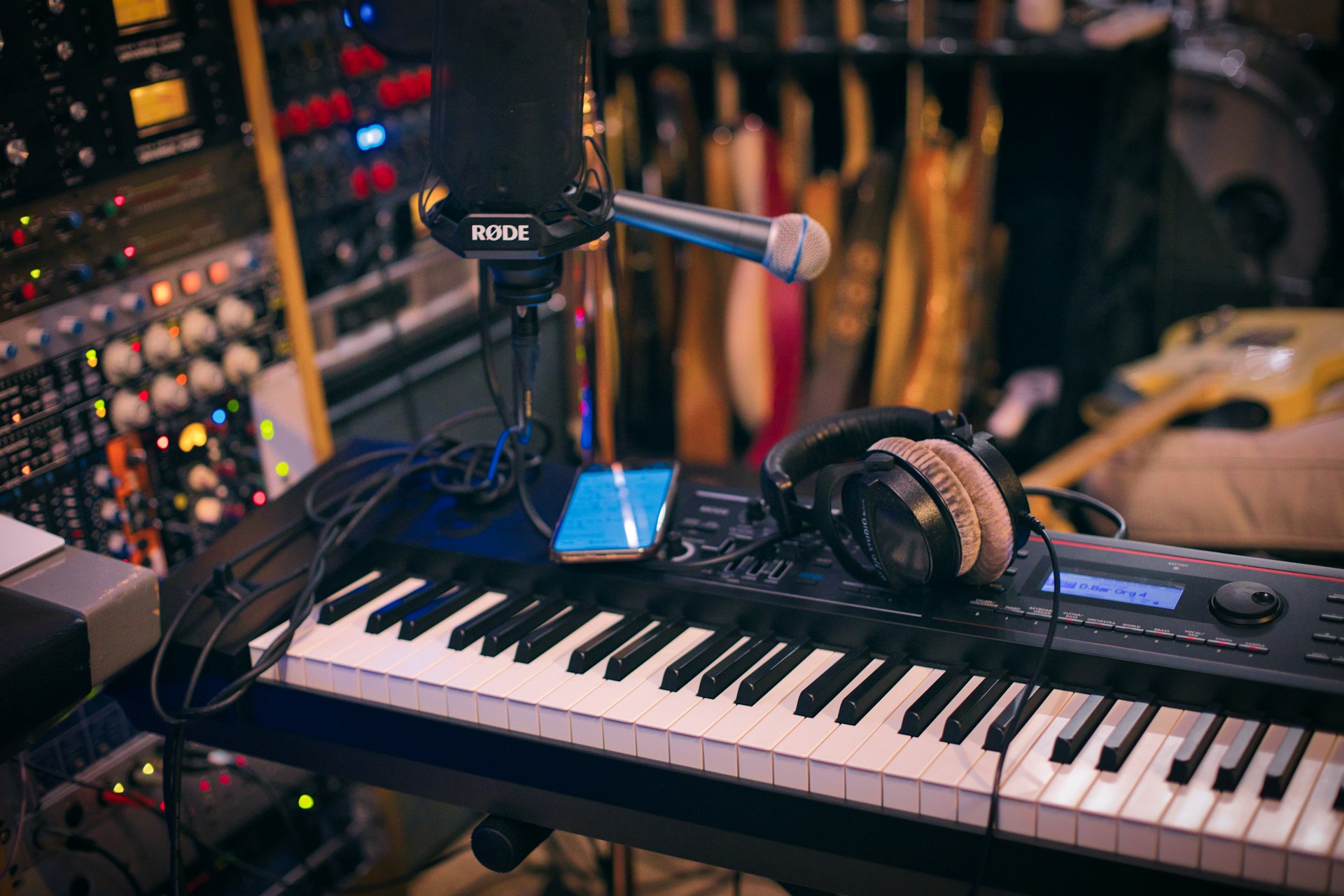 Photo by Caught In Joy on Unsplash
Musical drones and pads build tension. Sustained notes hovering in background create constant low-level anxiety. The sound shouldn't be obvious, just present enough to maintain unease. Think of this as emotional foundation beneath narration and effects.
Strategic silence matters as much as sound. Don't fill every second with audio. Gaps let narration breathe and give listeners processing time. The contrast between dense soundscapes and stripped sections creates dynamic range that manipulates emotional responses.
Volume dynamics and mastering
Consistent volume seems professional but can reduce impact. Strategic volume variation manipulates listener attention and physiological responses.
Compression evens out overall levels but kills dynamics. Use light compression to control peaks without squashing emotional range. Horror benefits from dynamic range that forces listeners to adjust volume, creating active engagement with content.
Whisper sections should actually be quiet. Make listeners turn up volume to hear. This forces focus and creates vulnerability. When the next loud section hits, it produces physical startle response because they've increased their volume.
Peak moments should hit hard. Death scenes, reveals, climactic confrontations. These earn temporary volume spikes that break established patterns. The shock value comes partly from pure loudness after sustained moderate levels.
Master for your distribution platform. YouTube applies normalization. Spotify has loudness targets. Podcast players vary widely. Research technical specs for your primary distribution method and master accordingly. What sounds great on studio monitors might disappoint through phone speakers.
Test on multiple playback systems. Studio headphones reveal every detail but don't represent typical listening conditions. Check mixes on laptop speakers, phone speakers, car audio, and earbuds. Horror often gets consumed in dark bedrooms through phone speakers. Optimize for that reality.
Platform-specific optimization
Different platforms demand different technical approaches. YouTube videos accompany visuals. Podcasts exist as pure audio. TikTok requires immediate impact. Tailor production to platform constraints and audience expectations.
YouTube lets you leverage visuals. Static images with subtle animation can enhance narration without requiring video production skills. Text overlays highlight key quotes. Visual pacing should match audio pacing, cutting between images during natural pauses or tonal shifts.
Podcasts require extra clarity since listeners often multitask. Avoid dense effects that obscure words. Keep ambient layers quieter. Ensure narration remains intelligible even when listener is partially distracted. Opening and closing music helps establish show identity across episodes.
TikTok demands immediate hooks. First three seconds determine whether viewers scroll past. Start with compelling audio, whether that's shocking statement, disturbing sound effect, or immediately engaging voice. Save exposition for later. Front-load impact.
Audiobooks prioritize endurance and clarity. Listeners consume hours of content. Avoid effects that become irritating over time. Keep processing minimal and professional. Consistency matters more than dramatic flair. The story carries weight, not production tricks.
Instagram and short-form platforms need visual coordination. The voice should complement imagery, creating cohesive aesthetic. Text-on-screen often duplicates narration for viewers watching without sound. Design for silent viewing even while optimizing audio.
Horror story structure for AI narration
Certain narrative structures work better with AI narration. Understanding these patterns helps you write or adapt content that plays to AI strengths while minimizing weaknesses.
First-person versus third-person narration
First-person creates immediacy. The narrator lived the events, giving testimony. AI voices handle this well because emotional authenticity comes through content rather than vocal performance. The script can include reactions and thoughts that guide AI delivery.
"I saw the thing in the basement. My God. I'll never forget." First-person naturally includes these emotional markers that help AI choose appropriate inflection. The narrator tells you they're horrified, guiding vocal interpretation.
Third-person omniscient requires more subtle performance. The narrator observes rather than experiences. Emotional cues come from described reactions rather than personal response. AI sometimes struggles with this nuance, delivering emotional content with insufficient affect or inappropriate emphasis.
Limited third-person provides middle ground. The narrator follows one character closely, accessing their thoughts and feelings while maintaining narrative distance. This gives you both intimacy and flexibility. "Sarah's hands trembled as she reached for the door." The description guides emotion without first-person testimony.
Multiple perspectives challenge AI consistency. If different sections follow different characters, consider using different voices. Gender-matched voices for gendered characters helps listeners track perspective shifts. Distinct vocal qualities signal when narration switches focus.
Found footage formats work brilliantly with AI. The narrator reads discovered documents, plays recovered audio, recounts research findings. This format inherently includes the distance and formality AI naturally produces. The voice becomes investigator presenting evidence rather than performer bringing drama.
Building tension through pacing
Tension requires careful escalation. You can't maintain peak anxiety for entire story. Structure content with rising and falling action, giving listeners recovery periods before next surge.
Opening hooks matter immensely. Start with compelling question, disturbing image, or immediate danger. The first paragraph determines whether listeners commit. AI voices help here by delivering text exactly as written. No nervous human narrator fumbling the crucial first lines.
Slow burn builds dread gradually. Information reveals piece by piece. Each revelation slightly worse than the last. The narrator's pacing should match this escalation, starting calm and controlled, slowly adding stress markers as horror accumulates.
Spike the tension graph strategically. Not smooth linear increase but jagged spikes and valleys. Relief moments make subsequent scares more effective. The narrator can shift from tense to momentarily relaxed, giving listeners false security before next horror spike.
False endings create multi-stage climaxes. The threat seems resolved. Narration relaxes. Then the real horror reveals itself. This structure forces two emotional peaks, the false resolution and the actual climax. AI voices handle these shifts well if your script clearly signals the tonal changes.
Dialogue and character voices
Character dialogue presents challenge and opportunity. Multiple characters need distinct voices. You have several approaches depending on production ambition and platform capabilities.
Single narrator reading all dialogue works if you choose versatile voice with good range. The narrator shifts tone and pacing for different characters. This traditional audiobook approach requires skilled voice selection. Look for voices that can convincingly differentiate through delivery variation rather than fundamental vocal change.
Multiple AI voices for different characters creates more distinct separation. Generate each character's dialogue with appropriate voice, then assemble in editing. This approach takes more production time but creates clearer character distinction. Browse the voice library for options matching your character demographics.
Attribution tags help listeners track speakers. "Sarah said" or "John replied" become more important with AI narration since listeners can't rely on subtle vocal performance to identify speakers. Clear attribution prevents confusion about who's speaking.
Dialogue-heavy scenes work better with sparse narration. Let conversations play out with minimal narrator intrusion. Too much "he said" and "she replied" clutters the audio. Find balance where attribution provides necessary clarity without becoming obtrusive.
Internal monologue versus spoken dialogue needs sonic distinction. One approach uses different voices. Another uses subtle effects, perhaps light reverb on internal thoughts to distinguish from external speech. This helps listeners track the difference between what characters say aloud and what they think.
Platform-specific strategies for horror content
Different distribution platforms create different opportunities and constraints. Optimize content for where your audience actually listens.
YouTube horror narration
YouTube combines audio and visual, letting you enhance narration with imagery. Static images work fine. You don't need video production skills. Just source relevant public domain horror artwork or create simple text-on-screen designs.
Thumbnails drive clicks in YouTube algorithm. Compelling thumbnail matters more than you'd expect for audio-focused content. Bold text, horror imagery, recognizable visual style. The thumbnail sells the content before viewers hear a single word.
Video length affects algorithm recommendations. YouTube favors 8-15 minute videos for general recommendation. Longer content requires existing loyal audience. Plan story length accordingly or break longer tales into series.
Chapters improve user experience. Add timestamp markers in description for different story sections. Listeners can skip to specific parts or replay favorite moments. This engagement signals quality to algorithm while serving audience.
End screens encourage binges. Direct viewers to related horror stories, playlists, or subscribe prompts. The momentum from one story can carry into hours of viewing if you structure your channel catalog strategically.
Background music should stay subtle. Too loud and it competes with narration. Too quiet and it barely registers. Find balance where music enhances mood without demanding attention. YouTube's copyright system means using royalty-free or properly licensed music exclusively.
Podcast horror series
Podcasts build audiences through consistency. Weekly releases create habit and anticipation. Plan sustainable production schedule before launching. Burning out after three episodes kills momentum.
Series structure versus standalone episodes represents key decision. Standalone stories let listeners jump in anywhere, lowering barrier to entry. Series create investment and loyalty but require listeners to start from beginning. Consider hybrid approach with season-long arcs made of semi-standalone episodes.
Show notes provide additional value. Transcript excerpts, source citations for true crime horror, discussion questions. These written supplements improve SEO and give audiences multiple engagement points beyond pure audio.
Cross-promotion with other horror podcasts expands reach. Guest appearances, shoutouts, collaborative episodes. The horror podcast community tends toward supportive rather than competitive. Leverage this for mutual growth.
Consistent release schedule matters more than frequent releases. Monthly schedule you actually maintain beats weekly schedule you constantly miss. Algorithm and audience both reward reliability.
Intro and outro music establish brand identity. Listeners should immediately recognize your show from opening notes. This audio branding builds association over time. Keep intro under 20 seconds. Listeners skip longer intros after first few episodes.
TikTok and short-form horror
TikTok demands immediate hooks. First three seconds determine everything. Start with the scare, the question, the disturbing statement. Context comes after you've captured attention.
Vertical format creates different intimacy than traditional video. The screen fills viewer's hand, creating personal private space. This psychological intimacy amplifies horror's effectiveness. Exploit this closeness.
Text overlays compensate for sound-off viewing. Many users scroll with audio muted in public spaces. Display key narration as text so your content works either way. Then audio becomes enhancement rather than requirement.
Series create comeback viewers. End each video with cliffhanger or hook for next installment. TikTok algorithm favors creators who get viewers returning specifically for their content. Serialized horror builds this following.
Duets and stitches enable audience participation. Horror fans create response videos, theories, artwork. This engagement feeds algorithm while building community around your content. Encourage this interaction explicitly.
Trending audio gets algorithmic boost. Consider adapting horror narration to fit trending sound formats, or create original audio compelling enough that others use it. When your audio goes viral, every use drives traffic back to your account.
Audiobook production
Audiobooks demand endurance and consistency. Hours of content require voice that listeners can tolerate long-term. Avoid extreme processing or affected delivery that becomes grating over time.
Chapter breaks provide natural pause points. Generate each chapter separately, allowing slight recovery between sessions. This also creates logical editing segments and lets listeners bookmark progress.
Pacing becomes critical over long durations. Too slow and listeners drift. Too fast and they can't process information. Find sustainable middle pace that keeps attention without exhausting listeners.
ACX and traditional audiobook platforms have technical requirements. Specific loudness targets, noise floor limits, file format specifications. Research requirements before final mastering. Rejection for technical reasons after hours of production creates terrible setback.
Sample audio matters for sales. The opening chapter represents entire book. Ensure your strongest narration, clearest audio quality, and most compelling content appears early. Many potential buyers decide from sample alone.
Consistent character voices across 8-12 hours proves challenging. Create voice guide documenting which AI voice and settings you used for each character. Reference this guide throughout production to maintain consistency.
Legal and ethical considerations
Horror content using AI voices navigates complex legal territory. Understanding rights, attributions, and ethical boundaries protects you from consequences.
Copyright and fair use
AI-generated content raises copyright questions. Most jurisdictions grant copyright to human creators, not AI output. You own copyright to the complete work, but the AI-generated narration itself may not be copyrightable. This matters if someone copies your audio.
Source material copyright remains relevant. If you're narrating Stephen King stories, you need rights regardless of using AI voices. The narration method doesn't exempt you from content licensing requirements.
Fair use covers criticism, commentary, education, and parody. Horror narration for entertainment typically doesn't qualify. Don't assume fair use protects you from copyright claims. Get proper licenses or use public domain material.
Public domain stories offer safe territory. Classic horror from authors like Poe, Lovecraft, and M.R. James exists free from copyright restrictions. These works let you create content without licensing concerns.
Original content avoids copyright issues entirely. Write your own horror stories or commission writers. You control all rights, eliminating licensing complexity. This approach requires more upfront work but provides complete freedom.
AI voice rights and personality
Celebrity and character voices raise publicity rights issues. Using someone's voice without permission potentially violates their personality rights, even with AI recreation rather than actual recordings.
Parody protections apply to obviously comedic or critical uses. Horror narration typically doesn't qualify as parody. Using celebrity voices for straightforward horror content could create legal exposure.
Fictional character voices occupy gray area. Disney and other studios protect character voices aggressively. Using recognizable character voices commercially risks cease-and-desist notices. Original voices inspired by characters offer safer approach than direct recreation.
Voice actors deserve consideration beyond legal requirements. AI voices potentially reduce work for professional narrators. Being transparent about AI use and considering when to hire humans reflects ethical responsibility.
Disclosure practices vary by platform and jurisdiction. Some require labeling AI-generated content. Others leave this to creator discretion. Research your specific distribution platform's policies and relevant regulations.
Age restrictions and content warnings
Horror content requires appropriate age gating. YouTube, Spotify, and most platforms offer age restriction options. Use them for content featuring graphic violence, disturbing themes, or intense psychological horror.
Content warnings help listeners make informed decisions. Simple note at episode start: "This story contains graphic violence and disturbing themes" lets audiences opt out. This consideration builds trust and reduces negative feedback.
Platform policies about violent content vary. YouTube demonetizes some horror content. Patreon allows more freedom but has own restrictions. Understand rules before investing production time in content that might get removed.
Trigger warnings for specific content help vulnerable audiences. Suicide, sexual violence, child harm. These specific warnings let people with trauma avoid content that might harm them. This isn't censorship but basic consideration.
Balance warnings with effectiveness. Too many warnings dilute impact and create spoiler issues. Generic "horror content" warning suffices for most needs. Reserve specific warnings for genuinely intense material.
Frequently asked questions
What makes an AI voice good for horror narration?
Good horror AI voices combine several characteristics. Tonal depth creates authority and threat. Natural imperfections like slight breathiness or vocal texture add authenticity. Emotional range lets the voice shift between calm and intense. Clear articulation ensures listeners understand words even during atmospheric processing. The voice should avoid uncanny valley weirdness unless you're deliberately exploiting that for effect.
Platform controls matter as much as base voice quality. You need ability to adjust pacing, emotion, and emphasis. Without these controls, even great voices become limited. TryAIVoices offers both quality voices and robust customization for horror content.
Can AI voices replace professional horror narrators?
AI voices excel at specific applications but can't fully replace skilled human narrators. The technology handles straightforward narration well, especially for first-person perspectives with clear emotional cues. Complex character interactions and subtle tonal shifts still favor human performance.
Budget and scale determine appropriate choice. Solo creators producing frequent content benefit enormously from AI. Studios producing flagship horror podcasts might still prefer human narrators for prestige and performance nuance. Many creators use hybrid approaches, AI for some projects and humans for others.
How do I make AI voices sound more creepy?
Post-processing creates most creepy effects. Subtle pitch shifting into unnatural ranges triggers uncanny valley responses. Adding slight distortion suggests corruption or damage. Layering the voice with itself slightly out of sync creates unsettling doubling. Reversed reverb before words creates supernatural anticipation.
Script writing contributes to creepiness. Long pauses force listeners to imagine. Inappropriate emotion in delivery, like calm cheerfulness describing violence, creates cognitive dissonance. Precise clinical language describing horror removes empathy barriers.
Voice selection matters from start. Choose voices with interesting natural texture rather than perfectly smooth delivery. Browse horror-suitable voices with inherent characteristics that lend themselves to dark content.
What's the best AI voice for Stephen King audiobooks?
Unauthorized Stephen King audiobooks violate copyright regardless of narration method. For legal King content, his official audiobooks already exist with professional narration.
For King-inspired original horror, choose voices matching his style's needs. His work spans different subgenres. Cosmic horror like "The Mist" needs deep authoritative voices. Psychological horror like "Misery" works with more neutral, observational narration. Coming-of-age horror like "It" benefits from warm, nostalgic tones that make the horror elements more jarring.
How long should horror stories be for AI narration?
Platform and format determine ideal length. TikTok horror maxes at 3 minutes for single video. YouTube sweet spot runs 8-15 minutes for algorithm favor. Podcast episodes typically span 20-40 minutes. Audiobooks run hours.
AI capabilities aren't the limiting factor. Modern platforms handle long-form content fine. Your story's natural pacing and audience attention spans should guide length decisions. A 3-minute story stretched to 15 minutes becomes boring. A complex tale rushed into 5 minutes loses impact.
Do I need expensive software for horror audio production?
Free tools handle professional horror production. Audacity provides robust audio editing. Reaper offers full DAW capabilities with generous evaluation period. GarageBand comes free on Mac. These programs include effects, mixing, and mastering tools sufficient for excellent horror content.
Paid options like Adobe Audition or Pro Tools offer advanced features but aren't necessary for beginners. Your skills matter more than your tools. Master free software thoroughly before investing in expensive alternatives.
Sound effect libraries come free from sources like Freesound and YouTube Audio Library. Stock horror ambiance, music, and effects cost nothing. Budget constraints don't prevent professional-quality horror production.
Related voices to try
- Morgan Freeman voice - Deep authoritative tone for cosmic horror
- Batman voice - Gravelly intensity for dark urban horror
- David Attenborough voice - Measured narration with ominous undertones
Related guides
- Creepy AI voice generator guide - Creating unsettling vocal effects
- Analog horror AI voice techniques - Found footage aesthetic
Horror narration transforms good stories into unforgettable experiences. Voice selection, script optimization, and production technique all contribute to content that genuinely frightens audiences. The right AI voice becomes your collaborator in psychological manipulation, building dread through calculated choices in pacing, tone, and emotional delivery.
Start creating horror content with TryAIVoices today. Access 500+ voices perfect for every horror subgenre, with controls that let you craft exactly the atmosphere your stories demand.