AI Demon Voice Generator: Create Dark Character Voices
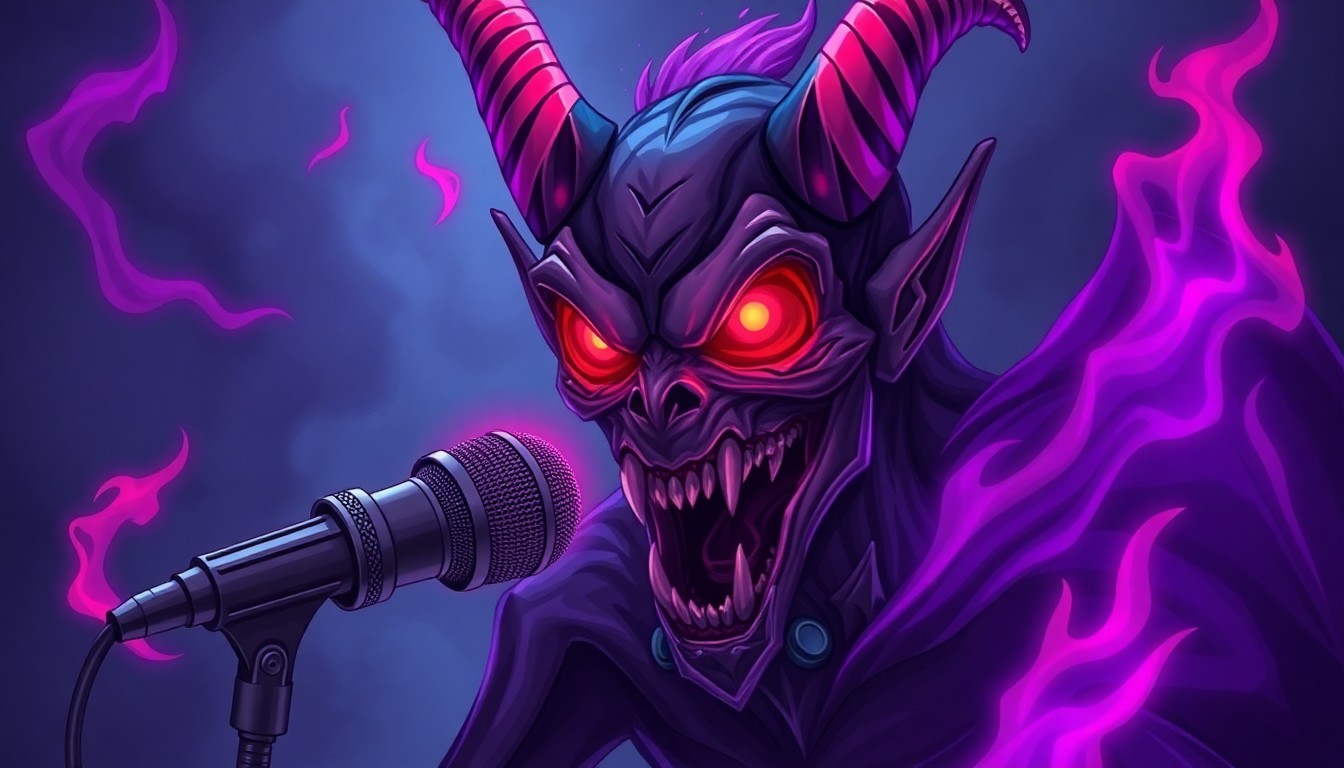
Creating menacing supernatural voices pushes text-to-speech technology into fascinating territory. Content creators need demon voices for horror games, scary stories, villain characters, and dark comedy sketches. The challenge lies in generating voices that sound genuinely otherworldly without crossing into cartoonish parody.
This guide covers demon voice generation from technical foundations to creative applications. We explore voice modulation techniques, platform comparisons, script writing strategies, and real-world use cases across gaming, horror content, and character work.
Understanding demon voice characteristics
Demon voices share specific audio qualities that signal supernatural menace. Low resonance. Guttural undertones. Unnatural pitch variations that unsettle listeners.
The most effective demon voices combine deep voice characteristics with distortion effects. Think gravelly bass frequencies mixed with subtle harmonic layering. Voice actors achieve this through throat techniques and post-production processing. AI voice generators replicate these qualities through specialized algorithms.
Traditional demon voice work requires vocal strain that damages performers over time. Professional voice actors limit demon sessions to protect their vocal cords. AI synthesis removes these physical limitations while maintaining authentic menacing qualities.
TryAIVoices specializes in dark character voices optimized for supernatural content. Our platform processes demon voice requests with specialized pitch shifting and harmonic distortion that maintains clarity while adding menace.
Demon voices fall into distinct categories. Ancient demons carry gravitas through extreme bass frequencies and slow pacing. Trickster demons blend smooth delivery with unpredictable pitch shifts. Rage demons emphasize aggressive mid-range frequencies with sharp consonants. Each archetype serves different narrative purposes.
Voice frequency analysis
Demon voices typically sit in the 85-150 Hz range for fundamental frequencies. Compare this to average male voices at 110-180 Hz. The lower register creates psychological unease through infrasonic elements our brains associate with danger.
Harmonic layering adds supernatural quality. Real voices produce clean harmonic series. Demon voices benefit from detuned harmonics that create beating frequencies. This subtle dissonance signals something wrong without overwhelming listeners.
Horror voice generators achieve demon qualities through specific DSP chains. Pitch shifting down by 3-8 semitones forms the foundation. Add formant preservation to maintain intelligibility. Layer subtle chorus effects with slightly detuned copies. The result sounds inhuman while remaining understandable.
Professional demon voice production uses multiband compression emphasizing lows while controlling harsh highs. Saturation in the 200-500 Hz range adds warmth and presence. Reverb choices matter enormously. Cathedral presets work for ancient demons. Tight room reverbs suit modern urban demons.
 Photo by Maxim Hopman on Unsplash
Psychological impact of demon voices
Demon voices trigger primal fear responses through specific acoustic features. Unpredictable pitch variations activate threat detection systems. Extremely low frequencies create physical sensations of unease. Our evolutionary psychology associates deep resonance with large predators.
The uncanny valley applies to voices as strongly as visuals. Demon voices that sound too processed feel fake. Voices that sound too human lack menace. The sweet spot sits just beyond normal human capability. Achievable but unsettling.
Voice onset time affects perceived threat levels. Slow voice onsets with gradual volume increase create creeping dread. Sharp sudden onsets trigger startle responses. Analog horror voices exploit these timing variations for maximum psychological impact.
Consonant articulation matters more than vowel quality for demon voices. Crisp threatening consonants maintain intelligibility while sibilant sounds (s, sh, ch) add serpentine qualities. Many effective demon voices emphasize these hissing elements.
Best AI demon voice generators
The demon voice landscape splits between general purpose platforms and specialized horror tools. Each approach offers distinct advantages for content creators working on different project types.
TryAIVoices provides demon voice synthesis optimized for narrative content. Our platform offers Bill Cipher for trickster demon energy and Alastor for sophisticated menace. Both voices handle complex scripts while maintaining character consistency across long-form content.
Platform comparison for demon voices
General voice cloning platforms struggle with demon voices because their training data emphasizes natural human speech. Demon voices require exaggerated characteristics that fall outside normal distribution curves. Specialized platforms trained on character voices perform better.
ElevenLabs excels at subtle menace but lacks extreme demonic qualities. Their voice cloning captures sophisticated villain delivery but can't push into true supernatural territory without heavy post-processing. Best for morally ambiguous antagonists rather than pure evil demons.
Resemble AI handles aggressive demon voices effectively through their emphasis control. You can push intensity sliders to achieve threatening delivery. Their weakness shows in maintaining consistency across longer scripts. Voice characteristics drift after 30-40 seconds.
TryAIVoices bridges this gap with character-specific models trained on consistent demon archetypes. Generate hours of content maintaining exact voice characteristics. Our Sukuna voice delivers cursed demon energy perfect for anime villains. Dagoth Ur provides ancient god-tier menace for fantasy content.
Murf AI approaches demon voices through their emphasis and pitch controls. Stack low pitch settings with aggressive emphasis for serviceable demon delivery. Limited compared to character-specific options but works for budget projects needing basic menace.
Voice.ai offers real-time voice changing that works for live streaming demon characters. Latency sits around 30-50ms making it viable for interactive content. Quality suffers compared to pre-rendered options but the real-time capability enables unique use cases.
Character voice options
Gaming character voices include several demon archetypes that work perfectly for horror content. These voices come pre-optimized for specific personality types rather than requiring manual effect chains.
Ghostface delivers psychological horror rather than supernatural demon energy but the menacing quality translates well to trickster demons. The voice combines smooth delivery with underlying threat. Perfect for demons who manipulate rather than intimidate directly.
For pure demonic rage, aggressive cartoon villain voices often work better than trying to modify neutral voices. These characters were designed for exaggerated delivery that translates cleanly to demon characterization.
Darth Vader provides the gold standard for technological demon energy. The mechanical breathing and processed quality create otherworldly menace while maintaining perfect intelligibility. Great reference point for sci-fi demon concepts.
Anime demon voices like Sukuna capture supernatural arrogance. These voices balance power with personality. They work for demons who see themselves as superior beings rather than mindless monsters.
Voice modulation techniques
Achieving convincing demon voices requires understanding which parameters to adjust and by how much. Small changes create subtle menace. Extreme adjustments risk losing intelligibility.
Pitch shifting forms the foundation. Drop pitch by 3-5 semitones for moderate menace. 6-8 semitones for deep demonic voices. Beyond 10 semitones you start losing consonant clarity. Deep voice generation explores these principles in detail.
Formant preservation maintains speech naturalness during pitch shifting. Disable it deliberately for demon voices to create alien vocal tract characteristics. The unnatural formant relationships signal non-human sound production.
Time stretching without pitch shifting creates unsettling delivery. Slow playback by 5-15 percent for ominous pacing. The unnatural timing creates tension without obvious processing artifacts. Combine with subtle pitch reduction for maximum effect.
 Photo by Matheus Ferrero on Unsplash
Script writing for demon voices
Demon dialogue requires different writing techniques than natural conversation. Word choice, sentence structure, and pacing all shift to support supernatural delivery.
Short brutal sentences work for rage demons. Long flowing monologues suit ancient demons displaying their superiority. Trickster demons benefit from casual modern language delivered with menacing undertones. Match writing style to demon archetype.
Rage demon example: "You dare. You dare challenge me. I will tear your world apart. Burn everything you love. Leave you broken."
Ancient demon example: "Your mortal understanding cannot comprehend the eons I have witnessed, the civilizations that rose and fell before your ancestors discovered fire, the truths that would shatter your fragile sanity."
Trickster demon example: "Oh that's adorable. You really think that little ritual is going to send me back. Go ahead. Try it. I'll wait."
Power dynamics in demon dialogue
Demons operate from positions of power. Their dialogue reflects absolute confidence even when circumstances turn against them. Threats come from positions of strength rather than defensive posturing.
Avoid qualifiers and uncertainty markers. Demons don't say "maybe" or "perhaps." They make statements. Declare truths. Issue commands. The voice itself carries enough menace without linguistic hedging.
Questions serve to mock rather than seek information. "Did you truly believe you could defeat me?" doesn't request an answer. It emphasizes the speaker's superiority. Rhetorical questions amplify demon arrogance.
Character voice techniques apply strongly to demon dialogue. Stay consistent with personality traits across all lines. An ancient demon wouldn't suddenly use modern slang. A trickster demon maintains playful menace even while angry.
Pacing variations create dramatic impact. Long pauses before key revelations. Rapid delivery during threats. Deliberate slow articulation emphasizing specific words. AI voices handle these variations through ellipses and punctuation placement.
Emotional range for demon characters
Demons express limited human emotions while displaying exaggerated supernatural alternatives. Rage manifests as cosmic fury rather than personal anger. Amusement becomes cruel mockery. Fear doesn't register because demons consider themselves beyond mortal threats.
Contempt works beautifully for demon voices. That sneering disdain for human weakness comes through clearly in vocal delivery. Write dialogue that drips with condescension. "Such pathetic creatures. So desperate for meaning."
Pleasure for demons derives from suffering and chaos rather than positive experiences. Their joy manifests as malicious glee. "Listen to them scream. Isn't it beautiful?" This inverted emotional framework makes demons feel genuinely alien.
Sadness and vulnerability rarely suit demon characters except as manipulation tactics. A demon faking remorse to trick victims creates interesting character moments. The voice maintains underlying menace even while performing surface-level emotions.
TryAIVoices' emotion controls let you emphasize these specific qualities. Push contempt and mockery sliders while minimizing warmth and compassion. The result sounds appropriately inhuman while maintaining narrative engagement.
Demon voice use cases
Horror content dominates demon voice applications but creative uses span multiple content categories. Each use case demands different balance between menace and intelligibility.
YouTube horror narration benefits from demon voices for villain dialogue and supernatural entity speech. Cut demon voices against normal narrator delivery for dramatic contrast. The shift in voice quality signals reality breaks or supernatural presence.
Gaming applications
Gaming content creators use demon voices for villain characters in actual gameplay and roleplay content. Dungeon Masters running horror campaigns need consistent demon voices across multi-hour sessions. AI generation enables this without vocal strain.
Horror game mods replace generic enemy dialogue with custom demon voices. This personalization increases immersion dramatically. Players report significantly higher engagement with voiced demon characters compared to text-only encounters.
Multiplayer roleplay servers use demon voices for faction leaders and supernatural NPCs. Consistency matters more than perfection here. A slightly robotic demon voice works fine when it remains identical across dozens of interactions.
Streaming content incorporates demon voices through soundboards and real-time voice changers. Streamers adopt demon personas for special events or Halloween streams. The novelty drives engagement and clip potential.
Fighting game content creators voice combo videos with demon commentary. The over-the-top menace pairs perfectly with exaggerated gameplay moments. "Witness true power" delivered in demonic tones while landing a 100-hit combo creates memorable content.
Podcast and audio drama
Audio dramas require the highest quality demon voices because listeners have zero visual distraction. Every vocal quality gets scrutinized. Inconsistent demon voices break immersion immediately.
Podcast applications range from true crime shows using demon voices for sinister quotes to comedy podcasts doing demon sketches. The flexibility of AI voices enables both serious horror and comedic applications.
Multiple demon characters in the same production need distinct voices. Pitch, pacing, and effect choices differentiate between demon castes. The demon king sounds different from demon soldiers. Voice variety prevents listener confusion during multi-character scenes.
Limited series horror podcasts benefit enormously from AI demon voices. Traditional voice acting requires consistent performer availability across months of production. AI voices remain perfectly consistent whether you generate episode 1 or episode 20.
Anthology series use demon voices for one-off villains without ongoing commitment. Generate exactly the voice you need for this episode. Move to completely different demon archetype next episode. No continuity concerns.
 Photo by Florian Olivo on Unsplash
Social media content
TikTok horror creators use demon voices for short-form scary content. The algorithm favors unique audio so custom demon voices outperform stock horror sounds. Consistent demon voice becomes brand identity for horror creators.
Instagram Reels horror skits need punchy demon dialogue under 60 seconds. Write tight threatening lines that land quickly. "Your soul belongs to me" works. "Through countless eons I have waited for this moment to claim what is rightfully mine" gets cut short by platform limits.
YouTube Shorts leverage demon voices for quick horror beats. POV content where demons address viewers directly performs exceptionally well. The direct address combined with menacing voice creates engaging creepy content.
Meme culture adopted demon voices for absurdist humor. Mundane statements delivered in demonic tones create comedy through tonal dissonance. "I crave the forbidden chalupa" spoken by an ancient demon entity makes people laugh.
Reddit communities r/nosleep and similar forums sometimes create audio versions of popular stories. Demon character voices enhance these adaptations significantly. Authors appreciate hearing their written demons vocalized.
Audio enhancement for demon voices
Raw AI demon voices benefit significantly from post-processing enhancement. Layer effects carefully to add depth without creating muddy incomprehensible results.
Reverb and spatial effects
Reverb placement determines whether your demon sounds present in the scene or isolated in hell. Natural room reverbs integrate demons into realistic spaces. Cathedral reverbs create otherworldly distance and power.
Pre-delay on reverb controls perceived distance. Short pre-delay (10-30ms) places demons close to the listener. Long pre-delay (50-100ms) creates spatial separation. Creepy voice effects often benefit from moderate pre-delay maintaining presence while adding supernatural space.
Reverb decay time signals environment scale. 1.5-2.5 second decays work for demon throne rooms and hell dimensions. Shorter decays suit demons manifesting in normal environments. Match reverb character to narrative context.
High-frequency damping in reverb creates dark oppressive atmospheres. Cut reverb highs above 4-6kHz for ancient demon energy. Preserve highs for younger more energetic demons. The tonal balance shifts psychological impact significantly.
Stereo width on reverb adds spatial interest without cluttering mono dialogue space. Keep demon voice centered. Spread reverb tails wide. This separation maintains clarity while adding environmental immersion.
Layering and doubling
Octave doubling adds supernatural depth. Mix a version pitched down 12 semitones at low volume beneath the main demon voice. The subliminal bass presence increases perceived power without obvious processing.
Slight stereo doubling with 5-15ms delays creates unsettling width. Our brains expect voices from single points. Spatially distributed demon voices feel wrong in exactly the right way for supernatural content.
Whisper layers add complexity. Mix quiet whispering versions of the same dialogue beneath full demon delivery. The subconscious layer creates psychological unease. Listeners feel multiple entities speaking simultaneously.
Harmonic distortion introduces useful artifacts. Saturation plugins add subtle odd harmonics that make voices feel less natural. Push subtle saturation for sophisticated menace. Crank it hard for chaotic demon energy.
TryAIVoices provides clean demon voice output optimized for your post-processing chain. Our models maintain dynamic range and frequency balance that accepts enhancement well without fighting built-in processing.
Compression and dynamics
Heavy compression creates unnatural consistency perfect for demon voices. Normal speech has natural dynamic variation. Demon voices benefit from reduced dynamics signaling inhuman control.
Multiband compression lets you emphasize specific frequency ranges. Boost low-end presence and power. Control harsh highs that cause listening fatigue. The selective processing maintains intelligibility while increasing impact.
Sidechain compression to music or ambient sound makes demon voices punch through dense mixes. The automatic ducking ensures dialogue clarity without manual volume automation.
Limiting prevents demon voice peaks from overwhelming listeners. Aggressive limiting works because demon voices already sound processed. The obvious peak control fits the aesthetic rather than sounding obviously limited.
Expansion can reduce background noise in AI-generated voices. Set gentle expansion to suppress quiet artifacts and processing noise between words. The cleaned spaces make demon dialogue feel more intentional and controlled.
 Photo by Austin Neill on Unsplash
Legal and ethical considerations
Demon voices raise fewer rights issues than celebrity impressions but ethical considerations still apply. Horror content targets mature audiences. Age-appropriate warnings matter.
Content warnings and audience expectations
Horror content needs clear labeling. Demon voices signal dark themes immediately. Platform requirements vary but transparent warnings protect creators from moderation issues.
YouTube allows horror content with appropriate age restrictions. Demon voices don't automatically trigger restrictions but combined with violent imagery they require proper flagging. Check platform guidelines before publishing.
Streaming platforms have varying demon voice policies. Twitch allows horror content but requires content warnings for graphic material. Discord servers set their own rules. Verify community guidelines before introducing demon voice content.
Educational content about demon voices (like this guide) doesn't require warnings. The meta-discussion differs from direct frightening implementation. Context matters enormously for platform moderation.
Accessibility considerations include trigger warnings for trauma survivors. Some horror fans appreciate knowing when demon voices appear so they can prepare mentally. Others prefer surprise. Know your audience's preferences.
Character voice rights
Fictional demon characters from published media have specific rights holders. You can create original demon voices freely. Replicating copyrighted demon characters (specific names, backstories) requires permission or fair use application.
Parody protections often cover demon voice content. A comedy sketch using a demon voice to satirize something typically qualifies. Straight reproduction of copyrighted demon characters for commercial gain doesn't.
Voice cloning ethics apply to demon voices when they replicate specific performances. Don't clone a voice actor's demon character work without permission. Create original demon voices inspired by archetypes rather than copies.
Transformative use strengthens fair use claims. Taking a demon voice and using it in completely different context from the original adds transformative value. Direct reproduction in similar context creates legal risk.
Commercial use increases scrutiny. Personal projects using demon voices face minimal issues. Selling content or monetizing videos requires careful rights evaluation. When uncertain consult entertainment lawyers familiar with voice rights.
Platform-specific optimization
Each content platform has ideal demon voice characteristics. Technical requirements and audience expectations vary significantly across publishing destinations.
YouTube optimization
YouTube videos benefit from demon voices mixed around -18 to -16 LUFS for dialogue. This maintains YouTube's loudness standards while preventing compression artifacts. Peak levels should stay below -1dB true peak.
Stereo demon voices work well for YouTube. Viewers primarily use headphones or reasonable speakers where stereo effects land properly. Avoid extreme width that creates problems for mono phone speaker playback.
Chapter markers help viewers navigate longer demon voice content. Mark where specific demon characters appear so interested viewers can jump directly to those sections. The segmentation improves watch time metrics.
Subtitle demon dialogue for accessibility and engagement. Many viewers watch with sound off initially. Captions displaying menacing dialogue encourage turning sound on to hear the full demon voice effect.
Content creator guides recommend demon voice peaks for maximum algorithmic performance. Horror content within first 30 seconds hooks viewers. Demon voices provide immediate genre signaling.
TikTok and short-form
TikTok content requires demon voices to land within 3 seconds. The platform punishes slow builds. Open with demon voice or lose viewers to scroll.
Mono demon voices work better for TikTok given predominantly phone speaker playback. Subtle stereo effects disappear. Focus on fundamental voice quality over spatial processing.
TikTok compression heavily affects demon voices. Test your demon voice content through the actual upload process before finalizing. What sounds great in your DAW might become muddy after platform processing.
Trending audio creates opportunities. Put original demon voices into trending format templates. The combination of familiar structure with unique demon voice creates viral potential.
Hashtag strategy matters enormously. Mix horror-specific tags (#creepy #scary #demon) with broader entertainment tags. The demon voice content can crossover beyond pure horror audiences into general entertainment viewers.
Podcast platforms
Podcast applications demand highest audio quality. Listeners wear headphones in quiet environments. Every demon voice artifact gets noticed.
Mono podcast mixes often work better than stereo for dialogue-heavy content. The compatibility across all listening situations outweighs stereo benefits. Save stereo effects for music and ambient elements.
Consistent loudness across episodes matters significantly. Demon voice episodes matching your normal dialogue loudness prevents jarring volume jumps. Listeners appreciate consistent experience.
Show notes should indicate demon voice presence for listeners who prefer preparation. Simple episode description noting "features demon character voiced by AI" sets appropriate expectations.
RSS feed artwork variations can signal demon voice episodes. Slight visual distinction helps listeners identify these special episodes when browsing their podcast app.
Demon voice trends and evolution
AI demon voices improved dramatically over 18 months. Early attempts sounded obviously synthesized. Current models achieve genuine menace while maintaining clarity.
Technical advancement timeline
First-generation AI demon voices relied on simple pitch shifting of neutral voices. Results sounded like bad telephone connections. Usable for comedy but not genuine horror.
Second-generation models introduced emotion controls allowing aggressive delivery. Better but still lacked true demonic character. The voices sounded angry rather than supernatural.
Current third-generation approaches use character-specific training data. TryAIVoices trained models on voice acting specifically performed for demon characters. The difference between modified neutral voices and purpose-built demon voices shows immediately.
Real-time demon voice synthesis became viable in recent months. Processing power requirements dropped enough for streaming applications. Expect this trend to accelerate with specialized hardware for voice processing.
The next frontier involves contextual demon voices that adapt delivery based on dialogue content. Aggressive lines automatically get menacing delivery. Manipulation lines become smooth and deceptive. The AI handles appropriate emotion without manual tagging.
Creative applications emerging
Interactive fiction using demon voices expands the format's audience. Text adventures with full demon voice acting reach players who wouldn't engage with pure text. The voice adds immersion justifying premium pricing.
Virtual reality horror benefits enormously from spatial demon voices. Direction and distance cues in 3D audio create genuine fear. Demons that sound like they're behind you or moving around you trigger stronger responses than flat audio.
Educational content about demonology and mythology uses AI demon voices to bring ancient texts alive. Reading medieval grimoires in appropriate demon voices adds entertainment value to academic material.
Music production incorporates demon voices for extreme metal vocals. AI-generated demon voices handle harsh vocal parts that destroy human throats. The synthetic approach enables impossible sustained screams.
Audiobook production sometimes needs demon character voices. Fantasy and horror novels with demon POV chapters benefit from distinctive demon narration. AI voices enable this without expensive voice actor sessions.
 Photo by Fredrick Tendong on Unsplash
Creating demon voice variations
Single demon voice projects work fine. Multi-demon content requires distinct voice characterization. Create demon character hierarchy through voice design.
Pitch and tone variations
Demon kings need deeper pitch than demon soldiers. Drop pitch 6-8 semitones for royalty. 3-5 semitones for basic demons. The frequency relationship establishes power hierarchy before dialogue content does.
Female demon voices work through different mechanisms than simply pitching male voices higher. Distinctive character voices maintain appropriate formant relationships. Pure pitch shifting sounds wrong. Use character models designed for female demon archetypes.
Ancient demons benefit from slower pacing and lower pitch. Young demons can use higher pitch with faster pacing. The age-voice relationship matches human expectations making demon characters feel more real.
Corrupted human demons sit between normal speech and full demon voice. Slight pitch reduction with subtle distortion signals the transformation while maintaining human characteristics. Perfect for possession narratives.
Personality through vocal qualities
Intelligent demons use precise articulation and complex vocabulary. Bestial demons favor simple threats with aggressive delivery. The voice clarity signals cognitive capacity immediately.
Smooth demon voices suit manipulation and deception. Rough gravelly voices work for straightforward intimidation. Match vocal texture to demon tactics and personality.
Energy levels differentiate demon types. Rage demons maintain high energy throughout. Depression demons use low energy monotone delivery. Excitement varies appropriately for demon emotional state.
Emotion controls on TryAIVoices enable precise personality crafting. Adjust anger, confidence, and mockery sliders to achieve exact demon character you need. Save settings for character consistency across multiple sessions.
Regional accent variations can distinguish demon factions. British demon aristocracy versus American demon rebels. The accent immediately signals allegiance and background without exposition.
Effect chain presets
Building consistent effect chains for demon character types ensures voice continuity. Save your processing chains as presets applied to all dialogue for specific demons.
Rage demon chain: Aggressive compression, distorted midrange saturation, short tight reverb, slight pitch reduction, emphasized consonants. The combination creates overwhelming aggressive presence.
Ancient demon chain: Deep pitch shifting, long cathedral reverb, gentle chorus for subtle otherworldly quality, low-pass filtering reducing high-frequency content. The effect chain signals vast age and power.
Trickster demon chain: Minimal processing maintaining clarity, subtle stereo doubling creating unsettling width, moderate reverb for presence, occasional pitch wobble on sustained vowels. The restrained approach lets personality shine through.
Corrupted human chain: Light distortion, pitch shift by only 2-3 semitones, short reverb, occasional glitching artifacts. The barely-changed human quality makes possession more disturbing than full transformation.
Record dry demon voice takes first. Apply effects during post-production. This workflow allows effect adjustment without re-recording. Much more efficient for character development and iteration.
Advanced demon voice techniques
Professional demon voice work incorporates subtle techniques that separate amateur from polished results. Small details create outsized impact on perceived quality.
Breath and timing
Demon breath sounds matter. Normal human breathing feels wrong. Either remove breaths entirely suggesting demons don't breathe. Or add unsettling breath sounds like growls and hisses between sentences.
Unnatural timing creates subtle wrongness. Pause too long between words. Rush through certain phrases. The irregular pacing signals non-human speech patterns without obvious processing.
Horror voice timing uses silence as effectively as sound. Demons that stop speaking mid-sentence before delivering threats create anticipation and dread. The pause becomes weapon.
Breath position affects perceived power. Breaths before sentences show effort and weakness. Demons rarely breathe before speaking. When they do it signals rare emotional states like rage or exertion.
Layered dialogue
Multiple demon voices speaking simultaneously creates overwhelming effect. Layer same dialogue with slight timing offsets. The resulting chorus sounds like demon legion rather than individual entity.
Call and response between demon voices works for ritual content. One demon asks. Multiple respond. The liturgical structure adds gravitas and organization to demon factions.
Whispering beneath main demon dialogue adds subliminal menace. Mix quiet whispered threats under clear dialogue. Listeners might not consciously notice but subconsciously register the doubled message.
Echo effects can create conversation with self. Demon speaks. Processed echo responds. The internal dialogue technique shows mental state and isolation. Works beautifully for mad demon characters.
TryAIVoices' voice library includes character voices that layer effectively together. Generate multiple takes with different voices. Combine for demon chorus effects. The varied vocal qualities prevent mushy blending.
Environmental integration
Demon voices need appropriate environmental sound to feel grounded. Pure dialogue floating without context sounds disconnected.
Subtle background drones anchor demon voices spatially. Low-frequency sustained tones create oppressive atmosphere. The demon voice emerges from and recedes into the drone rather than appearing from silence.
Environmental reverb should match narrative location. Demon in abandoned church gets cathedral reverb. Demon in basement gets small concrete room reverb. Consistent environmental sound maintains immersion.
Distance variations create spatial storytelling. Close demon voices for intimate threats. Distant voices for observed rituals. Movement through space adds drama beyond dialogue content.
Interaction sounds ground demons physically. Footsteps. Breathing. Movement. These foley elements make demons feel present in space rather than disembodied voices.
Demon voice workflow optimization
Efficient demon voice production requires streamlined workflows. From script to final audio, each step should minimize friction and maximize creative iteration.
Script preparation
Format scripts for optimal demon voice generation. Mark emphasis, pacing, and emotional beats. Clear direction produces better first-pass results.
Script example format:
[DEMON KING - slow, deep, contemptuous]
So... the mortal... dares to challenge me. [long pause]
[aggressive sudden energy] Pathetic.
The bracketed directions help AI interpret delivery appropriately. Explicit pause markers control timing. Emotional beats within scenes guide voice modulation.
Break long monologues into sentences for individual generation. This granular approach allows perfect control over each line's delivery. Combine processed lines for seamless final result.
Voice generation tips recommend testing multiple takes of key lines. Generate 3-5 variations of crucial demon dialogue. Pick the best performance. This selective approach beats trying to perfect settings for single perfect take.
Phonetic spelling helps AI pronounce unusual demon names correctly. "Baal" might become "ball" without guidance. Use phonetic spelling in script then correct in post if needed. Pronunciation accuracy matters for immersion.
Generation settings optimization
TryAIVoices' advanced controls let you fine-tune demon voice output. Start with character presets then adjust as needed for specific content.
Stability settings control voice consistency. High stability for character dialogue maintaining exact voice across long scripts. Lower stability for varied demon crowd sounds. The parameter affects how much AI varies delivery.
Clarity controls balance between natural variation and crisp articulation. Demons need high clarity for intelligible threats. Drop clarity slightly for bestial demons or background demon ambiance.
Style exaggeration amplifies character traits. Push higher for distinct memorable demon personalities. Keep moderate for realistic subtle demon qualities. The parameter intensity matches content tone.
Speaker boost affects voice presence and authority. Max speaker boost for demon kings and powerful entities. Moderate boost for lesser demons. The loudness hierarchy establishes power relationships.
Batch processing workflow
Process multiple demon dialogue lines efficiently through batch generation. Upload script with line breaks indicating separate segments. Generate all lines in single session maintaining voice consistency.
Organize output files systematically. Name files with character and line number: DemonKing_01_Opening.wav. This naming convention simplifies finding specific lines during editing.
Content creation workflows benefit from generating demon dialogue before recording other voices. The demon voice becomes anchor point that other performances respond to. The conversation feels more authentic.
Preview short samples before generating long-form content. Test settings on single sentence. Verify quality. Then commit to full script generation. This validation prevents wasted processing on incorrect settings.
Save character presets after finding ideal demon voice settings. Name presets clearly: Ancient_Demon_King, Trickster_Demon_Servant. Reuse exact settings for character continuity across projects and episodes.
Demon voice in different media formats
Each medium has optimal demon voice implementation strategies. Technical requirements and creative opportunities vary significantly.
Video content optimization
Video demon voices need to match visual intensity. Extreme visual horror requires extreme demon voices. Subtle psychological horror benefits from restrained demon delivery. The audio-visual balance matters enormously.
Dialogue mixing for video places demon voices around -12dB below reference level when speaking normally. Shouts and aggressive moments can hit higher but consistent baseline prevents listener fatigue.
YouTube content strategies use demon voices as channel branding. Consistent demon character across videos builds audience attachment. Viewers return for specific demon personality.
Color grading affects demon voice perception. Dark blue and purple visuals pair naturally with demon dialogue. The psychological association reinforces both elements. Warm colors create dissonance that works for specific tones.
Camera movement syncing to demon voice rhythm increases impact. Slow push during demon monologue. Quick cuts on aggressive demon outbursts. The visual-audio synchronization creates unified experience.
Audio-only content
Pure audio content demands highest demon voice quality. No visuals to distract from imperfect voice work. Every artifact gets noticed.
Podcast mixing keeps demon voices centered in mono field for maximum compatibility. Stereo effects work only when they serve specific purpose like demon voice movement through space.
Dynamic range in audio-only demon content can be wider than video. No visual compression distracting listeners. Natural quiet-to-loud dynamics create tension and release.
Music beds under demon dialogue should complement without competing. Low strings and drones support demon voices. Avoid busy mid-range elements that mask dialogue frequencies.
Production value expectations run higher for audio-only demon content. Listeners focus entirely on audio quality. Invest time in demon voice processing and environment creation. The extra effort shows clearly.
Interactive applications
Gaming implementations require demon voice variations responding to player actions. Idle demon dialogue. Combat demon threats. Victory demon mockery. Each state needs distinct but consistent demon voice.
Adaptive music systems should respond to demon voice presence. Demon speaks. Music adjusts. The integration creates cohesive audio experience rather than dialogue and music fighting.
Spatial audio for demon voices in 3D environments requires specific technical setup. Export demon voices mono. Let game engine handle 3D positioning. Pre-spatialized voices cause problems when moved through virtual space.
Loop points for ambient demon background voices need careful editing. Find phrases that cycle naturally without obvious repetition. Crossfade between variations. The seamless ambiance maintains atmosphere without becoming annoying.
Subtitle timing for demon dialogue affects player experience significantly. Display demon text slightly before audio plays. The preview builds anticipation. Then voice delivery pays off setup.
Monetization strategies for demon voice content
Demon voice content opens various revenue opportunities. From direct content sales to licensing, multiple monetization paths exist.
Content monetization
YouTube monetization works normally for demon voice horror content with appropriate age restrictions. Demon voices don't violate content policies when implemented properly with warnings.
Patreon supporters get early access to demon voice episodes. The preview period rewards subscribers while building anticipation for public release. Demon character exclusivity drives subscription value.
Demon voice content licensing to other creators provides passive income. Horror filmmakers need quality demon dialogue. License your generated demon voices to multiple projects. Set clear terms about exclusivity and rights.
Sponsored content can incorporate demon voices creatively. Game sponsorships use demon voices to present sponsor message in character. The entertaining integration performs better than standard ad reads.
Demon voice soundboards and sample packs sell to other content creators. Generate varied demon phrases. Package for easy download and use. Price reasonably for impulse purchase.
Service offerings
Custom demon voice generation as service helps creators without AI access. Charge per minute of generated demon dialogue. Offer revision rounds for client satisfaction.
Voice direction consultation for demon characters provides value to writers. Help clients articulate demon character vocal qualities. Translate creative vision into technical voice settings.
Voice cloning services can create custom demon voices from brief samples. Actors record basic demon performance. AI extrapolates full demon character voice. The hybrid approach combines human creativity with AI consistency.
Mixing and mastering demon voice content for other creators. Many generate decent demon voices but lack audio engineering skills. Provide professional processing and enhancement services.
Tutorial content about demon voice creation monetizes your expertise. Course sales, affiliate recommendations for voice generation platforms, and consulting create multiple revenue streams.
Frequently asked questions
What makes a good AI demon voice?
Good demon voices balance menace with intelligibility. Low pitch creates threatening presence. Clear articulation ensures audiences understand dialogue. Subtle harmonic distortion adds supernatural quality without sounding obviously processed. The voice should feel powerful yet controlled rather than chaotic noise. TryAIVoices optimizes for this balance across our demon character library.
Can I use demon voices commercially?
Commercial demon voice use depends on the platform and content. Original demon voices you create are fully commercial-usable. Demon voices replicating copyrighted characters require permission. Voice rights considerations vary by jurisdiction. Most creators use original demon archetypes avoiding character trademark issues. Check platform terms of service for specific AI voice commercial use policies.
How do I make demon voices sound natural?
Natural demon voices seem contradictory but the principle holds. Use conversation pacing rather than stilted reading. Include natural speech patterns like slight hesitations. Vary delivery across lines instead of monotone consistency. Add subtle breath sounds. Process minimally, letting character voice quality do heavy lifting. Character voice best practices apply fully to demon voices.
What's the best pitch for demon voices?
Demon voice pitch depends on character archetype. Ancient powerful demons work at 85-120 Hz fundamental frequency. Younger demons can sit at 100-150 Hz. Female demons typically range 140-180 Hz. Extremely low pitch below 80 Hz loses intelligibility. Test your demon voice pitch against your specific content needs. Deep voice generation explores these frequency relationships in detail.
Do demon voices work for comedy content?
Demon voices work brilliantly for comedy through tonal dissonance. Mundane content delivered in menacing demon voice creates humor. The contrast between serious voice and silly material makes people laugh. Meme applications frequently use demon voices for absurdist comedy. Commitment to full demon character delivery increases comedic impact rather than breaking character.
How long does it take to generate demon voices?
TryAIVoices generates demon voice dialogue in seconds. Short phrases process nearly instantly. Longer monologues take 5-15 seconds. Generation speed depends on dialogue length and platform processing load. Batch generation processes multiple lines sequentially. Most creators spend more time on script preparation and post-processing than actual voice generation.
Related voices to try
Related guides
Demon voice generation opens creative possibilities across horror content, gaming, and dark comedy. Success requires understanding vocal characteristics that signal supernatural menace, choosing appropriate generation platforms, and processing audio thoughtfully for your specific medium.
Start creating authentic demon voices with TryAIVoices today. Generate professional demon character audio with our specialized voice library optimized for supernatural content.