Splatoon AI Voice Generator: Inkling Character Voices
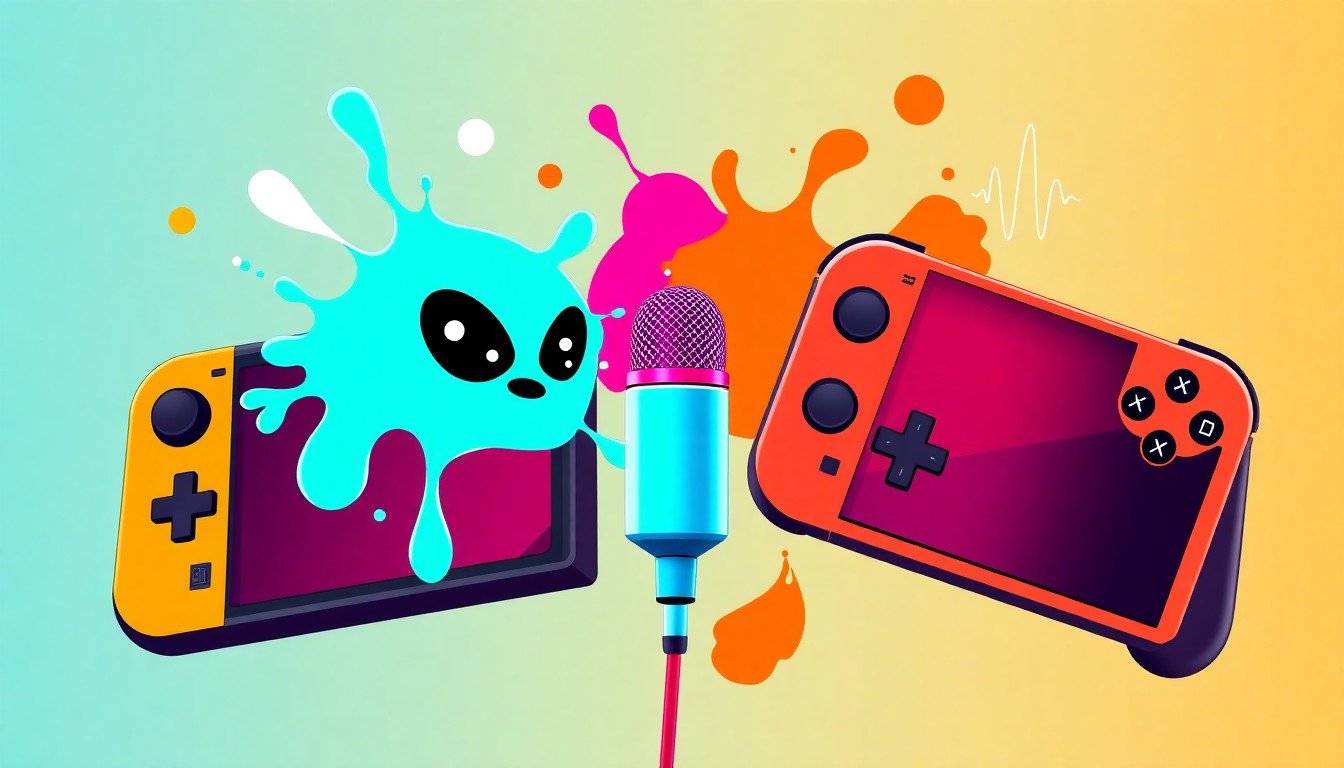
Splatoon has one of the most distinctive voice identities in gaming. The Inkling language isn't really a language at all, it's warped, pitch-shifted gibberish that somehow communicates personality perfectly. Callie and Marie banter like a pop duo who've known each other too long. Pearl barks commands with aggressive energy. Marina counters with smooth calm. And the whole cast radiates that colorful, youth-culture swagger that makes Splatoon different from every other Nintendo franchise.
Creators who want to build content around this universe face an interesting challenge. The voices are memorable, but they're built around fictional speech rather than replicable English dialogue. Getting close to that energy requires understanding what actually makes these characters work, which emotional registers they operate in, and how AI voice technology can help you capture something that feels genuinely Splatoon-adjacent.
This guide covers everything you need. We'll break down the character voice landscape, explain how AI voice tools work for gaming characters, show you which gaming voices on TryAIVoices come closest to the Splatoon aesthetic, and give you practical scripts, use cases, and production tips for gaming content that honors this franchise's unique energy.
TryAIVoices brings together hundreds of gaming, anime, and character voices with instant generation, giving creators the toolkit to build Splatoon-inspired content without starting from scratch.
What makes Splatoon voices unlike any other game
Nintendo built something strange with Splatoon's audio design. The Inkling language sounds like Japanese or English run through a blender. You recognize the emotional intent immediately but can't parse a single word. It works because language comprehension and emotional detection are separate processes. Your brain picks up rhythm, pitch, and delivery long before it processes meaning.
That's why Callie squealing "Inkredible!" hits differently than any actual English phrase could. The nonsense delivery forces you to read emotion directly rather than through words. You understand her excitement not because you translated it but because your nervous system picked it up like a signal.
The English versions of the games do include some real dialogue, particularly in Splatoon 3, where characters like Frye, Shiver, and Big Man interact with the player through hybrid Inkling-English exchanges. But the core sonic identity remains those warped, playful, high-energy vocalizations that defined the franchise from the beginning.
This creates a specific opportunity for content creators. You're not trying to replicate exact voice lines. You're trying to capture an energy, an aesthetic, a vibe. And that's precisely where AI voice tools shine, because they give you building blocks to construct something that feels right rather than requiring you to perfectly copy a specific performance.
Browse our full voice library to see the range of gaming and character voices available for your content projects.
The Inkling language and how it shapes character identity
The Inkling language emerged partly from necessity. Nintendo needed dialogue for a new franchise without the budget or timeline for full voice acting in every language. The solution was brilliant: create a synthetic language that communicated personality without words. Voice actors recorded English and Japanese phonemes that were then remixed and processed.
What you hear in the game is real human performance, warped until it becomes its own thing. The rhythm and emotional contour come from actual actors, which is why it feels more expressive than typical game gibberish. When Callie gets excited, the pacing and pitch match real excitement. When Cap'n Cuttlefish grumbles, the timing and timbre match real grumbling.
Understanding this helps content creators because it points to what matters in Splatoon-inspired voice work. The emotional performance is primary. The specific sounds are secondary. If you capture the energy, the playful aggression, the pop-idol enthusiasm, the veterans weariness, you've captured something that resonates with Splatoon fans even without the actual Inkling dialect.
Character voice archetypes across the franchise
The Splatoon series has developed distinct character voice archetypes across three main entries and their associated media. Each archetype gives content creators a different emotional register to work with.
The pop idol duo is the franchise's defining voice relationship. Callie and Marie represent two different ways of being charismatic. Callie is enthusiastic, high-energy, always a little extra. She commits fully to every performance. Marie is drier, cooler, prone to quiet sarcasm. She delivers the same level of charm with less apparent effort. Their dynamic generates natural content tension because they create contrast without conflict.
The experimental contrast pair arrived with Splatoon 2. Pearl and Marina escalate everything. Pearl is louder, more aggressive, more willing to say the wrong thing with full commitment. Marina is thoughtful, warm, technically precise. She's the counterweight to Pearl's chaos energy. This combination created some of the most beloved character writing in any Nintendo game because the contrast produces genuine comedy and occasional genuine emotional resonance.
The next-generation trio in Splatoon 3 pushed further. Frye brings competitive fire and ocean-inspired intensity. Shiver carries ice-cold confidence and competitive precision. Big Man, an enormous manta ray, communicates through emphatic crowd-pleasing enthusiasm. All three have strong sonic identities despite the Inkling language barrier.
Explore our gaming voice library for character types that map to these archetypes, from energetic idol voices to cool, controlled character deliveries.
Why content creators want Splatoon AI voices
The Splatoon community is passionate and creatively active. Fan art, fan videos, competitive content, and meme culture all thrive around this franchise. The demand for Splatoon-adjacent voice content exists across every major platform.
YouTube hosts thousands of Splatoon content creators. Competitive guides and ranked analysis, character lore breakdowns, weapon tier lists, level playthroughs, and fan theory videos all perform strongly. Voice-over narration elevates every format. A weapon tier list delivered in flat monotone loses half its authority. The same information delivered with the right character energy becomes genuinely entertaining.
TikTok content using Splatoon's aesthetic, the colorful visuals, the kinetic gameplay, the idol music, generates strong engagement from both the gaming community and wider audiences who respond to the visual style even without deep franchise knowledge. AI voice tools let creators add character-appropriate narration or commentary without requiring voice acting talent.
Fan animation and creative content represents another major use case. The Splatoon community has a particularly active creative scene, and AI voice tools can provide placeholder or final voice work for original characters, fan stories, and creative projects that explore the game's universe.
Read our guide to gaming content creation for strategies that transfer directly to Splatoon content formats. The FNAF AI voice guide also covers fan-game community content creation with similar audience dynamics.
 Photo by Erik Mclean on Unsplash
The streaming opportunity for Splatoon content
Splatoon 3 maintains a dedicated competitive streaming scene. The game has ranked modes, league battles, and a salmon run cooperative mode that all generate strong viewer interest. Streamers building a Splatoon-focused channel or adding Splatoon content to an existing stream need distinctive branding to stand out.
AI voice tools provide streaming brands with distinctive audio signatures. Custom alert sounds in character-appropriate registers. Bot response phrases that match the streamer's persona. Introduction and transition segments that establish the visual and sonic aesthetic the audience returns for.
The practical challenge for Splatoon content specifically is capturing that high-energy, slightly chaotic but fundamentally playful register that defines the franchise's tone. It's not dark. It's not grimdark. It's not ironic. It's genuinely enthusiastic about competition and color and style in a way that creates a specific kind of viewing experience.
TryAIVoices' energetic character voice options bring that fast, upbeat quality to gaming content that needs Splatoon's characteristic energy.
Fan fiction and creative projects
The Splatoon universe has one of the richest fan fiction communities in Nintendo's catalog. The lore around the post-human world, the Inkling-Octoling relationship, the deeper backstory of the final boss and the Calamity's aftermath, all of it creates material for creators who want to explore beyond the games themselves.
AI voice tools let these creators add vocal performances to their original characters and adaptations. A fan story following an Octoling struggling with her new identity after the events of Splatoon 2 needs character voices. A fan series exploring the idol world of Inkopolis needs the right energy for dialogue. AI generation provides accessible, high-quality voice work that would otherwise require voice actor recruitment.
The key for fan projects is finding voices with the right emotional personality rather than trying to replicate exact character sounds, which AI tools can't currently achieve with the Inkling language's processed nature.
How AI voice technology works for gaming characters
Understanding how AI voice generation works helps you use it more effectively. The technology is different from what you might expect, and that difference changes what's achievable.
Modern AI voice tools use neural networks trained on large datasets of human speech. They learn patterns of pronunciation, rhythm, emphasis, and emotional delivery from thousands of hours of audio. When you input text, the model generates speech that matches those learned patterns. The quality of the output depends heavily on the diversity and quality of the training data and the sophistication of the model architecture.
For gaming characters, the challenge is that most character voices are either fictional speech (like Inkling) or proprietary performances owned by studios. AI voice tools can't directly replicate these because they'd either be replicating gibberish without meaning or infringing on copyrighted performances.
What AI tools can do, and do very well, is generate speech in registers that match character archetypes. A high-energy, bright-toned anime girl voice for Callie-adjacent content. A deeper, cooler, more controlled voice for Marina-adjacent authority. A gruff, world-weary narrator for Cap'n Cuttlefish energy.
This approach works because audiences respond to archetypes as much as to specific characters. The Callie archetype, bubbly, high-pitched, enthusiastic, over-committed, exists across anime, gaming, and pop culture. Getting that archetype right delivers something that Splatoon fans immediately recognize as belonging to their universe.
TryAIVoices provides voice options across multiple character archetypes, from energetic idol voices to deep commanding characters, giving creators flexible tools for gaming content that captures the right register.
What text-to-speech can achieve for Splatoon-style content
The practical capabilities of current AI voice tools are significant. Here's what you can realistically achieve for Splatoon-adjacent content.
High-energy narration with the bright, upbeat quality that defines Splatoon's tone is entirely achievable. Energetic gaming commentary that matches the pace and enthusiasm of the franchise's visual style works well with the right voice selection. Character-appropriate announcer voices, competitive commentary, and enthusiastic play-by-play delivery translate directly from game to content creation context.
Contrast between voices, using different character registers to create the call-and-response dynamic that Pearl and Marina popularized, is fully achievable with multi-voice content. This technique generates natural dialogue energy without requiring real voice actors.
What's harder: the specific processed sound of actual Inkling speech. That requires audio manipulation beyond standard TTS generation, effects processing that transforms clean voice output into something that sounds like the franchise's signature dialect. We'll cover audio effects techniques later that can help bridge this gap.
The project sekai AI voice guide covers similar territory for a music-game franchise with distinctive character voices, with techniques that translate well to Splatoon content creation.
The role of voice selection in character matching
Choosing the right voice for your character archetype is the most important decision in AI voice content creation. Wrong voice selection produces content that feels discordant even if the script is excellent. Right selection lets average scripts punch above their weight.
For Callie-type characters (energetic, enthusiastic, pop-idol energy), look for bright, higher-pitched voice options with natural upbeat tonal quality. The voice should sound like it's having fun even reading neutral text. Anime girl voice options often map well to this archetype.
For Marie-type characters (dry wit, cooler register, understated delivery), look for voices with natural restraint. Medium pitch, controlled dynamics, a slight flatness in the emotional baseline that makes humor land through understatement rather than emphasis.
For Pearl-type characters (aggressive energy, louder, brasher), look for voices with natural assertiveness. These voices push rather than invite. They take up space.
For Marina-type characters (warm, thoughtful, technically precise), look for voices with natural warmth and measured pacing. These voices explain and include rather than perform.
Browse our anime voice section for character voice options that map to these Splatoon archetypes, particularly for idol-type characters.
Splatoon AI voice tools: what's available and what works
The market for gaming character AI voices has grown substantially. Different tools suit different content creation needs, and understanding the landscape helps you choose efficiently.
For content creators who need character variety, fast generation, and consistent quality across multiple voice types, a broad library approach works best. TryAIVoices' gaming and anime voice collections provide the range needed to cover Splatoon's diverse character cast, from energetic idols to gruff veteran characters.
Tools that focus on single-voice deep customization suit different use cases. If you're building an entire fan project around one specific character type, depth matters more than breadth. For general content creation across multiple Splatoon characters, library range is more valuable.
Speed matters for content creators working on publication schedules. Waiting hours for voice generation breaks workflow. Platforms with instant or near-instant generation, like TryAIVoices, fit the reality of modern content production better than tools with rendering queues.
Matching TryAIVoices options to Splatoon characters
TryAIVoices offers specific gaming and anime voices that map well to Splatoon character archetypes. Understanding these connections lets you build content that feels coherent to Splatoon fans.
For the high-energy idol energy of Callie and the Squid Sisters, anime female voice options in the brighter, more enthusiastic register capture the performance style that made these characters beloved. The key is finding voices that sound genuinely excited rather than performed-excited.
For competitive commentary, the Mortal Kombat announcer voice offers a template for authoritative gaming commentary that can be adapted toward Splatoon's tournament aesthetic. The franchise has its own announcers across ranked and league modes, and that announcer energy translates across competitive gaming content.
For the veteran soldier energy of Cap'n Cuttlefish, deep male character voices with natural authority work well. Morgan Freeman's voice offers the gravitas and controlled pacing that suits an elder character delivering wisdom to younger inklings. It's a tonal match even without being Inkling-specific.
For Minecraft-style gaming content that shares Splatoon's blocky, colorful aesthetic, the Minecraft Villager voice offers interesting crossover content possibilities that gaming audiences respond to. For horror-adjacent Splatoon content exploring the game's darker lore, Baldi's voice and Dagoth Ur's commanding delivery bring unexpected character depth.
Sonic the Hedgehog's voice captures the fast-talking, confident energy that maps well to aggressive Splatoon gameplay characters. Both franchises have that irreverent, never-stay-still attitude that drives high-energy gaming content.
 Photo by Aleks Dorohovich on Unsplash
Writing scripts that capture the Splatoon tone
Script quality determines whether AI voice content connects with your audience. Good voice selection plus weak scripting produces forgettable content. Strong scripts let even imperfect voice matching land. Understanding how Splatoon's characters actually communicate gives you the raw material.
The Callie voice register: writing for pure enthusiasm
Callie's defining quality is commitment. She doesn't do anything at half-intensity. When she's excited, she's completely excited. When she tries to be cool, she tries so hard it becomes endearing. When she makes a joke, she commits to the bit past the point where anyone else would bail.
Scripts for Callie-type voices should front-load the energy. Don't build to excitement, start there. Use exclamation points generously but purposefully. Let phrases run slightly longer than strictly necessary because Callie can't stop talking once she starts.
Example script in Callie register: "Okay, okay, okay, listen up! The Rotary Stage is officially the best map this season and I will fight anyone who disagrees. You've got the high-ground advantage, the mid-pressure point, and, best of all, it totally rewards aggressive play which is MY style, and if you're not already main-staging you are genuinely missing out, so let's go!"
The breathless run-on quality is intentional. Callie speaks like she's always about to run out of time. That energy translates well to short-form content introductions, reaction segments, and enthusiastic game recommendation posts.
The Marie voice register: writing for dry wit
Marie communicates through contrast. She matches Callie's genuine enthusiasm with apparent lack of enthusiasm, and the gap is where the comedy lives. Her deadpan isn't boredom, it's a performance of boredom that requires more skill than actual enthusiasm.
Scripts for Marie-type voices should use shorter sentences and let the understatement do the work. Avoid explaining the joke. Trust the delivery. Marie-style writing reads slightly flat but lands hard if the timing is right.
Example script in Marie register: "The new stage is fine. The new weapon is fine. Your gameplay is... probably fine. Look, everything's fine. I'm having the time of my life. This is definitely my favorite hobby and I absolutely didn't have better plans for the evening."
The repeated "fine" does emotional heavy lifting through accumulation. Each repetition lands slightly different. The final reveal of not-wanting-to-be-here is obvious from the start but still satisfying when it arrives. This register works brilliantly for dry gaming commentary, tier list reveals, and patch note reactions.
The Pearl and Marina dynamic: writing for contrast
Pearl and Marina created the template for the aggressive-enthusiastic versus calm-thoughtful vocal contrast. Their dynamic works because they're genuinely different rather than one being the straight-person to the other's comedy. Marina has humor too. It's just expressed differently.
Content using this dynamic needs both voices to have clear personalities. Pearl interrupts. Marina finishes her thought anyway. Pearl overstates. Marina provides the technical correction. Pearl celebrates too early. Marina notes the caveat.
Example Pearl-Marina exchange: PEARL: "We've officially cracked ranked! It's over! The win condition is: be extremely aggressive all the time and never stop ever!"
MARINA: "There's... also team coordination, map awareness, and understanding the objective cycle."
PEARL: "Right, right, all that, and: be extremely aggressive."
MARINA: "I'm not sure that's technically what I said."
PEARL: "Marina."
MARINA: "...yes, that's what you said."
The exchange works because Marina's capitulation at the end validates Pearl's energy without endorsing her logic. This is classic contrast comedy structure, and it translates perfectly to AI two-voice content.
Explore our voice options for building paired voice content that creates this kind of natural contrast dynamic.
Cap'n Cuttlefish: writing for veteran gravitas
Cap'n Cuttlefish is the franchise's elder statesman, the veteran who's seen the Great Turf War, trained generations of agents, and now dispenses wisdom and enthusiasm in roughly equal measure. His voice is weathered but not tired. He brings intensity to everything because he knows how quickly things can turn.
Scripts for veteran-gravitas voices should use more deliberate pacing. Short declarative statements. Earned pauses. Wisdom expressed through action rather than lecture.
Example Cap'n Cuttlefish register: "Back in my day, we didn't have special weapons. We had a squid, a gun, and the absolute determination not to let the other team take the Rainmaker. Most of us made it. The point is: you've got everything you need. Stop overthinking. Start inking."
The compressed war story, the list structure, the abrupt pivot to direct advice, all mark this as veteran-wisdom-register writing. It works for tutorials, strategy content, and motivational gaming segments.
The Morgan Freeman voice handles this kind of deliberate, earned narration register beautifully for gaming content that needs genuine authority.
Big Man: writing for wordless enthusiasm
Big Man is technically speaking Manta ray, but his communication style, pure enthusiastic crowd-reaction with no actual words, creates a fascinating content voice type. He responds to everything with varying degrees of emphatic positive energy.
In content terms, Big Man represents the enthusiastic non-verbal response that confirms what the other characters said. Writing for this archetype means finding the moments where pure enthusiasm without qualification is the funniest and most appropriate reaction.
Content using this type works well in reaction video format, where the enthusiasm of the reaction is itself the content, and in situations where the other voices have said something so obvious or so good that no further commentary serves.
Creative use cases for Splatoon-inspired content
Understanding the characters and their voice registers is foundation work. The actual opportunity is in content formats that let these voices shine.
YouTube gaming guides and ranked content
Splatoon's competitive scene has substantial appetite for instructional content. Ranked guides, weapon tier lists, and stage-specific strategy videos all perform well on YouTube. The challenge is making instructional content entertaining enough that people actually finish watching it.
AI voice narration using Splatoon character archetypes solves this. A weapon tier list narrated in Pearl's aggressive certainty becomes funnier and more watchable than the same list delivered in monotone. A ranked guide delivered with Cap'n Cuttlefish energy carries more authority than a creator simply explaining strategies over gameplay footage.
Structure your YouTube videos with character voice as a consistent element rather than an occasional flourish. Establish which character voice you're using in the first twenty seconds. Maintain that character's register consistently throughout. Audiences build expectations and part of the reward for finishing a video is seeing how that character responds to each beat.
TryAIVoices' library has the voice range to build this kind of consistent character identity across a full YouTube series.
TikTok and short-form gaming content
TikTok rewards the Splatoon aesthetic heavily. The colorful gameplay captures well in short clips. The music is designed for short, high-energy contexts. The characters are visually distinctive enough to build recognition quickly.
For AI voice content on TikTok, the Callie register works particularly well because it matches the platform's energy. Fast, enthusiastic, front-loaded with the hook, always feeling slightly rushed. TikTok audiences decide in under three seconds. Opening with Pearl screaming an opinion about a weapon tier is a better hook than a slow build into the same information.
Short-form Splatoon content that performs well: hot takes delivered in character voice, reaction to new weapon reveals, season analysis in idol-commentary format, competitive skill tips delivered as briefings.
The meme format translates especially well because Splatoon's aesthetic is already highly compressed and stylized. Adding voice over existing game clips with the right character energy requires minimal setup and can generate strong engagement from the gaming community.
Read our TF2 voice guide for short-form gaming content strategies that work equally well for Splatoon content creation. The Star Wars AI voice guide covers high-fanbase gaming content creation with similar audience passion levels.
 Photo by Jippe Joosten on Unsplash
Fan animations and creative videos
Splatoon's fan animation community is substantial. Original characters in the Inkling and Octoling visual style, adaptations of game storylines, and wholly original stories set in Inkopolis all attract dedicated audiences.
AI voice tools enable fan animators to add voice work that would otherwise require recruiting voice actors. For original Inkling characters, the voices don't need to match any existing performance, they just need to fit the character's personality and the franchise's emotional register.
The practical workflow: write character dialogue first with character personality driving every line. Select voice options that match each character's archetype. Generate audio. Process through light effects if you want to approximate Inkling language, see the audio production section below. Edit to match animation timing.
For characters speaking standard English rather than Inkling (which is completely legitimate in fan works), the selection challenge is finding voices with the right personality. An enthusiastic Inkling character who speaks English should still sound like someone whose native enthusiasm would overflow into gibberish if they got too excited.
The anime voice library provides the character voice archetypes that fan animators need for Inkling and Octoling-adjacent characters. Anime girl AI voice options cover the full range from bubbly idol energy to cool, controlled character delivery.
Streaming and live content with Splatoon theme
Streamers building Splatoon-focused brands or adding Splatoon content to existing channels need distinctive audio identity. AI voice tools provide affordable, instantly-generated audio assets for stream production.
Alert sounds in character voice are the most direct application. New follower alerts in Pearl-style aggressive celebration. Subscription alerts in Callie-style enthusiastic performance. Donation alerts delivered as competition announcements. These production touches create an immersive stream experience that reinforces the Splatoon brand.
Bot responses using character voice scripts can respond to chat commands with character-appropriate dialogue. A !strategy command triggers a Cap'n Cuttlefish tactical assessment. A !vibe command gets Pearl's current competitive intensity level. These interactions generate chat engagement and reinforce the streamer's gaming identity.
Pre-recorded intro and outro segments using idol-contest announcer energy create professional production at no cost beyond the time to script and generate. Subscribe to TryAIVoices for the generation credits needed to build a full streaming audio library.
Podcast content about competitive Splatoon
The competitive Splatoon community supports podcast-format content analysis. Tournament reviews, meta breakdowns, season retrospectives, and player spotlights all have audiences. AI voice tools provide production value that makes podcast content more engaging.
Character voice narration for podcast intros, chapter transitions, and sponsor reads creates a consistent sonic brand. A competitive Splatoon podcast using Deep Cut-style announcer energy throughout sounds like it belongs in the game's world, which creates connection with the audience before any content lands.
Cold opens work particularly well with strong character energy. Open with Pearl-level intensity about why this season's meta is broken and you've created immediate engagement with the competitive audience. Follow with Marina-style technical analysis and you've demonstrated the content depth that keeps listeners coming back.
Audio production for Splatoon-inspired voice content
Getting great AI voice audio is step one. Processing it correctly for each context is what separates professional-quality content from decent content.
Approximating Inkling audio effects
If you want to push AI voice content closer to actual Inkling speech rather than keeping it in clear English, audio processing can help bridge the gap. This is complex and results vary, but some effects produce interesting Splatoon-adjacent audio.
Pitch shifting and formant adjustment can give standard voice output a slightly non-human quality. Shifting pitch up 15-25% while adjusting formants slightly creates a more cartoonish delivery without complete intelligibility loss. Experiment with these values, too much and you lose comprehensibility, too little and it just sounds like a slightly different voice.
Reverb and chorus effects can create the slightly processed, over-produced quality of the in-game character voices. The idol voices in particular are heavily produced pop performances, and light chorus effect on AI voice output moves it toward that territory.
For the Inkling gibberish specifically, none of these effects fully achieve the result because actual Inkling is English/Japanese phonemes remixed at the syllable level, which isn't achievable with standard audio effects chains. But approximation is possible for stylistic effect, particularly for short character-voice moments rather than extended dialogue.
EQ and mastering for gaming content
Gaming content has different audio requirements across platforms. YouTube's normalization target, the loudness standards for streaming platforms, and TikTok's aggressive compression all affect how your voice output needs to be prepared.
For YouTube: normalize your AI voice audio to -14 LUFS before upload. Gaming content frequently has loud game audio competing with voice narration, so keeping the voice clearly above the game audio in the mix requires proper leveling rather than just turning things up.
For TikTok: generate slightly brighter (more high-frequency presence) than you think you need. TikTok's compression rolls off high frequencies, and voice content that starts too warm becomes muddy after processing. Slight brightness correction before upload maintains clarity.
For streaming: run AI voice audio on a dedicated audio channel in OBS or Streamlabs with its own level control. This lets you balance voice against game audio in real-time rather than pre-committing to a fixed mix.
Read the voice generation tips guide for platform-specific technical recommendations on audio quality across content formats.
Music selection for Splatoon-adjacent content
Splatoon's music is one of its most distinctive elements. The franchise uses fictional band names, Squid Sisters, Off the Hook, Deep Cut, and others, each with distinct styles within the game's overall aesthetic. The music ranges from J-pop idol to aggressive battle rap to technical jazz fusion, all unified by the franchise's energetic, colorful identity.
For content using Splatoon-inspired voices, music selection significantly affects whether the total package feels coherent. Matching the energy level and aesthetic of your chosen music to your character voice register prevents the jarring mismatch that pulls audiences out of content.
Cap'n Cuttlefish content works well with slower, more dramatic music that gives the veteran's words room to land. Pearl-style content pairs naturally with aggressive, high-tempo music that matches her energy. Callie-type content sits perfectly over upbeat pop that matches her enthusiasm.
You can't use actual Splatoon music in content without copyright implications. Look for royalty-free music in similar styles: energetic J-pop adjacent tracks for idol content, aggressive electronic for competitive commentary, ambient atmospheric for lore and world-building.
Building an audience around Splatoon content
Individual pieces of great content matter. Consistent publishing strategy builds the audience that makes the work worthwhile.
Understanding the Splatoon content audience
Splatoon fans skew younger than most gaming communities but include dedicated players across age ranges who've followed the franchise since the original Wii U release. They respond particularly strongly to content that takes the game seriously on its own terms without condescension, and to content that engages with the franchise's lore and character relationships.
The competitive audience wants information presented with appropriate authority and energy. Strategy content needs to be actually correct. Weapon tier lists need genuine analysis. Rankings need defensible reasoning. The community pushes back on lazy takes, but rewards creators who demonstrate genuine knowledge with sustained engagement.
The creative audience, fan fiction enthusiasts, lore theorists, character analysis viewers, wants content that expands on what the games provide. These viewers support creators who add to the franchise's universe rather than just reporting on it.
Check out our guide to gaming AI voices for more community-specific content strategy that applies across Nintendo gaming franchises.
Content calendar alignment with game updates
Nintendo releases Splatoon 3 seasons on a regular schedule, each bringing new weapons, stages, and sometimes story content. Planning AI voice content around these update cycles captures search traffic at peak density.
New weapon releases create natural tier list and guide opportunities. Generate AI voice commentary reacting to new weapon reveals the day they drop. The Callie-type enthusiastic response to something great, or the Marie-type dry skepticism about something questionable, creates immediate content that serves a defined search intent.
New stage releases create stage breakdown opportunity. Deploy strategic voice narration covering the new layout. Pearl-style confident declaration about the correct rotation strategy, followed by Marina-style technical correction of Pearl's more aggressive claims, produces genuinely useful content with natural entertainment built in.
Season finale story content generates lore discussion opportunity. These story segments are the most emotionally significant content the franchise produces, and deep-dive videos with appropriate character voice energy perform strongly with the core audience.
Cross-community content opportunities
The Nintendo gaming universe creates natural cross-community content opportunities. Splatoon fans overlap significantly with Super Mario fans, with Sonic the Hedgehog fans who share the colorful mascot platformer aesthetic, and with anime communities who respond to the idol elements of Splatoon's character design.
Crossover content, Splatoon mechanics explained to Mario Kart fans, Splatoon idol energy compared to Hololive virtual idol energy, Splatoon's post-apocalyptic setting analyzed alongside anime and gaming sci-fi contexts, reaches beyond the direct Splatoon audience while maintaining relevance to the core community.
Genshin Impact fans share the gacha game and character-focused gaming content space. My Little Pony AI voice content also shares the colorful, community-driven character fandom that Splatoon fans relate to deeply. Content that acknowledges these overlaps builds audiences across multiple communities simultaneously.
 Photo by Sara Kurfeß on Unsplash
Collaboration with other Nintendo content creators
The Nintendo content creator ecosystem supports collaboration well. Splatoon creators and other Nintendo franchise creators share audience demographics and content preferences. Cross-promotion with Mario, Zelda, or Kirby content creators reaches your target audience through trusted sources.
AI voice content is particularly well-suited to collaboration because it enables creators to produce content featuring another creator's character voice types without requiring both parties to be on the same recording session. Build AI voice content that includes references to collaborative creators' characters or themes, coordinate publication timing, and cross-promote to both audiences.
The key: make the collaboration content serve both audiences rather than functioning as pure marketing. A genuinely useful competitive guide for Splatoon that also acknowledges the Zelda-Splatoon speedrunning community serves both audiences and earns the goodwill of both.
Legal considerations for Splatoon AI voice content
Nintendo is known for aggressive enforcement of its intellectual property, which is something Splatoon content creators need to take seriously. Understanding the landscape protects your content.
What Nintendo protects and what's generally safe
Nintendo copyrights apply to specific game content: the actual recordings, the character designs, the music, the written text. They apply to the Splatoon brand name and the specific likenesses of characters like Callie, Marie, Pearl, and Marina.
What they don't own: the general concept of an energetic pop idol who commentates gaming, the voice archetype of a dry-witted character providing contrast to an enthusiastic partner, or the aesthetic concept of colorful ink-based gameplay. These are types, not properties.
AI-generated voices that capture archetypes rather than replicating specific protected performances are on much firmer ground legally than tools attempting to directly clone the actual voice actors' performances. If your content captures the "enthusiastic idol energy" as a generic archetype without claiming to be a specific character, you're in different territory than if you're claiming your content reproduces the specific copyrighted performance.
Nintendo's content creator policies
Nintendo has a formal content creator policy covering fan content. The short version: non-commercial fan content with clear transformative or fan-made framing is generally tolerated, commercial content faces greater scrutiny, and content that could confuse consumers about its official status is most at risk.
Clearly labeling your content as fan-made, using obvious AI-voice in a way that doesn't claim to reproduce official performances, and keeping commercial exploitation well removed from the specific IP all reduce risk.
The practical reality: Nintendo allows enormous amounts of fan content that technically touches their IP. They crack down most aggressively on content that monetizes their characters directly in ways that compete with or substitute for official products. Creative fan content that respects this line generally exists without issue.
Read our guide to AI voice regulation and legal landscape for a comprehensive overview of where AI voice law currently stands across different content formats.
Platform policies on gaming character content
YouTube and TikTok have Content ID systems that detect official audio from game publishers. AI-generated voices that don't use the actual game's audio files won't trigger Content ID, which is a significant practical advantage over using clips from the games themselves.
Standard content policy still applies. Content that harasses or sexualizes characters, even fictional ones, faces platform action independent of copyright concerns. Content that deceives audiences about being official Nintendo material creates risk. Content that uses characters for political messaging or unsuitable contexts violates spirit-of-terms even where the letter is arguable.
Within those boundaries, AI voice content using gaming character archetypes has broad freedom and a track record of successful publication across platforms.
Comparing AI voice platforms for Splatoon content creation
The choice of AI voice platform affects both the quality of your output and the practicality of your workflow. Gaming content creators have specific needs that not every platform meets equally well.
What matters for gaming content specifically
Character variety is the first filter for Splatoon content creators. You need multiple distinct voice registers to cover the different character archetypes. Platforms with limited voice libraries force you into repeated compromise. TryAIVoices' library of 500+ voices across gaming, anime, celebrity, and character categories provides the range that Splatoon's diverse cast demands.
Generation speed matters for content creators working on publication schedules tied to game updates. When Nintendo drops new season content, you have hours before the competition publishes. Waiting for voice rendering defeats the purpose. Instant generation platforms match the pace of competitive content creation.
Script length handling affects long-form content. Lore breakdowns and extended strategy guides need several minutes of narration. Some platforms degrade quality or fail entirely on longer inputs. Testing your platform's performance at realistic content lengths before building a full production workflow is worth the twenty minutes of experimentation.
Audio quality directly affects how professional your content reads to audiences. Platforms that produce clean, natural output reduce post-production work. Platforms that require heavy processing to sound acceptable add friction to your workflow.
Building a multi-voice content toolkit
The most effective Splatoon AI voice content uses multiple distinct voice registers. Pearl and Marina content needs both Pearl's aggression and Marina's calm. Idol commentary format needs contrast. Tutorial content benefits from different voices for host and guest roles.
Building this toolkit means identifying your primary character archetypes and finding voice selections that consistently represent each one. Document your selections so you can reproduce them across different content pieces. Consistency builds audience recognition, and recognition builds the kind of follow-back engagement that grows channels.
TryAIVoices' subscription plans provide the credits needed to build and maintain a full multi-voice content library, with instant generation that fits into rapid-turnaround content workflows.
Frequently asked questions
What AI voice options work best for Callie-style content?
Bright, high-energy anime girl voice options with natural enthusiasm produce the best results for Callie-type content. Look for voices that sound genuinely excited rather than performed-excited, the difference is subtle but audiences detect it immediately. Test with short enthusiastic dialogue samples before committing. Our anime voice library has options in this register.
Can I use Splatoon AI voice content on YouTube?
Yes, in most cases. AI-generated voices that don't use actual game audio avoid Content ID detection. Clear fan content framing reduces IP risk. As long as your content doesn't claim to be official Nintendo material, uses AI voice rather than actual game recordings, and has transformative creative purpose, YouTube publication is generally achievable. Check current platform policies as they update regularly.
How do I create the Inkling language effect with AI voice tools?
True Inkling speech requires pitch shifting and formant manipulation applied to standard voice output. Using a DAW like Audacity or GarageBand, shift the pitch up 15-30% and experiment with formant adjustment to create a non-human vocal quality. Light chorus and slight reverb complete the effect. Note that this approximates the aesthetic rather than precisely replicating the actual Inkling audio, which requires more complex processing.
Which TryAIVoices character comes closest to Splatoon energy?
Sonic the Hedgehog matches the fast, confident, never-slow-down energy that drives Splatoon's core characters. For idol-commentary formats, anime character voices capture the performance register. The Mortal Kombat announcer suits competitive commentary. Morgan Freeman handles veteran-wisdom character registers. Different content types map to different options.
How long should scripts be for Splatoon gaming content?
For TikTok and YouTube Shorts: 15-45 seconds of dialogue. For YouTube standard: individual voice segments of 30-90 seconds with natural transitions and cuts. For streaming alerts: 5-15 second response clips. For podcast content: extended narration works if voice quality stays consistent, though breaking long scripts into shorter segments often produces cleaner output.
Can I monetize content using Splatoon-inspired AI voices?
Yes, within Nintendo's content creator guidelines. Fan content with transformative creative purpose, clear AI-generated labeling, and non-commercial framing operates in Nintendo's generally-tolerated zone. Commercial projects with significant Splatoon IP use face greater scrutiny. Content with original creative contribution beyond pure replication, your own analysis, humor, competitive insight, stands on firmer ground for monetization than pure character voice replication.
Where can I find music that matches Splatoon's vibe?
Royalty-free music platforms like Epidemic Sound, Artlist, and Uppbeat have tracks in the J-pop, electronic, and energetic pop registers that match Splatoon's musical aesthetic without using the actual game soundtrack. Search for "J-pop," "idol pop," or "upbeat electronic" to find relevant tracks. Check the tips guide for audio licensing recommendations specific to gaming content creators.
Splatoon's voice identity is genuinely unusual in gaming. The franchise built an entire sonic universe around invented speech and still managed to create characters whose personalities come through with perfect clarity. That achievement points to something important for content creators: emotion, energy, and archetype communicate more directly than specific words ever could.
AI voice tools won't give you the exact Inkling processing or the precise performance of specific voice actors. What they give you is something arguably more useful for content creation: the ability to generate clear, high-quality voice output in the character registers that made those characters compelling in the first place.
TryAIVoices provides the gaming, anime, and character voice library you need to build Splatoon-adjacent content at any scale. Browse 500+ voices, generate instantly, and start building the Splatoon content your audience is looking for.